 Follow Us on Google News


 Follow Us on Google Discover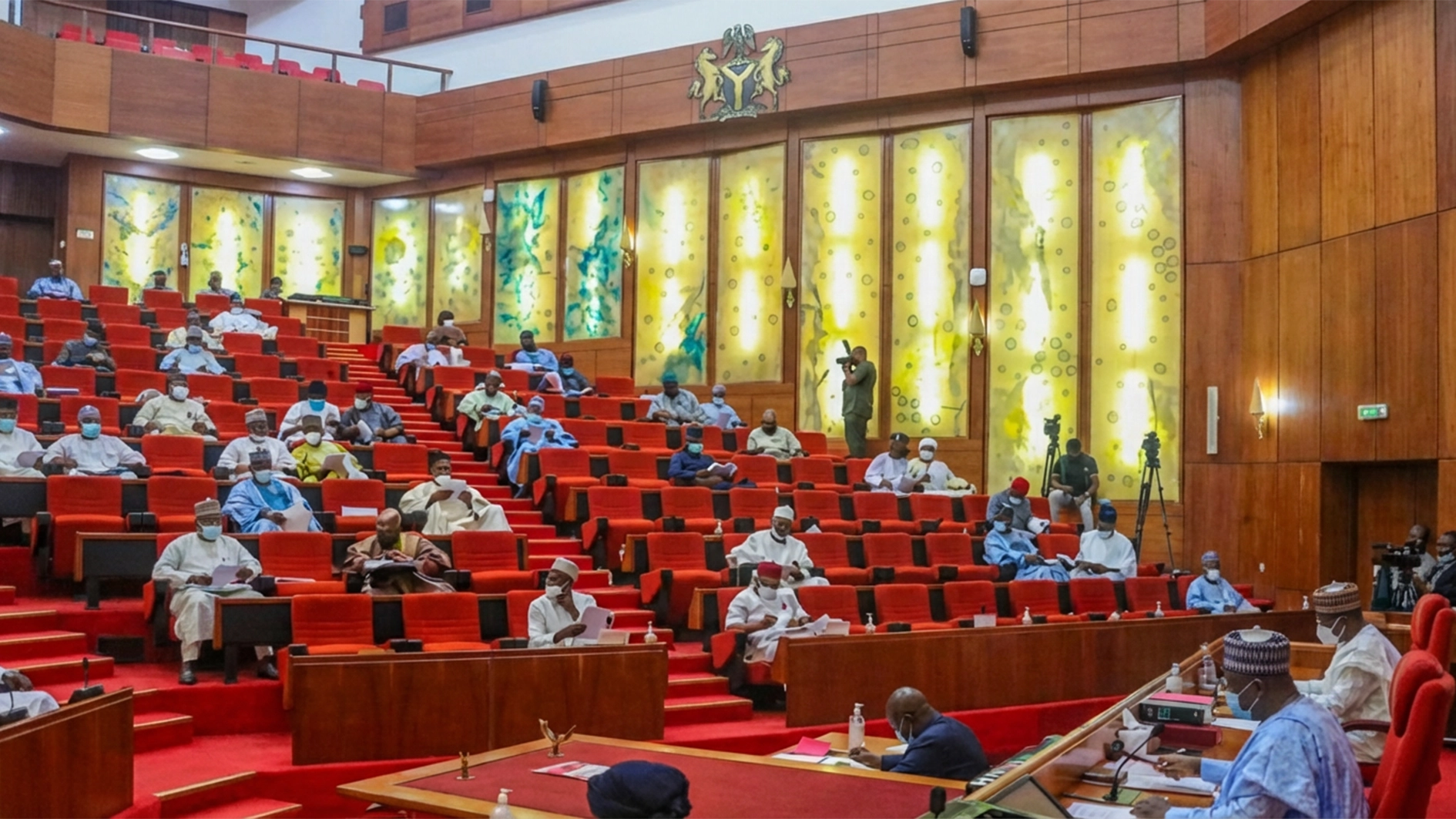
• Advances bill to reform electoral dispute process
• Approves N2.285tr FCT budget, earmarks N1.741tr for capital projects
The Senate yesterday rescinded controversial amendments to its Standing Orders relating to the election of its presiding officers, following mounting concerns over constitutional inconsistencies in the new provisions.
The Senate also passed for second reading a bill seeking to reform the handling of pre-election disputes by redefining the jurisdiction of courts in electoral matters, while separately approving the N2.285 trillion 2026 Federal Capital Territory (FCT) budget, with N1.741 trillion earmarked for capital projects aimed at accelerating infrastructure development in Abuja and satellite communities.
The reversal of the controversial amendments took place during plenary in the absence of Senate President, Godswill Akpabio, who reportedly arrived in the chamber after the motion had already been adopted.
The Senate had earlier amended its rules to provide that only senators who had served at least one four-year term would be eligible to contest for the offices of Senate President and Deputy Senate President.
The amended provision stated: “A Senator vying for the office of the President of the Senate and Deputy President of the Senate must have served at least one term of four (4) years in the Senate as a Senator of the Federal Republic of Nigeria.”

Another amendment had provided that senators could only participate in the election of presiding officers after being sworn in.
However, the Senate yesterday deleted the provisions after lawmakers raised concerns that they conflicted with the 1999 Constitution.
The motion for rescission was sponsored by Senate Leader, Opeyemi Bamidele, and seconded by Senator Enyinnaya Abaribe.
Presenting the motion, Bamidele said the amendments needed to be withdrawn to ensure conformity with constitutional provisions.
Citing Section 1(3) of the Constitution, he said: “If any other law is inconsistent with the provisions of this Constitution, this Constitution shall prevail, and that other law, to the extent of its inconsistency, be void.”
He also referred to Section 52(1) of the Constitution, which allows lawmakers-elect to participate in the election of presiding officers before taking the oath of office.
“In other words, Mr President and distinguished colleagues, election of the officers will have to take place, as it had always been, before the swearing-in of senators,” he said.
The motion noted that the Senate Standing Orders had been amended on Tuesday, May 5, 2026, but that “upon further legislative and constitutional review, certain provisions introduced under Order 2(2) and Order 3(1) may give rise to constitutional inconsistencies and unintended tensions” with the Constitution.
It added that the Senate possessed the parliamentary authority to revisit and rescind previous decisions to preserve the integrity of its proceedings.
Deputy Senate President, Barau Jibrin, who presided over the session, put the motion to a voice vote without debate.
“I thank the Leader for being observant and up to the game as Leader of the Senate by making this observation. We don’t need any debate on this,” he said.
However, Senator Adams Oshiomhole raised a point of order, arguing that debate should have been allowed on the matter.
“So when we are making a law, we should accommodate diverse views. That way, what one person forgot, the other person will remember,” Oshiomhole said.
“The only point I want to make is that next time we should allow debate. That’s it.”
Responding, Bamidele defended the decision to dispense with debate, saying recent disagreements over the amendments had generated unnecessary controversy.
“Yesterday, I saw the kind of drama that went on. It was unnecessary,” he said.
“But the unfortunate thing about that drama was that, regardless of what was done in this hallowed chamber yesterday, what became the news out of this chamber was that unnecessary drama. And we are not going to allow this to continue.”
He added that any senator dissatisfied with previous decisions ought to bring a substantive motion before the chamber rather than disrupt proceedings.
“We cannot allow this kind of drama to go on in the Senate. We must put a stop to it,” Bamidele said.
Also, the Senate passed for second reading a bill seeking to amend the Electoral Act, 2026, with provisions aimed at redefining the jurisdiction of courts in pre-election disputes and streamlining the handling of electoral cases in the country.
The proposed legislation, sponsored by former Plateau State governor and Senator, Simon Bako Lalong, seeks to establish a clearer legal framework for the adjudication of electoral disputes and reduce conflicting court judgments, forum shopping and delays in litigation.
Under the bill, pre-election matters relating to National Assembly, governorship and State Houses of Assembly elections would originate at the Federal High Court, with appeals proceeding to the Court of Appeal.
Disputes involving presidential and vice-presidential elections, however, would commence directly at the Court of Appeal, which would exercise original jurisdiction, while final appeals would be determined by the Supreme Court.
Leading debate on the bill during plenary, Lalong said the proposed amendment was designed to eliminate ambiguity in the existing legal framework, where overlapping interpretations of jurisdiction have resulted in conflicting judgments by courts of coordinate authority.
He said persistent uncertainty over jurisdiction in pre-election matters had contributed to delays, abuse of court processes and constitutional tensions within the judiciary.
According to him, although Section 285(14) of the 1999 Constitution recognises pre-election matters, inconsistencies in interpretation have continued to undermine efficiency in adjudication.
“Democracy thrives not merely on the conduct of elections, but also on the credibility, certainty and predictability of the legal processes that precede those elections,” he said.
Lalong explained that assigning original jurisdiction over presidential election disputes to the Court of Appeal would ensure faster resolution of sensitive national cases, while empowering the Federal High Court to handle other electoral disputes would promote specialisation and consistency.
The bill also seeks to curb the practice of filing multiple suits across different jurisdictions in search of favourable rulings, a trend lawmakers said has weakened public confidence in the electoral process.
It further proposes that no court should entertain pre-election matters outside the procedures outlined in the proposed new Section 29A of the Electoral Act.
Senators who supported the bill described it as timely and necessary for strengthening Nigeria’s democratic and judicial systems, noting that electoral disputes are time-sensitive and require prompt resolution to avoid constitutional uncertainty.
Following debate on its general principles, the Senate approved the bill for second reading, paving the way for further legislative consideration.
In another development, the Senate approved the N2.285 trillion 2026 Statutory Appropriation Bill for the Federal Capital Territory (FCT), with N1.741 trillion allocated to capital projects aimed at accelerating infrastructure development in Abuja and satellite communities.
The approval followed the adoption of the harmonised report of the Senate and House of Representatives Committees on the FCT during plenary.
Presenting the report on behalf of the Chairman of the Senate Committee on the FCT, Ibrahim Bomai, the committee’s Vice Chairman, Austin Akobundu, said the budget was based on a projected revenue framework of N2.385 trillion for the 2026 fiscal year.
According to him, N165.7 billion was allocated for personnel costs, N378.2 billion for overheads, while N1.741 trillion was earmarked for capital expenditure.

