 Follow Us on Google News


 Follow Us on Google Discover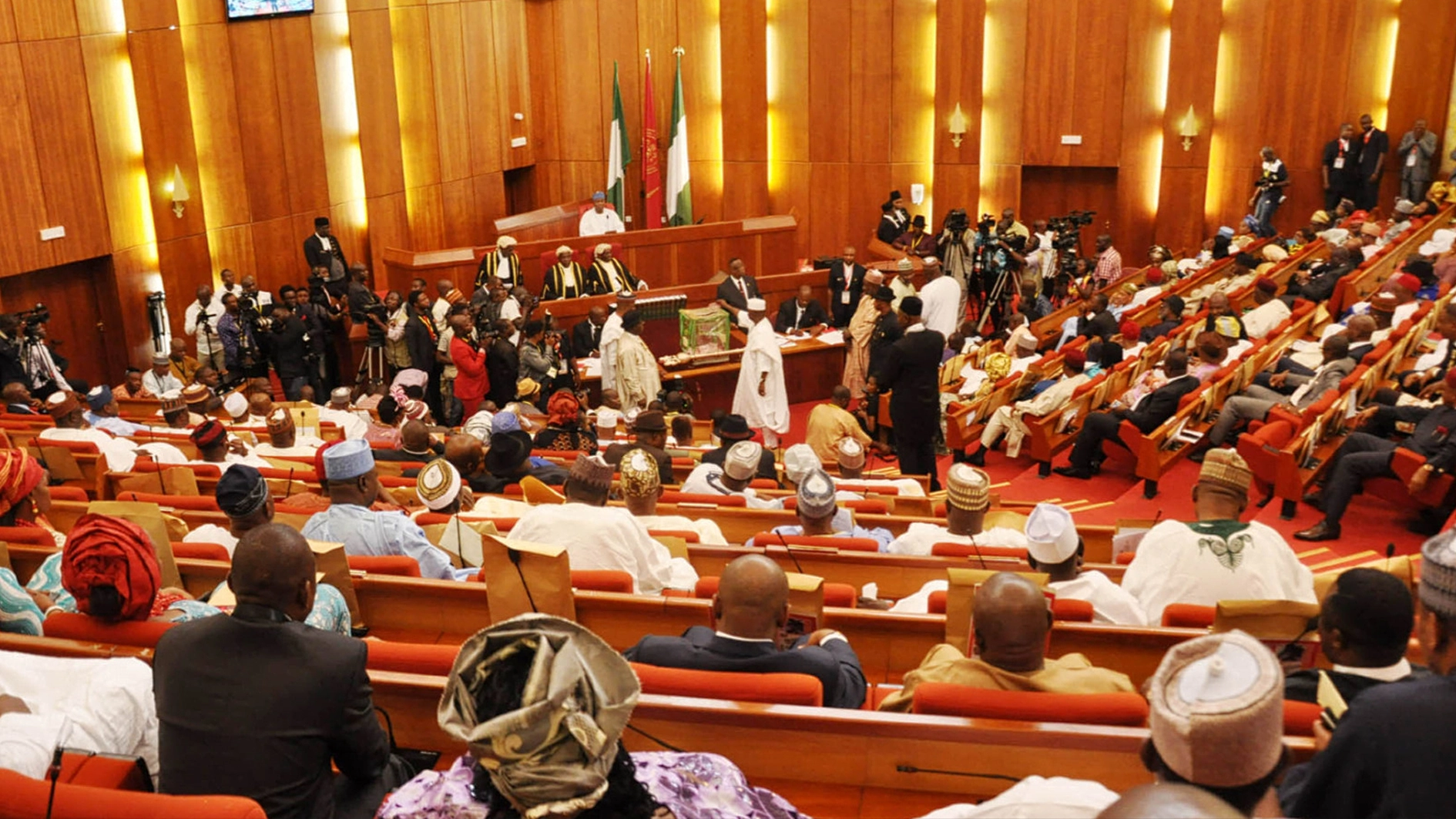
The recent drama in the Senate over controversial amendments to its Standing Orders has further reinforced growing concerns about misplaced priorities within Nigeria’s political leadership. At a time when citizens are facing worsening insecurity, poverty, inflation, unemployment, and repeated national grid collapses, lawmakers were instead preoccupied with internal power struggles over leadership positions ahead of the 2027 elections.
What should have been a routine constitutional alignment exercise degenerated into controversy, procedural confusion, and eventual reversal. The Senate’s attempt to introduce stricter eligibility rules for the Senate Presidency was widely interpreted as an effort to shape the 2027 leadership race in favour of insiders while limiting competition. However, the amendments quickly ran into constitutional contradictions, forcing the chamber into an embarrassing U-turn after it became clear that parts of the rules could not stand legal scrutiny.
Legislative scholar Douglas Baye-Osagie noted that the crisis was worsened by a procedural lapse in which the Senate Leader relied on the wrong constitutional provision. According to him, the motion referenced Section 52 instead of Section 50, yet no senator reportedly corrected the error during deliberations. He further explained that the Senate was eventually forced to retract itself on the procedure for electing presiding officers, adding that the Leader also relied on provisions relating only to oath-taking rather than the correct constitutional basis.
He emphasized that “ranking” in the Senate is not a constitutional requirement but a parliamentary convention used only for seniority and leadership allocation. The Constitution only provides that senators elect their presiding officers from among themselves. Attempts to redefine ranking to restrict eligibility were therefore seen as unnecessary and politically motivated, especially since the current Senate President, Godswill Akpabio, had previously benefited from a broader interpretation of the rule.
He further warned that when lawmakers design rules to target political opponents or secure future advantage, they weaken democratic institutions.
This is where the political fragility of the entire exercise becomes clearer. If ranking is used as a gatekeeping tool for future leadership, it assumes stability in political fortunes that elections do not guarantee. Nigerian electoral history shows that political dominance can shift quickly, meaning incumbency or internal party structure cannot reliably predict future outcomes. Voters ultimately decide who returns, not legislative assumptions about continuity.

From that standpoint, the Senate Leader’s decision to move a rescission motion suggests the amendment either lacked full internal consensus or became politically and legally untenable once scrutiny intensified. It reflects a chamber correcting itself under pressure after overreaching.
However, the controversy did not end with procedure alone. The broader political tension inside the chamber was further amplified by leadership style and authority dynamics.
“This is the final warning,” the Senate President reportedly declared during the heated exchange, a moment that underscored a forceful and tightly controlled chamber environment.
But beneath the surface, the clash carried deeper political undertones. Multiple sources within the National Assembly suggest Senator Adams Oshiomhole’s insistence on raising procedural concerns was not purely technical. He is widely believed to have political interests linked to the future Senate leadership contest in 2027, and the confrontation has been interpreted in some quarters as an early signal of resistance to the current power structure.
At the heart of the tension is a controversial amendment to Senate rules, which critics argue would have narrowed the 2027 Senate Presidency race to a select group of insiders before any electoral contest begins. For figures like Oshiomhole, the development was viewed as politically restrictive and potentially exclusionary.
Insiders claim the amendments form part of a broader political calculation to influence the composition and leadership of the next National Assembly. According to multiple accounts, the move is allegedly backed by influential interests within the ruling establishment seeking to ensure the Senate leadership remains aligned with the executive arm.
Critics argue that this approach is designed to limit independent or unpredictable contenders, preempt internal dissent, and reduce legislative friction with the executive—raising concerns about institutional independence.
Within this context, the Senate confrontation is increasingly being read not as a routine procedural disagreement but as part of a deeper struggle over control, ambition, and succession planning within Nigeria’s legislative hierarchy.
To some observers, the Senate President’s firm handling of proceedings reflects necessary enforcement of order in a volatile chamber. To others, it signals an increasingly centralised leadership style that risks suppressing dissent during politically sensitive moments.
Either way, the episode has exposed a Senate increasingly shaped not only by lawmaking duties but also by internal power balancing ahead of 2027.
These concerns were strongly echoed by Auwal Musa Rafsanjani, Executive Director of the Civil Society Legislative Advocacy Centre (CISLAC)/Transparency
International Nigeria, who expressed deep concern over the growing focus of political office holders on future elections while Nigeria continues to face multiple national emergencies.
According to CISLAC, millions of Nigerians are battling insecurity, economic hardship, unemployment, inflation, healthcare failures, and food insecurity, while political leaders appear increasingly preoccupied with succession politics rather than governance delivery.
The organisation warned that Nigeria is facing overlapping crises requiring urgent attention, including banditry, kidnapping, terrorism, communal violence, overstretched healthcare systems, and deepening poverty. It stressed that leadership is a public trust, not a permanent entitlement, and warned that excessive focus on political positioning weakens accountability and distracts from governance responsibilities.
CISLAC therefore urged the Senate and political actors to refocus on national challenges, while calling on civil society, the media, and citizens to demand issue-based governance.
Taken together, the legislative and civil society perspectives point to a shared concern: Nigeria’s governance space is increasingly driven by elite political calculations at a time of severe national distress. The Senate controversy thus reflects not only procedural missteps, but also deeper questions about authority, ambition, and the balance between leadership control and democratic accountability. (edited)

