 Follow Us on Google News


 Follow Us on Google Discover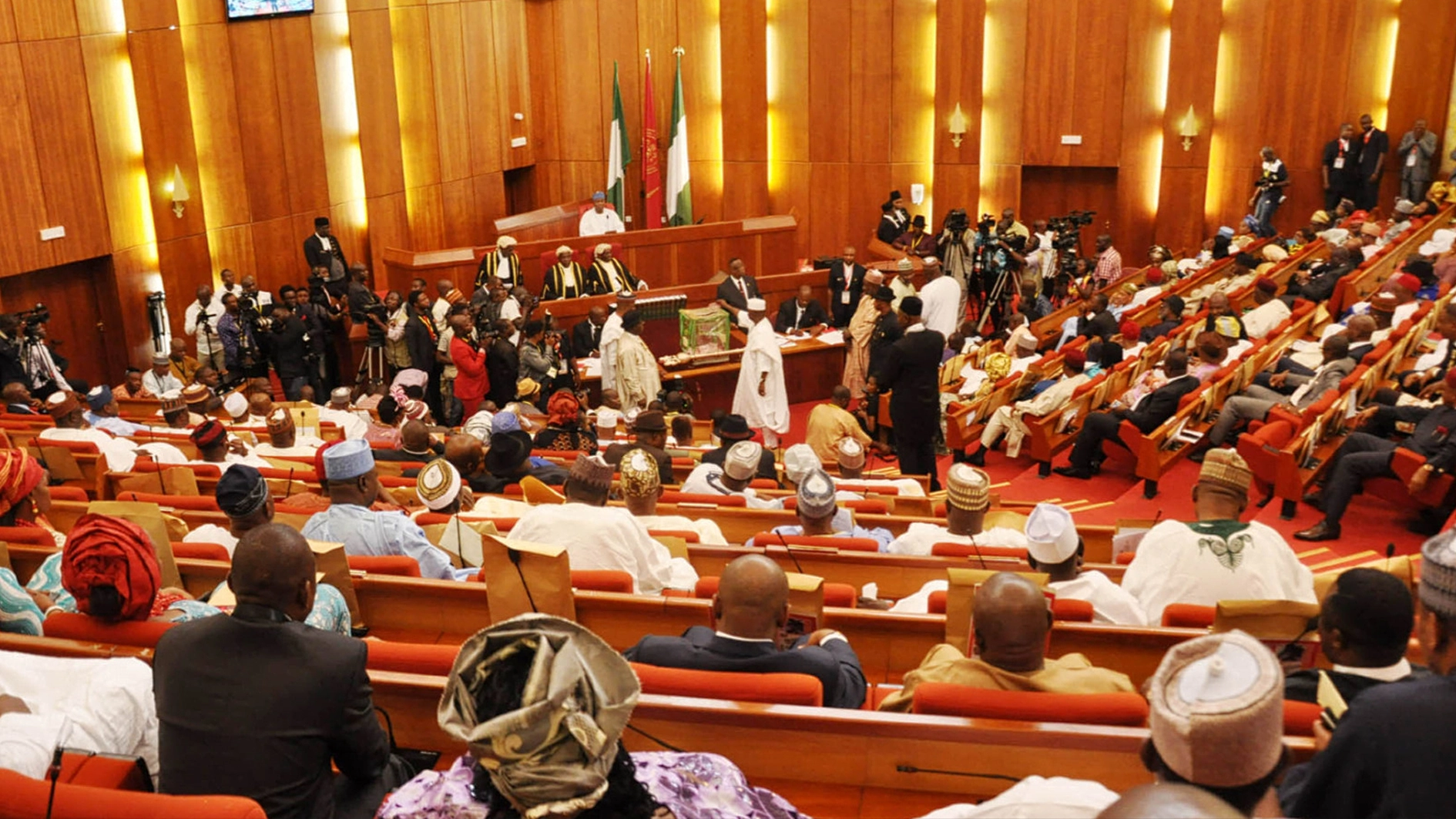
Fresh defections across the National Assembly yesterday signalled deepening realignments within opposition parties, as 17 members of the House of Representatives and three senators switched platforms, citing internal crises, factional disputes and shifting political alliances.
The House of Representatives witnessed a major bloc movement as 17 lawmakers defected from the African Democratic Congress (ADC) to the Nigerian Democratic Congress (NDC) during plenary.
The development followed the exit of prominent opposition figures, including Peter Obi, former governor of Anambra State and 2023 Labour Party presidential candidate, and Rabiu Musa Kwankwaso, former governor of Kano State, from the ADC to the NDC.
During the same plenary, Leke Abejide, representing Yagba Federal Constituency of Kogi State, also announced his defection from the ADC to the All Progressives Congress (APC).
Those who moved to the NDC are Yusuf Datti, Uchenna Okonkwo, Adamu Wakili, Thaddeus Attah, George Ozodinobi, Lilian Orogbu, Oluwaseyi Sowunmi, Peter Aniekwe, Mukhtar Zakari, George Oluwande, Munachim Umezuruike, Emeka Idu, Jesse Onuakalusi, Ifeanyi Uzokwe, Afam Ogene and Abdulhakeem Ado.
Obi said his decision to join the NDC was driven by the need to “rescue Nigeria” from economic and governance challenges. He said the move followed reflection on the state of the nation and its democracy.

“I joined the NDC to continue the struggle for a new Nigeria built on justice, competence, accountability, and compassion for the ordinary Nigerian,” he said.
He added that his defection from the ADC reflected concerns about internal crises and litigations within political parties that affect democratic participation.
In the Senate, three lawmakers also announced party switches, citing similar concerns over internal divisions and ideological alignment.
Victor Umeh, senator representing Anambra Central, defected from the ADC to the NDC in a letter read on the floor by Senate President Godswill Akpabio.
Umeh said his decision followed consultations with constituents and stakeholders, pointing to persistent leadership divisions within the ADC.
“I remain committed to making my contributions towards the development of our dear nation, but this time through the NDC,” he stated.
In a related move, Rufai Hanga, senator representing Kano Central, left the New Nigeria Peoples Party (NNPP) for the NDC, citing internal crises, including leadership disputes and conflicting directives that, he said, hindered effective representation.
Hanga said his decision followed consultations with constituents and stakeholders, adding that the NDC aligns with his commitment to good governance and democratic values.
“In view of the above, I respectfully request that this letter be accepted as a formal notice of my defection,” he stated.
In a separate development, Enyinnaya Abaribe announced his resignation from the ADC and immediate move to the Labour Party, citing unresolved leadership crises and legal disputes.
“My decision to resign is effective immediately. Accordingly, I have joined the Labour Party,” Abaribe said.
The wave of defections highlights growing instability within opposition parties as lawmakers reposition ahead of evolving alliances and broader political realignments.
Akpabio jokes ADC ‘dead’ as defections hit Senate
MEANWHILE, Senate President Godswill Akpabio yesterday described the African Democratic Congress as effectively “dead” following the fresh wave of defections by lawmakers to other parties.
Akpabio made the remark while presiding over plenary shortly after the Senate announced the defections.
“Resignation from ADC and declaration for Labour Party. Maybe all those defecting from ADC should just compile everything in one paper and bring it so that we don’t keep announcing, announcing, announcing. Because I think ADC is dead,” he said, drawing reactions in the chamber.
He continued in a lighter tone, questioning the frequency of defections by lawmakers.
“How many times can you defect in a month? Once. But some have done three times,” he said.
The Senate President also suggested a more coordinated system for handling defections, urging lawmakers to submit joint notices rather than individual announcements.
“So that it doesn’t look like a daily ritual. If you are defecting from Labour, you write all of you. If you are moving from ADC, you write all of you. If you are entering NDC, you write all of you,” he added.
ADC says Obi, Kwankwaso’s exit not fatal to 2027 ambition
THE African Democratic Congress has said the exit of Peter Obi and Rabiu Musa Kwankwaso has not derailed its political prospects, despite ongoing reactions within opposition circles.
The party’s National Publicity Secretary, Bolaji Abdullahi, said the departure of the two politicians, though a setback, would not threaten the ADC’s broader objective ahead of the 2027 general elections.
Obi and Kwankwaso, both presidential candidates in 2023, left the ADC for the Nigerian Democratic Congress two days ago.
Speaking on Arise Television last night, Abdullahi said the defections had affected the coalition’s plan to present a single opposition candidate to challenge President Bola Ahmed Tinubu in 2027.
He said the departure of the two politicians was premeditated, adding that Obi was not committed to building the party but sought a special purpose vehicle to pursue his presidential ambition.
He acknowledged the significance of the defections but maintained that they were not fatal to the party’s ambition.
“I will be lying to say it didn’t mean anything. No, these are two significant politicians, frontline politicians in this country. When you lose those two politicians, then you feel that you’ve lost something. But it’s not a mortal blow,” he said.
NDC zones presidential ticket to South, boosting Obi’s 2027 prospects
FORMER Labour Party presidential candidate, Peter Obi, may gain an advantage ahead of the 2027 general election following the decision of the Nigerian Democratic Congress to zone its presidential ticket to the South.
The disclosure was made by Buba Galadima, an ally of former Kano State governor Rabiu Musa Kwankwaso, during an appearance on Channels Television’s Politics Today on Monday.
Galadima said the party had concluded plans to submit its membership register to the Independent National Electoral Commission (INEC) on May 5 or 6 as part of efforts to strengthen its structure ahead of the 2027 elections.
“Once we do that, we are good to go,” he said.
He confirmed that the party had zoned its presidential ticket to the southern region.
“We have zoned the party’s presidential candidature to the South. No missing votes. We’ve zoned it to the South,” he stated.
The decision is expected to improve Obi’s prospects within the party, given his position on power rotation and equitable political representation across regions. Political observers say the arrangement places the former Anambra State governor in a strong position ahead of the party’s presidential primaries.
Galadima, however, said the NDC would not adopt a consensus arrangement, adding that the party would conduct open and credible primaries.
Obi meets U.S. envoy, calls for credible elections after defection to NDC
FORMER Anambra State governor Peter Obi has met with the United States Consul-General, Rick Swart, to discuss credible elections and political space in Nigeria, days after he defected to the Nigerian Democratic Congress.
In a post on X, Obi said the meeting took place yesterday morning in Lagos and focused on strengthening bilateral relations between Nigeria and the United States.
“This morning, in Lagos, I met with the U.S. Consul General, Mr Rick Swart, where we discussed strengthening the bilateral relationship,” he wrote.
“We focused on promoting credible elections in Nigeria, ensuring they are free from interference, and fostering a space where all political parties, especially opposition parties, can thrive and contribute.”
The 2023 Labour Party presidential candidate said discussions also covered trade and business opportunities between both countries. He added that he was accompanied by Adefolaseye Adebomi Adebayo, South-West zonal coordinator of the Obi-Kwankwaso movement.
“The discussion was very productive, and we are hopeful that, moving forward, Nigeria’s elections will be even more credible and transparent,” Obi said.
Obi’s defection driven by political survival, says Ikechukwu
THE Executive Director of Development Specs Academy, Prof Okey Ikechukwu, has described the defection of Peter Obi from the African Democratic Congress to the Nigerian Democratic Congress as a move driven by political survival.
Speaking on Arise Television yesterday, the former Editorial Board member of The Guardian said the development, alongside the political repositioning of Rabiu Musa Kwankwaso, reflects the unintended consequences of earlier assumptions within opposition circles.
According to him, many political actors had expected that leading figures within the ADC would “slug it out” for the party’s presidential ticket, with a consensus candidate eventually emerging. Instead, recent defections have disrupted that expectation and exposed underlying tensions within the party.
Ikechukwu noted that a growing perception had linked the ADC’s internal challenges to Obi’s presence, suggesting that some stakeholders may have adopted a strategy of keeping the party structure fluid until it became difficult for key entrants to exit.
“The thinking, perhaps, was to allow everyone to come in, reach a point where it becomes difficult to leave, and then deploy a strategic move that could sideline certain actors,” he said.
He argued that such manoeuvres may have created conditions in which Obi risked being politically constrained within the party, prompting his decision to seek an alternative platform.
The professor also raised concerns about the future of opposition financing, noting that during the last election cycle, significant support was believed to have come from the South-South, particularly Delta State. He questioned whether such backing would be sustained amid ongoing realignments.
Describing Obi’s latest move as urgent and strategic, Ikechukwu said it reflects what could be termed “running for one’s life” within a competitive political environment.
“As the saying goes, a person fleeing danger does not tire. That captures the urgency of his repositioning,” he added.
He observed that the shift could reshape the dynamics of the 2027 general election, compelling parties such as the All Progressives Congress to reassess their strategies.
Ikechukwu warned, however, that continued fragmentation within the opposition could ultimately benefit the ruling party by splitting votes that might otherwise consolidate behind a single challenger.
He said an alternative path remains possible if opposition leaders embrace dialogue and coalition-building.
“The key question is whether they are willing to subordinate personal ambition to a collective goal. A unified front behind one candidate would present a stronger challenge,” he said.
While acknowledging that a “rainbow coalition” is feasible, he expressed doubts about the willingness of major political actors to commit to such an arrangement.
The don also pointed to internal crises within the ADC, including leadership disputes and court interventions, as factors weakening the party’s capacity to present a credible electoral front.
“Recent developments suggest strategic positioning, but also deep instability. It is increasingly difficult for the party to operate effectively without being weighed down by controversy,” he noted.
On broader opposition efforts, Ikechukwu said earlier consultations and summits had raised hopes of a coordinated strategy, but defections and shifting alliances have since undermined that momentum.
He stressed that, beyond elite negotiations, grassroots mobilisation would be critical to electoral success in 2027.
“Mobilisation at the grassroots has declined in recent years compared with the early 2000s. Without rebuilding that base, even the most well-structured coalition may struggle to convert agreements into votes,” he said.
Rhodes-Vivour reaffirms ADC membership amid opposition defections
FORMER Labour Party governorship candidate in Lagos State, Gbadebo Rhodes-Vivour, has reaffirmed his membership of the African Democratic Congress amid ongoing political realignments and defections within the opposition.
In a statement addressed to Lagos residents and ADC supporters, Rhodes-Vivour acknowledged the turbulence shaping opposition politics, noting that some members have moved to other platforms.
“We are living through a defining moment. Our politics is turbulent, the unity of the opposition is being tested, and for some, it has become necessary to forge different paths. To those who have made the difficult decision to move on to a new platform, I offer my genuine respect and best wishes.
“These are hard choices, made in hard times, and I do not judge anyone for the path they have chosen. We are all fighting for a better Nigeria, even when our roads diverge,” he said.
He, however, said his political loyalty remains with the ADC, describing it as the platform he has invested in and continues to build.
“I want to make it clear that I am staying in the African Democratic Congress. It is the platform we have built, the ground we have fought on, and the vehicle that can take us to victory. It is not because it is the convenient choice, or that the political winds are blowing in our favour, but because of what brought me here and because of what was paid for me to be here,” he stated.
Rhodes-Vivour traced his political journey across parties, saying each transition was driven by conviction rather than convenience.
“My political journey did not begin in comfort. From KOWA, where we built from nothing, to PDP, to Labour Party — every step I have taken has been guided by one thing: conviction. And when those spaces could no longer serve the people honestly, I moved on out of principle. Every political decision I have ever made has been rooted in that principle, not in personal gain,” he said.
He also maintained that he has not compromised with the ruling All Progressives Congress in Lagos State, saying he rejected offers that conflicted with his principles.
“I have never compromised with the APC in Lagos. Not when it was convenient. Not when agreements were put on the table. Not when billions were placed before me. I walked away then, and I would walk away again. That is who I am,” he added.
The former governorship candidate said political success in Nigeria requires organisation, discipline and grassroots strength, particularly in defending electoral mandates.
“If you want to protect the people’s mandate, you must have the strength to defend it from the polling unit to the collation centre. Because those who want to take what belongs to the people will not do so with arguments. They will do so with force. And you must be organised enough, rooted enough, and ready enough to meet that,” he said.

