 Follow Us on Google News


 Follow Us on Google Discover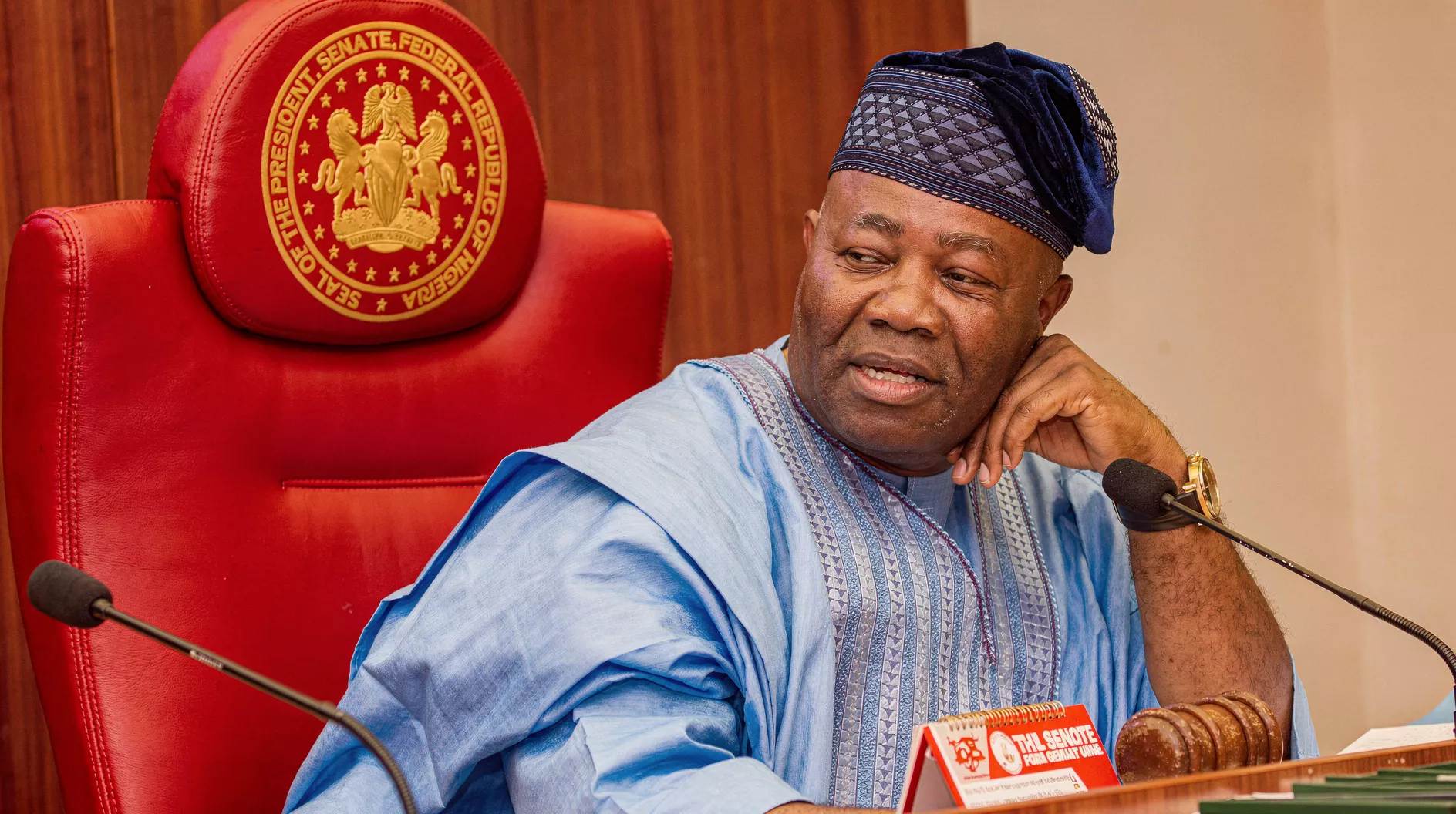
•As SCI says 28m children lack access to education
Senate President, Godswill Akpabio, has warned that Nigeria is approaching a severe food crisis, citing a United Nations projection that as many as 35 million Nigerians could face hunger in 2026 if urgent interventions are not implemented.
Akpabio’s warning came just as Save the Children International (SCI) declared that more than 28 million Nigerian children and adolescents lacked access to formal schooling or digital learning
Akpabio, speaking at the resumption of plenary after the Christmas and New Year recess, described the 35 million projection as a sobering reminder of the human cost of economic instability, insecurity, and weak food systems, urging lawmakers to treat food security as a national emergency.
According to him, the warning underscores the need for intensified legislative action to strengthen agricultural productivity, protect vulnerable populations, and ensure that no Nigerian is abandoned to hunger. He said Nigerians had shown resilience despite mounting pressures, adapting and persevering through enterprise and an enduring belief that tomorrow could be better than today, but stressed that patience must now be matched with responsive leadership.
Beyond the looming hunger crisis, the Senate President acknowledged the persistent challenge of insecurity, extending condolences to families who lost loved ones nationwide. He described security as inseparable from food security, noting that lives, farms, homes, and futures cannot be protected in isolation.
He commended the ongoing military collaboration between Nigeria and the United States in the fight against terrorism. Akpabio also urged senators to remember Nigerians still held in captivity within the country, describing their continued detention as a national wound that compounds economic and humanitarian suffering.

As the political season approaches, he cautioned political actors against actions that could inflame tensions or distract from urgent national priorities.
He called for reform-driven lawmaking focused on unlocking growth, strengthening institutions, restoring confidence in governance, and addressing the structural causes of hunger and poverty.
According to him, history would not judge the Senate by the number of bills passed, but by their impact on citizens’ lives, particularly in confronting hunger, insecurity, and economic vulnerability.
He concluded by reminding senators that their primary assignment remained service to all Nigerians. ON the lack of access to formal schooling or digital learning by 28 million Nigerian children and adolescents, SCI disclosed this in a statement by Badar Musa, the SCI’s Deputy Director, Advocacy Campaigns, Communications and Media.
The statement noted that the nation’s education sector was facing a “crisis of great magnitude,” including insecurity, learning poverty, teacher shortages, low retention rates, and a widening digital divide.It, therefore, called for concerted efforts by stakeholders to address the situation, saying:
“Nigeria’s education sector is facing a ‘crisis of great magnitude’, requiring the concerted efforts of all stakeholders, as more than 28 million Nigerian children and adolescents lack access to formal schooling or digital learning.
“This 2026 International Day of Education, Save the Children Nigeria is calling for stronger government investment in education, full implementation of the safe school declaration, and robust security measures to protect children and their learning environments.”
It further called on stakeholders to “invest in technology, innovation, and digital inclusion, especially as Nigeria’s rapidly growing youth population demands 21st century skills.

