 Follow Us on Google News


 Follow Us on Google Discover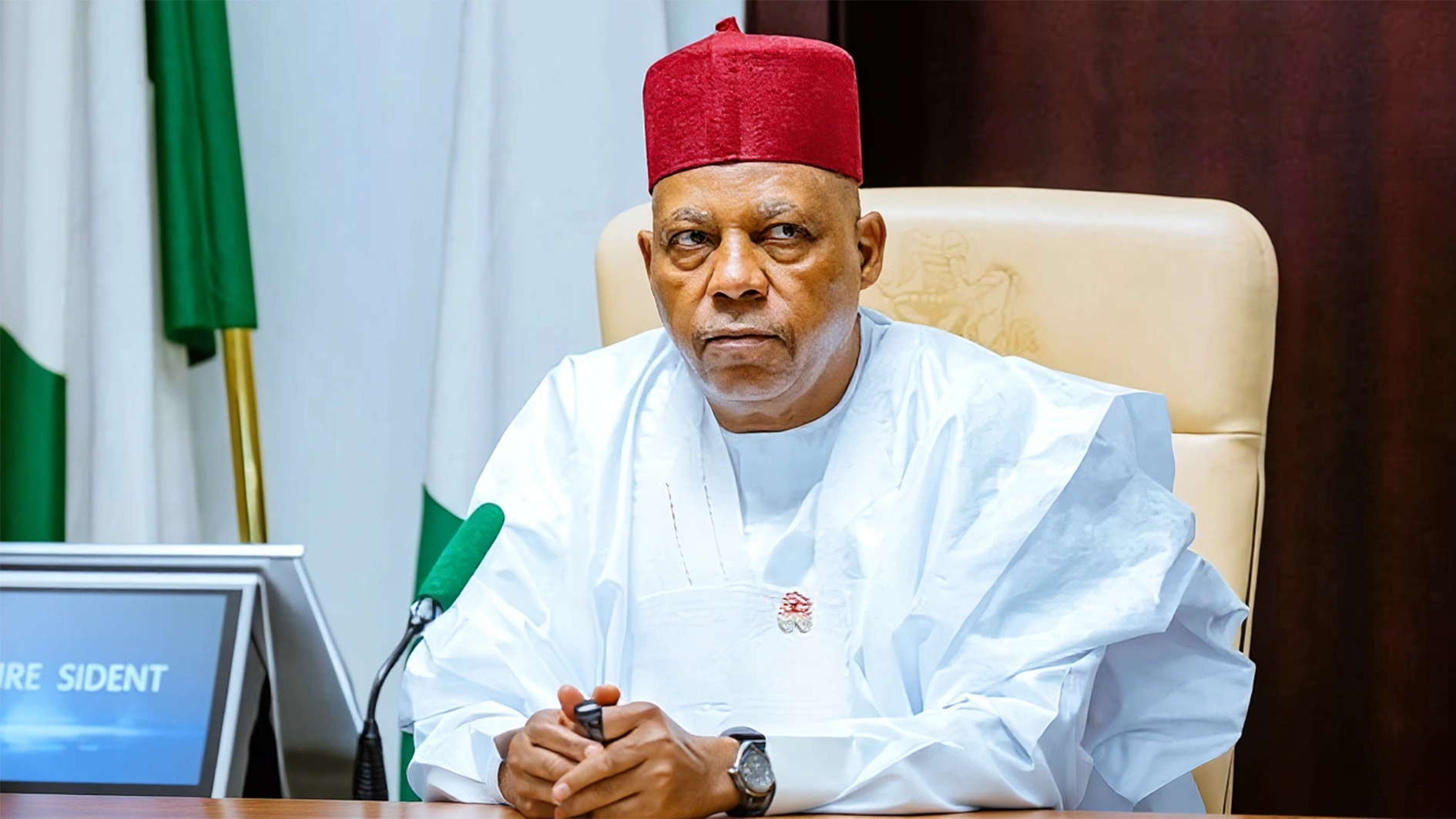
**cites Lagos as blueprint for subnational growth, says reforms aimed at unlocking private capital
***Warns prosperity cannot be built on “illusions” but on productivity and discipline
Vice President Kashim Shettima on Monday said Nigeria’s quest to build a $1 trillion economy will be driven by private enterprise, strategic investments and coordinated reforms across all tiers of government, identifying Lagos State as the clearest example of how subnational leadership can catalyse national transformation.
Speaking at the opening of the Invest Lagos 3.0 Summit at Eko Hotel and Suites, Victoria Island, Lagos, the Vice President said the country’s economic future depends on creating an environment in which businesses can thrive, innovation can flourish and investors can deploy capital with confidence.
Addressing an audience of policymakers, investors, entrepreneurs, development partners and business leaders, Shettima described Lagos as Nigeria’s economic heartbeat and a model for the kind of governance required to achieve sustainable growth.
“Lagos is the livewire of our continent. Lagos is the furnace in which our ideas are tested against the discipline of execution. Lagos is the great doorway through which Nigeria continues to greet the future,” he said.

The Vice President said Lagos had consistently demonstrated that economic progress is attainable when visionary leadership is backed by institutional continuity, policy consistency and private sector confidence.
He traced the state’s economic trajectory to reforms initiated by President Bola Tinubu during his tenure as governor, saying the Lagos model had evolved into a governance tradition that successive administrations have sustained.
“President Bola Ahmed Tinubu planted the tree whose shade has sheltered a succession of leaders committed to futurist ideas, institutional continuity and disciplined governance,” he stated.
He also commended Governor Babajide Sanwo-Olu for consolidating those gains and strengthening Lagos’ appeal as a preferred destination for investment and business expansion.
Referring to the summit’s theme, “Lagos: The Business Gateway to Africa,” Shettima said cities are increasingly shaping global production systems, supply chains, innovation ecosystems and investment flows.
He noted that Lagos continues to attract investors because of its market size, infrastructure, talent pool and access to financial opportunities.
The Vice President used the occasion to defend the Tinubu administration’s economic reforms, saying recent policy decisions were aimed at restoring investor confidence, improving fiscal sustainability and unlocking large-scale private investment.
He acknowledged the short-term pains associated with some of the reforms but insisted that enduring prosperity requires difficult choices.
“We have taken difficult decisions because we understand that the economy of our dream cannot be built on illusions. It must be built on productivity, discipline, competitiveness and the courage to create a climate in which enterprise can breathe,” he said.
Highlighting Nigeria’s long-term prospects, Shettima said the country’s demographic advantage and strategic position under the African Continental Free Trade Area (AfCFTA) provide a strong foundation for industrial expansion and regional competitiveness.
With Nigeria projected to become one of the world’s most populous nations by 2050 and AfCFTA opening access to a market of more than 1.4 billion people, he said the country is well positioned to emerge as Africa’s leading hub for production, logistics, innovation and investment.
He, however, stressed that the Federal Government cannot achieve economic transformation alone, urging stronger collaboration among federal and state governments, development institutions and the private sector.
Earlier, Lagos State Governor Babajide Sanwo-Olu said the summit reaffirmed Lagos’ status as an investment-ready destination and a gateway through which investors can access opportunities across critical sectors of the Nigerian economy.
He credited President Tinubu with laying the foundation for the modern Lagos economy and praised his continued commitment to accelerating subnational development.
Sanwo-Olu outlined his administration’s achievements in agriculture, healthcare, human capital development, transportation, energy, technology, trade and commerce, assuring investors of a conducive environment for businesses to thrive.
Also speaking, the Minister of Finance and Coordinating Minister of the Economy, Mr Wale Edun, said the Tinubu administration’s reforms were beginning to yield results, with Lagos emerging as a shining example of subnational economic resilience and competitiveness.
He said the Federal Government had, over the past two years, taken bold steps to address structural distortions in the economy, adding that signs of recovery were becoming evident across sectors and states.
In her remarks, Lagos State Commissioner for Commerce, Cooperatives, Trade and Investment, Mrs Folashade Ambrose-Medebem, said the summit underscored Lagos’ readiness for business, partnerships and investments, assuring stakeholders that the state would continue to provide a stable environment for investment.
Secretary-General of the Commonwealth, Shirley Botchwey, described Lagos as a city that justifies its reputation as Africa’s business gateway.
“While Lagos is setting the pace in technology, culture and enterprise, it is not merely a city of potential but a city of proof,” she said.
Chairman of the Commonwealth Enterprise and Investment Council, Lord Marland, called for pragmatic leadership amid growing global economic, environmental and health challenges, saying Nigeria’s leadership had shown determination in navigating difficult realities.
Representing the President of Afreximbank, Dr Gainmore Zanamwe reaffirmed the bank’s commitment to supporting viable investments in Lagos and Nigeria, citing confidence in the country’s capacity to power Africa’s next phase of trade and economic leadership.
Secretary-General of the AfCFTA Secretariat, Mr Wamkele Mene, said Africa’s future growth would depend largely on collaboration, infrastructure investments and support for entrepreneurship, adding that Lagos was strategically positioned to help realise the continent’s economic aspirations.
The opening session also featured a fireside conversation involving Governors Caleb Mutfwang of Plateau State, Abdullahi Sule of Nasarawa State, Hope Uzodimma of Imo State, Babajide Sanwo-Olu of Lagos State, and Alex Otti of Abia State on the role of subnational governments in driving investment-led growth.

