 Follow Us on Google News
 Follow Us on Google Discover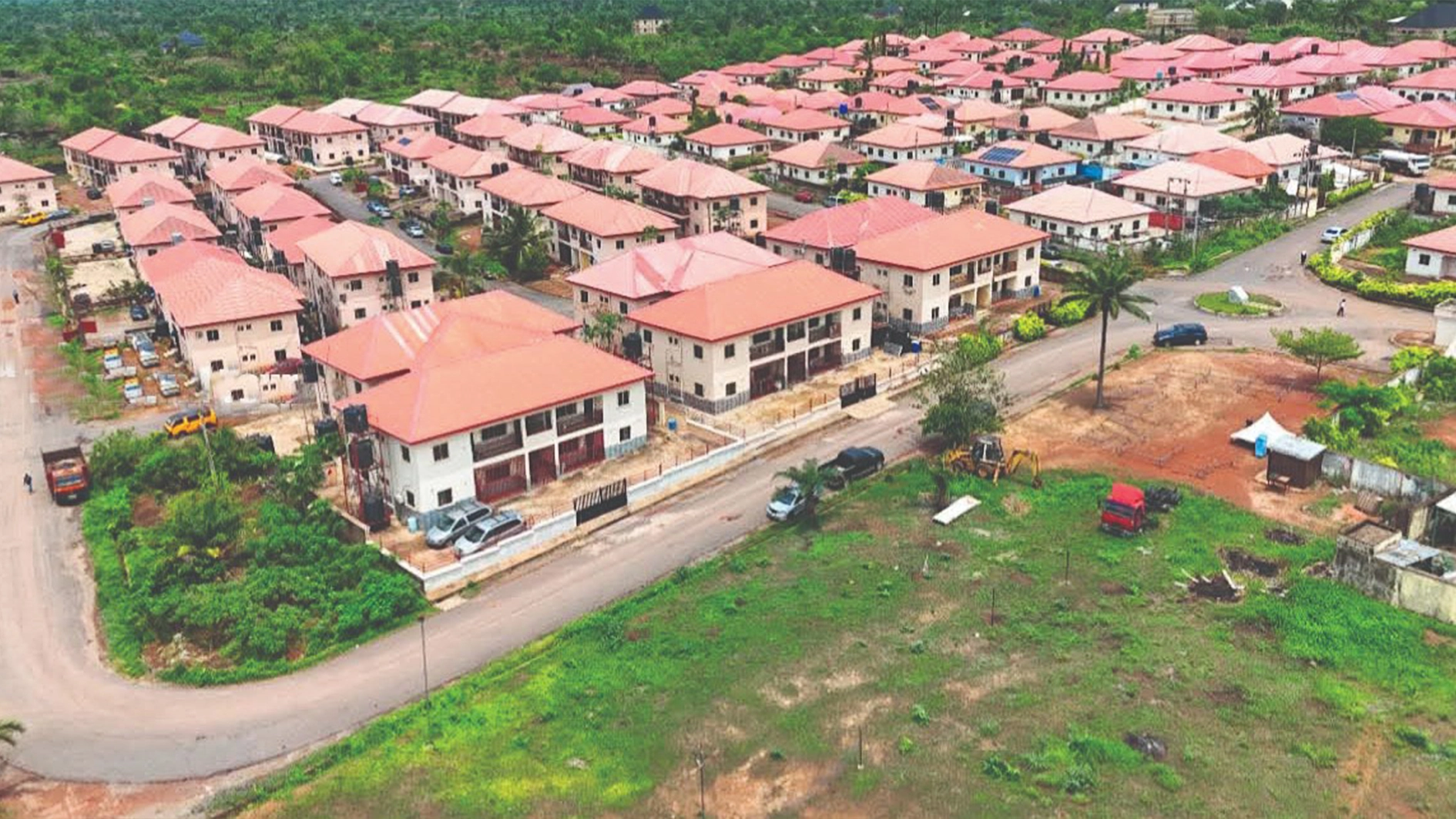
Even with over N322 billion allocated to the housing sector in three years, access to housing has remained elusive in the South-East, as the governments have been unable to provide affordable housing for residents, LAWRENCE NJOKU reports.
On Saturday, July 11, several rent-paying residents of Enugu State held a peaceful protest at Michael Okpara Square against landlords and agents over unfair practices, illegal fees, and housing-related exploitation in the state.
The protest, which was at the behest of ‘Make Everyone Great Again (MEGA)’, was aimed at forcing a regulation of housing fees in the state, as the organisers reasoned that “residents deserve fair housing fees” rather than the current practice that has made housing almost unaffordable to the average person in the state.
From Michael Okpara Square, the aggrieved residents marched through the city with their placards, insisting that it was becoming increasingly difficult to afford decent accommodation in the state without paying exorbitant fees. They asked the government to intervene and solve the housing crisis in the state.
They further lamented the near-absence of low-cost/mass housing in the state, insisting that had the government given priority to constructing housing for low-income earners, the ugly situation would have been addressed when it was still fledgling.
Indeed, low-cost/mass housing has become a major challenge for residents of the South-East. Despite state governments’ yearly budgets for the housing sector, not much has been done to solve the problem.

Rents in the region have continued to surge, with two-bedroom apartments in prime locations jumping to as much as N1.3 million yearly.
Civil servants and low-income earners are worse off because of the increase, as the current on-the-ground conditions do not support the substantial allocations the five states have made to the housing sector over the last three years.
For instance, from 2024 to 2026, the five southeastern states of Abia, Enugu, Ebonyi, Imo, and Anambra have budgeted over N322 billion for the housing sector.
A breakdown of the three-year expenditure showed that Enugu State allocated the highest amount – N251 billion; Ebonyi State appropriated N23 billion; Abia State appropriated about N20.78 billion; and Imo State budgeted N18.875 billion, while Anambra State budgeted the least with N6.8 billion. Unfortunately, despite all these, what is on the ground in these states does not justify these huge amounts.
While some states may not have embarked on low-cost housing projects in the past three years, those that have started have not given them the required attention to ensure completion in record time.
According to the Centre for Affordable Housing Finance in Africa (CAHF), Nigeria needs about 700,000 new housing units annually to close its housing deficit, while the South-East would require between 35,000 and 50,000 housing units annually to curb the deficit plaguing its 36 million population.
A state-by-state account of low-cost/mass housing development shows that in Enugu State, the government resettled low-income families displaced by urban slum development at Aguowa and Ugbo Lawrence last year, setting up about 105 blocks of 2-bedroom semi-detached bungalows for them.
While presenting his budget this year, Governor Peter Mbah identified housing as one of the challenges facing residents, especially low-income earners, and promised that his administration would strive to deliver 15,000 mass housing units for civil servants, low-income earners, and middle-income families by the end of 2026. He said his administration would also curb the state’s housing deficit.
He added that the houses would be located at Akpuoga Nike, Ogbeke Nike, in Enugu East Local Council and Agbogugu in Awgu Local Council, as well as Owo in Nkanu East Local Council.
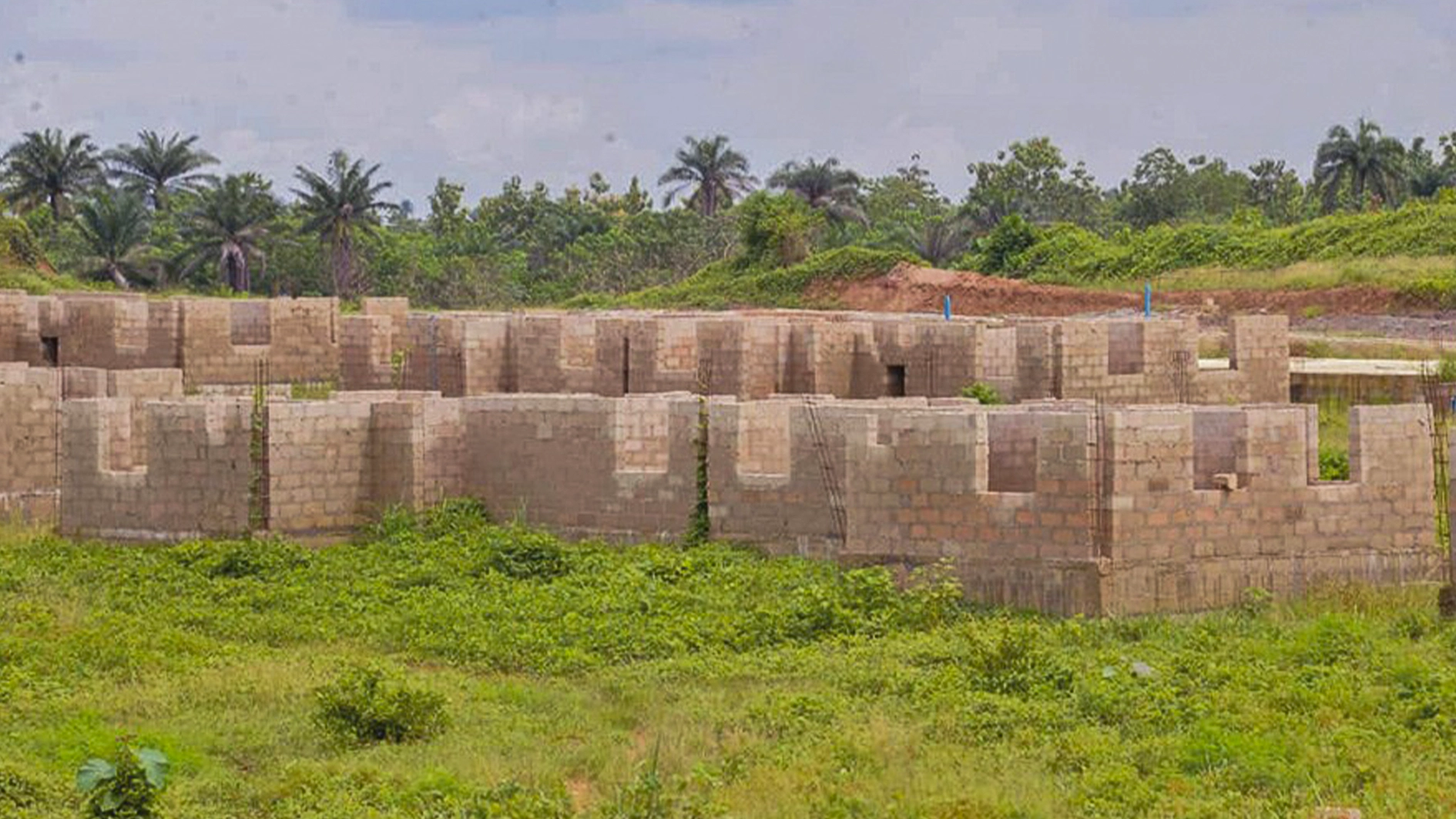
Imo State Governor Hope Uzodinma has not delivered any housing project in the past three years. In fact, he has not delivered any housing projects since he became governor in 2020, despite annual allocations to the sector.
It was gathered that the government announced last year plans to begin massive construction of affordable housing estates in Owerri, with low- and middle-income earners at its epicentre. As it is, however, residents still await the takeoff of the projects after the government has designated certain locations for the mass housing project.
The Ebonyi State government under Governor Francis Nwifuru seems to have continued in the steps of previous administrations of the state in the area of housing projects.
Findings indicated that previous administrations, since the state’s creation, had completed several housing estates, especially for low-income earners and civil servants.
In 2024, Nwifuru built 143 housing units in the state capital, Abakaliki, which he gave to civil servants. This is the highest by the administration so far.
It was followed by 41 housing units for traditional rulers, while several of those displaced by communal crises, especially in the Ezza and Ezeilo regions, have been provided with specialised housing in the state as temporary accommodation.
The state government is also partnering with the Federal Ministry of Housing and Urban Development (FMHUD) to establish the 250-unit Renewed Hope Estate in Abakaliki. The Ebonyi State government provided land for the project, comprising various semi-detached bungalows.
The Abia State government under Dr Alex Otti is more comfortable with fostering partnerships for its low-income and mass housing development in the state. In this direction, the government has partnered with private individuals, the FMHUD, and other agencies to solve the housing needs of the state.
For instance, in 2024, the state government partnered with the FMHUD for the 250-unit Renewed Hope Estate in Bende Local Council. The state government paid fully for the land acquisition.
A visit to the site in June this year, with the Renewed Hope Presidential Media Tour to Abia State, showed that civil and structural works are still ongoing.
However, none of the partnerships initiated by the government has so far completed any housing project in the state.
The state government has cleared and demolished the former Civil Service Commission’s office as well as the defunct Abia Hotels premises, which it parcelled and allocated to contractors to build affordable housing estates for residents of the state.
In April this year, the state government flagged off the construction of 1,200 housing units in Umuahia in partnership with the Federal Housing Authority (FHA) for affordable housing. The government procured the land and has fully paid compensation to its owners.
In Anambra State, none of the initiatives for mass housing by the state government since 2024 has fully materialised. A visible effort to construct 10,000 housing units for low-income earners, tagged the “Civil Servants Housing Scheme”, was made last year.
The scheme is currently at its infrastructural and site preparation phase, an indication that the government is not in a hurry to deliver the project this year.
Apparently perturbed by the housing gap, a consortium of Igbo groups, Igboebinie, recently entered into an agreement to deliver 100,000 housing units across the region within the next 10 years.
The agreement, signed in Enugu, would see the development of mixed housing units in the five states of the region, with Igboebinie and a construction firm – Hand of God Construction Company – providing the resources for the projects.
The promoters of the scheme stated that the ambitious project would also redefine urban development in the South-East and position it as a hub for sustainable, inclusive housing and investment in the coming years.
The five commissioners for land and housing in the region who were present at the signing of the agreement stated that the state governments have keyed into it by allocating substantial parcels of land across their states to support the initiative.
The President of Igboebinie, Mr Chinedu Nsofor, who noted the support of state governors, explained that the project formed part of the broader vision to develop Igboland, driven by unity, innovation, and economic empowerment.
“Ndigbo have all it takes to create massive wealth in Igboland, Nigeria and Africa, thereby ending unemployment, poverty, and insecurity through gainful trade, commerce, education, technology, and a clean environment,” he said
Nsofor explained that the consortium has introduced a novel “zero construction mechanism” designed to reduce costs and ensure affordability across all income levels in the region.
On his part, the Managing Director of the Hand of God Construction Company, David Nwachukwu, added that the partnership was driven by the need to develop innovative, digital-based solutions for housing infrastructure in the region.
“Nigeria’s population is growing rapidly, but the housing sector faces a huge deficit. The South-East needs sustainable solutions to bridge the gap.
“We have engaged with Igbo communities at home and in the diaspora, and there is a strong desire among them to invest back home. This platform provides that opportunity for us to solve a major challenge that is threatening living in the South-East – housing. Our people need to be comfortable to be able to contribute to development meaningfully,” he said.
While stakeholders urge governments in the region to change their attitudes toward tackling the region’s housing needs, they fear that the challenge may persist, given the way and manner in which they fail to initiate and complete a single low-cost housing unit within the year.
“It does not make sense that a government would build a certain number of roads, healthcare centres, among others, in a budget year and fail to invest the same level of effort to set up housing units for the people. This is compounding the problem. Let our leaders take the bold initiative, and the required change would come,” a real estate development consultant, Dr Jude Osundu, stated.
Osundu, who alluded to recent efforts by the Anambra State government to regulate housing costs, stated that toeing similar lines by other governments may not yield the required results because “several persons are chasing a few available houses built by private individuals where the government has failed to provide at the same time.”
The Anambra government is moving to crash housing fees by establishing a new mass housing policy to control skyrocketing rents and enforcing the state’s tenancy law, which caps agent commissions.
The Managing Director of Andex Homes, Great Nwadilor, also spoke of the need for South-East governments to provide free or subsidised land specifically for low- and middle-income housing projects, explaining that housing costs skyrocket when developers provide almost everything, including land, buildings, access roads, and electricity.
“Investing in real estate in the region is capital-intensive. There are high taxes to pay to the ministries and agencies after you have paid heavily to acquire land. You want to put up roads, you pay; you want to put up electricity, you pay, among other inconveniences. There is no investor that would not like to recoup his money after undergoing the stress. So, let our governors review their policies on land to help the sector,” Nwadialor, real estate developer, said.

