 Follow Us on Google News
 Follow Us on Google Discover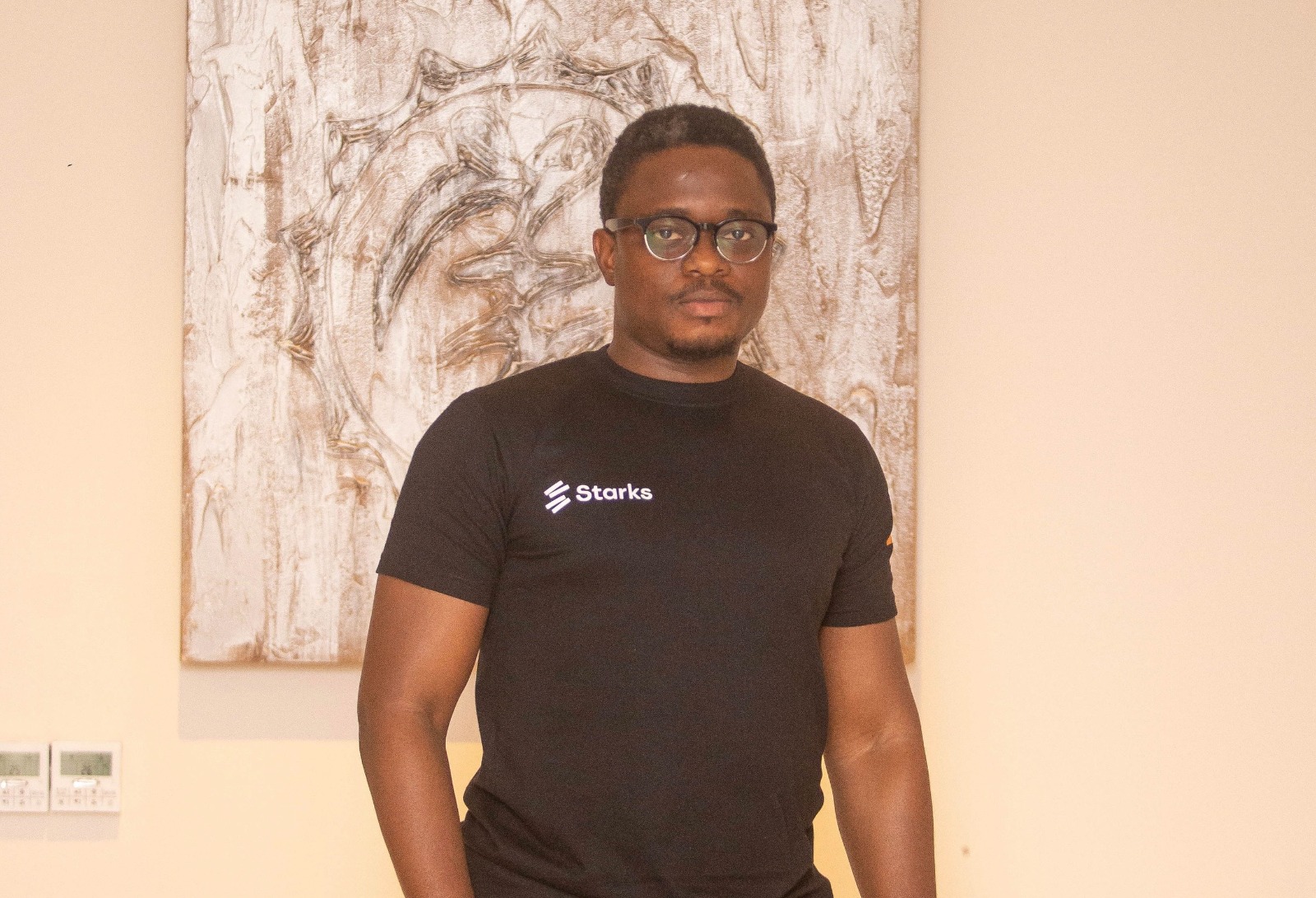
Starks Associates is a liquidity and treasury management company leveraging technology to empower businesses across emerging markets through liquidity provision, multi-currency settlements, and borderless banking services. With Starks Associates, the possibilities are endless for businesses across Africa and beyond who want to trade on a global scale.
In this interview, Oreoluwa Adeyemo, the Co-founder and Executive Director, shares insights on Starks’ vision to empower MSMEs across Africa. Excerpts.
Can you give a brief background as to how Starks Associates started and what the growth trajectory has been since inception?
Starks Associates started in 2022 as a reaction to a very unpleasant experience of our founders during a holiday in Cairo, they found it impossible to get Egyptian Pounds for Nigerian Naira after they realized they didn’t bring along a USD card. On the plane back, both being finance professionals, they resolved to create simpler and cheaper ways to cross African currencies against one another.
Since then, Starks Associates has processed up to US$3 Billion in 5000+ transactions, for over 50 clients, across 18+ jurisdictions and 20+ currency pairs. But that is only proof of concept for us, we are just getting started. We are building an end-to-end chain of finance solutions for corporates doing business in Africa and beyond. We are building Africa’s borderless bank.
What prompted the shift from a treasury service to a full-fledged trade finance company? Was there a defining moment that led to this transformation?
In one phrase, Africa’s stunted growth. We have proven that financial inhibitors in Africa, cross-border treasury in our case, can be dismantled. So why not go a step further to catalyze a shift in how businesses finance, transact, fund, settle and bank intra-African trade and commerce?
Our epiphany came when we decided to see beyond settlements, and tackle the more structural inhibitors to doing business in Africa. First is the historical financing challenge: there is chronically insufficient, highly restrictive, and poorly priced financing available for doing business in Africa. Then there is the sociopolitical border barrier. Our borders simply don’t cross: high tariffs, hostile neighbours, disparate languages, and disjointed policies.
This kind of evolution isn’t easy. What were the biggest hurdles in making this transition, and how did you overcome them?
For us, we are just getting started with our transition so we expect the hurdles to be in front and around us, not behind. The first hurdle we are seeing are policies and regulations. Then, another significant hurdle is buy-in from key stakeholders and gatekeepers. Following that will be repackaging African businesses, players and the entire African case for global financing. Then the last significant barrier is convincing global financiers to fund Africa more.
Trade finance in Africa has significant gaps. What key problems is Starks solving, and how does your approach differ from traditional financial institutions?
For any problem as complex, widespread, chronic, sticky and cyclical as the malaise plaguing African trade finance, there are many sides that one has to address simultaneously to be successful. For example, one has to make African business and trade more bankable, while convincing financiers to adopt new approaches to trade financing. One also has to convince regulators of compliance and stability, while at the same time convincing backers and partners to wade in untested murky waters.
Our multifaceted approach makes us different from all other groups of stakeholders in the ecosystem, and at the same time creates a common platform for ecosystem-wide engagement.
Access to finance remains a major challenge for businesses. How exactly does Starks bridge this gap, and what financing solutions do you offer?
In a nutshell, we want to make it easier for African MSMEs to access suitable, sufficient & sustainable financing. For us, that means facilitating alternative financing that does not rely on traditional financing models, anchoring requirements, credit scoring, and unfair collateralization.
We offer financing for Payables, Receivables & Invoices, Trade-based Multilaterals, and Supply-chains. But beyond this, we are creating solutions that allow accredited bodies to aggregate and repackage trade assets and/or derivatives into pools and securities that private, impact and institutional financiers can confidently buy into.
Beyond financing, we also offer Banking as a Service (the ability to open accounts and hold balances in multiple currencies), as well as Embedded FInance (collections in African currencies, and disbursement to endpoints denominated in African currencies).
This end-to-end integrated and multifaceted suite of solutions is why we can say We Are Building Africa’s Borderless Bank.
Cross-border transactions in Africa come with regulatory hurdles and currency volatility. How does your platform help businesses navigate these challenges?
As already mentioned earlier, regulatory hurdles required for market access in some jurisdictions are very steep. But we have learnt to work with licensed partners across multiple jurisdictions to fix this challenge while acquiring licenses in strategic countries for a more robust standing. This mix and match approach helps us remain cheaper and more agile than banks and fintechs.We also offer spot and near-instant settlements on all currency pairs. That helps our clients manage currency volatility. We also have hedging solutions (through partners) that can help businesses further insulate their liquidity positions against volatility for longer.
With the African Continental Free Trade Area (AfCFTA) creating a single market across the continent, how is Starks positioning itself to support businesses in taking full advantage of these new trade opportunities?
We’ve conquered cross-border settlements involving two or more African currencies, that is we can cross two African currencies against one another without using an intermediary currency. We have proprietary systems for intra-African currency conversion ensuring highly-efficient LCY-LCY transactions. This reduces the cost of infra-African trade very significantly, which is crucial for the AfCFTA vision and Africa’s transformation.
Additionally, We want to be able to provide a real-world template for direct exchange and digital disintermediation that AfCFTA can model policies and implementation on. We will accomplish this by creating a platform for ecosystem engagement where the buy-side, their aggregators/anchors, and the sell-side of trade assets (plus ancillary service providers) can list, aggregate, securitize, negotiate, buy and/or sell trade assets (e.g LPOs, Invoices, Cashflow, etc).
Finally, we want to be able to facilitate financing and banking solutions end-to-end for African trade and African financiers. This will continue to make Starks relevant to AfCFTA and Africa in the short, medium, and long run.
How many businesses are actively using Starks today, and can you share a real-world success story that reflects your impact?
Over 50 mid-to-large cap businesses use Starks directly as of today, which means more than 500 MSMEs are indirectly impacted by Starks’ efficiency, network, and proprietary strategies day-to-day.
For real-world success stories, on the LCY-LCY intra-African currency conversions leg, we are a major liquidity partner for PAPSS, unlocking corridors for direct LCY to LCY conversions and liquidity solutions, and PAPSS is the payment infrastructure designed to power AfCTFA. In addition to PAPSS, we have Cadana, Mota Engil, and StartButton, to name a few, who work with Starks for LCY-LCY settlements.
On the more global front, we have Marex, Corpay, dLocal, and Nala, to name a few, relying on us to deliver African LCY liquidity.
Have you formed any strategic partnerships that have been instrumental in driving the company’s success?
Sure. Our network of partners across multiple jurisdictions is crucial to our success. In fact, we consider our strategic partnerships our strongest assets, and we see our ability to make and hone strategic partnerships as our core competency. At our core, we see ourselves as a network of networks, a one-entity ecosystem for doing business in Africa – from African LCY liquidity, to conversions, to settlements, to banking, to collections and payouts.
Our partnerships with PAPSS, Flutterwave, IHS or Crown Agent Bank, is a highlight of how we do business. We foresee the future and make the right partnerships today with that future in mind. We have extensive partnerships with several banks within and outside Africa, and we have a selection of even more strategic partnerships in the works that will further entrench Starks as the go-to financial partner for doing business across Africa and beyond.
Where do you see Africa’s trade finance ecosystem in the next five years, and what role will Starks play in shaping it?
Simply put, we see Africa as the next frontier for global production, commerce and industry. All the factors are there: 22% of the world’s population but only 3% of trade, 2/3 of the world’s arable and uncultivated land, the world’s youngest population, the fastest growing continental economy, and the largest ratio of informal economy.
We want to accelerate Africa’s growth and catalyse the explosion we foresee by making it easier for the 44 million-strong African MSMEs to access suitable, sufficient and sustainable financing. They already contribute half of Africa’s GDP, with highly constrained resources and the most challenging business ecosystem in the world. Imagine what they would do if given the support they need.
By focusing on localized financial innovation and strategic partnerships, Starks is positioned to play a crucial role in advancing Africa’s payment sovereignty and financial aids-to-trade. Specifically, by facilitating highly-integrated, highly-effective pan-African borderless banking and glocal trade finance solutions, we hope to catalyze confluence between policymaking, business deal-making, and financial market-making by being an unprecedented success story.
Once a critical mass of each of these groups of stakeholders buy into the Africa we see, it can be achieved within a very short time.
Fast-forward a decade—what’s your ultimate vision for Starks, and how will you define success?
Success for us in a decade’s time will be that we have brought Africa into its first golden age of growth and transformation, by catalysing unprecedented inflows and productivity. We would have achieved this by being at the epicentre of Africa’s multilayered and multifaceted financial integration within itself and with the rest of the world.
In 10 years’ time, Starks will for all intents and purposes be undisputed as Africa’s borderless bank.

