 Follow Us on Google News
 Follow Us on Google Discover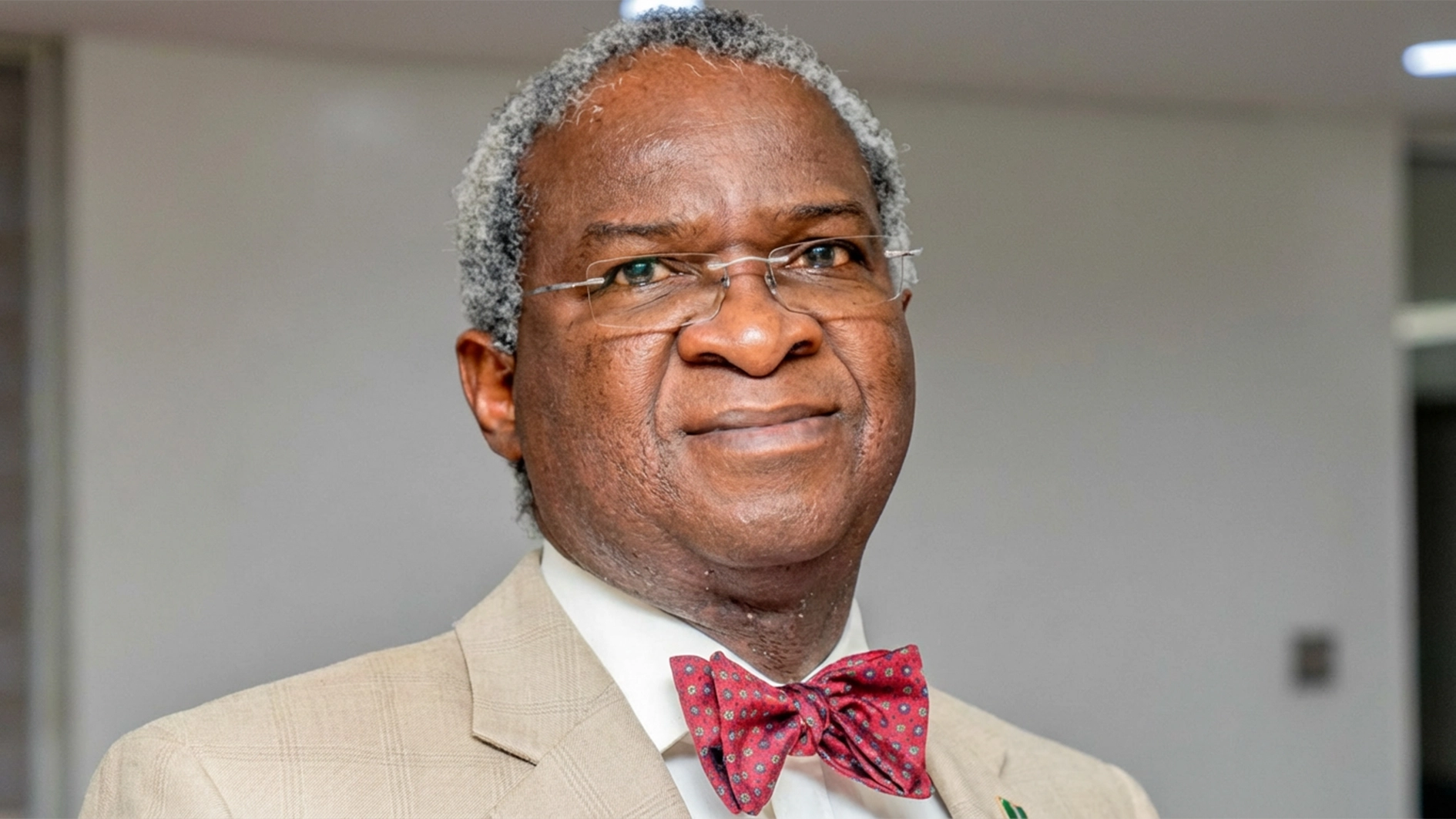
A former Minister of Works and Housing, Babatunde Fashola (SAN), has said that lasting reform and efficiency in Nigeria’s public institutions will only be achieved when strong systems, clear processes and accountability mechanisms are entrenched, rather than dependence on individual performance.
Fashola, represented by a former Rector of Lagos State Polytechnic, Dr Oluremi Olaleye, stated this yesterday, during the second yearly distinguished service lecture series and awards of Yaba College of Technology (YABATECH).
The lecture was themed “Institutional reform and entrenching the culture of excellence in public service.”
The former minister said that no matter how powerful a public office holder might be, whether a director, commissioner or chief executive, such an individual cannot override a well-structured system.
He said strong institutions are designed to correct excesses and ensure due process.
According to him, effective governance is not about having performing leaders alone, but also about building structures that sustain excellence regardless of who is in charge.

“Lagos does not need performing governors; it needs a system where excellence is embedded in the structure such that even if a weak leader emerges, the system will correct itself,” he said.
He stated that every individual within an institution, regardless of rank, plays a critical role in its success or failure, warning that negligence, lateness, and dereliction of duty by even the lowest-ranking staff can undermine the entire system.
He, however, maintained that many of the challenges facing public institutions reflect collective failure, as individuals often contribute to inefficiency while distancing themselves from responsibility.
Fashola, who identified the three key pillars necessary for institutional reform to include structural reform, cultural reform and accountability systems, said that structural reform involves establishing clear rules, processes and procedures that guide operations within institutions.
He, therefore, stressed that all actions must follow due process, regardless of how well-intentioned they may be.
On cultural reform, he said institutions must develop shared values, norms and mindsets that promote discipline, integrity and professionalism across all levels—from entry-level staff to top management.
According to him, when rules are consistently enforced, they evolve into institutional culture, making ethical behaviour the norm rather than the exception.
Fashola further emphasised the importance of accountability and transparency, noting that trust alone is insufficient without verifiable systems.
He advocated the use of measurable standards, audits and technology-driven monitoring tools to track performance and eliminate manipulation.
Olaleye, drawing from his experience in public service, cited the introduction of digital monitoring systems to track staff attendance and performance, noting that technology can help enforce discipline and improve efficiency.
He said that institutional reform must also lead to leadership development and capacity building, stressing that appointments should be based on competence and not sentiment.
He, therefore, urged public servants to embrace integrity and professionalism, noting that sustainable development can only be achieved when institutions are strengthened to function efficiently and independently of individuals.

