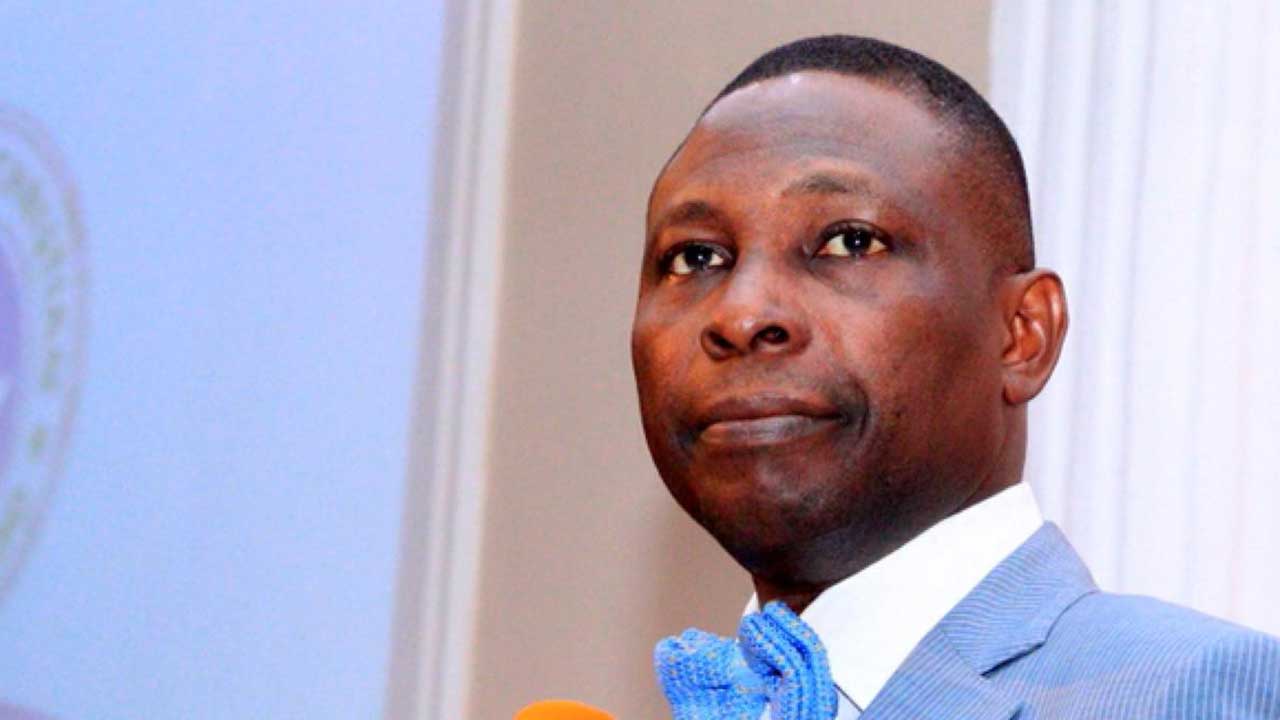
The immediate past Chairman of the Federal Inland Revenue Service (FIRS), Mr Muhammad Nami, has condemned the alleged unauthorised alteration of the Tax Administration Act, advising that the National Assembly should consider passing a resolution for the outright cancellation of the gazetted Tax Administration Acts.
He also advised that the executive should prevail on the FIRS to halt the regulations and information circulars already prepared and ready for release to the public to prevent further damage and confusion in the tax system.
Nami, in a statement made available to newsmen on Monday, said the implication of the unfortunate act by the yet-to-be-identified persons is that the actual legislation passed and signed by the President differed from that which was eventually gazetted.
A member of the House of Representatives, Abdussamad Dasuki (PDP, Sokoto), had, during plenary on Wednesday last week, alleged discrepancies between the versions of the tax laws passed by the House and the copies later gazetted.
According to Nami, “The occurrence of this incident is not only unusual but also regrettable, and calls for a proper and unimpeded investigation, as well as the prosecution of the perpetrators. Those found culpable must be punished accordingly.”
He said the NASS should also consider passing a resolution prevailing on its committee on the review of the alterations to jointly work with the executive team to gazette the actual law passed by the two chambers.
“Sections 4 and 58 of the 1999 Constitution vest law-making power exclusively in the National Assembly,” he noted. “The executive or any person purporting to act on behalf of the executive has no constitutional authority to alter a bill after passage. Any post-passage alteration is ultra vires, unconstitutional, and void to the extent of the alteration. Affected provisions are vulnerable to judicial invalidation, creating legal and fiscal uncertainty.”
Mr Nami further noted that it is disturbing and confusing that someone is calling for a stakeholders’ consultation on a document he said was criminally and arbitrarily altered by a yet-to-be-identified set of individuals.
He, however, does not agree that the entire new tax laws should be discarded, considering the research, investment, and legal process by NASS that have gone into it since 2022, when the process started.
According to the former chief executive of FIRS, “Our best option in this crisis time is to stand firm with the NASS. They are verifiably doing their best to ensure that there is peace in our country; they are working hard to ensure that all efforts and resources invested in the tax reforms project thus far are not wasted, and that, come January 2026, we can implement the new tax provisions that are needed to block leakages in our tax system, generate revenue to fund our economic growth and developmental programmes, fund debt servicing and budget deficits by the government at all levels, initiate social welfare programmes, provide security and build world-class infrastructure, and attract foreign direct investment in our economy.”
He said that numerous provisions in the new tax laws encourage governments at all levels to prioritise taxing prosperity over poverty and fruits over seeds so that SMEs can grow and provide employment opportunities to the youth, ultimately becoming taxpayers in the future.