 Follow Us on Google News
 Follow Us on Google Discover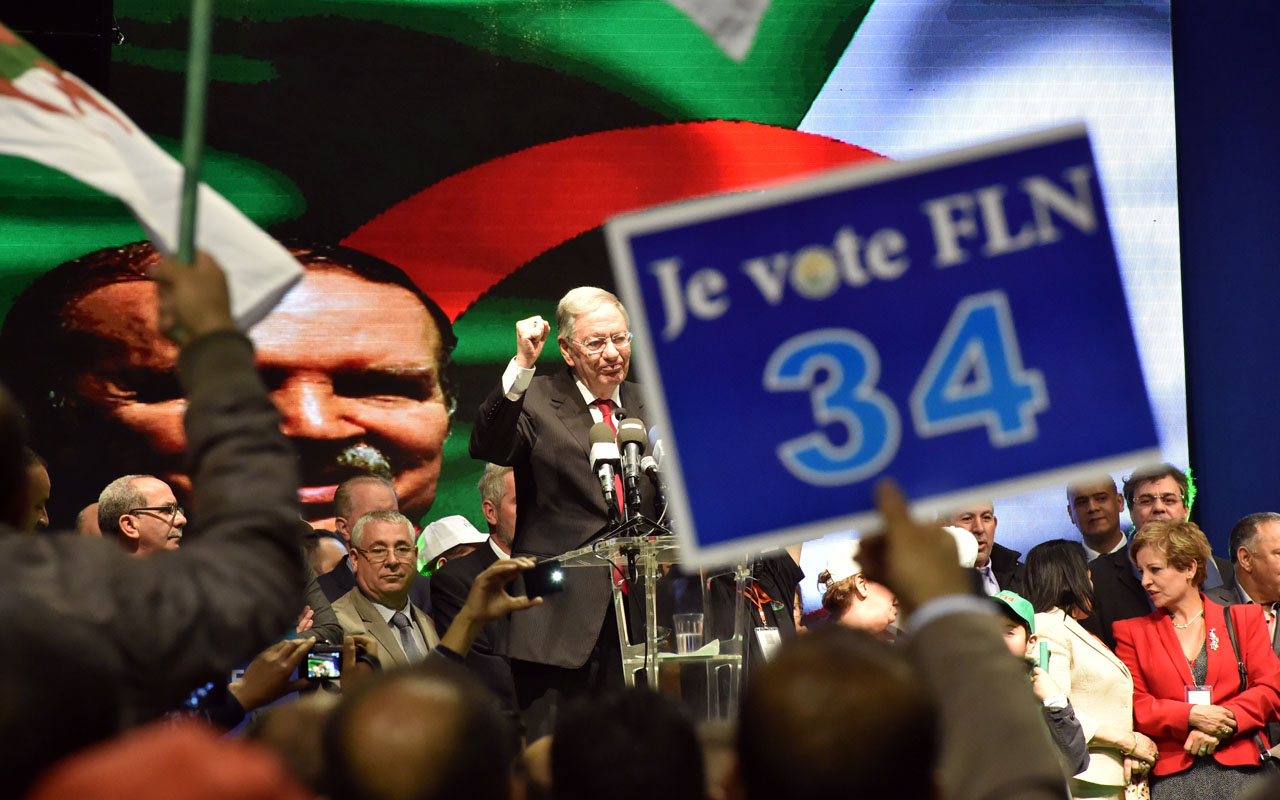

A two-party alliance led by President Abdelaziz Bouteflika’s National Liberation Front dominates Algeria’s parliament.
In Thursday’s legislative poll the alliance will face an Islamist opposition organised in two main coalitions in a bid to regain ground five years since the worst electoral defeat in their history.
– Presidential alliance –
Bouteflika’s National Liberation Front (FLN) and the Rally for National Democracy (RND) led by the president’s chief of staff, Ahmed Ouyahia, together enjoy an absolute majority in parliament, which they are expected to retain.
[ad]
The FLN, which was the main player in Algeria’s long and bloody struggle for independence from France, alone holds 221 of the national assembly’s 462 seats.
– Islamists –
At the last parliamentary election in 2012 following Arab Spring-inspired street protests, Islamist parties hoped they could replicate the gains of their peers in Egypt and Tunisia.
But they suffered their worst ever electoral defeat, winning just 60 seats.
Ahead of this week’s election, the country’s various Islamist parties formed two main coalitions in a bid to regain lost ground.

Three leading Islamist parties — El Binaa, the Front for Justice and Development (FJD) and Ennahda — said in December they were forming a “strategic” alliance for the election.
In early January, the Movement for the Society of Peace (MSP), which has links to the Muslim Brotherhood, and a splinter group, the Front for Change, said they would reunite.
The Rally for Hope in Algeria (TAJ), a new Islamist party led by Islamist former public works minister and fierce Bouteflika supporter Amar Ghoul, could surprise observers by winning a significant number of seats.
– Secular groupings –
The secular Rally for Culture and Democracy (RCD) boycotted legislative elections in 2012. This time around it is hoping to take seats from its rival, the Front of Socialist Forces (FFS) in the latter’s heartland, the mountainous eastern region of Kabylie.
The Workers’ Party (PT) led by Louisa Hanoune, a Trotskyist member of parliament and former presidential candidate, is hoping to add to its 10 seats.
A batch of smaller parties are unlikely to win a significant number of seats because of the nature of Algeria’s list-based electoral system.
[ad]

