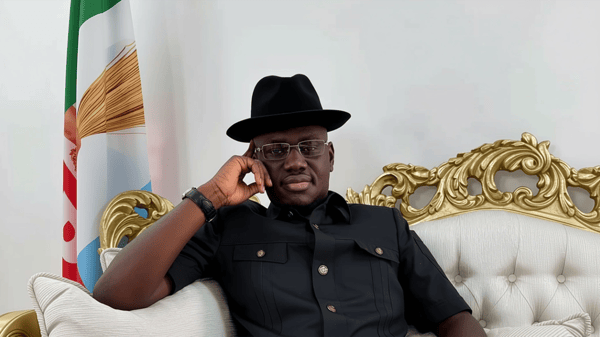
Political activist and former Deputy National Publicity Secretary of the All Progressives Congress (APC), Comrade Timi Frank, criticised the Economic and Financial Crimes Commission (EFCC) on Wednesday, accusing it of neglecting its constitutional duties and acting as a political tool for the ruling party.
Frank called for the resignation of EFCC Chairman Ola Olukoyede, claiming the agency has breached its mandate and brought “shame and disrepute” through selective prosecution. He noted that it has become difficult to distinguish between a commission fighting corruption and one serving the ruling party’s interests.
“We have unfortunately reached a point in our country where it has become difficult to distinguish between a Commission statutorily saddled with the responsibility of fighting economic and financial crimes and one that appears to operate as an arm of the ruling party,” Frank said.
He cited the case of former Delta State Governor Senator Ifeanyi Okowa, who faced corruption allegations while in opposition but went silent after defecting to the APC and receiving a ‘Renewed Hope Ambassador’ position. Frank also mentioned that former governors Okezie Ikpeazu (Abia), Samuel Ortom (Benue), and Ifeanyi Ugwuanyi (Enugu) were invited by the EFCC.
“Senator Ifeanyi Okowa was vigorously pursued while he was in the opposition over allegations of massive corruption,” he said. “Shortly after meeting with the EFCC, he defected to the ruling APC. Since then, the matter appears to have gone silent. Today, he has even been rewarded with a ‘Renewed Hope Ambassador’ position.”
“They had ‘discussions’,” Frank said. “Thereafter, none of these individuals appears to have returned to the Commission, and no meaningful updates have been provided to Nigerians.”
Frank described the handling of the case against former Kogi State Governor Yahaya Bello as “particularly troubling.” He noted that the EFCC Chairman had previously threatened to resign for a lack of freedom in prosecuting Bello. However, after a meeting with the Commission, the case lost its urgency and vigor.
He accused the EFCC of acting as Bello’s defender, emphasizing that the former governor was deemed “innocent until proven guilty” and thus eligible to contest elections. He questioned whether the EFCC Chairman was aware of this constitutional principle when he publicly celebrated allegations against Bello.
Frank challenged the Commission to extend similar public defence to other suspects, including former Attorney-General Abubakar Malami and former CBN Governor Godwin Emefiele. He raised concerns about selective prosecution, asking why these individuals were treated differently, especially when they had not defected to the ruling party.
“The Commission should also do well to act as the spokesperson for other suspects, such as former Attorney-General of the Federation, Abubakar Malami, former CBN Governor, Godwin Emefiele, the Commissioner of Finance, Bauchi State, Yakubu Adamu, and a host of others,” he said.
He urged Nigerians to reconsider the relevance of the EFCC, suggesting it might need to be disbanded to prevent further ridicule of the institution.
Furthermore, he called on the international community to scrutinise the EFCC and impose sanctions on corrupt individuals, asserting that misappropriation of funds meant to combat insecurity has contributed to the nation’s challenges.
Frank alleged that looters of public resources are rewarded with appointments and that confiscated properties are returned to them once they align with the ruling party.
He criticised the EFCC as a “toothless dog,” urging it to clarify the status of unresolved cases and calling on the Chairman to publish related reports for transparency.
He warned that the current leadership would be judged harshly by history, drawing parallels with past chairmen like Ibrahim Magu. Frank concluded by demanding the resignation of the EFCC Chairman, stating that the fight against corruption has become a “show of shame” and that his continued leadership could tarnish the Commission’s legacy.