 Follow Us on Google News
 Follow Us on Google Discover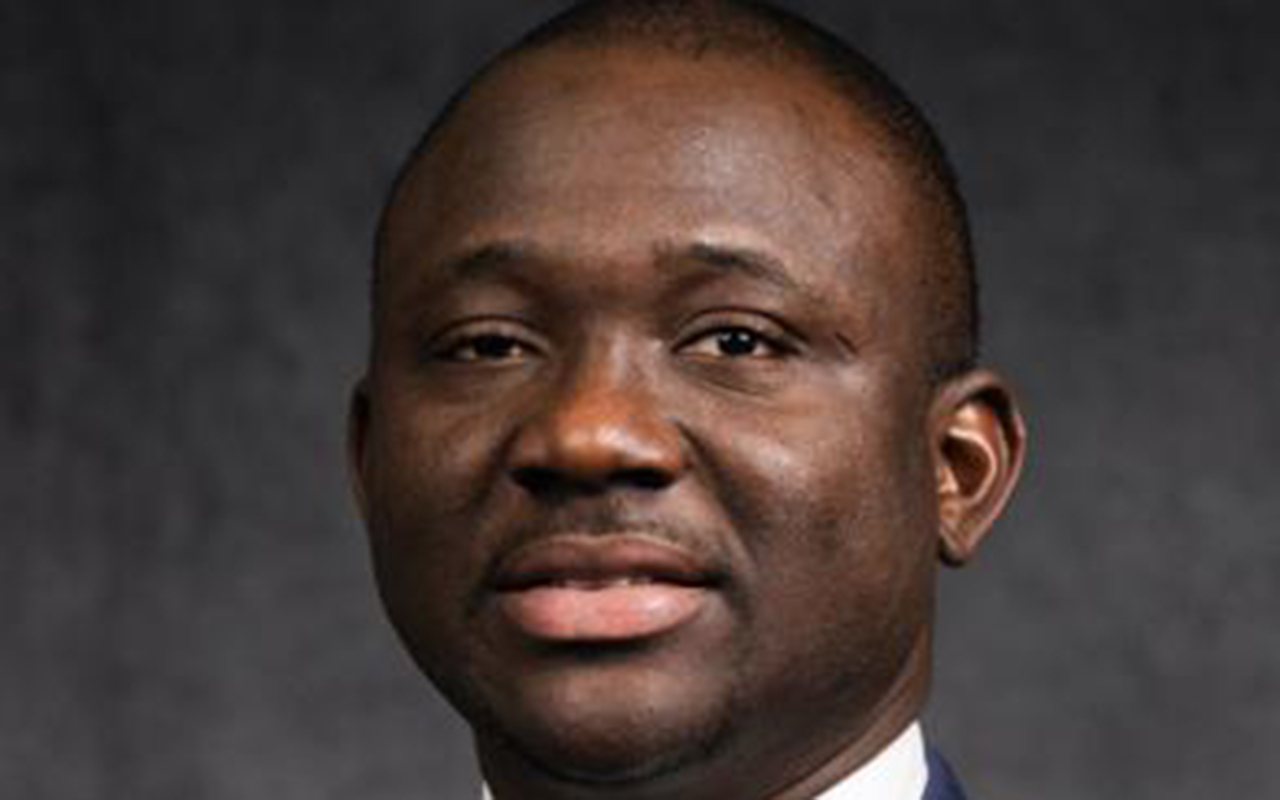
Over the years, Dr. Ibukun Samuel Osunbunmi has positioned himself as one of the leading minds redefining how America approaches engineering education both in practice and in the classroom. As an Assistant Research Professor and Instructional Support Specialist at Penn State University, Dr. Osunbunmi stands at the intersection of engineering education, emerging technology, and faculty development. His unrelenting pursuit of blending artificial intelligence, experiential learning, evidence-based, and inclusive pedagogy, along with assessment, sets him apart as a visionary scholar reshaping U.S. engineering education.
The Engineering Educator: Blending Theory, Technology, and Praxis
Dr. Osunbunmi’s approach is grounded in a simple yet profound idea: educational systems must evolve at the pace of the real-world problems they are training students to solve.
His instructional philosophy merges three axes. First, enhance student learning by integrating emerging technologies such as artificial intelligence (AI) and virtual reality (VR) into the engineering classroom to make learning adaptive, immersive, and industry-relevant. Second, learning should be student-centered, experiential, and grounded in social constructivism. Also, the instructor facilitating the learning process must be intentional in design and skilled in their approach.
He leads institutional and national faculty development efforts aimed at equipping engineering instructors with the requisite pedagogical skills in redesigning their classrooms for inclusiveness, retention, and higher cognition. Third, machine learning models, traditional statistical methods, and other educational research approaches are to be integrated to predict academic success and personalize student learning experience. This integrated, responsive model of engineering instruction has begun to influence faculty and academic units across the country.
One of Dr. Osunbunmi’s hallmark contributions is his work on enhancing engineering pedagogy and learning through the use of Generative Artificial Intelligence and Virtual Reality. His approach is that these emerging technologies should not replace engineering instructors but rather augment pedagogy, aid student exploration, provide contextualized feedback, and enable the visualization of engineering models and components.
In one of his projects, Dr. Osunbunmi led a team of researchers and instructional design in the development of AI literacy academic resources for graduate engineering teaching assistants to equip them with the necessary skills to ethically and responsibly use Artificial Intelligence, both in their role as teaching assistants and as graduate students, thus preparing the future workforce to be career-ready in this AI age. For global impact and dissemination, some of these academic resources were presented during a faculty development session at the recently concluded American Society for Engineering Education Conference, held from June 22 to 25, 2025, in Montreal, Canada.
In addition, Dr. Osunbunmi led a team that utilized machine learning models and explainable artificial intelligence to predict engineering student persistence and help educators identify and support students at risk of dropping out preemptively. Equally groundbreaking is his use of virtual reality to reconstruct physical labs in 3D environments. One such project is a VR application for a machine design course that allows engineering students to experiment with gears, bearings, and kinematic systems, mirroring what they would do in a physical lab that could otherwise cost hundreds of thousands of U.S. dollars. These approaches are known not only to increase student engagement but also to close access gaps for students from rural or under-resourced areas.
Dr. Osunbumi’s research has a Global Relevance with Local Impact
While his immediate academic environment is at Penn State, the ripples of Dr. Osunbunmi’s work extend far beyond the university. His projects have been showcased at the American Association for the Advancement of Science (AAAS), Frontiers in Education (FIE) Conference, American Society for Engineering Education (ASEE), World Engineering Education Forum (WEEF), Institute of Electrical and Electronics Engineers (IEEE) Integrated STEM Education Conference in Princeton University, Rwanda, and Egypt.
In each context, He demonstrates that a technology-enhanced pedagogy, student-centered design, AI, and data-informed pedagogy and curriculum can revolutionize engineering education across borders. Whether building AI-literacy educational models, leading international curriculum reforms, or mentoring doctoral students at the forefront of machine learning applications in engineering education, Dr. Ibukun Osunbunmi is not merely solving problems; he is changing the way problems are taught, understood, and approached with methods as novel as they are necessary.

