United Nations Office on Drugs and Crime, (UNODC), has launched a Compendium of Best Practices in Combating Human Trafficking in Nigeria to promote efficiency in stakeholders’ intervention.
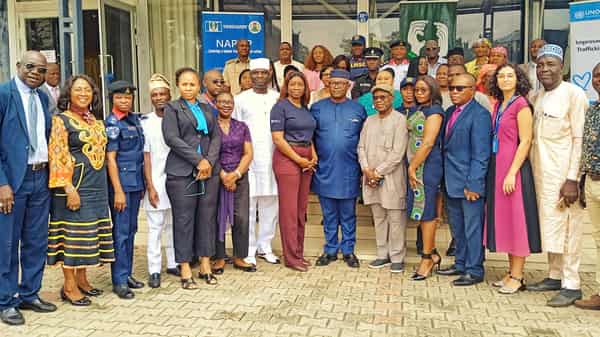
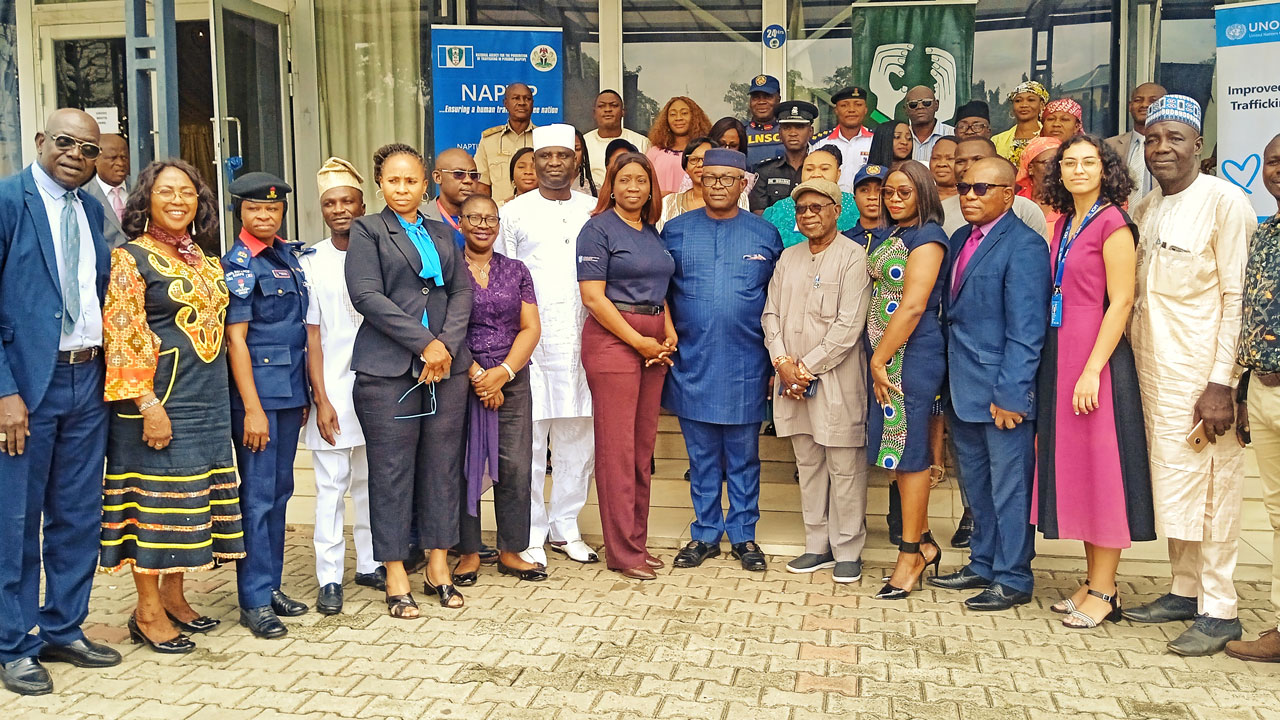
Country Director, UNODC, Oliver Stolpe, announced the launch of the document at the 2023 five-day boot camp for State Task Forces on Human Trafficking and launch of Compendium of Good Practices in commemoration of the World Day Against Trafficking in Persons organised by NAPTIP in partnership with the UNODC, yesterday in Abuja.
He explained that the compendium of good practices serves as a documentation of reference point for all the state task force in their anti-human trafficking efforts.
Represented by the Team Leader, UNODC, Abimbola Adewumi, she said ” Last year we were also able to come up with a compendium of good practices now serves as a documentation of reference point for all the state task force so for this year, we are consolidating what we have started.
“When it comes to the response on human trafficking in Nigeria, we all have agreed that NAPTIP cannot do it all alone as a federal government agency and that is why the concept or the idea of the state task forces also evolved. In the state task forces, we have a combination of law enforcement agencies including traditional rulers, media in some states, Civil Society Organisations, it’s a composition of the different influencers in the red society.”
Director General, National Agency for the Prohibition of Trafficking in Persons, (NAPTIP), Professor Fatima Waziri-Azi, pointed that key outcomes of the boot camps was a significant increase in the participation of law enforcement institutions that make up the state task forces, in the investigation and prosecution of cases.
“One of the main highlights of this boot camp is the launch of the Compendium of Best Practices in Combating Human Trafficking in Nigeria. This comprehensive document, the result of extensive research and case studies from around the country as it serves as a practical guide for our taskforce members, enabling them to leverage proven methodologies and adapt them to their specific localised content.”
“We witnessed a more proactive in the identification, rescue and referral of victims of trafficking leading to a greater number of survivors being provided with necessary support, care and rehabilitation.
“Having published the first Compendium of Best Practices, this boot camp aims at building upon the successes of the previous editions and further equip our task force members with the knowledge and tools necessary to tackle emerging challenges in the fight against human trafficking,” she said.
International Organisations for Migration, (IOM), Nigeria Chief of Mission, Laurent De Boeck, said “World over, trafficking in persons remains a global problem with over 40 million people being trafficked for various forms of exploitation.
“Nigeria is an important locus as a source, transit, and destination country in the trafficking process. Several push and pull factors have been identified as catalysts for TiP.
He adds that “The International Organization for Migration, (IOM), recognizes the critical role of partnerships and coordination to address Trafficking in Persons.
“IOM takes a comprehensive approach to addressing Trafficking in Persons. Advocating for rights, and protecting the physical, mental, and social well-being of individuals and their communities; and promoting sustainability through institutional capacity development and partnerships, are at the Centre of the Organization’s counter-trafficking efforts.”