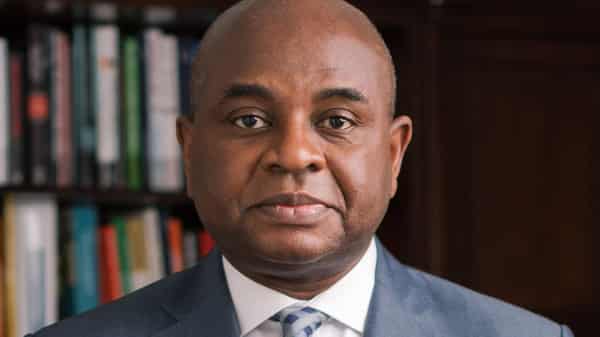
African countries remain largely underdeveloped because the majority of their revenue is used for debt servicing, leaving limited funds for healthcare, education and infrastructure, according to fiscal data cited by former Central Bank of Nigeria deputy governor, Kingsley Moghalu.
In a post referencing a recent report by The Africa Report, Moghalu said that many of Africa’s poorest countries now spend more on servicing debt than on healthcare, education and infrastructure combined.
“Consider this nugget from a @TheAfricaReport news report: “Many of the poorest countries in Africa spend more on debt service than on healthcare, education and infrastructure combined”. Debt is blocking Africa’s development, instead of facilitating it. African countries must borrow less, and spend more wisely and responsibly” he said.
Budgetary data across the continent support this assessment, showing that debt obligations have become a dominant component of public expenditure.
Africa’s external public debt has risen steadily over the past decade, reaching about 656 billion dollars in 2022, representing roughly 28 per cent of the continent’s combined gross domestic product.
Debt service payments have increased alongside this growth. In 2024, African countries were projected to spend close to 90 billion dollars on external debt servicing alone, a sharp rise compared with levels recorded before the COVID-19 pandemic.
Spending patterns indicate a clear fiscal imbalance. Between 2019 and 2023, African governments on average spent several times more on debt service than on infrastructure development.
In at least 15 countries, payments on interest and principal exceeded total infrastructure spending. In more than 25 countries, debt service costs were higher than public spending on health, while in several others they surpassed education budgets.
Nigeria illustrates the pressure debt places on public finances. Federal budget figures show that in 2024, nearly 70 per cent of government revenue was allocated to servicing debt.
This level of expenditure reduced the amount available for social services and capital projects, including hospitals, schools, roads and power infrastructure.
The structure of Africa’s debt has also changed. Commercial borrowing now accounts for a much larger share of external debt than it did two decades ago.
By 2022, commercial loans and eurobonds represented over 40 per cent of Africa’s external debt stock, compared with about a quarter in 2000. These loans typically attract higher interest rates and shorter repayment periods, increasing annual debt service obligations.
Rising global interest rates have further intensified the burden. As borrowing costs increased, African governments faced higher repayment bills on both new and existing debt, particularly on variable-rate and market-based loans. This has reduced fiscal flexibility and increased the share of national budgets devoted to debt servicing.
Debt pressure has also affected social outcomes. In 2023, more than half of Africa’s population lived in countries where government spending on debt service exceeded spending on healthcare. In several countries, funds allocated to education declined in real terms as governments prioritised meeting repayment schedules.
Export earnings data reflect a similar pattern. In 2022, debt servicing absorbed more than 11 per cent of Africa’s export revenues, limiting the ability of governments to use foreign exchange earnings for development-related imports such as medical equipment, educational materials and industrial inputs.