 Follow Us on Google News


 Follow Us on Google Discover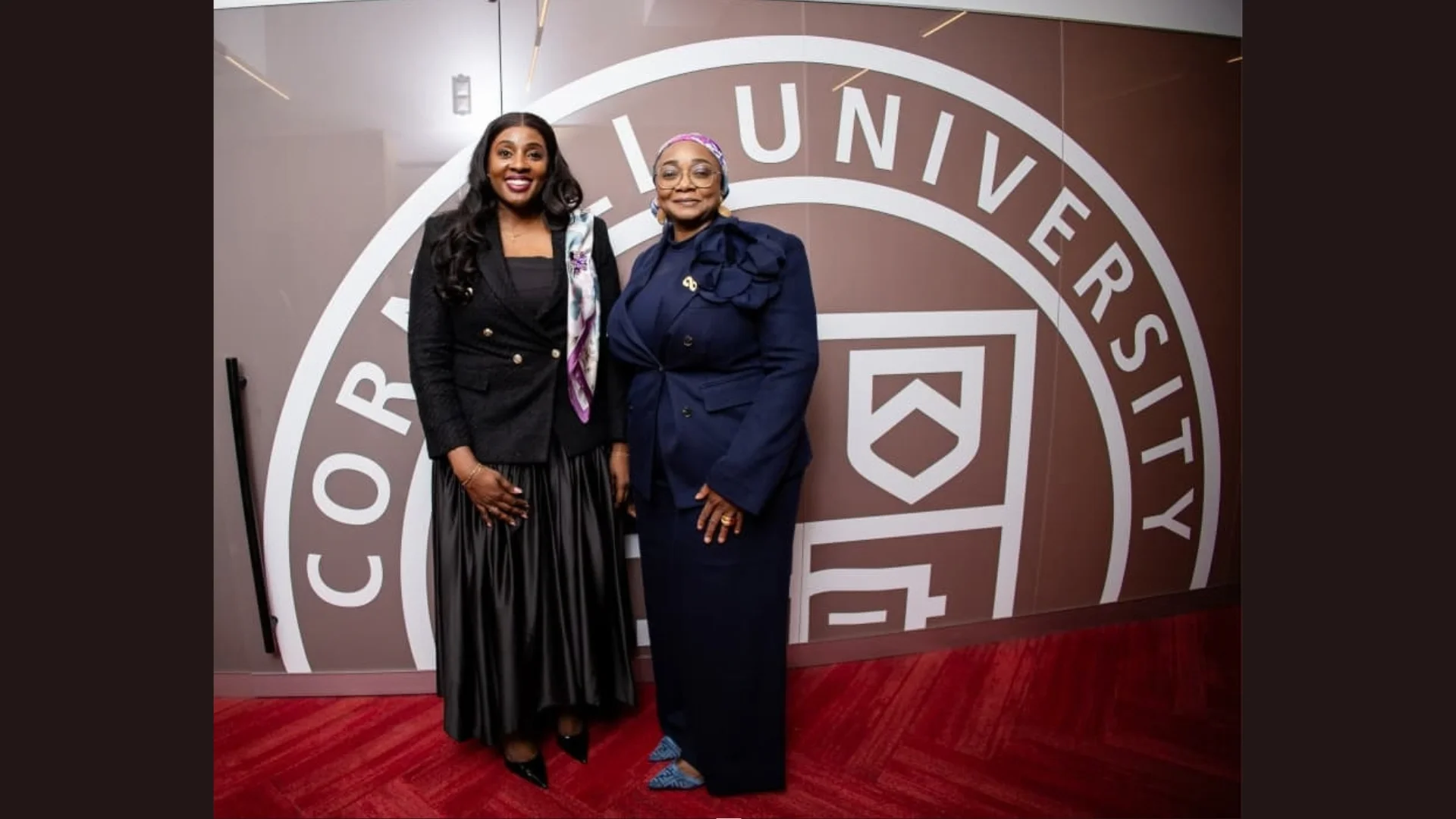
Nigeria’s Minister of Women Affairs, Imaan Sulaiman-Ibrahim, has called for stronger collaboration between government, businesses and development organisations to create pathways for women to participate more extensively in technology, artificial intelligence, financial services, clean energy and other high-value sectors.
Sulaiman-Ibrahim said women’s economic empowerment should move beyond programmes that position women primarily as beneficiaries, arguing that policies should also enable them to become business owners, producers, innovators and participants across major economic value chains.
She spoke in New York on the sidelines of the 81st session of the United Nations General Assembly at an event convened by Vivacity Development.
The programme formed part of a series of events taking place around UNGA 81, whose high-level meetings brought government officials, development institutions, businesses and civil society organisations to New York.
Vivacity Development’s programme focused on “Work, Innovation and Opportunity: Preparing the Next Generation for the Global Economy”, with discussions around skills, investment, innovation and economic opportunities for Africa’s young population.
Addressing participants, Sulaiman-Ibrahim argued that government policies would have greater impact when combined with private-sector expertise, investment and practical skills development.

“We have to put heads together, the government and practitioners, to provide various pathways and entry points for women,” she said.
“Women should not only be beneficiaries of initiatives like clean cooking; they must be empowered to fabricate the technology, own the local skills, and access multi-million dollar credit tools to build real economic power.”
Her remarks highlighted a distinction between women’s participation as consumers or recipients of development programmes and their participation as producers and owners of businesses within the industries those programmes support.
Using clean cooking as an example, the minister argued that expanding women’s access to cleaner energy should be accompanied by opportunities for them to participate in the underlying economic value chain.
That could include acquiring technical skills, establishing businesses, manufacturing or assembling relevant technologies and gaining access to finance.
The same principle, she said, should extend to emerging and high-growth sectors, including technology, artificial intelligence and fintech.
Sulaiman-Ibrahim maintained that government alone could not create those opportunities at the scale required.
She called for greater coordination between policymakers, private-sector operators and development organisations, with government providing enabling policies while businesses and practitioners help translate them into commercially viable opportunities.
The minister also referred to the Federal Government’s efforts to increase women’s participation in public procurement.
She cited a 35 per cent affirmative procurement target intended to expand opportunities for women-owned and women-led enterprises to participate in government contracting.
Greater access to procurement has increasingly formed part of discussions around women’s economic participation because government purchasing can provide businesses with access to substantial markets.
However, achieving such targets depends not only on policy commitments but also on implementation, awareness among women-owned businesses, access to procurement information and the ability of smaller companies to satisfy bidding and compliance requirements.
Convener of the event and Chief Executive Officer of Vivacity Development, Oluwakemi Ann-Melody Areola, said sustainable economic mobility would require stronger coordination among governments, investors and organisations responsible for skills development.
“Building sustainable economic mobility requires more than isolated interventions; it demands intentional alignment between government policy, private capital, and practical skills development,” Areola said.
“Our goal through this platform is to ensure young women and youth are not just included in the conversation, but are equipped to compete and lead in the global marketplace.”
Vivacity Development had positioned its UNGA programme around preparing younger Africans for changes in the global economy, particularly as technology reshapes employment and creates new requirements for skills and entrepreneurship.
The organisation has also used its international engagements to connect discussions about skills development with access to capital and cross-border investment.
Its New York programme came after an Investors Connect event in London earlier in September, which focused on connecting entrepreneurs with investors, mentors and international partnerships.
For Sulaiman-Ibrahim, the challenge is ensuring that policies intended to support women ultimately translate into measurable economic participation.
Her argument places greater emphasis on ownership and productive participation rather than measuring women’s empowerment solely through the number of beneficiaries reached by government or development programmes.
That distinction becomes increasingly important as artificial intelligence, financial technology and the energy transition create new industries and reshape existing ones.
Women who are trained only to consume new technologies risk capturing a relatively small proportion of the economic value those sectors generate.
Creating opportunities for women to develop technology, manufacture equipment, provide professional services, establish companies and secure investment could allow them to participate at more profitable stages of emerging value chains.
Such ambitions, however, require more than policy declarations.
Access to affordable finance, digital and technical skills, reliable infrastructure, markets, mentorship and transparent procurement systems can all affect whether women-owned businesses are able to compete and expand.
The minister’s call for a unified approach therefore places responsibility on several groups.
Government can develop policy and financing frameworks, while private-sector organisations can provide market opportunities, investment, technical knowledge and commercial partnerships. Development organisations can contribute training, research and programmes designed to address barriers to participation.
The challenge is bringing those interventions together rather than allowing them to operate independently.
Across UNGA 81, economic inclusion, technology and investment have featured prominently in discussions concerning Africa’s development. UNDP, for example, has highlighted questions around who owns infrastructure supporting artificial intelligence, who captures economic value from African resources and talent, and how entrepreneurs can gain better access to capital and markets.
For Nigeria, Sulaiman-Ibrahim said women’s participation should form part of that wider economic conversation.
Her proposition is that women should increasingly be considered not simply in terms of how development programmes can assist them, but in terms of what they can own, produce, finance and lead.
Turning that proposition into measurable economic outcomes will depend on whether government policies, private capital and skills-development programmes can create practical routes into the sectors where future economic value is being created.

