 Follow Us on Google News


 Follow Us on Google Discover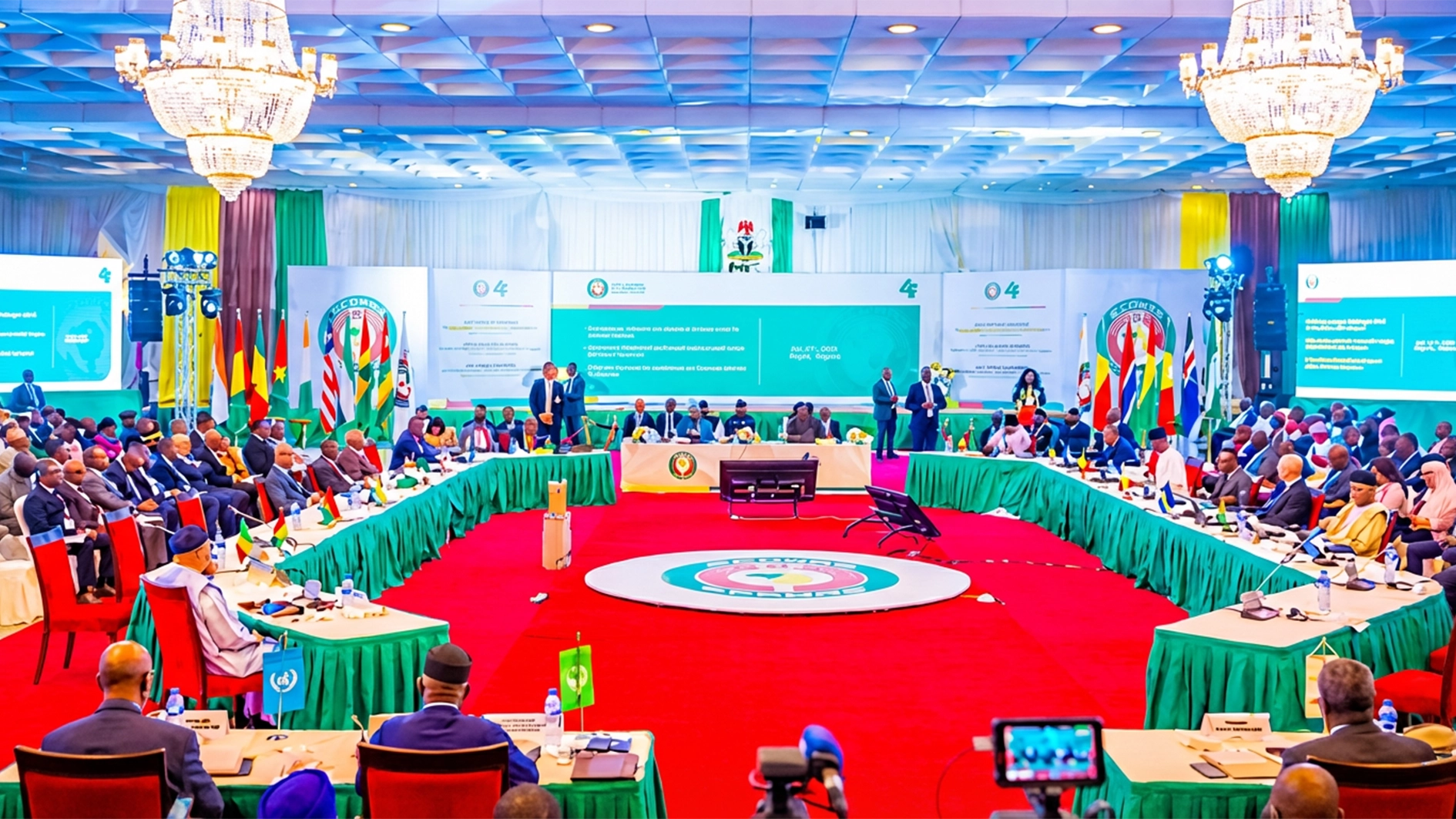
THE Community Court of Justice of the Economic Community of West African States (ECOWAS) has launched an Electronic Case Management System (ECMS) to digitise judicial processes, improve access to justice and enhance the efficiency of case administration across its 15 member states.
The platform was officially unveiled in Abuja yesterday during a ceremony attended by senior ECOWAS officials, judges, diplomats, legal practitioners, civil society organisations and development partners.
The launch marked a major milestone in the court’s digital transformation agenda, replacing largely paper-based procedures with a secure, multilingual online platform for filing, managing and tracking cases.
Designed to automate judicial and registry operations, the ECMS allows electronic filing of cases, digital document management, virtual hearings, electronic notifications and real-time monitoring of proceedings.
It is available in English, French and Portuguese, making it accessible to legal practitioners and litigants throughout the ECOWAS region.
Speaking at the event, President of the ECOWAS Court, Justice Ricardo Cláudio Monteiro Gonçalves, described the launch as a defining moment in the history of the regional court and a significant step towards strengthening access to justice for more than 400 million citizens within the ECOWAS community.

He said the introduction of the platform demonstrated the court’s determination to embrace technology in delivering faster, more transparent and more efficient judicial services.
“We have gathered, in person in Abuja and virtually across the entire ECOWAS region, to mark the beginning of a new era in which technology strengthens access to justice, enhances efficiency and promotes transparency in the administration of justice, for the benefit of over 400 million citizens,” he said.
Justice Gonçalves noted that since its establishment, the ECOWAS Court had remained committed to promoting the rule of law, protecting human rights and ensuring the effective interpretation and application of Community law.
According to him, the court has consistently sought ways to ensure that justice remains independent, impartial, accessible and responsive to the changing realities of the modern world.
He recalled that the COVID-19 pandemic accelerated judicial reforms across the globe, prompting the ECOWAS Court to adopt practical guidelines on electronic case management and virtual hearings.
The experience, he said, demonstrated the need for a permanent digital system capable of sustaining uninterrupted judicial services beyond emergency situations.
“The ECMS is a secure, multilingual, web-based electronic platform that will enable the digital management of all stages of judicial proceedings, from the electronic filing of claims to digital archiving, including case management, electronic notifications, secure communication and real-time monitoring of cases,” he said.
According to the court president, the platform will significantly reduce administrative delays, eliminate unnecessary bureaucracy and improve transparency and institutional accountability.
He explained that lawyers appearing before the court would now be able to submit court processes electronically, monitor the progress of cases remotely and receive notifications online without travelling to the court’s headquarters.
Litigants, he added, would benefit from easier access to judicial services and faster processing of cases, while judges and registry staff would have more efficient tools for managing proceedings and case records.
“Member States will see their confidence in a modern and efficient justice system strengthened; judges will have better tools for case management; and the Court’s Registry will operate with a fully digital and more efficient administration,” he stated.
Justice Gonçalves, however, emphasised that the deployment of technology would not diminish the central role of judges in the administration of justice.
“It is important to bear in mind that digital transformation does not replace the judicial function. Technology is a tool in the service of justice, and the Court’s decisions remain firmly grounded in the law, judicial independence and fairness,” he said.
He disclosed that the ECMS formed one of the strategic priorities of the 2025/2026 judicial year, adding that the court expects at least 80 per cent of legal practitioners appearing before it to register and verify their accounts on the platform within the next six months.
The court is also targeting a drastic reduction in physical filing of cases, with new matters expected to be processed electronically, while its long-term ambition is to establish a fully digital court by 2030 that would serve as a model for regional judicial institutions.
Earlier, Chief Registrar of the ECOWAS Court, Dr Yaouza Ouro-Sama, described the launch as the beginning of a new chapter in the administration of justice across West Africa.
He said the ECMS represented more than a technological innovation, describing it as a transformational project that would strengthen the rule of law and reinforce public confidence in regional judicial institutions.
“With the introduction of this electronic system, we reaffirm our commitment to strengthening the rule of law and ensuring that justice is not only done, but is seen to be done, swiftly, transparently and equitably,” he said.
According to the Chief Registrar, the electronic platform will streamline case management by reducing delays and eliminating administrative bottlenecks that often slow judicial proceedings.
He added that it would provide stakeholders with real-time access to information, bridge geographical barriers to justice and further strengthen regional integration by harmonising judicial processes across ECOWAS member states.
Ouro-Sama noted that the successful deployment of the project was achieved despite administrative, procurement and technical challenges encountered during its implementation.
The Chief Registrar stressed that the value of the ECMS extends beyond the technology itself, insisting that it represents an investment in institutional credibility and public trust.
“As we launch this system today, let us remember that technology is only as powerful as the values it serves. The ECMS is not merely about digital transformation; it is about deepening trust in our institutions, empowering citizens and upholding the principles of justice and equity that lie at the heart of ECOWAS,” he added.
He urged judges, lawyers, civil society organisations and other stakeholders to embrace the platform, expressing confidence that it would leave a lasting legacy for future generations.
“The future of justice in our community begins here, begins now. Together, let us embrace this innovation with optimism and determination, knowing that we are building a legacy of fairness and progress for generations to come,” he said.
Also speaking, Acting Deputy Chief Registrar and ECMS Project Team Manager, Mrs Marie Saine, traced the evolution of the project, saying it emerged from the court’s long-term vision to modernise judicial administration and improve access to justice throughout the region.
She explained that the initiative aligns with ECOWAS Vision 2050 and the court’s Strategic Plan 2026-2030, known as “Justice 2030”, which prioritises greater efficiency in judicial processes, stronger protection of human rights and wider access to justice.
According to her, the project was conceived after recognising the limitations of a paper-based system in a regional court serving multiple countries, languages and legal traditions.
Before the ECMS, filing a case required physical submission of documents at the Registry in Abuja, while tracking proceedings depended largely on manual handling of paper files.
Serving court documents across 15 member states was often expensive, time-consuming and vulnerable to procedural delays.
“The ECMS was conceived to change that, to build a platform that would remove those barriers, reduce delays, cut costs and place this Court where it belongs: within reach of every person in our Community who needs it,” she said.
Saine explained that rather than adopting a generic software package, the court deliberately opted to develop a bespoke platform designed specifically around its Rules of Procedure, multilingual operations and unique judicial processes.
She said every stage of a case, from filing and service of processes to hearings, deliberations and delivery of judgments, was carefully mapped and converted into digital workflows.
The development process, she noted, involved extensive collaboration among judges, registry officials, legal officers, information technology experts and software developers over several years.
She also disclosed that after the completion of system development, the court embarked on extensive stakeholder engagement, training and sensitisation programmes involving legal practitioners from Anglophone, Francophone and Lusophone member states.
Training sessions held in June 2024 introduced users to electronic filing, case tracking and document management, while refresher courses organised between June 22 and 26 this year ensured that users were fully prepared ahead of the official rollout.
According to her, the court recognised from the outset that technology alone could not improve justice delivery unless users were equipped with the necessary knowledge and confidence to maximise its potential.
She said the court therefore invested heavily in capacity building to ensure seamless adoption of the platform across the region.
With the official launch, the ECOWAS Court expects the ECMS to reduce dependence on paper filings, improve judicial performance monitoring, strengthen data security and significantly reduce the time required to process cases.

