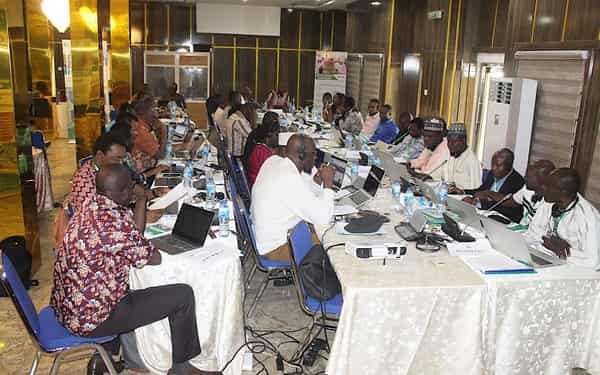
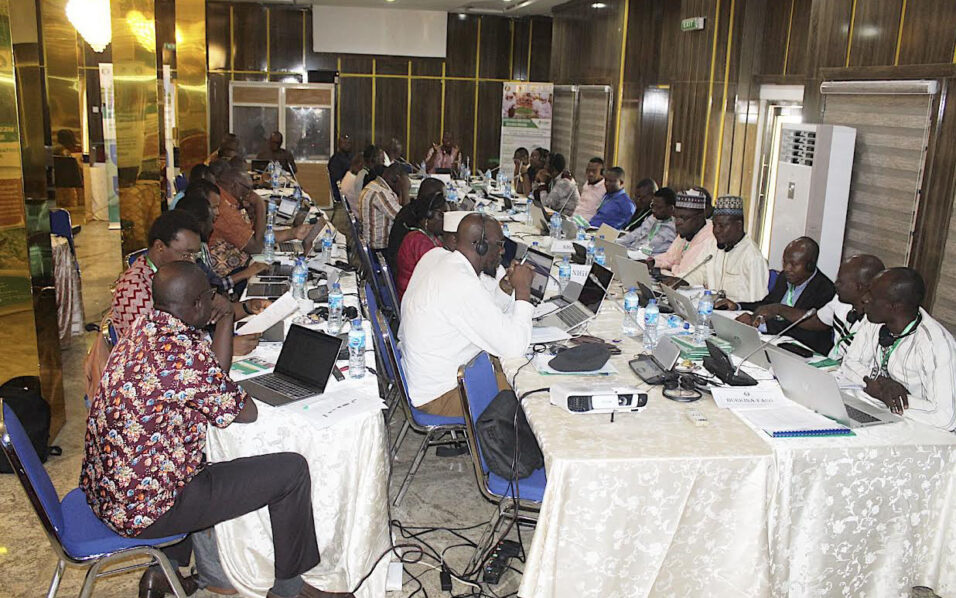
Twenty three stakeholders and partners specialised in agricultural trade and markets in West Africa and Chad have been empowered on data collection and reporting tools for the Economic Community of West African States (ECOWAS) Agricultural Trade and Market SCORECARD (EATM-SCORECARD).
The objective of the EATM-SCORECARD is to assess and track the performance of agricultural trade by member-countries within the ECOWAS sub-region.
The tool also aims to better document intra-regional trade of agri-food products, identify gaps in agri-food trade policies and strengthen the implementation of regional policies by countries
The training which took place in Abuja from February 19 to 22 had participants, from Burkina Faso, Ghana, Mali, Niger, Sierra Leone, Chad and Togo, and partner Organisations CILSS and West African Association for Cross-Border Trade in Agro-forestry-pastoral and Fisheries Products (WACTAF) who were trained on the methodology of the EATM SCORECARD, the data collection process, the type of data to be collected, the data collection and handling platform and the reporting format.
They in turn had the onerous task of training other players in the field in their countries to facilitate the collection and handling.
Director of Trade of the ECOWAS Commission, Dr. Kolawole Sofola said the results generated by the SCORECARD should be used by decision-makers to influence policy reforms for the promotion of intra-regional trade and strengthen policy implementation.
“It is crucial that we recognize the importance of data in policy formulation and decision-making. Accurate and timely data can help governments design appropriate agricultural policies, anticipate food crises, support small-scale farmers, especially women and young people, and promote regional and international trade,” he stated.
Sofola noted that the Abuja meeting is an important phase in the deployment of the SCORECARD in the countries, with the knowledge acquired being put into practice.
“National and regional players have agreed on a timetable to formalize the formation of country teams, to move on to data collection and handling, and to produce country scores before the start of the last quarter of 2024.
“The country scores will provide ECOWAS with a map of the trade of agricultural products in the sub-region so that it can make the necessary corrections and help governments to design appropriate agricultural policies, anticipate food crises, support small-scale farmers, especially women and young people, and promote sub-regional trade,” he added.