The Central African Republic holds presidential, legislative, regional and local elections on Sunday, capping a period of relative calm after years of instability and violence.
Deeply poor despite boasting mineral wealth, the central African country adopted bitcoin as legal tender despite the reservation of traditional banking institutions.
Here are five things to know about the country:
Stabilising after years of war
Since winning independence from France in 1960, the country has endured coups and authoritarian regimes and, from the beginning of the 2010s, civil war between the government and rebels based in the northern regions.
Since 2013, the fighting has claimed thousands of lives and forced nearly a quarter of the country to flee their homes.
French troops under a UN mandate helped the government secure the main cities from 2014.
More recently, the Russian mercenary outfit Wagner and Rwanda lent their support.
Since a peace agreement signed in Khartoum in 2019, the country has moved to a more stable existence, a welcome development in the run-up to the December 28 elections.
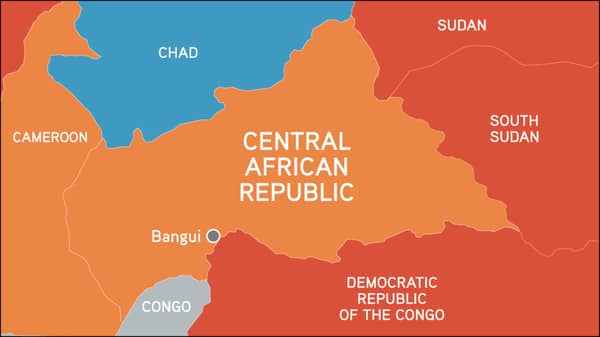
But there is still violence in the east of the country, along the border with the two Sudans — and in the northwest.
As of February, the country was sheltering more than 31,000 Sudanese refugees from the violence there.
And in the southeast of the country, there are regular outbreaks of ethnic violence between Fulani herders and local farmers.
A weak economy and deep poverty
The successive conflicts have stalled the country’s economic development preventing it from profiting from its mineral riches buried underground.
That instability and the poor state of the infrastructure — from pot-holed roads to frequent cuts to water and power supplies — makes it difficult to attract investors.
So too does the high price of fuel, the lack of skilled labour and the patchy internet network.
Despite having 15 million hectares (37 million acres) of farmland, the country has stalled in developing its agriculture and struggles to feed its population.
The World Food Programme says that 31 percent of the population is severely food insecure and more than 68 percent live below the poverty line.
The country is 191 out of 193 on the UN Development Index, ahead of only South Sudan and Somalia.
Coveted mineral wealth
Any number of foreign businesses — from China, France, Rwanda, Russia, the United States — exploit the country’s rich mineral resources, mining everything from wood and gold to lithium and uranium.
To get a better share of that wealth, the government changed the process by which it attributes mining permits and its mining code of practice, which allowed it in 2024 to resume the export of diamonds.
France’s Orano holds the only permit to mine uranium, while Russia’s Wagner has had two major gold mining concessions in the north and forestry rights since deploying there in 2017.
Russian presence
The country is in fact the last bastion the paramilitary group Wagner since it pulled out of Mali. President Faustin-Archange Touadera called them in in 2017 to help his army against the rebels and to train his troops.
They have between 1,500 and 2,000 fighters there, according to informed estimates.
Since the 2023 death of Wagner chief Yevgeny Prigozhin in Russia, Moscow has put increasing pressure on the authorities in Bangui to swap the paramilitary group to the Africa Corps, which has replaced Wagner as its preferred private-sector security outfit.
Crypto currency
In 2022, the Central African Republic became just the second country to adopt the virtual currency bitcoin as legal tender.
The authorities framed it as a means of modernising the economy and an alternative way to finance infrastructure development.
Central banks have expressed concern of the difficulties tracing transactions in the currency, of the high risks regarding fraud and money-laundering and the risk that international criminal networks could gain control of the country’s resources.