Bangladeshi police clashed on Tuesday with thousands of garment workers demanding better wages for the clothing they make for major Western brands, a day after similar protests left at least two people dead.
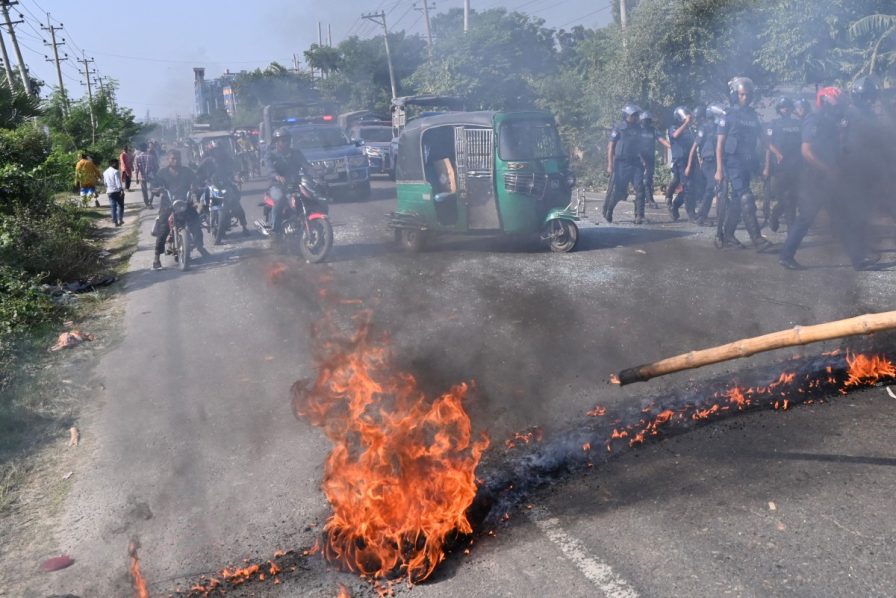
Police said tens of thousands of workers at dozens of factories had launched strikes in Ashulia and Gazipur, the country’s largest industrial city, with authorities firing tear gas and rubber bullets as crowds smashed up factories and blocked roads.
Gazipur alone is home to more than a thousand plants that make clothing for brands such as H&M and Gap.
“Workers hit the streets as their salaries can no longer cover rising food expenses,” said Al Kamran, a senior garment union leader in Ashulia.
Bangladesh is one of the world’s largest garment exporters, with the industry accounting for 85 percent of the South Asian country’s $55 billion in annual exports.
However, conditions are dire for many of its four million apparel workers.
“Some 15,000 of the workers joined protests for a wage hike at separate places in Ashulia,” Mahmud Naser, a deputy police chief of the Ashulia industrial area, told AFP.
Union leader Kamran disputed those figures, reporting some 50,000 workers had downed tools in Ashulia alone, with soaring prices a key driver after some basic foodstuffs doubled in cost from last year.
“Potato now sells at 70 taka ($0.64) per kilogramme and onion sells at 130 taka — last year potato sold for 30 taka per kilogramme and onion sold for 50-60 taka per kilogramme,” Kamran told AFP.
“House rents have also spiked. The only thing that has not increased is salaries.”
Deputy police chief Mahmud said the protesters had torched tyres, broken windows at factories and blocked a key highway connecting the industrial area with the capital Dhaka, prompting police to “fire rubber bullets and tear gas”.
There were no reports of injuries, he said.
The protests erupted early last week, but violence escalated on Monday when tens of thousands left their shifts and staged protests in Gazipur, where a six-storey factory was torched by workers, leading to the death of one labourer.
Another worker was killed during clashes between police and protesters.