As the crisis between America and Venezuela unfolds, legal scholars, diplomats and policy experts warn that the incident exposes the fragility of the rules-based international order and highlights the growing vulnerability of weaker states in a global system increasingly shaped by power rather than law. NGOZI EGENUKA examines the legal, diplomatic and geopolitical implications of the standoff, with particular attention to its consequences for Africa and the wider Global South.
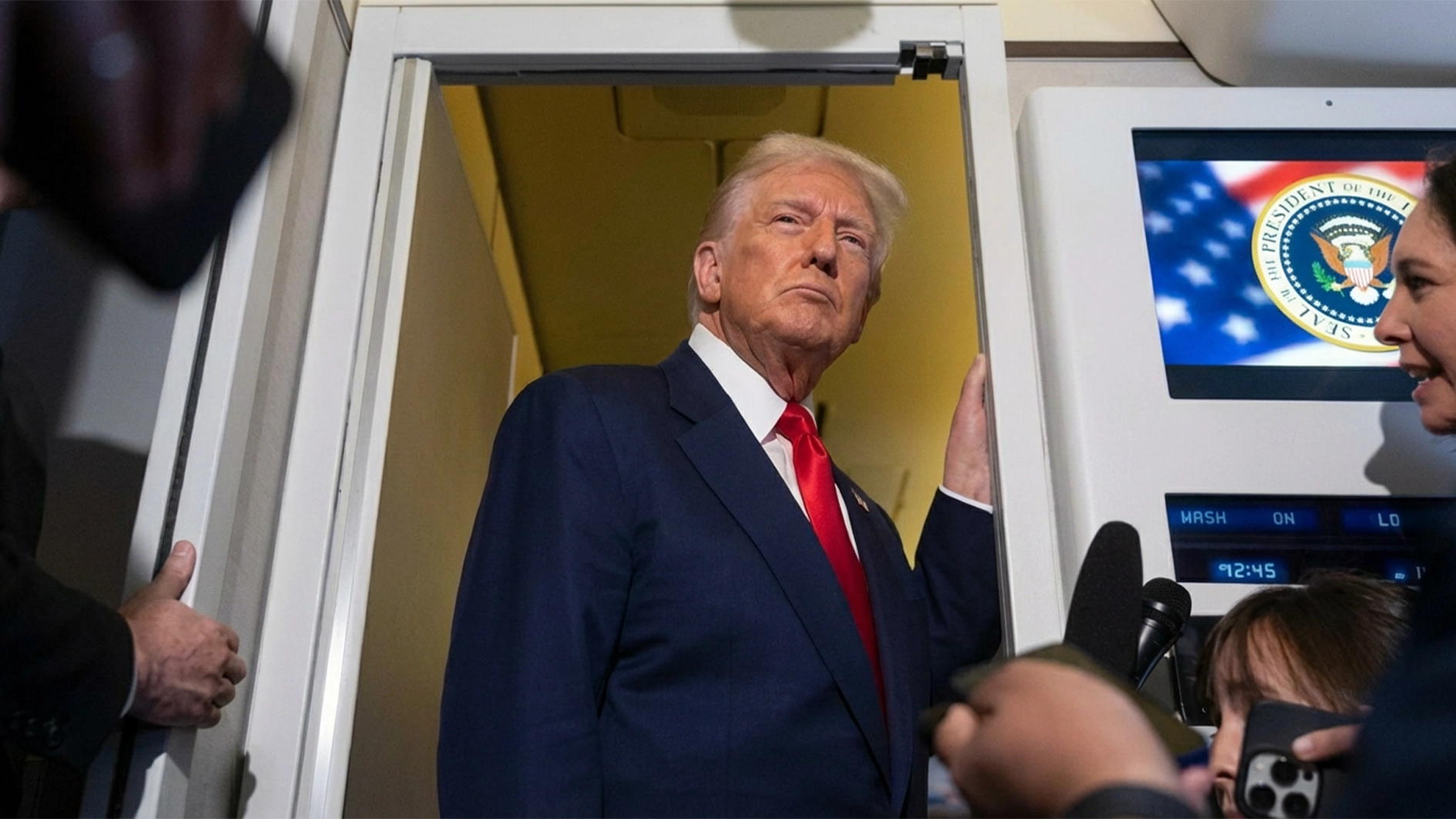
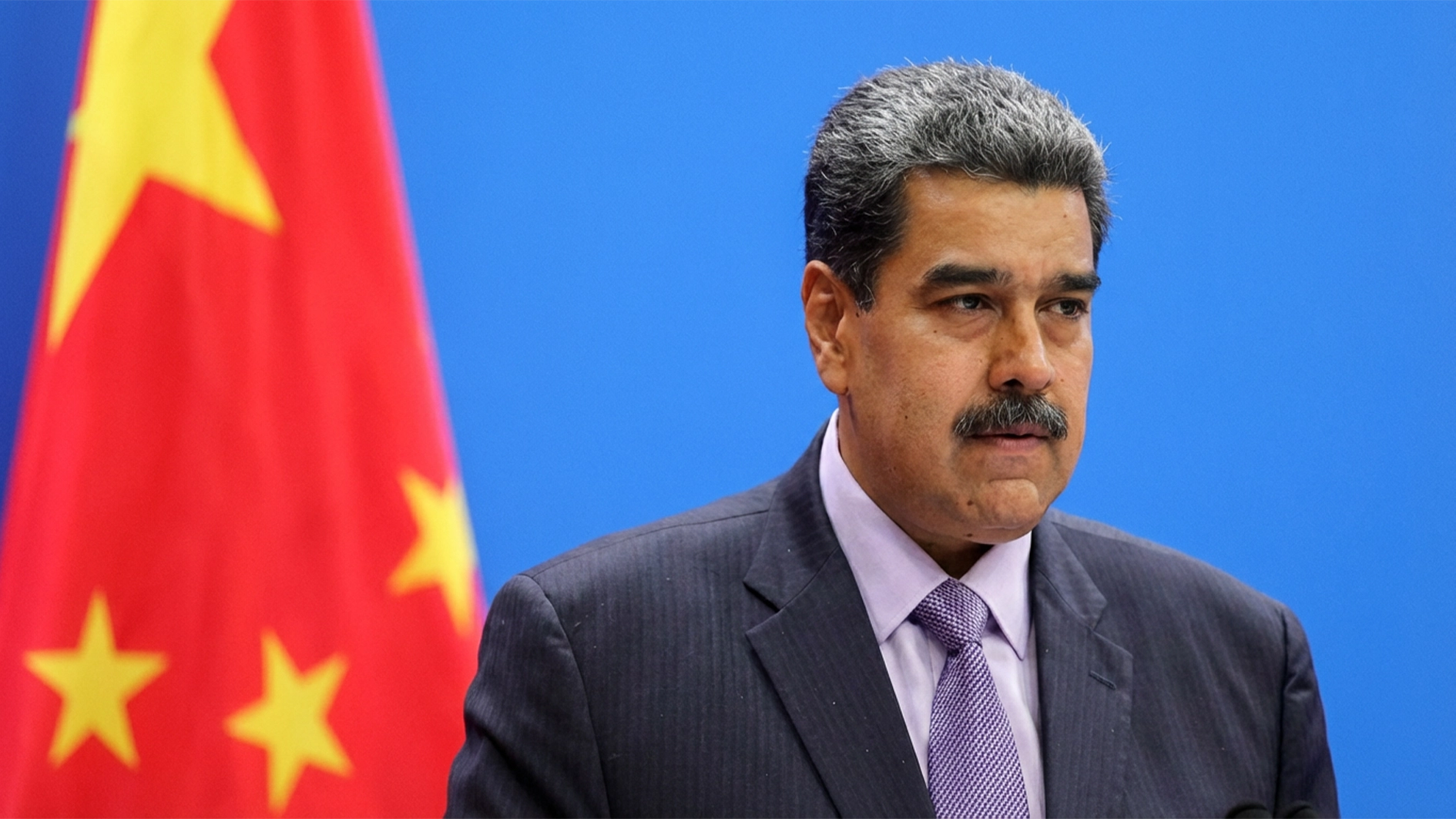
Recent developments in American–Venezuela relations have reignited global concern following Washington’s military operation in Caracas that led to the arrest of Venezuelan President, Nicolás Maduro, and his wife, Cilia Flores. The action, which the U.S. President Donald Trump acknowledged resulted in the deaths of several Cuban nationals, has sharply escalated diplomatic tensions and reopened long-standing debates over sovereignty, intervention and the use of force in international relations.
At the forefront of raising these concerns is the Director-General of the Nigerian Institute of International Affairs (NIIA), Prof Eghosa Osaghae, who described the developments as deeply unsettling, noting that they have sent shockwaves across the international system. According to him, events that appear geographically distant often have direct and troubling implications for Africa and other developing regions.
Osaghae said many observers are questioning whether the actions against Venezuela represent a new phase of imperialism, driven less by international norms and more by raw power. From the perspective of the African Union and the Global South, he argued, the episode exposes serious lapses in the global order, as no state can confidently assume immunity from similar actions.
He disclosed that the gravity of the situation compelled the NIIA to convene a special roundtable, because silence was no longer an option.
Providing a legal assessment, Head of the International Law Unit at the NIIA, Dr Chinyere Rita Agu, stressed that the U.S.–Venezuela conflict is not merely political or economic, but fundamentally legal. She noted that U.S. economic sanctions against Venezuela lack explicit authorisation from the United Nations Security Council, as required under Article 41 of the UN Charter, making them unlawful under international law.
Dr. Agu further explained that coercive diplomacy and threats of force contravene Article 2(4) of the Charter, which prohibits both the use and threat of force.
International jurisprudence, she added, consistently holds that where the use of force would be unlawful, the threat of such force is equally illegal.
On the arrest of President Maduro, Dr Agu emphasised that Venezuela has not launched an armed attack against the United States, nor is there any Security Council resolution authorising military action. Regime change, she maintained, is not recognised as a lawful justification for the use of force. Any invasion, arrest of political leaders or enforced political transition therefore constitutes a violation of international law.
She pointed out that under customary international law, a sitting head of state enjoys absolute personal immunity (immunity ratione personae) from arrest or prosecution by foreign states. The arrest of President Maduro on Venezuelan soil without consent, she argued, violates the principle of sovereign equality and breaches established International Court of Justice jurisprudence. While the First Lady does not enjoy absolute immunity, Dr Agu noted that she possesses derivative and functional immunity connected to her official role, making any politically motivated arrest an unlawful intervention and a violation of human rights norms.
According to her, domestic criminal indictments issued by the United States cannot override international legal protections. An indictment, she explained, is not a judicial determination, and national laws cannot negate international obligations. Jurisdiction over sitting heads of state exists only through international tribunals or UN Security Council referrals—neither of which applies in this case.
Dr Agu also cited Article 2(7) of the UN Charter on non-intervention, pointing to public statements by U.S. officials suggesting control over Venezuela’s political transition as evidence of interference in domestic affairs. Extraterritorial arrest operations without state consent, she warned, breach territorial sovereignty and international law.
She added that any military intervention would trigger obligations under international human rights and humanitarian law, prohibiting arbitrary detention and violations of the rights to liberty, dignity and fair trial. Such actions, she said, amount to aggression under UN General Assembly Resolution 3314 (1974), attracting state responsibility, reparations and international condemnation.
Writer and lawyer, Mr Femi Ojumu, echoed these concerns, arguing that U.S. actions in Venezuela reflect a pattern of exceptionalism and unipolar power projection that undermines sovereignty, territorial integrity and non-interference. He questioned whether the United States could credibly invoke self-defence under Article 51 of the UN Charter, adding that the doctrine of Responsibility to Protect requires Security Council authorisation, which was absent.
By placing Venezuela alongside past interventions in Iraq, Syria and elsewhere, Ojumu warned of a dangerous precedent in which powerful states treat international law as optional. Such behaviour, he said, erodes the credibility of the rules-based order and invites reciprocal violations, with destabilising consequences for global peace and security.
“If nuclear-armed states can violate sovereignty with impunity, what restrains others from doing the same?” he asked, warning that the erosion of accountability fuels militarisation, proliferation and instability, particularly in vulnerable regions.
Professor of International Relations, Femi Otubanjo, traced the crisis to a long history rooted in oil, ideology and power asymmetry. He recalled that Venezuela emerged in the early 20th century as a major oil producer dominated by American companies, a relationship that was cordial but unequal.
Although Venezuela aligned with U.S. interests during the Cold War, nationalist resentment over foreign control of resources persisted. Otubanjo identified the election of Hugo Chávez in 1998 as a turning point. Chávez’s socialist, anti-imperialist agenda, nationalisation of oil and alliances with rivals such as China and Russia fundamentally altered relations. Following Chávez’s death in 2013, Nicolás Maduro inherited both political power and intensifying conflict, as sanctions mounted and regime-change efforts became more explicit.
According to Otubanjo, Venezuela’s oil trade with China and Iran—often conducted outside the dollar system—posed a strategic threat to U.S. economic dominance, particularly the petrodollar framework. From this perspective, oil remains central to the conflict. He described the January 3, 2026 operation as the culmination of decades of ideological confrontation and economic rivalry.
Former diplomat, Ambassador Joe Keshi, attributed Washington’s actions partly to the over-dependence of other nations on the United States, which he said has emboldened it to act with impunity. He warned that if such actions go unchecked, similar interventions could occur elsewhere. For Nigeria, he stressed that internal governance, resilience and reduced dependency remain critical safeguards.
On the economic front, Executive Director of Ombudsman, ThisDay/Arise Media Group, Kayode Komolafe, said the immediate impact on global oil prices may be limited due to Venezuela’s weakened production capacity. However, medium-term effects could emerge if U.S. companies re-enter Venezuela’s oil sector, though this would require substantial investment.
Policy analyst, Magnus Onyibe, described the episode as a reflection of the United Nations’ weakness, arguing that repeated violations of its principles suggest the need for a rethinking of the current global governance system.
Meanwhile, Cuba has reported that 32 of its nationals were killed during the operation, while President Trump acknowledged Cuban casualties. Reactions have been sharply divided: opposition figures hailed Maduro’s arrest as a victory for freedom, while his son, Maduro Guerra, warned that normalising the seizure of a head of state places all nations at risk. The country’s exiled opposition leader María Corina Machado described Maduro’s arrest as “a huge step for humanity, for freedom and human dignity.”
Relations between the United States and Venezuela have deteriorated over the past decade amid sanctions, disputed elections and competing claims to legitimacy. The latest episode has intensified legal and diplomatic disputes, raising fundamental questions about the durability of international law in a world increasingly defined by power politics rather than collective restraint.