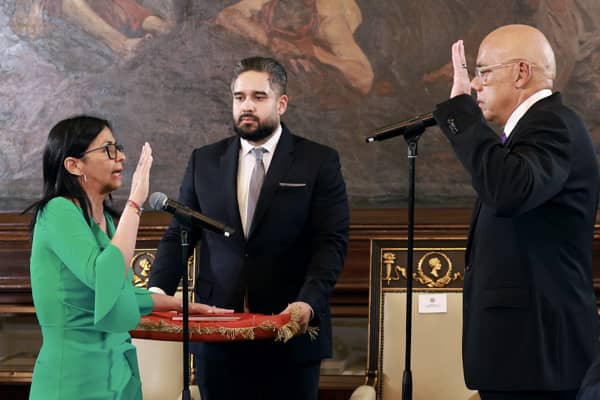
Venezuela’s parliament on Monday formally swore in Delcy Rodriguez as interim president, two days after US forces captured her predecessor, Nicolas Maduro, and flew him to New York to face trial on drug trafficking charges.
Rodriguez, who served as Maduro’s vice president, took the oath of office before the National Assembly, addressing lawmakers:
“I take this oath in the name of all Venezuelans. I am in pain over the kidnapping of our heroes, the hostages in the United States,” she said, referring to Maduro and his wife, Cilia Flores.
The session also saw the reelection of Rodriguez’s brother, Jorge Rodriguez, as parliament speaker, consolidating control of Venezuela’s executive and legislative branches within the siblings.
“All procedures, all platforms, and all avenues will be pursued to bring back Nicolas Maduro Moros, my brother, my president,” Jorge Rodriguez told lawmakers.
Maduro’s son, Nicolas Maduro Guerra, also addressed the assembly, pledging family support and assuring Venezuelans of continuity:
“Count on me, count on my family. Venezuela is in good hands until my parents return.”
Despite the parliamentary endorsement, opposition voices and protests continued outside the legislature. Thousands of demonstrators marched through Caracas, chanting in support of Maduro. Flur Alberto, 32, told AFP:
“Regardless of whether Nicolas Maduro has something to answer for in court, this was not the way to do it.”
The parliament session opened with lawmakers chanting “Let’s go Nico!”, a slogan from Maduro’s 2024 campaign, which was widely criticised internationally as fraudulent.
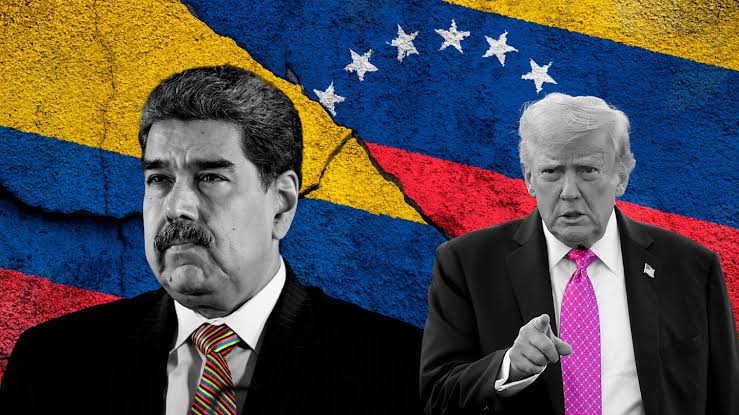
The US military operation that captured Maduro was ordered by former President Donald Trump and involved airstrikes and naval support early on Saturday. Venezuelan lawmaker Fernando Soto Rojas condemned the raid, saying:
“The president of the United States, Mr Trump, claims to be the prosecutor, the judge, and the policeman of the world. We say: you will not succeed. And we will ultimately deploy all our solidarity so that our legitimate president, Nicolas Maduro, returns victorious to Miraflores.”
Following Rodriguez’s swearing-in, tensions persisted in the capital. Witnesses reported shots fired near the Miraflores presidential palace, while drones were seen over the area. Security forces responded, and officials said the situation was under control.
The Supreme Court of Venezuela had authorised Rodriguez to assume the presidency “in an acting capacity” on Saturday, and the military expressed support for her the following day.
Maduro Guerra emphasised Venezuela’s demand for respectful international engagement:
“Venezuela asks for neither privileges nor concessions; it demands respect. We want international relations with everyone, based on equality, mutual respect, and cooperation, without threats and without interference.”
Rodriguez has indicated a willingness to cooperate with Washington, which has said it will engage with Venezuelan leaders if they comply with US demands on policy reforms and oil access. Trump, however, warned that Rodriguez could face consequences should she fail to follow these requirements.
The political transition comes amid heightened uncertainty in Venezuela, where the United Socialist Party of Venezuela (PSUV) and its allies hold 256 of the 286 parliamentary seats following elections last May, which were largely boycotted by the opposition.