 Follow Us on Google News


 Follow Us on Google Discover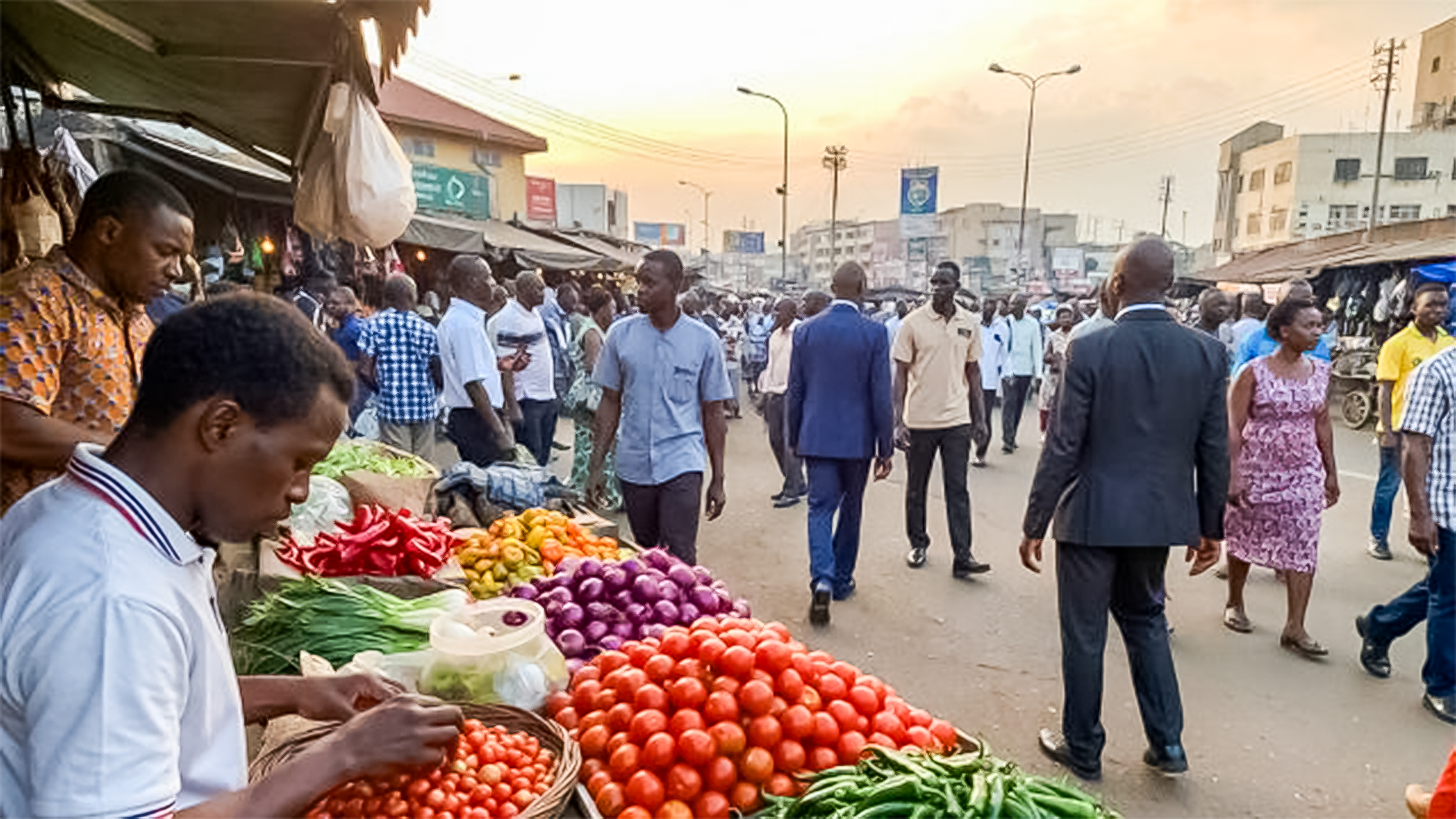
• Labour demands wage review, palliatives, security action
• N70,000 minimum wage loses value amid inflation, naira volatility
• Fuel price surge drives transport, food costs higher
• Workers say living standards worse than in 2019
• Food prices remain elevated despite inflation slowdown
• Analysts: Price declines insufficient to ease hardship
• Labour signals early push ahead of 2027 wage review
• CPPE urges shift from wage hikes to real income protection
Worsening cost-of-living pressures have overshadowed this year’s May Day celebrations, as Nigerian workers grapple with rising prices despite a recent increase in the minimum wage.
As the Nigeria Labour Congress (NLC) and the Trade Union Congress (TUC) mark the annual Workers’ Day today, demands for wage increases, far-reaching palliatives, and concrete steps to address insecurity are expected to dominate proceedings across the country.
Though the conflict between Iran and the United States is far removed from Nigeria, the resulting increase in the price of Premium Motor Spirit (PMS), which has risen from around N780 per litre to N1,400, has pushed the cost of basic items beyond the reach of ordinary Nigerians.
Nigerian workers are struggling under the N70,000 minimum wage, which has been eroded by inflation. They are also weighed down by escalating fuel costs, which have driven up transportation and the prices of basic food items, largely due to global oil price movements.
Speaking at the pre-May Day celebration in Abuja, the President of the NLC, Joe Ajaero, warned that worsening economic conditions were undermining workers’ welfare and national productivity.

Ajaero explained that insecurity and poverty had become major obstacles to decent work, stressing that millions of Nigerians were trapped below the poverty line while quality jobs continued to disappear.
According to him, overcoming insecurity would significantly improve living conditions and economic activity across the country, especially in agriculture and small businesses.
On his part, the TUC President, Festus Osifo, called for stronger solidarity among workers and stakeholders to combat poverty and insecurity.
He said decent work remained non-negotiable for Nigerian workers and urged greater cooperation to improve working conditions nationwide.
He said, “While calling for greater solidarity and cooperation towards the eradication of poverty and insecurity in our workplaces, in particular, and Nigeria in general, decent work is a must for Nigerian workers and is not negotiable.”
In July 2024, when the current N70,000 national minimum wage law came into effect, the exchange rate fluctuated significantly, with the naira showing extreme volatility, at about N1,472 to the dollar rate. At this rate, the minimum wage was equivalent to $43.19.
The National Bureau of Statistics (NBS) Consumer Price Index, which measures inflation, showed that as of March 2026, inflation stood at 15.38 per cent year-on-year. Consequently, workers have argued that their living conditions were better in 2019, when the minimum wage was N30,000, than they are today, when the exchange rate hovered between N357 and N360 to the dollar.
A comparison of food commodity prices between 2019 and April 2026 shows that food inflation rose from 13.70 per cent to 14.31 per cent (under the revised standard). A bag of imported rice, which sold for N7,000, now costs N57,000, while a bag of local rice, previously sold at N12,000, now sells between N53,000 and N95,000, with prices fluctuating due to high transportation costs and market demand.
A big bag of melon rose from N252,500 in March to N330,000 in April, representing a 30.69 per cent increase.
A large basket of round tomatoes rose from N50,000 to N65,000, while oval tomatoes increased from N35,000 to N40,000.
A 50kg bag of white and yellow garri each increased by 25 per cent to N25,000.
Similarly, Royal Stallion rice rose by 13.2 per cent to N60,000, while Mama’s Pride rice increased to N65,000 from N57,500, up by 13 per cent.
A big bag of ogbono increased from N246,500 to N300,000.
A 5kg bag of Honeywell semovita rose by 13.85 per cent to N7,400, while the 2kg variant increased by almost 11 per cent to N3,100.
A 5kg carton of Kings groundnut oil currently sells for N17,000, while a 70g Indomie carton sells for N10,000, and pasta/spaghetti sells for N19,000.
The World Bank’s Nigeria Development Update of October 2025 acknowledged improvements in macroeconomic stabilisation, revenue mobilisation, and external balances, but noted that these gains had yet to translate into improved living standards.
It highlighted high food inflation and widespread poverty, and called for urgent action to reduce inflation, improve the efficiency of public spending, and expand social protection.
Organised labour insisted that macroeconomic reform is incomplete until it reaches the cooking pot, stressing that fiscal adjustment has also fallen short, as balance sheets improve while citizens’ living conditions deteriorate.
However, analysts said that although inflation is decelerating and food prices have declined, the pace of reduction remains insufficient to make a meaningful impact on citizens’ lives.
Data from the statistics office showed that the average price of locally produced rice fell by 10.94 per cent year-on-year to N1,841.83 per kilogram, while brown beans dropped by 48.65 per cent to N1,262.43.
Analysts noted that the trajectory of food prices in the first half of 2026 will depend on sustained policy coordination, input affordability, and farmer confidence ahead of the next planting season.
Nigeria’s inflation rate declined from 18.85 per cent in 2023, when the current administration assumed office, to 15.38 per cent in March 2026. The current unemployment rate stands at 5.3 per cent under the revised standard methodology, although analysts said that, when measured using previous metrics, it would approach 40 per cent.
For instance, a worker earning N70,000 monthly in 2015 could afford some commodities and still have modest savings. Today, purchasing power has weakened significantly, and incomes no longer provide the same level of comfort.
Labour stated that with the rising cost of energy, which has also increased the prices of basic food items, and a minimum wage of N70,000 that is no longer sufficient for Nigerian workers, the need for another wage increase is urgent.
According to the Minimum Wage Act passed in 2024, the next statutory review is due in 2027, following President Bola Tinubu’s decision to reduce the wage review cycle from five years to three years in line with prevailing economic realities.
Before the new minimum wage process begins next year, labour leaders are expected to begin early advocacy from today for improved workers’ welfare.
This comes against the backdrop of rising costs of public transportation, healthcare services, and rent, among others.
President Tinubu is expected to join organised labour in Abuja to mark the day.
Also speaking at the pre-May Day lecture, Dr Toyin Olawunmi of the Department of International Relations and Diplomacy, Chrisland University, Abeokuta, warned that Nigeria’s insecurity and poverty crisis has become a direct threat to decent work, household welfare, productivity, and national stability.
Olawunmi stated that insecurity, poverty, and labour distress can no longer be treated as separate policy problems, as they have converged into a single national governance crisis requiring urgent, coordinated, and measurable action.
He described the current burden on workers as extending beyond formal taxation to include insecurity tax, inflation tax, transport tax, power generation tax, healthcare tax, corruption tax, and the emotional tax of uncertainty.
“Nigeria cannot build decent work on frightened communities, hungry households, collapsing purchasing power and weak public institutions. A nation that neglects its workers is preparing its own instability. A nation that dignifies work is investing in peace,” he said.
The President of the Precision Electrical and Related Equipment Senior Staff Association, Rufus Olusesan, who said there was nothing to celebrate, accused the government of bribery and corruption.
He also accused the government of handling insecurity leniently, without sufficient commitment to safeguarding the survival of the working population.
Olusesan said that next year’s elections have heightened public awareness of the need to elect a government capable of protecting workers and improving their well-being.
“There is nothing to celebrate. We thank God that we are alive. The economic situation is not palatable. As we speak, seven litres of fuel costs N10,000; factoring it into economic indices vis-à-vis salaries, it cannot take anybody home. Nothing works in this country except bribery and corruption,” he said.
Also, the President of the Chemical and Non-Metallic Products Senior Staff Association of Nigeria, Segun David, in a solidarity message, said that despite the change mantra and the inauguration of the Tinubu administration, Nigerian workers have faced persistent challenges following the abrupt removal of fuel subsidy without adequate cushioning measures to mitigate the resulting rise in transportation and service costs.
He noted that the current minimum wage cannot cover a worker’s transportation expenses and lamented that, for an average worker supporting up to 10 dependents across immediate and extended families, the renewed hope agenda is fast fading without urgent policies and programmes to address the situation.
Since the N70,000 minimum wage was signed into law on July 18, 2024, organised labour has maintained that, even at the point of enactment, the wage had already been eroded by inflation and the rising cost of living, underscoring the urgency of improved welfare measures.
CPPE calls for shift from wage hikes to real income protection
MEANWHILE, the Chief Executive Officer (CEO) of the Centre for the Promotion of Private Enterprise (CPPE), Dr Muda Yusuf, has called for a fundamental shift in Nigeria’s approach to labour welfare, warning that the country’s focus on wage negotiations has obscured deeper, structural threats to workers’ living standards.
In a policy brief titled Beyond Wage Increases: Reframing Labour Welfare Priorities in Nigeria, he argued that periodic wage increases, while necessary, are consistently eroded by the combined pressures of food inflation, rising energy costs, and deteriorating public service delivery.
He said protecting real incomes, rather than merely increasing nominal wages, must become the central objective of any serious labour welfare policy.
Noting that nominal wage increases are often eroded within a short period, he said food and transport alone account for a large share of monthly expenditure for most low- and middle-income households.
He identified 10 critical welfare priorities to anchor a new national labour agenda. At the top of the list are cost of living and price stability. He called for scaled investment in mass transit systems to reduce commuting costs, stronger policies to boost agricultural productivity and contain food inflation, and measures to moderate rental pressures in Nigeria’s major urban centres.
He also urged medium and large enterprises, as well as government institutions, to provide subsidised staff canteens.
On healthcare, he highlighted the high rate of out-of-pocket expenditure as a major source of financial vulnerability for Nigerian workers. He called for expanded coverage under the National Health Insurance Authority, strict enforcement of employer-provided health insurance schemes, and stronger occupational health and safety standards, arguing that health security is as critical to productivity as it is to welfare.
Raising concern over retirement insecurity across both formal and informal sectors, he called for stronger compliance with pension remittances, expansion of micro-pension schemes for informal workers, and enforceable sanctions against defaulting employers.
On job security, the CPPE chief expressed concern about the growing normalisation of casualisation and contract employment, which he said has weakened protections for many workers. He urged labour unions to advocate stronger regulatory frameworks and robust redundancy protection systems, particularly in the absence of any unemployment insurance scheme in Nigeria.
Addressing rising energy costs, which he described as an unsustainable burden, he said electricity tariffs and generator fuel expenses place significant pressure on households. He called for improved power supply reliability, reduced dependence on self-generation, and a more transparent tariff regime, noting that lower energy costs would directly improve disposable incomes.
He added that Nigeria’s reliance on informal transport systems exposes workers to high and volatile commuting costs, and called for investment in affordable mass transit, stronger regulatory oversight to curb exploitative pricing, and policies encouraging employers to provide staff transportation.
On housing, he advocated expanded affordable housing schemes and reforms to mortgage financing frameworks.
He also emphasised sustained investment in skills development and vocational training as a pathway to long-term income mobility, stressing that employer-supported capacity building and stronger public-private partnerships are essential to addressing productivity gaps in the workforce.
On social protection, he described Nigeria’s safety net system as weak and fragmented, and called for the introduction of unemployment insurance and expanded targeted social programmes to cushion workers against economic shocks.
He also addressed the tax burden on workers, noting that limited relief for low- and middle-income earners means many Nigerians lose a significant share of their earnings to a tax system the centre described as regressive. He called for reforms that improve take-home pay rather than merely increasing gross wages.
On wages, he said that while he does not oppose pay adjustments, there is a need for a structural overhaul of how wages are determined. He recommended institutionalising inflation-linked wage adjustments, periodic cost-of-living adjustments (COLA), and more transparent and predictable wage review frameworks, arguing that episodic, reactive increases are insufficient to protect real incomes.
In its strategic recommendations, the brief called on the government to strengthen public service delivery in healthcare, education, transportation, and power; prioritise productivity-enhancing policies in agriculture, energy, and logistics; and accelerate efforts to build inclusive social protection systems.
He also urged tighter regulatory enforcement across labour protection, pension compliance, and workplace standards.
“A comprehensive welfare framework anchored on structural reforms and strong institutions is imperative to improving workers’ quality of life and advancing inclusive economic growth,” he said.
He said the policy brief is necessary as labour tensions in Nigeria continue to persist against a backdrop of double-digit inflation and a cost-of-living crisis that has significantly eroded purchasing power across income groups.

