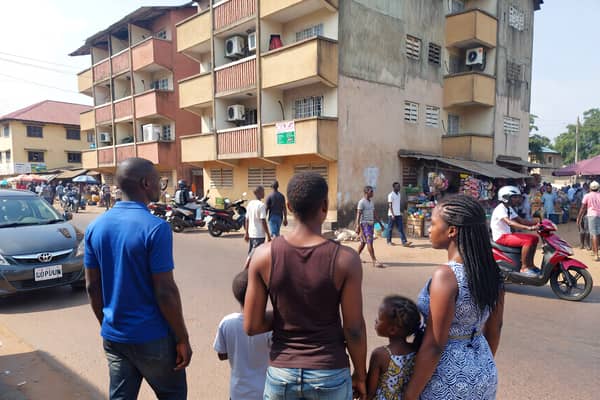
After months of poring over National Bureau of Statistics housing data, interviewing landlords across Lagos and Abuja, and years of covering Nigeria’s property market for Guardian Nigeria, I can tell you that rent here isn’t simply a matter of dollars and cents. It’s a window into urban survival, economic pressures, and the daily arithmetic Nigerians perform just to keep a roof overhead.
This is what I’ve learned: renting in Nigeria, particularly in cities like Lagos and Abuja, has become one of the steepest financial hurdles facing residents. When people search for “how much is rent in Nigeria in US dollars”, they’re usually planning a move, budgeting for relocation, or trying to understand what their money will buy them in Africa’s most populous nation.
The short answer? A one-bedroom flat in Lagos now averages $750 to $1,200 annually (₦1.2 million to ₦1.8 million), while Abuja commands $1,000 to $1,650 (₦1.5 million to ₦2.5 million). But understanding Nigerian rent means understanding a system that demands full payment upfront, involves multiple fees, and varies wildly by neighbourhood, infrastructure access, and landlord whims.
Let me walk you through what I’ve seen firsthand.
How Much is Rent in Nigeria in USD?
The American or British expat asking this question typically assumes monthly payments, security deposits, and perhaps a letting fee. Nigeria operates differently.
Here, annual rent is the standard. Not monthly, not quarterly. One full year’s payment upfront, plus caution fees (damage deposits), agent commissions, and sometimes “agreement fees” for the tenancy contract itself. I’ve watched bewildered newcomers blanch when landlords quote ₦2 million for what they thought was a reasonable apartment, only to learn that doesn’t include the additional ₦400,000 in fees.
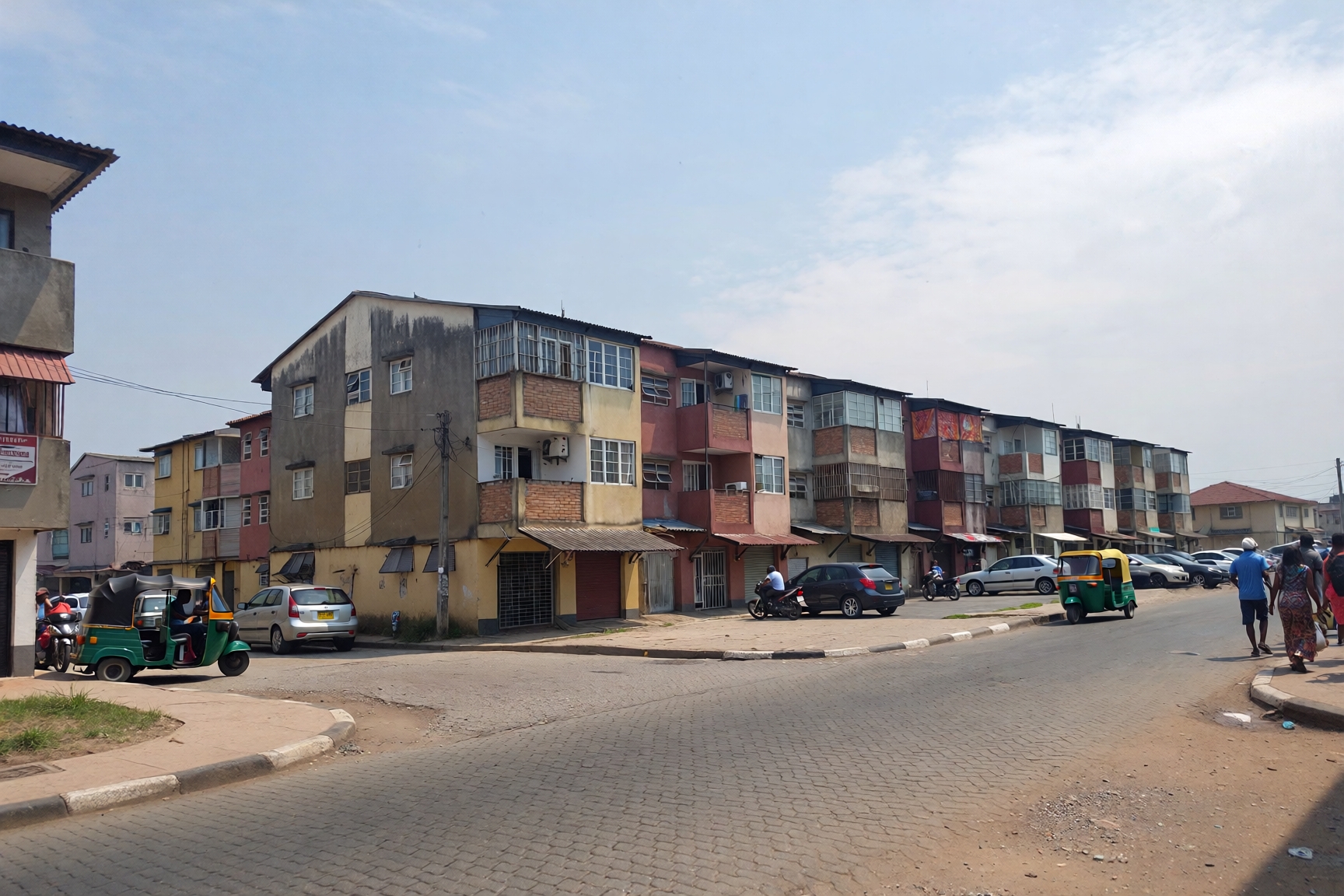
In Lagos, rent pricing follows proximity to infrastructure. A self-contained flat in Yaba (close to the Third Mainland Bridge and tech hubs) might run $800 to $1,100 annually. Move to Lekki Phase 1, where expatriates and Nigeria’s upper-middle class congregate, and that same flat balloons to $2,500 to $4,000. Yet venture to Ikorodu or Ajah’s outskirts, and you’ll find one-bedroom apartments for $500 to $700.
The National Bureau of Statistics tracks these fluctuations, though their data often lags behind the market’s reality. I’ve been following how Lagos tenants are barely surviving rising house rent, with some seeing their costs jump by ₦200,000 or more when landlords decide they need to offset rising expenses.
What does this mean in practical terms?
For someone earning Nigeria’s median income of ₦70,000 monthly (about $46), a ₦1.2 million annual rent represents 17 months’ salary. It’s why many Nigerians live in shared accommodations, “face-me-I-face-you” compounds where multiple families share facilities, or relocate to peripheral areas with punishing commutes.
What is the Cost of Living in Nigeria in US Dollars?
Beyond rent, daily expenses paint a fuller picture. I’ve spent years tracking how Nigerians budget around housing, and the pattern is clear: rent dominates household spending.
A typical middle-class Nigerian earning ₦250,000 monthly ($165) might allocate their income as follows:
- Rent (annual, amortised monthly): ₦100,000 to ₦150,000 ($66 to $99)
- Food and groceries: ₦60,000 to ₦80,000 ($40 to $53)
- Transportation: ₦30,000 to ₦50,000 ($20 to $33)
- Utilities (power, water, internet): ₦25,000 to ₦35,000 ($16 to $23)
- Healthcare, miscellaneous: ₦20,000 to ₦30,000 ($13 to $20)
The maths rarely works out favourably. Recent data confirms that over 70 per cent of Lagos residents are tenants who spend between 40 and 60 per cent of their monthly income just keeping a roof over their heads.
Food costs have climbed alongside rent. A bag of rice (50kg) that cost ₦18,000 in 2020 now fetches ₦70,000 to ₦85,000. A basket of tomatoes quadrupled in price between 2022 and 2024. Transport fares rose 60 to 80 per cent as petrol subsidies were removed, pushing pump prices to ₦650 per litre.
Living in Lagos or Abuja on $500 monthly ($6,000 annually) is feasible but requires careful economising. You’ll rent in less desirable areas, cook rather than eat out, use shared transport (danfos and okadas), and accept frequent power cuts that necessitate generator fuel or prepaid electricity meter top-ups.
Compare this to life in smaller cities like Ibadan, Benin City, or Enugu. Rent drops by 40 to 60 per cent. A two-bedroom flat that costs ₦2 million annually in Lagos rents for ₦800,000 to ₦1.2 million in Ibadan. Food is marginally cheaper, transport more affordable, yet job opportunities scarce.
The Federal Mortgage Bank of Nigeria has attempted to ease housing costs through its National Housing Fund scheme, offering mortgage loans at 6 to 7 per cent interest with up to 30-year repayment periods. Yet uptake remains limited. Most Nigerians work in the informal sector, lack required documentation, or can’t afford even the minimal equity contributions.
I interviewed a civil servant in Abuja recently who summed it up perfectly: “We’re choosing between feeding our families properly and keeping the roof we already have.”
Is $200 USD a Lot in Nigeria?
This question reveals a fascinating divide in purchasing power. $200 (approximately ₦304,000 at December 2025 rates) occupies different economic stratospheres depending on who holds it.
For tenants struggling with Lagos’s escalating housing costs, $200 represents more than four months’ worth of savings after expenses. It might cover two weeks’ groceries for a family of four, or three months of prepaid electricity, or school fees for one child for a term.
It’s not “a lot” in the sense that it transforms someone’s economic position. You can’t secure decent accommodation for $200 in any major Nigerian city. But it’s significant money that creates breathing room.
I’ll paint you a picture. With $200 in hand, a typical Nigerian household might:
- Purchase a month’s worth of quality groceries including rice, beans, palm oil, tomatoes, chicken, fish, and vegetables
- Pay for three months’ worth of transportation to work via danfo buses
- Cover medical expenses for minor illnesses at a general hospital
- Buy essential household items like toiletries, cleaning supplies, and cooking gas refills
- Set aside a small emergency fund
The Federal Ministry of Housing acknowledges that Nigeria faces a housing deficit of 17 to 20 million units. This shortfall keeps rent artificially inflated. When demand catastrophically outstrips supply, landlords dictate terms. They know desperate tenants will scrape together the fees somehow, even if it means borrowing from relatives or cooperatives.
There’s a painful irony here. The same $200 that seems modest to an American or European represents genuine financial flexibility in Nigeria. It’s the difference between eating three meals daily or two. Between affording transport to job interviews or staying unemployed. Between sending a child to school with books or empty-handed.
Yet that same $200 won’t cover one month’s rent for even a single room in many Lagos neighbourhoods. The disconnect between purchasing power and housing costs creates a trap.
I’ve watched families pool resources across siblings, parents, and extended networks just to gather annual rent. It’s not uncommon for someone to borrow ₦500,000 at 10 to 15 per cent monthly interest from informal lenders, repaying ₦700,000 to ₦800,000 over the year just to secure housing.
Does $200 go far? Yes and no. It depends entirely on whether you’re spending it on consumables or trying to solve the housing equation.
How Far Does $100 Go in Nigeria?
Let me be blunt: $100 (roughly ₦152,000) gets you through two weeks of reasonable living in Lagos or Abuja if you’re careful. But “reasonable” here means accepting conditions that would shock most Westerners.
Here’s what ₦152,000 might buy you across a fortnight:
Food and Household Supplies:
- 50kg bag of rice: ₦75,000
- Cooking oil (3 litres): ₦6,000
- Beans (2kg): ₦4,000
- Tomatoes, peppers, onions (market basket): ₦8,000
- Chicken (whole): ₦5,000
- Fish (frozen mackerel): ₦4,000
- Bread, eggs, milk: ₦12,000
- Toiletries and cleaning supplies: ₦8,000
That’s ₦122,000, leaving ₦30,000 for transport, emergencies, or utility top-ups.
But this assumes you already have housing sorted. If you’re trying to use that $100 toward rent? It’s a drop in the ocean. You’d need six to twelve times that amount just to secure a basic one-bedroom flat for the year, before agent fees and caution deposits.
I remember interviewing a teacher in Surulere who’d just had her rent increased by ₦200,000. She told me she’d been saving ₦10,000 monthly for three years, thinking she was building security. “Then my landlord added ₦200,000 and I realised I’d been saving for nothing. That money just disappeared.”
The challenge isn’t that $100 is worthless in Nigeria. It’s that it addresses immediate consumption needs while housing costs operate on an entirely different scale. You can feed yourself adequately, move around the city, and handle small emergencies with that money. You just can’t solve the fundamental problem of where to sleep.
How Nigerians Navigate Rent Challenges: 7 Practical Steps
After covering housing stories for Guardian Nigeria and interviewing hundreds of tenants, I’ve identified strategies Nigerians use to handle rent pressures:
- Start saving 18 months before your rent expires. Divide your annual rent by 18 months rather than 12. This creates a realistic saving timeline with some buffer for emergencies. If your rent is ₦1.2 million annually, save ₦67,000 monthly starting immediately after you’ve just paid.
- Join a cooperative thrift society (ajo or esusu). These informal savings groups collect contributions from members monthly, with each member receiving the pot on a rotating basis. It’s how many Nigerians accumulate lump sums for rent. My neighbour saved ₦1.5 million this way over 15 months by contributing ₦100,000 monthly to a group.
- Negotiate payment terms ruthlessly. Some landlords will accept semi-annual or quarterly payments if you’re a reliable tenant. Others might discount annual rent by 5 to 10 per cent for prompt payment. Always ask before assuming yearly payment is mandatory. As Lagos officials have acknowledged, they cannot enforce monthly rent collection on landlords, but some are willing to negotiate if you ask. I’ve seen tenants save ₦100,000 to ₦150,000 simply by asking politely but persistently.
- Consider peripheral neighbourhoods with better transport links. Living in Epe, Sangotedo, or Ikorodu costs 50 to 60 per cent less than Lagos Island or Lekki, while the new expressways and BRT lanes make commuting feasible. Calculate transport costs against rent savings. Often, you’re ahead financially even with longer commutes.
- Access National Housing Fund schemes if you’re a formal sector worker. The Federal Mortgage Bank of Nigeria’s Rent-to-Own programme lets you occupy government-built housing while paying toward ownership over 10 years. Equity contribution is just 5 per cent. Government initiatives have helped over 1,700 residents benefit from rent-to-own housing schemes, though many Nigerians still don’t know these options exist.
- Document everything meticulously. Keep receipts for rent payments, agent fees, and repairs. Use bank transfers rather than cash where possible. The Lagos State government has urged professionals to halt illegal agency fees like inspection fees and finder’s fees that aren’t allowed under existing tenancy laws. Proper documentation helps if disputes arise. I’ve seen tenants lose caution deposits worth ₦400,000 because they paid cash without receipts.
- Build relationships with your community and neighbours. In Nigeria’s housing market, personal connections matter enormously. Neighbours might alert you to upcoming vacancies before they’re advertised. Landlords might offer better terms to tenants their current occupants vouch for. Community connections also provide informal safety nets when rent deadlines loom.
These strategies won’t eliminate rent pressure. But they make the burden manageable rather than catastrophic.
Nigeria’s Rent Crisis in Numbers: A Regional Breakdown
Understanding how rent varies across Nigeria’s regions helps clarify what “expensive” means in different contexts. I’ve compiled this data from National Bureau of Statistics reports, Guardian Nigeria’s property coverage, and estate surveyors I’ve interviewed over the years.
| City/Region | 1-Bedroom Flat (Annual, USD) | 2-Bedroom Flat (Annual, USD) | 3-Bedroom Flat (Annual, USD) | Average Income |
|---|---|---|---|---|
| Lagos (Island/Lekki) | $2,000 – $4,000 | $3,500 – $7,000 | $6,000 – $12,000 | ₦180,000/month |
| Lagos (Mainland) | $750 – $1,200 | $1,300 – $2,000 | $2,000 – $3,500 | ₦120,000/month |
| Abuja (Central) | $1,000 – $1,650 | $1,600 – $2,500 | $2,500 – $5,000 | ₦150,000/month |
| Abuja (Suburbs) | $500 – $900 | $900 – $1,500 | $1,500 – $2,500 | ₦100,000/month |
| Port Harcourt | $650 – $1,100 | $1,100 – $1,800 | $1,800 – $3,200 | ₦110,000/month |
| Ibadan | $400 – $700 | $650 – $1,100 | $1,000 – $1,800 | ₦80,000/month |
| Enugu | $450 – $750 | $700 – $1,200 | $1,100 – $2,000 | ₦85,000/month |
| Kano | $350 – $600 | $550 – $950 | $850 – $1,500 | ₦75,000/month |
The stark disparity between average incomes and rent costs reveals Nigeria’s housing crisis. A Lagos resident earning ₦180,000 monthly faces annual rent of ₦1.2 million to ₦1.8 million, consuming 67 to 100 per cent of their gross annual income. This is why multiple families share flats, why young professionals live with parents into their thirties, and why slums proliferate on Lagos’s periphery.
These figures also show where opportunity lies. Secondary cities like Ibadan, Enugu, and Kano offer rent 50 to 70 per cent cheaper than Lagos or Abuja. The challenge is that job markets in these cities haven’t grown proportionally. You might save ₦700,000 annually on rent by relocating from Lagos to Ibadan, only to discover limited employment options or lower salaries that offset the savings.
Navigating Nigeria’s Housing Market: Understanding the Full Cost
Let me dispel a common misconception. When Nigerians say “rent is ₦1.5 million,” they’re usually understating total costs.
The actual figure includes:
- Annual rent: The quoted price
- Agency fee: Typically 10 per cent of annual rent (₦150,000 on a ₦1.5 million flat)
- Caution fee: One year’s rent held as deposit (₦1.5 million)
- Agreement fee: ₦50,000 to ₦100,000 for tenancy paperwork
- Service charge: In estates, ₦100,000 to ₦300,000 annually for security, waste disposal, generator fuel
Total initial outlay: ₦3.3 million to ₦3.6 million. That’s $2,170 to $2,370.
This is why securing new accommodation in Nigeria resembles buying a car in many countries. You need substantial upfront capital, even though you’re not acquiring an asset.
I once spent a month shadowing an estate agent in Yaba. Every single prospective tenant asked about monthly payments. Every single time, the agent explained this wasn’t an option. “Landlords prefer annual rent because our currency depreciates,” he told me. “They don’t trust that monthly payments today will have the same value in December.”
It’s a rational response to economic instability, but it creates devastating barriers for ordinary Nigerians.
The Guardian Nigeria’s analysis of rising costs and the rental boom that now dominates the real estate sector shows that a flat costing ₦1 million annually in 2022 now demands ₦1.5 million to ₦1.8 million. Landlords cite rising construction material costs, naira devaluation, and inflation. Yet tenants’ salaries rarely increase proportionally.
This mismatch drives behaviours that would seem bizarre elsewhere. Families celebrate when someone secures a government job not because of the salary (often modest), but because formal employment opens access to cooperative loan schemes that can advance rent money. Church congregations pool resources to help members facing eviction. Extended families negotiate complex arrangements where multiple wage earners contribute to one household’s rent.
Regional Variations and What They Mean for Renters
Nigeria isn’t a monolith. Rent dynamics in Calabar differ dramatically from those in Lagos.
Coastal Cities (Lagos, Port Harcourt, Calabar): These cities command premium rent because of economic activity, port access, and oil industry presence. Lagos, as the commercial capital, sets national price ceilings. A two-bedroom flat in Ikeja averaging ₦1.8 million annually establishes what Nigerians consider “expensive.” Port Harcourt follows similar patterns, though political instability in the Niger Delta sometimes dampens demand.
Northern Cities (Kano, Kaduna, Jos): Rent here runs 40 to 60 per cent lower than Lagos or Abuja. Cultural factors play a role. Extended family compounds remain common, reducing pressure on the rental market. Yet insecurity in parts of northern Nigeria has driven internal migration, with families relocating to Abuja and straining its housing supply.
Eastern Cities (Enugu, Onitsha, Aba): These markets reflect Nigeria’s economic downturn. Rent increased between 2020 and 2025, but not as steeply as Lagos or Abuja. Many easterners still own ancestral homes in their villages, maintaining urban apartments primarily for work while spending weekends and holidays in family compounds. This dual-residence pattern affects rental demand.
Federal Capital Territory (Abuja): Abuja represents Nigeria’s most distorted housing market. As the seat of government, it attracts civil servants, diplomats, and contractors chasing government contracts. Demand perpetually exceeds supply in areas like Maitama, Asokoro, and Wuse. Yet vast estates sit partially empty in peripheral districts like Lugbe or Gwagwalada because infrastructure (roads, water, electricity) hasn’t caught up with development.
I visited the National Bureau of Statistics offices in Abuja last year researching housing data. The statisticians I spoke with acknowledged their figures lag market reality by 18 to 24 months. By the time they publish rent averages, prices have jumped another 20 per cent. This gap between official data and street experience frustrates policymakers trying to design interventions.
The Currency Question: Why Dollar Pricing Matters
You might wonder why Nigerians increasingly quote rent in dollars when local transactions occur in naira.
It’s currency hedging. Landlords, particularly those with options, prefer dollar-pegged rents because the naira has depreciated over 50 per cent against the dollar since 2023. A landlord accepting ₦1.5 million annual rent in January 2023 received approximately $3,250. By December 2025, that same ₦1.5 million equals just $985.
Smart landlords now quote rent in dollars but accept payment in naira at the prevailing exchange rate. This shifts currency risk to tenants. If the naira weakens between lease signing and payment, the tenant pays more naira for the same dollar-denominated rent.
I interviewed one landlord in Lekki who’d implemented this system. “I’m not trying to exploit anyone,” he insisted. “I’m protecting the value of my property. Building materials are imported. When I need to renovate, I’m paying dollar-linked prices for cement, tiles, and fittings. My costs don’t decrease just because the naira weakens.”
His logic makes sense from an economic perspective. But it devastates tenants whose salaries are denominated in depreciating naira. A civil servant earning ₦200,000 monthly in 2023 enjoyed relative stability. That same ₦200,000 in 2025 buys half as much, while rent obligations doubled.
This currency dynamic also explains why expatriate housing remains a distinct market segment. Foreigners on dollar salaries can afford Lagos rents that seem astronomical to local professionals. A $3,000 monthly accommodation allowance (₦4.5 million) secures luxury apartments in Ikoyi or Victoria Island where Nigerian executives earning ₦500,000 monthly can’t compete.
The resulting segregation isn’t just economic. Certain neighbourhoods effectively price out Nigerians, creating expatriate enclaves serviced by international schools, imported goods stores, and restaurants accepting card payments. Meanwhile, ordinary Lagos residents crowd into “face-me-I-face-you” compounds where ten families share one bathroom and kitchen.
Government Interventions: Do They Help?
The Federal Mortgage Bank of Nigeria theoretically addresses housing affordability through its National Housing Fund scheme. Contributors pay 2.5 per cent of monthly income, qualifying them for mortgage loans at 6 to 7 per cent interest over 30 years.
In practice, uptake remains dismally low.
I’ve investigated why. First, most Nigerians work informally without documented income. Second, the mortgage approval process involves Byzantine bureaucracy that discourages applicants. Third, many Nigerians distrust formal financial institutions after repeated banking sector crises.
But the fundamental issue is that even “affordable” mortgages require equity contributions most Nigerians can’t muster. A ₦10 million property (a modest two-bedroom in Lagos) demands ₦1 million equity plus documentation, legal fees, and valuation costs totalling ₦300,000 to ₦500,000. That’s ₦1.5 million upfront. For a population where 40 per cent live below the poverty line, this isn’t “affordable.”
Lagos State recently launched a monthly rent payment initiative partnering with financial institutions. The government advances annual rent to landlords while tenants repay monthly over 12 months. It’s promising conceptually, but implementation has been patchy. Many landlords refuse participation, and tenants report rigid eligibility criteria.
When Lagos committed ₦5 billion to the monthly rent payment scheme to ease the burden of yearly payments, initial enthusiasm among tenants quickly soured when they discovered they needed formal employment, bank statements, and property ownership documentation to qualify. The scheme essentially helps middle-class Nigerians with financial literacy and institutional access, while excluding the majority who need help most.
I want to acknowledge something important here. Government officials aren’t ignorant of housing challenges. I’ve interviewed ministers and permanent secretaries who grasp the problem clearly. But solutions require confronting vested interests (landlords benefiting from scarcity), addressing systemic corruption in land allocation, and mobilising capital for mass housing construction. These are politically and economically complex tasks.
Making Rent Work: What I’ve Learned
After years covering Nigeria’s housing crisis, here’s what I understand about making rent work in this environment:
Accept that rent will consume a disproportionate share of income. International guidelines suggest spending no more than 30 per cent of income on housing. In Nigeria, 50 to 70 per cent is common. This isn’t ideal. It’s reality.
Prioritise location based on total costs, not just rent. A flat in Epe costing ₦600,000 annually seems cheaper than one in Yaba at ₦1.2 million. But if Epe adds ₦60,000 monthly in transport costs (₦720,000 annually), you’re worse off. Calculate comprehensively.
Negotiate everything. Nigerian landlords expect haggling. A landlord quoting ₦1.5 million might accept ₦1.3 million for prompt payment or ₦1.4 million if you handle minor repairs yourself. The worst outcome is paying the first number quoted.
Consider shared accommodation without shame. Economic pressures have normalised flatsharing among young professionals in ways that previous generations avoided. It’s not defeat. It’s practical mathematics.
Use legal protections where they exist. Lagos State Tenancy Law caps rent increases and prohibits certain exploitative practices. Most tenants don’t know their rights. Learn them. The Consumer Protection Council sometimes intervenes in egregious cases.
Build financial resilience through multiple income streams. The pressure rent creates drives Nigeria’s entrepreneurial culture. Side businesses, freelancing, and informal trading aren’t luxuries. They’re survival mechanisms that create the margin between making rent and homelessness.
I recognise this advice might sound harsh to outsiders. But Nigerian resilience isn’t about accepting injustice. It’s about navigating circumstances while working toward systemic change. Every tenant who successfully negotiates lower rent, every family that pools resources cooperatively, every person who accesses mortgage schemes represents incremental progress.
Looking Forward: Will Rent Become More Affordable?
Here’s my honest assessment based on market analysis and conversations with economists, property developers, and policymakers.
Short answer: No. Not in the next five to ten years.
Nigeria’s housing deficit continues growing. The population increases by approximately 5 million annually. Construction costs keep rising as building materials are mostly imported and dollar-dependent. Infrastructure improvements lag behind urban growth, limiting where developers can build affordably.
However, some positive signals exist:
- Real estate investment trusts (REITs) are attracting diaspora capital
- Technology companies are exploring innovative financing models
- State governments increasingly recognise housing as political priority
- Young Nigerians are challenging assumptions about homeownership versus renting
The National Bureau of Statistics projects Nigeria’s urban population will reach 70 per cent by 2040 (currently around 52 per cent). This urbanisation will intensify housing pressure unless construction keeps pace. Given Nigeria’s track record, betting on adequate supply seems optimistic.
What might improve the situation?
Land reform that simplifies acquisition and registration processes. Currently, obtaining clear title to land in Nigeria can take years and involve multiple payments to different authorities. Streamlining this would reduce development costs.
Regulatory changes allowing more flexible rental arrangements. Monthly rent payments, longer lease periods with limited increase clauses, and stronger tenant protections would help. Governor Sanwo-Olu has called on stakeholders to develop modalities for monthly rent payments, acknowledging that the current yearly system creates pressure for residents.
Investment in mass transit reducing the premium on central locations. If reliable rail or BRT systems connected peripheral areas to employment centres, people could live farther from city cores without punishing commutes.
I want to be clear: I’m not predicting any of this will happen quickly. Nigerian reforms move glacially when they move at all. But understanding what might help allows citizens to advocate intelligently.
Understanding Your Housing Options in Nigeria
Before concluding, let me address what different budgets actually buy in Nigeria’s rental market. This comes from recent Guardian Nigeria reporting and my own observations.
Under $500 Annually (Under ₦760,000): You’re looking at single rooms in outlying areas, shared accommodations, or “boys’ quarters” (converted servant quarters behind main houses). Expect limited privacy, shared facilities, and basic amenities. Water and electricity supply will be unreliable. These spaces work for single individuals prioritising saving over comfort.
$500 to $1,000 (₦760,000 to ₦1.5 million): Self-contained flats (one-room studio with private bathroom and kitchenette) become accessible in middle-tier neighbourhoods. You’ll have your own space but limited size. Expect this category in places like Surulere, Ojodu, Berger, or peripheral Abuja suburbs. Infrastructure is present but patchy.
$1,000 to $2,000 (₦1.5 million to ₦3 million): Proper one-bedroom or small two-bedroom flats in decent neighbourhoods. This category covers most middle-class accommodation in Lagos mainland or Abuja suburbs. You’ll have reasonable infrastructure access, though power cuts and water supply issues persist. Security in estate environments becomes more common here.
$2,000 to $5,000 (₦3 million to ₦7.6 million): Two to three-bedroom apartments in better areas. This segment targets upper-middle-class Nigerians and junior expatriates. Expect estate living with security, possibly backup power, and maintained grounds. Locations like Lekki Phase 1, Yaba’s nicer streets, or Abuja’s Maitama become accessible.
Above $5,000 (Above ₦7.6 million): Luxury accommodation primarily serving senior expatriates and Nigeria’s wealthy elite. Three-bedroom plus flats or detached houses in prime locations. Full service charges, backup generators, borehole water systems, maintained pools and gardens. This is less than 2 per cent of the market but sets ceiling prices that influence psychology across all segments.
Understanding these tiers helps in realistic budgeting. Don’t aim for Ikoyi on a Surulere budget. Work within your price bracket while staying alert for opportunities to negotiate up.
How Rent Shaped Nigeria’s Urban Experience
Let me close by connecting rent to broader Nigerian life. Housing costs don’t exist in isolation. They shape family structures, career decisions, marriage timing, and urban development patterns.
Young Nigerians increasingly delay marriage because they can’t afford separate housing. Parents continue supporting adult children not from choice but necessity. Extended family compounds that once seemed archaic are experiencing revival because they’re economically rational responses to housing costs.
This isn’t necessarily bad. Nigerian communal living patterns have strengths. Shared childcare, resource pooling, and mutual support systems function well in extended households. But they should be choices, not imperatives.
The rent burden also drives brain drain. Young Nigerian professionals calculate whether their education translates to housing security at home or abroad. An engineer earning ₦300,000 monthly in Lagos struggles to afford decent housing. That same engineer in Dubai or Toronto enjoys comfortable accommodation. This calculation affects Nigeria’s development trajectory.
I’ve covered enough housing stories to recognise patterns. The tenant in Ogba whose rent jumped ₦200,000 represents millions facing similar pressures. The family pooling resources across siblings isn’t unique. The landlord converting from naira to dollar-pegged rents is following rational incentives created by macroeconomic instability.
There aren’t easy answers here. Nigerian housing challenges emerge from interlocking problems: rapid urbanisation, inadequate infrastructure investment, currency instability, limited mortgage access, land tenure complications, and construction cost inflation. Solving one element without addressing others produces limited progress.
But acknowledging complexity shouldn’t paralyse action. Every Nigerian tenant learning their rights, every family developing saving strategies, every developer pursuing affordable housing models contributes to incremental change. Systemic transformation emerges from thousands of small actions, not single grand gestures.
When people ask me how much rent costs in Nigeria, I try to provide both numbers and context. The dollars and naira matter. But so do the strategies Nigerians employ, the trade-offs they navigate, and the resilience they demonstrate daily. That’s the fuller picture worth understanding.
If you’re interested in understanding more about how Nigerians manage their finances in challenging economic conditions, you might find value in my previous articles exploring what the average income in Nigeria looks like and how Nigerians navigate food costs and household budgeting.
Key Takeaways: Navigating Nigeria’s Rental Market
- Nigerian rent operates on annual payment cycles with substantial upfront costs including agency fees, caution deposits, and agreement charges that can double the quoted rent figure. Budget for 2x to 2.5x the stated annual rent when planning new accommodation.
- Location dramatically affects affordability with Lagos Island and Lekki commanding $2,000 to $4,000 annually for one-bedroom flats while similar accommodation in mainland areas or secondary cities costs 50 to 70 per cent less. Calculate total living costs including transport before choosing location based solely on rent.
- Access government mortgage schemes and cooperative savings groups to accumulate lump sums for rent payments. The Federal Mortgage Bank of Nigeria’s National Housing Fund offers loans at 6 to 7 per cent interest, while ajo and esusu systems help members pool resources for annual rent obligations.
FAQs: Understanding Rent Costs in Nigeria
How much is a one-bedroom apartment in Lagos in US dollars?
A one-bedroom flat in Lagos typically costs between $750 and $4,000 annually depending on location, with mainland areas averaging $750 to $1,200 while island neighbourhoods like Lekki or Victoria Island command $2,000 to $4,000. This represents annual payment, not monthly rent, and excludes additional fees for agency commissions and caution deposits that can add 100 to 150 per cent to total initial costs.
Do Nigerians pay rent monthly or annually?
Nigerian tenants pay rent annually as standard practice, providing one full year’s payment upfront along with additional fees for agency commissions (typically 10 per cent of annual rent), caution deposits (often equal to one year’s rent), and agreement charges. Lagos State recently introduced monthly rent payment schemes through government partnerships with financial institutions, but uptake remains limited and most landlords continue preferring annual payments.
What is included in Nigerian rent costs besides the base rent?
Beyond base rent, tenants pay agency fees (10 per cent of annual rent), caution fees or damage deposits (typically one year’s rent held throughout tenancy), agreement or legal fees (₦50,000 to ₦100,000), and estate service charges where applicable (₦100,000 to ₦300,000 annually covering security, waste disposal, and generator maintenance). Total initial payment commonly reaches 2.5 to 3 times the quoted annual rent figure.
Is $1,000 USD enough to live on monthly in Nigeria?
$1,000 monthly ($12,000 annually) provides comfortable middle-class living in Nigeria outside luxury accommodations, covering rent for a decent two-bedroom flat in middle-tier Lagos neighbourhoods or good Abuja suburbs, food, transport, utilities, and healthcare with modest savings capacity. However, this assumes single person or couple without children; larger families would find this budget tighter but still workable with careful management.
How much is rent in Abuja compared to Lagos?
Abuja rent runs 10 to 30 per cent higher than Lagos mainland but lower than Lagos Island premium areas, with one-bedroom flats in central Abuja costing $1,000 to $1,650 annually compared to Lagos mainland’s $750 to $1,200. Abuja suburbs like Lugbe or Gwagwalada offer cheaper options at $500 to $900 annually, similar to Lagos peripheral areas like Ikorodu or Ajah.
Can foreigners rent apartments in Nigeria easily?
Foreigners with proper documentation and employment letters rent Nigerian apartments readily, often accessing better accommodation through expatriate housing allowances that exceed local salary levels; however, landlords typically require foreign tenants to pay in dollars or demonstrate stable foreign currency income sources. Embassy letters, company guarantees, and international references facilitate the process, though the same upfront payment structure applies including full annual rent, agency fees, and deposits.
What is Nigeria’s National Housing Fund scheme?
The National Housing Fund managed by the Federal Mortgage Bank of Nigeria requires formal sector workers to contribute 2.5 per cent of monthly income, qualifying them after six to twelve months for mortgage loans at 6 to 7 per cent interest over up to 30 years with 5 to 10 per cent equity contributions. Despite attractive terms, uptake remains low due to informal sector dominance, bureaucratic application processes, and documentation requirements many Nigerians cannot meet.
How much should I budget for accommodation in Lagos as an expatriate?
Expatriates should budget $2,000 to $5,000 monthly ($24,000 to $60,000 annually) for comfortable accommodation in secure areas with reliable infrastructure like Lekki Phase 1, Victoria Island, or Ikoyi, recognising this covers annual rent only and requires additional upfront payments of similar magnitude for deposits and fees. Companies typically provide housing allowances in this range, sometimes including furnished options that add 20 to 30 per cent to costs but eliminate furniture acquisition expenses.
Are there cheaper alternatives to traditional rental apartments in Nigeria?
Cheaper alternatives include single rooms in compound houses (₦200,000 to ₦400,000 annually), boys’ quarters or converted servant quarters (₦300,000 to ₦600,000), shared flats where multiple professionals split costs reducing individual burden by 50 to 60 per cent, or peripheral area accommodation in developing neighbourhoods lacking full infrastructure. University areas often offer affordable student lodging with minimal amenities suited to young singles prioritising cost savings.
What percentage of income do Nigerians typically spend on rent?
Nigerians commonly spend 50 to 70 per cent of annual income on housing costs including rent, utilities, and maintenance, far exceeding the international guideline of 30 per cent; middle-class households earning ₦200,000 to ₦300,000 monthly face annual rents of ₦1.2 million to ₦2 million that consume 50 to 100 per cent of gross annual income. This explains shared living arrangements, extended family compounds, and the proliferation of peripheral settlements where rent is more affordable.
How often do Nigerian landlords increase rent?
Landlords typically increase rent at lease renewal annually or biennially, with recent Guardian Nigeria reporting documenting increases of 35 to 50 per cent between renewals in major cities like Lagos and Abuja driven by construction cost inflation, currency devaluation, and housing supply shortages. Some landlords maintain stable rates for reliable long-term tenants, but expectation of increases at each renewal has become standard, particularly in high-demand neighbourhoods.
What are my rights as a tenant in Nigeria?
Lagos State Tenancy Law prohibits certain exploitative practices including excessive rent increases, arbitrary eviction, and unreasonable deposit retention, while requiring written agreements and proper notice periods; however, enforcement remains weak and many tenants lack awareness of legal protections. The Consumer Protection Council sometimes intervenes in egregious cases, and proper documentation including receipts and signed agreements strengthens tenant positions in disputes with landlords.