 Follow Us on Google News
 Follow Us on Google Discover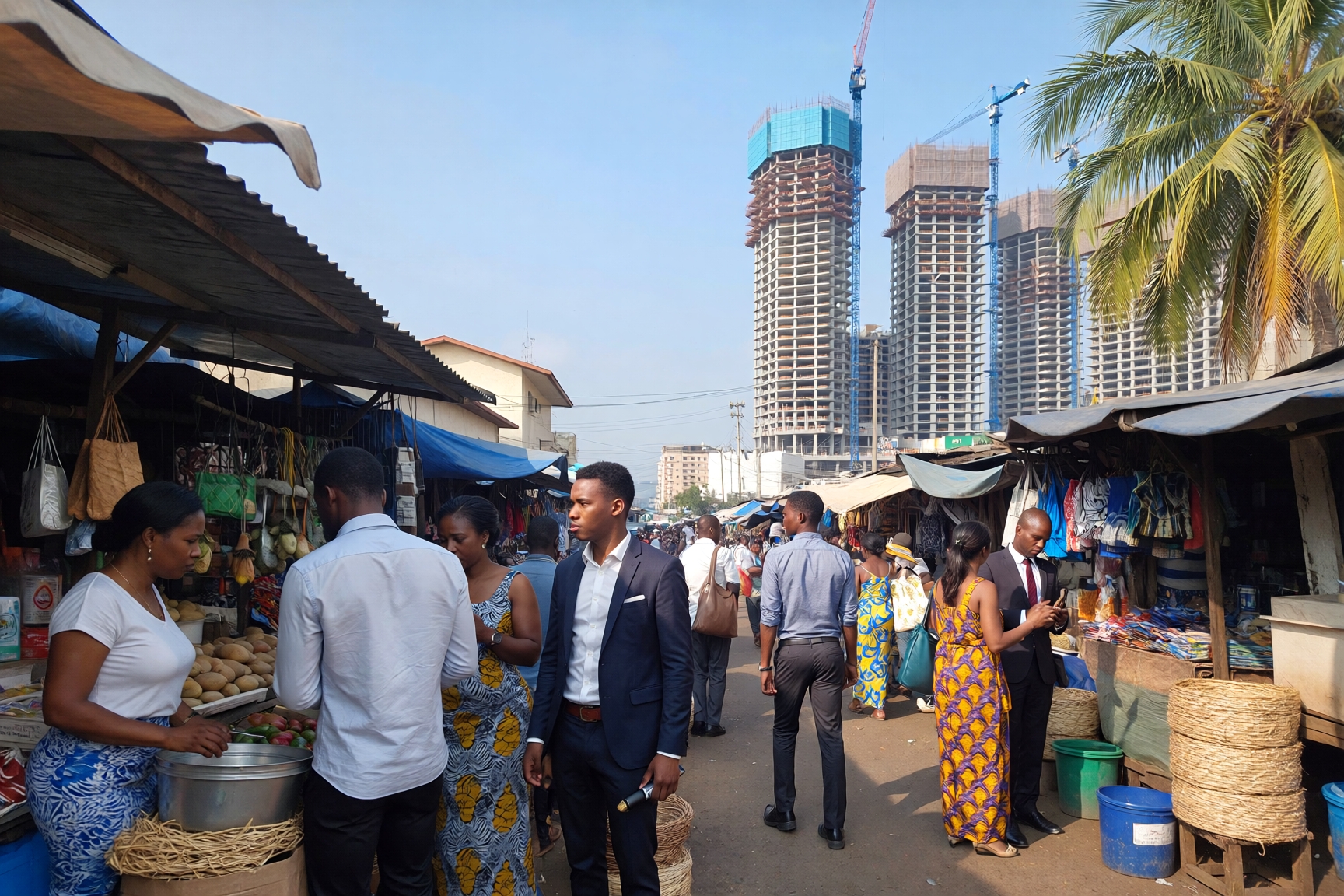
Hello there! If you’re wondering whether Nigeria is considered a rich or poor country, you’ve arrived at the right place. After months of research into this topic and years covering Nigeria’s economic landscape, I can tell you the answer is far more nuanced than a simple binary classification. This question matters deeply to every Nigerian, whether you’re planning your future, considering business investments, or simply trying to understand where our nation stands on the global stage.
The short answer? Nigeria exists in what economists call a paradox: we’re simultaneously one of Africa’s largest economies by total GDP while also housing one of the world’s largest concentrations of people living in poverty. It’s rather like owning a magnificent mansion but lacking the income to maintain it properly.
Throughout this article, we’ll explore the metrics that define economic wealth, examine Nigeria’s unique position, and understand why our country defies easy categorisation.
Is Nigeria a Wealthy or Poor Country?
Let me share something I’ve observed over years of economic reporting: Nigeria’s wealth status depends entirely on which lens you’re looking through. By some measurements, we appear impressively wealthy. By others, devastatingly poor.
Consider this: Nigeria boasts Africa’s largest economy when measured by nominal GDP. The National Bureau of Statistics reported our GDP at over 70 trillion Naira in recent quarters. We produce oil, possess vast agricultural resources, and maintain a population of over 200 million people contributing to economic activity. On paper, these figures suggest considerable wealth.
But here’s where things get complicated.

That same impressive GDP, when divided among our massive population, tells a completely different story. Our GDP per capita sits at approximately $824 as of 2024, down from over $3,000 just a decade ago. This means the average Nigerian has access to far less wealth than citizens in countries with smaller total economies. It’s the difference between a large family sharing a modest income versus a small household enjoying the same amount.
The 2022 Multidimensional Poverty Index revealed that 63% of Nigerians (133 million people) experience multidimensional poverty. We’re not just talking about low income here. This measurement captures deprivations in health, education, and living standards. Over half our population lacks access to clean energy for cooking, adequate sanitation, and reliable healthcare.
I remember interviewing market traders in Onitsha who perfectly embodied this paradox. They conducted businesses worth millions of Naira monthly, contributing to Nigeria’s impressive GDP figures. Yet they lacked reliable electricity, sent children to under-resourced schools, and couldn’t afford quality healthcare when emergencies struck. Were they wealthy business owners or struggling citizens?
Both.
This duality extends across our nation. We produce billionaires whilst simultaneously seeing poverty rates climb. Recent analyses from economists highlight that wealth in Nigeria has become increasingly concentrated amongst a tiny elite, whilst the majority experience declining living standards.
The World Bank’s classification system places Nigeria in the “lower-middle-income” category, though recent economic pressures have pushed us closer to low-income territory. This classification considers gross national income per capita, purchasing power parity, and other developmental indicators beyond simple GDP.
What makes someone truly wealthy isn’t just total income but purchasing power and quality of life. A Nigerian earning 500,000 Naira monthly might struggle to maintain living standards that someone earning equivalent amounts in Vietnam or Bangladesh enjoys, thanks to our higher inflation rates and weaker currency.
What Is the Richest Country in the World 2026?
When discussing Nigeria’s economic status, it helps to understand what genuine wealth looks like at the national level. The world’s richest countries in 2026 haven’t changed dramatically from recent years, though the gaps between them and developing nations continue widening.
The United States maintains its position as the world’s largest economy with a GDP exceeding $28 trillion. But here’s what’s instructive: America’s wealth isn’t measured merely by that impressive total. Their GDP per capita sits around $85,000, meaning the average American commands economic resources roughly 100 times greater than the average Nigerian.
China follows with the world’s second-largest economy at approximately $18 trillion GDP. Yet even China, with its massive population, achieves a GDP per capita around $13,000, still dwarfing Nigeria’s figures.
European nations like Germany, the United Kingdom, and France complete the top tier of wealthy economies. What these countries share isn’t just large GDPs but high GDP per capita, indicating their citizens generally enjoy substantial purchasing power and quality of life.
The truly wealthy nations exhibit certain characteristics we struggle to replicate in Nigeria. They’ve successfully industrialised, moving populations from subsistence agriculture into manufacturing and services. They maintain reliable infrastructure, robust educational systems, and effective governance structures. Their citizens access quality healthcare, education, and social safety nets.
I find it telling that when measuring national wealth by GDP per capita (a more accurate indicator of citizen wellbeing), small nations like Luxembourg, Ireland, and Singapore often top rankings. Luxembourg’s GDP per capita exceeds $120,000, achieved through financial services, strategic positioning, and efficient governance of a small population. These countries prove that national wealth isn’t about size or resources but how effectively you deploy what you possess.
Nigeria possesses resources these wealthy nations lack. We have more oil than Ireland, more land than Luxembourg, more people than most European countries combined. Yet we haven’t translated these advantages into broadly distributed prosperity.
The lesson? True national wealth manifests in citizens’ daily lives, not merely on economic spreadsheets. Wealthy countries feature functioning hospitals, reliable electricity, quality schools, and infrastructure that works. Their citizens spend less time struggling with basic necessities and more time pursuing opportunities for advancement.
Understanding Economic Classifications and Measurements
Economic classifications operate on multiple levels, and understanding these helps contextualise Nigeria’s position. International organisations use various metrics to categorise countries, each revealing different aspects of economic health.
The World Bank divides nations into four income categories: low-income, lower-middle-income, upper-middle-income, and high-income. These classifications use gross national income (GNI) per capita, adjusted for purchasing power. Nigeria sits in the lower-middle-income bracket, alongside countries like India, Kenya, and Bangladesh. This classification suggests we’ve moved beyond the poorest nations but remain far from economic comfort.
Key Economic Indicators: Nigeria Compared to Select Nations (2024-2025 Data)
| Country | GDP (Total) | GDP Per Capita | Poverty Rate (%) | HDI Ranking | Classification |
|---|---|---|---|---|---|
| Nigeria | $415 billion | $824 | 63% (MPI) | 161st | Lower-middle-income |
| India | $3.7 trillion | $2,612 | 16.4% | 134th | Lower-middle-income |
| United States | $28.7 trillion | $85,370 | 11.4% | 21st | High-income |
| South Africa | $380 billion | $6,485 | 55.5% | 109th | Upper-middle-income |
| Ghana | $75 billion | $2,363 | 24.2% | 133rd | Lower-middle-income |
| Kenya | $113 billion | $2,130 | 36.1% | 152nd | Lower-middle-income |
This comparison reveals Nigeria’s unique challenges: we possess a larger total economy than many peers but struggle with wealth distribution and human development outcomes that lag behind countries with smaller GDPs.
The Human Development Index (HDI) provides another lens. Compiled by the United Nations Development Programme, it measures life expectancy, education levels, and standard of living. Nigeria ranks 161st out of 191 countries, placing us in the “low human development” category despite our economic size. This ranking reflects realities every Nigerian knows: short average lifespans due to inadequate healthcare, insufficient educational opportunities, and limited access to basic services.
Multidimensional poverty measurements (like the one conducted by our National Bureau of Statistics) capture deprivations beyond income. These reveal that 65% of Nigeria’s poor live in the North, whilst 35% inhabit the South. The index examines whether households access clean energy, adequate sanitation, nutritious food, quality education, and healthcare. By these measurements, Nigeria performs poorly even compared to poorer nations with better social services.
The Gini coefficient measures income inequality within countries. Nigeria scores high on this index, indicating severe wealth concentration. A handful of billionaires control resources equivalent to what millions of ordinary Nigerians collectively possess. This inequality explains why impressive GDP figures don’t translate into widely felt prosperity.
I’ve noticed something interesting covering economic stories: Nigerians intuitively understand these distinctions even without formal economic training. Market women know that headline GDP growth doesn’t put food on their tables. University graduates recognise that being Africa’s largest economy means little when unemployment approaches 40%. The disconnect between macroeconomic statistics and lived experience defines modern Nigerian economic reality.

What Is the No. 1 Poorest Country?
Understanding extreme poverty globally provides important context for Nigeria’s situation. The title of “world’s poorest country” typically goes to Burundi, South Sudan, or the Central African Republic, depending on which measurement you use.
Burundi frequently ranks as the world’s poorest by GDP per capita, with figures around $280 annually. The nation has endured civil conflict, political instability, and lacks the natural resources Nigeria possesses. Citizens there face challenges that make even Nigeria’s difficulties seem manageable: near-total absence of infrastructure, minimal foreign investment, and persistent food insecurity affecting most of the population.
South Sudan, born from conflict in 2011, struggles with ongoing violence, displaced populations, and an economy dependent on oil exports that rarely benefit ordinary citizens. Their GDP per capita hovers around $300, with over 80% of the population living below the international poverty line.
The Central African Republic battles similar challenges. Despite possessing diamonds, gold, and other minerals, they rank amongst the world’s poorest due to endemic corruption, ongoing conflict, and virtually nonexistent infrastructure. Their GDP per capita sits below $500.
What separates these nations from Nigeria? Primarily scale and potential. Nigeria possesses functioning (albeit struggling) institutions, a large educated population, diverse economic sectors, and international recognition. We maintain diplomatic relations, attract some foreign investment, and possess the capacity for economic transformation that the world’s poorest nations lack.
However, here’s the sobering truth: Nigeria accounts for nearly 20% of Africa’s extremely poor population. The World Bank’s 2025 Africa Pulse report revealed that sub-Saharan Africa contains 80% of the world’s 695 million people living in extreme poverty (under $3 daily). Nigeria’s share of this burden is approximately 113 million citizens, placing us as a significant contributor to global poverty despite not being the poorest nation.
This creates a peculiar situation. We’re not the poorest country, but we house more poor people than most nations house people period. It’s rather like saying a building isn’t the shortest structure but contains the most basement levels.
Recent analysis from economic observers highlights how Nigeria transitioned from what some call a “golden age” in the 1970s to our current “gilded age” where surface prosperity masks deep poverty. During the oil boom decades, Nigeria’s currency was strong, inflation low, and living standards rising. That era feels like ancient history to most Nigerians today.
The question “what is the poorest country” also depends on which poverty you’re measuring. Monetary poverty? Multidimensional poverty? Access to opportunities? By some measures, Nigeria ranks amongst the world’s poorest despite our economic size. By others, we sit in middle positions. This ambiguity itself tells a story: we’re neither fully poor nor remotely wealthy, trapped in an uncomfortable middle ground.
Who Is Poorer, India or Nigeria?
The comparison between India and Nigeria fascinates economists because both nations share certain characteristics: massive populations, significant natural resources, colonial histories, and challenges with poverty and development. Yet their trajectories have diverged notably over recent decades.
Let me cut straight to it: by most meaningful metrics, India has pulled ahead of Nigeria economically, though both nations still grapple with significant poverty.
India’s total GDP exceeds $3.7 trillion, making it the world’s fifth-largest economy. Nigeria’s GDP sits around $415 billion, making us Africa’s largest but globally much smaller. This gap has widened over recent decades as India industrialised whilst Nigeria remained largely dependent on oil exports.
More tellingly, India’s GDP per capita reaches approximately $2,612, over three times Nigeria’s $824. This difference translates into tangible quality of life improvements for ordinary Indians compared to Nigerians. The average Indian citizen commands more economic resources, enjoys better infrastructure, and accesses superior services than their Nigerian counterpart.
Poverty rates tell a similar story. India’s national poverty rate sits around 16.4%, whilst Nigeria’s multidimensional poverty rate exceeds 63%. In absolute numbers, India certainly houses more poor people (around 230 million) than Nigeria (133 million), but that’s primarily because India’s population approaches 1.4 billion whilst Nigeria’s sits around 220 million. Proportionally, poverty affects Nigerians far more severely.
I’ve observed how this plays out in development outcomes. India has built a significant technology sector, manufacturing base, and service industry that employ hundreds of millions. Bangalore rivals global tech hubs. Mumbai hosts a thriving film industry alongside finance. Chennai manufactures automobiles for global markets. Nigeria’s Lag os, whilst Africa’s largest economy, struggles with basic infrastructure issues that hinder similar development.
India’s Human Development Index ranking (134th) surpasses Nigeria’s (161st), indicating their citizens generally enjoy longer lifespans, better education, and higher living standards. Indian life expectancy exceeds 70 years, whilst Nigeria’s sits around 55 years. Literacy rates in India reach 77%, compared to Nigeria’s approximately 62%.
The trajectory matters as much as current positions. India lifts millions from poverty annually through economic growth that creates jobs, particularly in manufacturing and services. Nigeria’s poverty rates have actually increased in recent years, with economic growth failing to generate sufficient employment or improve living conditions for most citizens.
However, this comparison shouldn’t discourage us. India faced similar challenges decades ago: high poverty, weak infrastructure, and limited industrialisation. Their progress stemmed from deliberate policy choices: investing heavily in education, encouraging manufacturing, and building infrastructure. These same pathways remain open to Nigeria if we muster the political will to pursue them.
Both nations struggle with income inequality, though Nigeria’s wealth concentration appears more extreme. Both battle corruption, though international indices consistently rank India as somewhat less corrupt than Nigeria. Both possess demographic advantages (young, large populations) that could drive growth if properly harnessed.
The question “who is poorer” thus has a clear answer: Nigerians experience poverty more intensely and widely than Indians. But more importantly, India demonstrates that large, diverse, post-colonial nations can chart paths out of poverty. Their success story should inspire rather than dismay us, showing what becomes possible with sustained commitment to development, education, and industrialisation.
Seven Steps to Understanding Nigeria’s Economic Reality
Understanding whether Nigeria is rich or poor requires looking beyond simple classifications. Here’s how to genuinely grasp our economic situation:
1. Examine GDP Per Capita, Not Just Total GDP
Nigeria’s impressive total GDP of 70+ trillion Naira misleads without context. Divide that among 220 million people and you see the reality: most Nigerians access minimal wealth despite living in Africa’s largest economy. Always check per capita figures when assessing national wealth.
2. Consider Multidimensional Poverty Measurements
Income alone doesn’t capture poverty’s full impact. The National Bureau of Statistics tracks deprivations in health, education, and living standards. These measurements reveal that 63% of Nigerians lack basic necessities beyond just money. True wealth means accessing quality healthcare, education, clean water, reliable electricity, and adequate nutrition, not merely earning above poverty-line incomes.
3. Compare Within Context, Not in Isolation
Nigeria appears wealthy compared to Burundi or South Sudan but poor compared to South Africa or Egypt. Even within our income bracket (lower-middle-income countries), we underperform peers like Vietnam or Bangladesh on human development indicators. Fair comparisons require examining similar-sized economies with comparable resources.
4. Understand Resource Curse Dynamics
Our oil wealth hasn’t translated into widespread prosperity, illustrating what economists call the “resource curse”. Nations with abundant natural resources often develop poorly compared to resource-scarce countries that invested in human capital and manufacturing. Norway and Nigeria both produce oil, but Norway built a trillion-dollar sovereign wealth fund whilst we struggle with fuel queues and poverty. The difference? Governance, diversification, and long-term planning.
5. Track Inequality Metrics Alongside Poverty Rates
Nigeria creates billionaires whilst poverty deepens, indicating severe inequality. Understanding this wealth concentration explains why economic growth doesn’t improve most people’s lives. When economic analysts note that one Nigerian billionaire’s wealth equals the annual income of over 3 million citizens, you glimpse the magnitude of this inequality.
6. Monitor Inflation and Currency Strength
The Naira’s declining value against major currencies erodes Nigerians’ purchasing power even when nominal incomes rise. Inflation consistently outpaces wage growth, meaning most Nigerians grow poorer annually despite apparent economic growth. A salary that seemed comfortable five years ago now barely covers necessities. This real-terms decline matters more than GDP statistics when assessing true wealth.
7. Assess Infrastructure and Service Delivery
Wealthy nations provide reliable electricity, clean water, quality schools, and functioning hospitals. Nigeria’s struggles in these areas signal our poverty more accurately than any statistic. When citizens generate their own electricity, purchase private water, pay for private education and healthcare, and navigate broken roads daily, no GDP figure can convince them they’re wealthy. Infrastructure quality reflects real economic development better than abstract measurements.
These steps reveal Nigeria’s complex reality: we possess considerable resources and economic potential but have failed to translate these into broadly distributed prosperity. Understanding this nuance helps navigate discussions about our economic status more intelligently than simply declaring ourselves “rich” or “poor”.
Is Nigeria Considered a Rich or Poor Country? The Direct Answer
Right, let’s address this question head-on with absolute clarity: Nigeria is classified as a lower-middle-income country that experiences high poverty rates despite possessing significant economic resources. We’re neither among the world’s poorest nations nor approaching wealthy status. Instead, we occupy an uncomfortable middle position characterised by enormous potential paired with persistent underdevelopment.
The Federal Ministry of Finance and international organisations consistently place Nigeria in the lower-middle-income bracket based on our GNI per capita. This classification acknowledges we’ve moved beyond low-income status (countries with per capita incomes below $1,085) but remain far from upper-middle-income territory (where countries like Brazil, China, and South Africa reside with per capita incomes between $4,466 and $13,845).
Specifically, Nigeria is considered economically poor when measured by how wealth impacts ordinary citizens’ lives. Our poverty rate of 63% places us amongst nations with the highest proportions of poor people globally. Over 130 million Nigerians lack adequate access to basic necessities, healthcare, education, and economic opportunities. This widespread deprivation defines our reality more accurately than our total GDP figures.
Yet we’re simultaneously “rich” in several respects: we possess Africa’s largest economy by nominal GDP, produce significant oil and gas reserves, maintain vast agricultural potential, house innovative and entrepreneurial populations, and sit on enormous untapped mineral resources. The cruel paradox is that these riches haven’t translated into prosperity for most citizens. It’s rather like having a wealthy relative who refuses to share their resources, constantly poor despite proximity to abundance.
This dual nature explains why asking whether Nigeria is rich or poor generates such varied responses. To international investors, Nigeria represents a major African market with growth potential. To ordinary Nigerians queuing for fuel, struggling with electricity ratios, and watching currency devaluation erode savings, Nigeria feels desperately poor. Both perceptions reflect genuine aspects of our reality.
Understanding this complexity matters because simplistic classifications lead to misguided solutions. Treating Nigeria purely as a poor country might justify foreign aid approaches that don’t address our governance and distribution challenges. Viewing us as wealthy might suggest problems stem merely from temporary difficulties rather than fundamental structural issues requiring systemic reform.
Factors Contributing to Nigeria’s Economic Classification
Several interconnected factors explain how Nigeria ended up in this peculiar economic position. Understanding these helps us comprehend not just where we are but how we arrived here.
Oil dependency tops the list. Since discovering petroleum in commercial quantities during the 1950s, Nigeria has become increasingly reliant on oil revenue. This dependence created what economists call “Dutch disease”, where resource exports strengthen currency whilst undermining other economic sectors. Our agriculture, once globally competitive, declined dramatically. Manufacturing never developed significantly. We became an import-dependent consumption economy rather than a production-oriented one.
I’ve watched how oil dependence truncated development across decades. Rather than using oil wealth to build infrastructure and diversify, successive governments consumed revenues on recurrent expenditure and allowed corruption to siphon billions. The result? When oil prices dropped or production faltered, we lacked alternative economic engines to maintain growth.
Governance failures compound our challenges. Corruption, policy inconsistency, and short-term thinking have prevented effective development planning. We’ve launched countless poverty alleviation programmes, from Operation Feed the Nation to NEEDS, yet poverty deepens. Why? Because programmes get abandoned with each government transition, funds disappear into private pockets, and political considerations override economic logic in policy decisions.
Infrastructure deficits severely constrain economic activity. Businesses spend fortunes generating their own electricity, drilling boreholes, and maintaining private security. These costs make Nigerian manufacturing uncompetitive globally. How can our textile industry compete with Asian imports when they pay double for electricity? How can agriculture thrive when farmers lose harvests to poor roads and lack storage facilities?
Population growth outpaces economic development. Nigeria’s population expands by approximately 2.6% annually, requiring the economy to grow significantly faster just to maintain current per capita income levels. We’re running hard merely to stay in place. Countries that successfully developed (like South Korea, Singapore, or Malaysia) coupled economic growth with declining birth rates, allowing prosperity to spread rather than being diluted across ever-larger populations.
Educational deficiencies limit our human capital development. Despite possessing one of Africa’s largest education systems, quality remains poor. University graduates often lack skills employers need. Millions of children never attend school or drop out early. Without educated, skilled populations, nations cannot industrialise or develop knowledge-based economies.
Security challenges increasingly constrain economic activity. From Boko Haram in the Northeast to banditry in the Northwest and separatist agitation in the Southeast, violence disrupts livelihoods, displaces populations, and discourages investment. Farming communities abandon fertile land. Businesses relocate. Tourism, which could generate billions, remains undeveloped because who visits conflict zones?
Exchange rate management has consistently failed. Rather than allowing market forces to establish equilibrium or building forex reserves through export diversification, we’ve cycled through various managed rate regimes that typically favour elites whilst ordinary Nigerians suffer. The resulting Naira weakness imports inflation, making life progressively more expensive for citizens.
The Path Forward: Can Nigeria Escape Poverty?
The crucial question isn’t merely whether Nigeria is rich or poor but whether we can transition from our current lower-middle-income, high-poverty status toward genuine prosperity. The answer, supported by both economic theory and global precedents, is yes, but success requires fundamental shifts in approach.
Economic diversification must become reality, not rhetoric. We’ve discussed reducing oil dependence for decades whilst remaining more reliant than ever. True diversification means developing competitive manufacturing sectors, modernising agriculture beyond subsistence farming, building service industries (particularly technology and finance), and creating value-added industries that process our raw materials domestically rather than exporting them for others to profit from.
I find hope in Nigeria’s technology sector, which has flourished despite government neglect rather than because of support. Lagos’s tech ecosystem generates billions in valuations, creates thousands of jobs, and positions Nigeria as Africa’s technology leader. Imagine if we applied similar innovation and dynamism to agriculture, manufacturing, and services, supported by proper infrastructure and sensible regulation.
Infrastructure investment must become priority number one. Every naira spent on reliable electricity, quality roads, efficient ports, and modern rail generates multiplier effects throughout the economy. We cannot industrialise without power. We cannot trade efficiently without transport infrastructure. We cannot compete globally without modern facilities. The Budget Office should prioritise capital expenditure over recurrent costs, building assets that generate long-term returns rather than consuming revenues on salaries and allowances.
Education reform needs urgent attention. We require both quantity (enrolling out-of-school children) and quality (improving what schools teach). Curriculum should emphasise skills employers need: technical abilities, critical thinking, entrepreneurship, and digital literacy. We must also massively expand vocational training, recognising that not everyone needs university degrees but everyone needs marketable skills.
Governance improvements remain fundamental. No policy succeeds when corruption diverts resources, incompetence bungles implementation, and political considerations override technical advice. We need meritocratic civil service, accountable institutions, transparent budgeting, and consequences for corruption. Countries that escaped poverty generally did so after establishing reasonably effective governance.
Population management deserves frank discussion. Whilst large populations can be assets (as China and India demonstrate), rapidly growing populations strain resources. Investing in family planning, girls’ education, and women’s empowerment (all proven to reduce birth rates) would allow economic growth to increase per capita incomes rather than being diluted across expanding populations.
Regional cooperation and continental integration through the African Continental Free Trade Area offer opportunities. Nigeria’s large market can anchor regional value chains. We could manufacture goods for African consumers rather than depending on imports from Asia and Europe. But this requires competitive industries, which circles back to infrastructure and governance.
Security stabilisation is non-negotiable. Investors cannot operate where violence threatens. Farmers cannot produce where bandits roam. Citizens cannot prosper whilst fearing for safety. Addressing security requires both military responses and tackling underlying grievances: unemployment, marginalisation, and lack of opportunity that push youth toward violence.
The question isn’t whether Nigeria can escape poverty but whether we possess the collective will to make hard choices required for transformation. History shows that late developers can catch up remarkably quickly when they get policies right. South Korea went from poverty to prosperity in one generation. Vietnam transformed from war-torn nation to manufacturing hub in three decades. Bangladesh, once dismissed as hopeless, now outperforms Pakistan on most development indicators.
Conclusion: Understanding Nigeria’s Economic Reality for a Better Future
After this comprehensive exploration, we can conclusively answer our original question: Is Nigeria considered a rich or poor country? Nigeria is officially classified as a lower-middle-income nation experiencing severe poverty despite possessing significant natural resources and economic potential. We house Africa’s largest economy by total GDP whilst simultaneously containing one of the world’s largest populations of poor people. This paradox defines modern Nigerian economic reality.
The gap between our resources and our citizens’ lived experiences represents perhaps the greatest tragedy of post-independence Nigeria. We possess everything needed for prosperity: oil, gas, minerals, fertile land, an enormous population, strategic location, and entrepreneurial spirit. Yet most Nigerians struggle with poverty that shouldn’t exist given our national wealth. This isn’t fate or bad luck but the result of choices, policies, corruption, and governance failures that we can potentially reverse through concerted effort.
Understanding Nigeria’s true economic status matters because clarity enables better solutions. Recognising that we’re neither hopelessly poor nor secretly wealthy allows realistic assessment of challenges and opportunities. We needn’t accept current poverty as permanent, but we also shouldn’t pretend problems are minor or easily fixed. Transformation requires sustained commitment to infrastructure development, economic diversification, governance reform, educational investment, and addressing the inequality that concentrates wealth among elites whilst millions languish in deprivation.
Key Takeaways
- Nigeria is classified as a lower-middle-income country with a GDP per capita of $824, approximately 100 times smaller than wealthy nations like the United States, despite being Africa’s largest economy by total GDP at over $400 billion.
- Over 63% of Nigerians (133 million people) experience multidimensional poverty, lacking adequate access to healthcare, education, clean energy, and sanitation, making Nigeria one of the world’s largest contributors to global poverty despite not being the poorest nation.
- Nigeria’s economic potential remains largely untapped due to oil dependency, governance failures, infrastructure deficits, and severe income inequality, but transformation remains possible through diversification, improved governance, and strategic infrastructure investment.
Related Articles
As you’ve explored Nigeria’s economic classification and poverty challenges, you might find value in understanding related aspects of our national reality. Our previous discussions of Nigerian living standards examine how economic metrics translate into daily life experiences, showing how GDP figures and poverty rates manifest in healthcare access, education quality, and infrastructure availability. These insights complement today’s analysis by connecting abstract economic classifications to tangible realities Nigerians navigate constantly.
Understanding Nigeria’s economic position also benefits from examining similar questions about our resources and governance. Looking beyond economics into how we’re addressing governance and security challenges provides fuller context for why resource wealth hasn’t translated into citizen prosperity, and what systemic changes might unlock our enormous potential for broadly shared development.
FAQ: Is Nigeria Considered a Rich or Poor Country?
Is Nigeria considered a rich country?
Nigeria is not considered a rich country by international standards, despite being Africa’s largest economy by nominal GDP. Our classification as a lower-middle-income nation with GDP per capita of only $824 places us among the world’s poorer nations, with over 63% of citizens experiencing multidimensional poverty.
What makes a country officially “wealthy” or “poor”?
Countries are classified by organisations like the World Bank using gross national income per capita, with high-income nations exceeding $13,845 per person annually, whilst low-income countries fall below $1,085. Additional factors include human development indices, poverty rates, infrastructure quality, and citizens’ access to basic services beyond simple income measurements.
How does Nigeria’s economy compare to other African nations?
Nigeria possesses Africa’s largest economy by total GDP at approximately $415 billion but ranks poorly on per capita measurements and human development indicators. South Africa, Egypt, and Algeria achieve higher GDP per capita despite smaller total economies, whilst countries like Ghana and Kenya show better poverty reduction trajectories despite smaller economic sizes.
Why is Nigeria poor despite having oil wealth?
Nigeria’s oil wealth failed to generate widespread prosperity due to corruption, mismanagement, lack of economic diversification, and poor governance that concentrated benefits among elites. The “resource curse” phenomenon saw oil dependency undermine agriculture and manufacturing whilst successive governments consumed revenues rather than investing in infrastructure, education, and economic transformation.
Has Nigeria always been economically struggling?
Nigeria experienced relative prosperity during the 1970s oil boom when our currency was strong, infrastructure functional, and living standards rising. Economic decline began in the 1980s with falling oil prices, accumulated debt, structural adjustment programmes, and governance failures that eroded earlier gains and established patterns of corruption and mismanagement persisting today.
What is Nigeria’s poverty rate?
Nigeria’s multidimensional poverty rate stands at 63%, meaning 133 million people lack adequate access to basic necessities including healthcare, education, clean energy, sanitation, and nutritious food. Additionally, approximately 40% of Nigerians live below the national monetary poverty line of 137,430 Naira annually in real per capita expenditures.
Is India richer than Nigeria?
Yes, India significantly surpasses Nigeria economically with a GDP per capita of $2,612 compared to Nigeria’s $824, and a poverty rate of 16.4% versus Nigeria’s 63%. India’s total economy exceeds $3.7 trillion (compared to Nigeria’s $415 billion), and they rank higher on human development indices despite having a much larger population.
Which African country is the richest?
South Africa typically ranks as Africa’s most developed economy with GDP per capita around $6,485, whilst Nigeria claims the largest total GDP at approximately $415 billion. Egypt possesses the third-largest African economy whilst Seychelles boasts Africa’s highest GDP per capita at over $12,000, demonstrating how total economic size differs from citizen wealth.
Can Nigeria become a wealthy nation?
Nigeria possesses potential for economic transformation through diversification beyond oil, infrastructure development, governance reform, educational investment, and industrialisation. Historical precedents from South Korea, Vietnam, and Bangladesh demonstrate that sustained commitment to effective policies can generate rapid development, though success requires political will and fundamental systemic changes.
What is the difference between GDP and GDP per capita?
GDP measures a nation’s total economic output, whilst GDP per capita divides that total among the population to show average individual wealth. Nigeria’s large total GDP masks poverty because our massive population means that economic output, when distributed, provides minimal resources per person, explaining why we’re simultaneously Africa’s largest economy and home to millions in poverty.
How does corruption affect Nigeria’s economy?
Corruption diverts billions from infrastructure, education, and healthcare into private accounts, undermines business confidence, increases operational costs through bribery, distorts market competition, and perpetuates poverty by ensuring resources benefit elites rather than citizens. Estimates suggest corruption costs Nigeria tens of billions of dollars annually that could otherwise fund development.
What would improve Nigeria’s economic classification?
Improving Nigeria’s economic status requires economic diversification beyond oil, massive infrastructure investment especially in electricity and transport, governance reforms to reduce corruption, educational improvements, manufacturing development, agricultural modernisation, and policies that distribute growth benefits more equitably rather than concentrating wealth among a tiny elite.

