 Follow Us on Google News
 Follow Us on Google Discover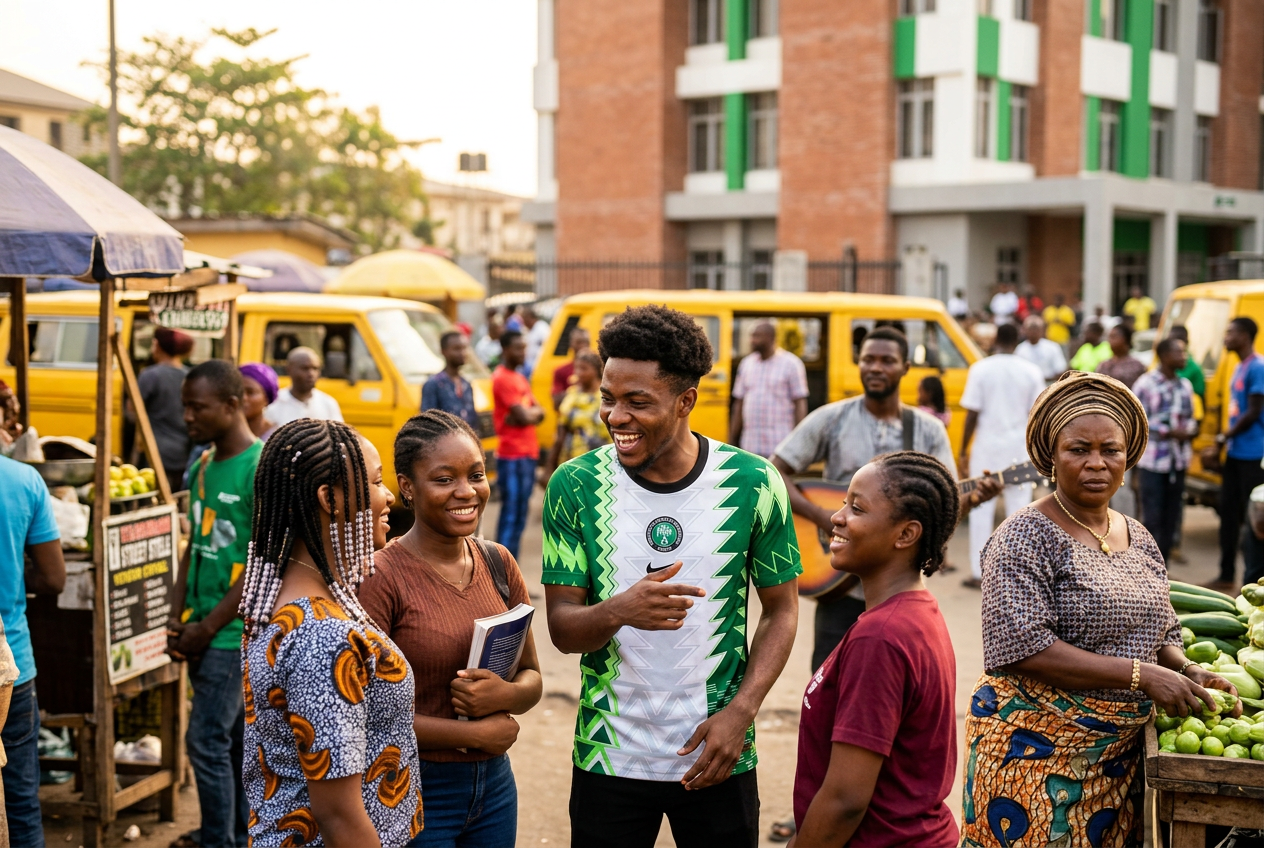
Welcome, friend, and do pull up a chair. If you have ever caught yourself wondering what Nigerians are famous for, then you have arrived at exactly the right place, because this article is the happy conclusion of months of research and years of living, working, and laughing alongside Nigerians on three continents. I have danced at owambe parties until my feet ached, argued passionately about jollof rice with people who became lifelong friends, and watched a quiet nation grow into one of the loudest cultural voices on the planet. So consider this your warm, honest, slightly opinionated guide to a country that refuses to be ignored.
Let me say it plainly before we go any further. Nigerians are famous for their music, their films, their food, their entrepreneurial fire, their towering literary talent, and a kind of joyful resilience that you simply cannot fake. That is the short answer. The long answer, which is far more fun, takes up the rest of this piece.
Rather like trying to describe the taste of a perfectly ripe mango to someone who has never had one, capturing Nigeria in a few words feels almost unfair. But we shall try anyway.
Five Quick Facts That Capture What Nigeria Is Famous For
Before we get into the heart of it, let us lay down a few foundations. Nigeria is the giant of Africa, and the numbers explain why.
First, Nigeria is the most populous country in Africa, home to roughly 242 million people according to the National Bureau of Statistics and United Nations projections. That is more people than Russia, packed into a space smaller than the state of Texas plus a bit.
Second, the country is staggeringly diverse. There are more than 250 ethnic groups and over 500 indigenous languages spoken across its borders, a richness the National Institute for Cultural Orientation describes as one of the nation’s greatest assets. Imagine the breakfast conversation at a Lagos office where Yoruba, Igbo, Hausa, English, and Pidgin all take their turn before the coffee has even gone cold.

Third, Nigeria runs on youth. The median age sits at around 18 years, making it one of the youngest populations on earth. Walk through any market and you feel that energy practically humming in the air.
Fourth, the country is an entertainment powerhouse. Nollywood, regulated by the National Film and Video Censors Board, produces roughly 2,500 films a year, second only to India’s Bollywood by sheer volume.
Fifth, Nigerian hospitality is legendary. There is an unwritten law that no guest leaves a Nigerian home hungry, and woe betide the host who breaks it.
Those five facts barely scratch the surface, but they tell you something important. This is a nation that does very little quietly.
So, What Are Nigerians Famous For? The Honest Answer
Here is the question you actually came for, answered directly and without the usual fluff.
Nigerians are famous, above all, for their outsized cultural influence relative to the rest of the world, expressed through a handful of unmistakable exports. The clearest examples of what Nigerians are famous for include Afrobeats music (through global stars like Burna Boy, Wizkid, Davido, Tems, and Rema), Nollywood cinema, world-class literature (from Chinua Achebe and Wole Soyinka to Chimamanda Ngozi Adichie), a fierce entrepreneurial spirit, beloved cuisine such as jollof rice, suya, and egusi soup, colourful traditional fashion like Ankara and Agbada, and a sporting pedigree that has sent champions into football, boxing, athletics, and mixed martial arts. Underpinning all of it is a national character built on optimism, hustle, and community that persists through every hardship.
That, in one breath, is what Nigerians are famous for. Now let us slow down and savour each of these properly, because each one deserves its moment.
What Is Nigeria Special For? Beyond the Stereotypes
Ask ten people what makes Nigeria special and you will get ten passionate answers, usually delivered at volume.
For me, the specialness begins with the music. Afrobeats has gone from Lagos street parties to sold-out arenas in London, New York, and beyond. The genre blends traditional rhythms with modern production into something that feels both ancient and brand new. If you have followed Burna Boy’s rise to global stardom, you have watched a Nigerian artist carry the sound of an entire continent onto the world’s biggest stages, Grammy and all.
Then there is the cinema. I have watched Nollywood grow from grainy straight-to-video dramas in the 1990s into streaming productions that sit comfortably on Netflix beside Hollywood titles. The industry employs hundreds of thousands of people and serves as Nigeria’s cultural ambassador across Africa and the diaspora.
Nigerian literature is another quiet giant. Chinua Achebe’s “Things Fall Apart” remains one of the most widely read African novels ever written, and Chimamanda Ngozi Adichie’s TED talks reach tens of millions. These are not niche achievements. They shape how the world thinks about identity, feminism, and storytelling.
And the food. Oh, the food. Have you ever sat around a steaming pot of jollof rice at a family celebration, watching three different aunties claim their state makes it best? It is a sacred argument, and I have witnessed debates that nearly came to blows over a pot of rice. (I love every second of it.)
Nigeria’s Global Footprint by the Numbers
To see just how special Nigeria’s cultural reach really is, it helps to put the headline figures side by side.
| What Nigeria Is Famous For | Key Figure | What It Means |
|---|---|---|
| Population | About 242 million | Africa’s most populous nation and sixth-largest on earth |
| Ethnic groups | More than 250 | Each with its own language, dress, and customs |
| Indigenous languages | Over 500 | Among the most linguistically diverse nations anywhere |
| Nollywood output | Roughly 2,500 films a year | Second only to India’s Bollywood by volume |
| Median age | About 18 years | One of the youngest populations in the world |
| Afrobeats reach | Billions of global streams | Headlining festivals from Coachella to Europe |
The table tells a simple story. Nigeria punches far above its weight in culture, exporting music, film, and language to a global audience that keeps growing every single year.
If you want to experience this specialness first-hand rather than from a distance, here is exactly where I would start.
- Build an Afrobeats playlist that goes beyond one hit. Add Burna Boy, Wizkid, Tems, Ayra Starr, Rema, and Asake, then notice how traditional drums hide inside modern beats.
- Watch two or three Nollywood films back to back. Try “The Wedding Party” for comedy and “King of Boys” for drama, both streaming and budget-friendly at around ₦5,000 a month.
- Find a Nigerian restaurant or, better still, befriend a Nigerian who will invite you home. Order jollof rice, pounded yam with egusi, and suya, and expect to be fed far too much.
- Read Chimamanda Ngozi Adichie’s “Americanah” to understand the Nigerian and the diaspora experience in one sitting.
- Attend an owambe party if you ever get the invitation. Wear the aso-ebi fabric (a coordinated set usually costing ₦15,000 to ₦50,000), and learn to spray money during the dancing.
- Watch a Super Eagles match in a crowded viewing centre. Entry is often just ₦200 to ₦500, and the shared roar when Nigeria scores is worth every kobo.
Do those six things and you will understand Nigeria better than any encyclopaedia could teach you.
Why Are Nigerians So Strong? The Roots of a Resilient People
When people ask why Nigerians are so strong, they usually mean two things at once: physical strength and the deeper strength of spirit. Both deserve an answer.
On the physical side, Nigeria has a genuine sporting pedigree. The Super Eagles have qualified for more World Cups than any other African nation, and Nigerian heritage runs through boxing champion Anthony Joshua, UFC star Israel Adesanya, and a long roll call of footballers, sprinters, and basketballers competing at the very top. Tobi Amusan even holds the world record in the 100 metres hurdles. There is something in the combination of fierce competition, deep talent pools, and sheer determination that keeps producing champions.
But the strength that impresses me most is not measured in medals.
It is the resilience. Nigerians have built thriving businesses, vibrant communities, and a globally celebrated culture while navigating economic turbulence, infrastructure gaps, and political ups and downs that would flatten many people. The hustle is real, and so is the optimism that fuels it.
I once watched a Lagos trader lose a day’s stock to a sudden downpour, shrug, crack a joke, and start planning the next day before the rain had even stopped. That is the Nigerian strength I mean. It is the refusal to be kept down, passed from one generation to the next like a family heirloom.
Community plays a huge part too. Nobody truly struggles alone in Nigerian culture, because extended family, neighbours, religious congregations, and old school friends form a safety net woven from obligation and affection. When one person rises, the whole network feels lifted.
What Are Nigerian Women Known For?
Now to a question that deserves care and honesty, because Nigerian women are extraordinary and too often reduced to lazy clichés.
Nigerian women are known, first and foremost, for strength of character. They are entrepreneurs, professors, market queens, surgeons, authors, and activists, frequently holding family and career together with a grace that astonishes me.
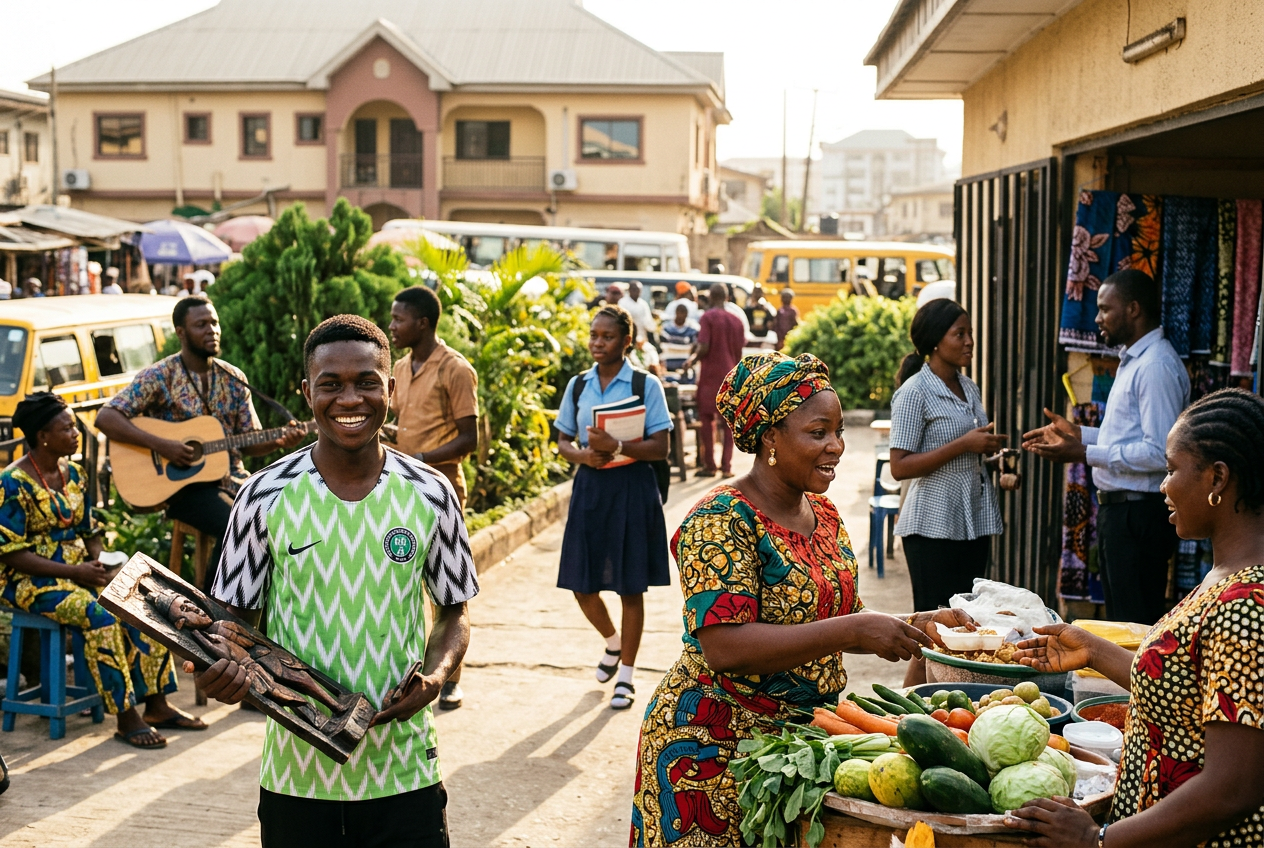
They are also known for a remarkable sense of style. Nigerian fashion is bold, expressive, and unapologetic, from the elaborate gele (head tie) that can take genuine skill to wrap, to flowing Ankara prints, to the statement-making outfits at every celebration. Style here is a language, and Nigerian artists have long understood that a great look turns heads as fast as a great song does, which is exactly why pieces on how Nigerian artists turn fashion into a statement resonate so widely.
A quick styling note, since we are here. If you want to honour Nigerian fashion respectfully, invest in well-made Ankara from a local tailor rather than mass-produced imitations, let the print be the star by keeping accessories simple, and never underestimate the power of a confident gele. Colour is celebrated, not feared, so embrace the bold combinations.
Beyond style, Nigerian women are celebrated for their role as cultural anchors. They carry recipes, languages, proverbs, and traditions across generations, often serving as the keepers of family memory. They are also increasingly global. Names like Chimamanda Ngozi Adichie, Asisat Oshoala, and Tems sit comfortably among the most influential people in their fields anywhere on earth.
Are there stereotypes? Of course, and many are tiresome and unfair. The reality is far richer and more varied than any single image could hold.
Bringing It All Together: What Nigerians Are Famous For
So, what are Nigerians famous for, when all is said and done?
They are famous for turning limited resources into world-changing art. For music that makes strangers dance together. For films that travel from Lagos to living rooms across the globe. For literature that reshapes how we see ourselves. For food worth arguing over, fashion worth celebrating, and a hustle that simply does not quit.
Most of all, Nigerians are famous for a spirit that blends fierce ambition with genuine warmth. It is a country that has decided, again and again, to meet hardship with creativity and joy rather than despair.
If this article has done its job, you will not just know what Nigerians are famous for. You will want to experience it. So stream the music, watch the films, taste the food, read the books, and if you are ever lucky enough to be invited to a Nigerian celebration, say yes immediately and bring your appetite.
Here are three actionable takeaways to carry with you:
- Start with culture you can access today. Build an Afrobeats playlist, stream a Nollywood film, and read one Nigerian novel this month for under ₦5,000.
- Look past the stereotypes. Nigeria’s real story is its diversity of more than 250 ethnic groups, its youth, and its resilience, not any single headline.
- Engage with people, not just products. The fastest way to understand what Nigerians are famous for is to share a meal and a conversation with one.
Related Articles
If you enjoyed this, you may also like these two pieces of mine that go deeper into the topics we touched on today. To understand the traditions and ethnic identities underpinning the country, read What is the Biggest Culture in Nigeria?. And for a thoughtful look at the assumptions people make about women, have a read of What Are Five Stereotypes of Females?.
Frequently Asked Questions About What Nigerians Are Famous For
What are Nigerians famous for around the world?
Nigerians are famous worldwide for Afrobeats music, Nollywood films, acclaimed literature, entrepreneurial drive, beloved cuisine like jollof rice, and sporting champions. Underlying all of it is a reputation for warmth, resilience, and infectious optimism.
What are 5 facts about Nigeria?
Nigeria is Africa’s most populous nation with around 242 million people, has more than 250 ethnic groups, and speaks over 500 indigenous languages. It also has a median age of about 18 years and runs the world’s second-largest film industry by output.
Why are Nigerians considered so strong?
Nigerians are seen as strong both physically, through champions in football, boxing, athletics, and mixed martial arts, and in spirit, through remarkable resilience. That resilience comes from tight community bonds and a refusal to be defeated by hardship.
What is Nigeria special for?
Nigeria is special for its enormous cultural influence, exporting Afrobeats, Nollywood films, and globally celebrated literature far beyond its borders. It is also special for its diversity, its youthful energy, and its legendary hospitality.
What are Nigerian girls known for?
Nigerian women are known for strength of character, entrepreneurial success, and a bold, expressive sense of style. They are also celebrated as cultural anchors who carry traditions, languages, and family memory across generations.
Is Nigeria the giant of Africa?
Yes, Nigeria is widely called the giant of Africa thanks to its position as the continent’s most populous country and one of its largest economies. Its cultural exports in music, film, and literature amplify that influence globally.
What food is Nigeria most famous for?
Nigeria is most famous for jollof rice, a spiced one-pot dish that sparks friendly rivalry across West Africa. Other beloved staples include suya, pounded yam with egusi soup, moi-moi, and pepper soup.
Which Nigerian musicians are world famous?
Burna Boy, Wizkid, Davido, Tems, Rema, and Ayra Starr are among the most globally recognised Nigerian artists today. They have headlined major festivals, won international awards, and helped carry Afrobeats onto the world stage.
Why is Nollywood so famous?
Nollywood is famous for producing roughly 2,500 films a year, making it the second-largest film industry in the world by volume after Bollywood. It tells authentically Nigerian stories that resonate across Africa and the diaspora.
Are Nigerians known for being entrepreneurial?
Yes, Nigerians are renowned for an entrepreneurial spirit that thrives even in difficult conditions. From Lagos tech hubs to market traders building empires from single stalls, the hustle mentality runs deep in the culture.
What traditional clothing is Nigeria famous for?
Nigeria is famous for vibrant traditional attire including Ankara prints, the flowing Agbada, and the elaborate gele head tie. Each ethnic group has its own distinctive styles, fabrics, and ceremonial dress.
How can I experience Nigerian culture if I cannot travel there?
You can experience Nigerian culture by streaming Afrobeats and Nollywood films, reading Nigerian authors like Chimamanda Ngozi Adichie, and visiting a local Nigerian restaurant. Connecting with Nigerians in your community brings the culture to life faster than anything else.

