 Follow Us on Google News
 Follow Us on Google Discover
Welcome, dear readers, to what I genuinely believe is one of the most important explorations of Nigerian identity you’ll encounter. After months of dedicated research traversing Nigeria’s six geopolitical zones, attending countless cultural ceremonies from Lagos to Kano, and drawing upon years of documenting African cultural practices, I’m absolutely delighted to share this comprehensive guide with you. What culture does Nigeria have is a question that deserves far more than a superficial answer, because Nigerian culture represents one of the most magnificent, complex, and influential cultural systems on the African continent.
I still remember my first Eyo Festival in Lagos. The white-robed masquerades gliding through the streets like ancestral spirits, the pulsing drums echoing off colonial-era buildings, the crowds of Lagosians from every ethnic background pausing their daily hustle to witness this ancient Yoruba ceremony. That moment crystallised something essential about Nigerian culture: it’s simultaneously ancient and modern, deeply rooted in specific ethnic traditions yet constantly evolving through urban mixing and global influences. Nigeria encompasses 371 distinct ethnic groups speaking over 500 languages, creating a cultural landscape so diverse that describing “Nigerian culture” requires acknowledging both the extraordinary variety within our borders and the unifying national characteristics that bind us together.
The Nigerian Ministry of Foreign Affairs emphasises our rich cultural heritage as a defining national strength, recognising that our diversity creates both challenges and exceptional opportunities for cultural innovation. As Guardian Nigeria opinion writers have explored, languages carry traditional wisdom, folklore, and oral history that cannot be fully translated into another tongue, making cultural preservation urgent. What makes Nigerian culture particularly fascinating is how we’ve managed to maintain distinct ethnic identities whilst simultaneously building pan-Nigerian cultural expressions through music, food, fashion, and shared national experiences.
Understanding Nigeria’s Primary Cultural Framework
Before we can properly answer what culture Nigeria has, we need to understand the fundamental structure of Nigerian cultural identity. Nigerian culture doesn’t exist as a single monolithic entity (though some elements do unite us). Instead, it operates on multiple interconnected levels that Nigerians navigate daily with remarkable fluidity.
At the ethnic level, each of our 371 groups maintains distinct languages, traditional governance systems, religious practices, artistic expressions, and social customs that have evolved over centuries. The three largest groups (Hausa-Fulani, Yoruba, and Igbo) collectively represent roughly 60% of Nigeria’s 230 million population, whilst the remaining 40% distribute across 368 other ethnic groups, many numbering in the millions.
I learnt this complexity firsthand during research in Plateau State, where I encountered seven different ethnic groups within a single local government area. Each maintained separate languages, traditional festivals, and marriage customs whilst simultaneously identifying as “Plateau indigenes” and Nigerians. That layering is quintessentially Nigerian.

At the regional level, geographical and historical factors created broader cultural zones. Northern Nigeria (predominantly Muslim, Hausa-Fulani influenced, with Islamic architectural styles and social organisation) differs markedly from Southern Nigeria (predominantly Christian, with Yoruba and Igbo cultural dominance, more individualistic social structures). The Middle Belt occupies a fascinating transitional space where northern and southern cultural influences blend.
What’s rather wonderful is how Nigerians code-switch between these identity layers effortlessly. A Lagos businessman might wear Western suits during the week, elaborate traditional agbada robes for weekend festivities, speak Yoruba at home, English at work, and Nigerian Pidgin in the market, without experiencing any contradiction. This multiplicity defines Nigerian cultural competence.
The Three Dominant Cultural Blocks Shaping Nigeria
Whilst Nigeria has 371 ethnic groups, three cultural blocks dominate our national conversation, politics, media representation, and cultural production. Understanding these “big three” provides the foundation for understanding Nigerian culture more broadly, though we must always remember they represent only 60% of our population.
The Hausa-Fulani cultural block dominates Northern Nigeria, particularly in states like Kano, Katsina, Sokoto, and Kaduna. This culture reflects centuries of Islamic influence dating back to the 10th century Arab trading contacts, the powerful Sokoto Caliphate that ruled much of Northern Nigeria in the 19th century, and pastoral traditions from Fulani migration patterns. Hausa culture emphasises hierarchical social organisation, Islamic scholarship (with ancient manuscript traditions), elaborate ceremonial protocols around traditional rulers (Emirs), and rich textile traditions including the distinctive baban riga robes and intricate embroidery work.
According to cultural documentation from the National Council for Arts and Culture, Northern cultural values prioritise communal harmony, respect for age and authority, gender separation in social settings, and religious devotion that structures daily life from prayer times to food customs. The cultural practice of “kulle” (wife seclusion) exists in some conservative communities, whilst urban Northern Nigeria increasingly blends traditional values with modern lifestyles.
The Yoruba cultural block centres in Southwest Nigeria (Lagos, Oyo, Ogun, Osun, Ondo, Ekiti states) and represents one of Africa’s most culturally sophisticated ancient civilisations. The Yoruba developed complex urban centres like Ile-Ife and Old Oyo centuries before European contact, created remarkable bronze and brass artworks that rival anything produced globally, and established elaborate religious systems (Orisha worship) that influenced diaspora cultures throughout the Americas. Yoruba culture values education exceptionally highly, maintains elaborate age-grade societies and chieftaincy systems, celebrates artistic expression through music, dance, and visual arts, and practises elaborate ceremonial protocols around respect and social hierarchy.
I’ve attended Yoruba naming ceremonies where the precision of ritual performance, the literary quality of oriki (praise poetry), and the symbolic significance of every element revealed cultural sophistication developed over millennia. The Yoruba proverb culture (owe) embeds philosophical wisdom in everyday conversation, making casual discussions surprisingly profound.
The Igbo cultural block dominates Southeast Nigeria (Anambra, Imo, Abia, Enugu, Ebonyi states) and emphasises republican governance traditions, entrepreneurial spirit, achievement orientation, and vibrant masquerade traditions. Unlike the hierarchical Hausa-Fulani and Yoruba systems, traditional Igbo society operated through consensus-based village councils rather than centralised monarchies. This cultural difference profoundly shapes modern Igbo identity.
Igbo culture celebrates individual achievement and commercial success, maintains elaborate title-taking ceremonies (Ozo, Nze) that recognise accomplishment, practises intricate funeral rites that honour ancestors, and values competitive excellence in all endeavours. The Igbo expression “onye aghala nwanne ya” (be your brother’s keeper) captures communal responsibility that balances fierce individualism. My Igbo colleagues often joke that “even our cooperation is competitive!”
These three blocks shape Nigerian national culture through their demographic weight, economic power, political influence, and cultural production. Nollywood films, Afrobeats music, and Nigerian fashion all draw heavily from these three traditions whilst increasingly incorporating elements from minority groups.
Ten Universal Cultural Examples Found Across Nigerian Society
When people ask for examples of culture, they’re often seeking concrete practices that define daily life. Nigerian culture provides rich examples across every category of human cultural expression. Let me walk you through ten fundamental cultural examples that appear consistently across our diverse ethnic landscape.
1. Extended Family Systems and Communal Responsibility
Nigerian culture universally emphasises extended family over nuclear family units. Your “family” includes grandparents, aunts, uncles, cousins, in-laws, and even distant relatives who share your surname. Financial obligation extends beyond immediate household to include supporting siblings’ education, contributing to family home construction, and providing for elderly parents. I’ve watched successful Nigerian professionals support 10 or 15 relatives financially without complaint. That’s not exceptional generosity, it’s cultural expectation. The burden (and beauty) of this system shapes everything from career choices to marriage decisions.
2. Elaborate Traditional Ceremonies Marking Life Transitions
Nigerians celebrate major life events (birth, coming of age, marriage, death) with multi-day ceremonies involving entire communities. Naming ceremonies eight days after birth feature prayers, symbolic foods, and formal introduction of the child to family and community. Traditional weddings involve bride price negotiations, extensive gift exchanges, and ceremonies honouring both families’ ancestors. Funerals, particularly for elderly people who lived well, transform into celebrations featuring entertainment, elaborate food, and hundreds of attendees. These ceremonies cost anywhere from ₦500,000 for modest events to ₦20 million or more for prominent families.
3. Respect Protocols Based on Age and Social Status
Age commands automatic respect across all Nigerian cultures. Children kneel or prostrate when greeting elders (specific gestures vary by ethnic group, but the principle remains universal). You address older people with respectful titles (Uncle, Aunty, Sir, Ma) even if they’re not related to you. Younger people serve food to elders first, offer seats to older people, and defer to their opinions in family discussions. Challenging an elder publicly, even when they’re objectively wrong, constitutes serious social transgression that damages your reputation.
4. Distinctive Traditional Dress Varying by Ethnic Group
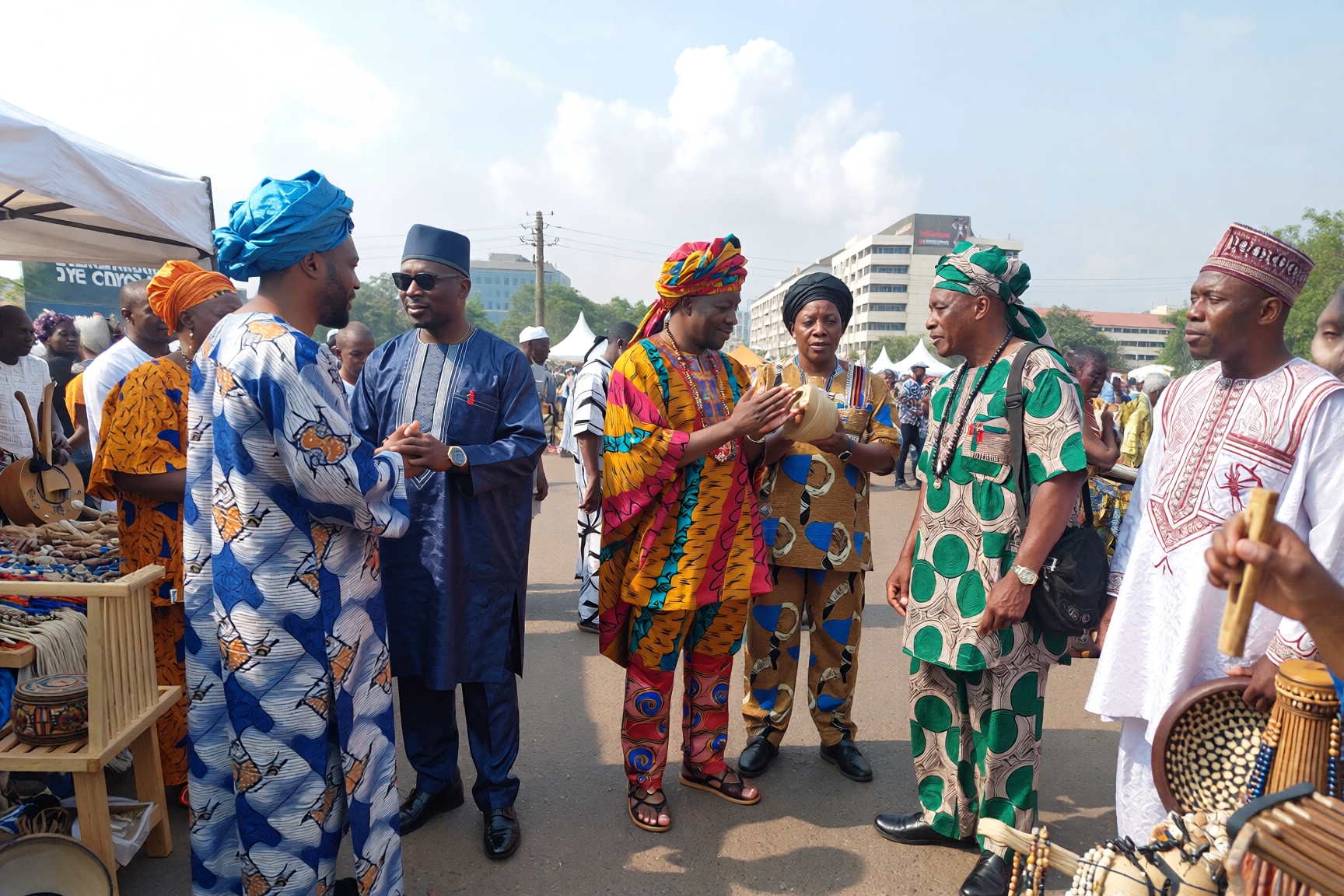
Every Nigerian ethnic group has developed distinctive traditional attire that immediately identifies origin. Yoruba men wear agbada (flowing robes), Igbo men favour isiagu (lion-head patterned tops) with red caps, Hausa-Fulani men wear elaborate embroidered babariga or kaftans. Women’s traditional dress varies even more dramatically, from Yoruba iro and buba (wrapper and blouse combinations) to Igbo George fabric wrappers with coral bead accessories to Northern hijab styles. Wearing traditional dress for ceremonies, religious services, and cultural events remains standard practice, with high-quality traditional outfits costing ₦50,000 to ₦5 million depending on fabric and embellishment.
5. Complex Religious Practices Blending Faith with Cultural Tradition
Christianity and Islam dominate Nigeria (roughly 47% and 50% respectively according to Ministry of Foreign Affairs demographic data), but Nigerian religious practice distinctively blends imported faiths with indigenous traditions. Christians might attend church services whilst maintaining traditional ceremonies honouring ancestors. Muslims observe Islamic festivals whilst respecting traditional rulers and participating in cultural celebrations. Traditional African religions (particularly Yoruba Orisha worship and Igbo deity veneration) persist openly in some communities and subtly influence Christian and Muslim practice elsewhere.
6. Culinary Traditions Centred on Staple Foods and Communal Eating
Nigerian food culture revolves around “swallow” foods (pounded yam, eba, fufu, amala) eaten with rich soups containing vegetables, meat, and fish. Eating with hands from communal bowls remains common in many contexts, though urban Nigerians increasingly use cutlery. Specific dishes identify ethnic origin: Yoruba love amala with ewedu soup, Igbo favour ofe nsala (white soup), Hausa prefer tuwo with miyar kuka. Food carries deep cultural meaning beyond nutrition, with certain dishes required for ceremonies and others forbidden during specific periods.
7. Elaborate Greeting Rituals and Social Courtesy
Nigerians greet extensively and elaborately. Simple “hello” doesn’t suffice. You ask about someone’s family, their health, their work, their journey, and so on before transitioning to actual conversation. Failure to greet properly marks you as rude or poorly raised. Different ethnic groups have distinctive greeting styles (Yoruba prostration, Igbo handshakes with both hands, Hausa bows), but the principle of extensive greeting transcends ethnic boundaries. I’ve participated in five-minute greeting exchanges that covered every possible topic before the actual conversation began!
8. Music and Dance as Essential Cultural Expression
Every Nigerian ethnic group has distinctive musical traditions, dance styles, and ceremonial performances. Yoruba talking drums communicate linguistic messages, Igbo flutes create haunting melodies, Hausa praise singing honours patrons. Traditional music served ceremonial, entertainment, and communication functions for centuries. Modern Nigerian music (Afrobeats, highlife, fuji) builds on these traditions whilst incorporating global influences, creating sounds that now dominate African and increasingly global music charts.
9. Traditional Governance Systems Alongside Modern Democracy
Nigeria maintains traditional rulers (Obas, Emirs, Obis, Chiefs) alongside elected government officials. These traditional authorities don’t hold constitutional power but command enormous cultural influence, mediating disputes, preserving cultural knowledge, and serving as custodians of tradition. Visiting any Nigerian state requires paying courtesy calls to relevant traditional rulers, demonstrating how these ancient institutions remain relevant in modern governance.
10. Festivals Celebrating Agricultural Cycles and Cultural Identity
Annual festivals mark agricultural seasons, honour deities, celebrate historical events, and affirm cultural identity. The Igbo New Yam Festival celebrates harvest, the Yoruba Eyo Festival honours deceased traditional rulers, the Hausa Durbar marks Islamic celebrations with elaborate horse parades. These festivals attract thousands of participants and spectators, maintain cultural continuity, and create tourist attractions that showcase Nigerian diversity. Every month features festivals somewhere in Nigeria, creating a continuous calendar of cultural celebration.
Seven Strategic Steps for Understanding Nigerian Culture
Understanding Nigerian culture requires more than passive observation. It demands active engagement, cultural sensitivity, and willingness to challenge assumptions. Let me provide a practical framework that will help you navigate Nigeria’s cultural complexity whether you’re visiting, conducting research, or simply seeking deeper understanding.
1. Recognise That “Nigerian Culture” Contains Multitudes
Start by accepting that Nigeria doesn’t have one unified culture but rather a collection of interrelated cultures operating under shared national identity. This isn’t a flaw, it’s our defining characteristic. When someone mentions “Nigerian culture,” clarify which specific aspect or ethnic group they’re referencing. A Hausa wedding ceremony differs dramatically from an Igbo traditional marriage, yet both are authentically Nigerian. Learn to hold this complexity comfortably rather than seeking oversimplified explanations.
2. Study the Geographic Distribution of Cultural Groups
Get a detailed map showing Nigeria’s 36 states and understand which ethnic groups dominate which regions. Northern states (Sokoto, Kano, Katsina, Borno, Kaduna) host predominantly Hausa-Fulani, Kanuri, and other northern groups. Southwest states (Lagos, Oyo, Ogun, Osun) are Yoruba strongholds. Southeast states (Anambra, Imo, Abia, Enugu) are primarily Igbo. The Middle Belt (Plateau, Nasarawa, Benue) and Niger Delta (Rivers, Bayelsa, Delta) host dozens of minority groups. This geographic knowledge helps you understand regional cultural variations and anticipate which customs apply where.
3. Learn Basic Greetings and Respect Protocols in Major Languages
Master simple greetings in Hausa (sannu, yaya dai), Yoruba (e kaaro, e kaasan, bawo ni), and Igbo (kedu, ndewo). Learn proper respect protocols including kneeling or prostrating for elders in Southern cultures, avoiding left-hand usage when giving or receiving items, and addressing people with appropriate titles. These small gestures demonstrate cultural awareness and open doors to deeper engagement. Nigerians appreciate foreigners who make even minimal effort to understand our customs.
4. Engage With Nigerian Arts, Literature, and Entertainment
Read Nigerian authors like Chinua Achebe, Chimamanda Ngozi Adichie, Wole Soyinka, and Helon Habila to understand how Nigerians see ourselves and our culture. Watch Nollywood films to observe (albeit dramatically) Nigerian social dynamics, family relationships, and cultural conflicts. Listen to Afrobeats, highlife, and traditional music to understand the rhythms that move Nigerian souls. Cultural products reveal values, anxieties, and aspirations that formal descriptions miss.
5. Understand How Religion Shapes Daily Life and Cultural Practice
Recognise that for most Nigerians, religion isn’t peripheral but central to identity and daily routine. Muslims observe five daily prayers that structure their schedules. Christians attend services multiple times weekly and reference God constantly in conversation. Religious festivals (Eid, Christmas, traditional harvest celebrations) provide the rhythm for annual cultural cycles. Don’t treat religion as separate from culture, they’re thoroughly intertwined in Nigerian life.
6. Participate Respectfully in Cultural Events and Ceremonies
When invited to Nigerian ceremonies (weddings, funerals, naming ceremonies, festivals), attend if possible. Dress appropriately (traditional attire appreciated, modest Western clothing acceptable), bring a gift (cash in envelope customary for weddings), follow the lead of others regarding protocols, and express genuine interest in understanding what you’re witnessing. Nigerians welcome curious outsiders who show respect. These experiences provide cultural education no book can match.
7. Recognise Both Unity and Diversity in Nigerian National Identity
Finally, understand that Nigerians maintain both fierce ethnic pride and genuine national identity. We’re simultaneously Yoruba AND Nigerian, Igbo AND Nigerian, Hausa AND Nigerian. This isn’t contradictory, it’s layered identity that most Nigerians navigate effortlessly. Events like Nigerian Super Eagles football matches, national tragedies, or international competitions unite Nigerians across ethnic boundaries whilst ethnic festivals and local politics emphasise particular identities. Both are equally authentic expressions of Nigerian culture.
Regional Cultural Variations Across Nigeria’s Six Geopolitical Zones
This table synthesises cultural observations across Nigeria’s regions, compiled from field research, government cultural documentation, and academic sources between 2020 and 2025:
| Region | Dominant Groups | Primary Religion | Key Cultural Values | Traditional Governance | Distinctive Practices |
|---|---|---|---|---|---|
| North-West | Hausa-Fulani | Islam (85%+) | Hierarchy, Islamic scholarship, communal harmony | Emirates, Sultan authority | Wife seclusion (kulle), Durbar festivals, elaborate embroidery |
| North-East | Kanuri, Hausa | Islam (80%+) | Religious devotion, trade orientation | Shehu of Borno, emirates | Ancient manuscript traditions, fishing culture (Chad Basin) |
| North-Central | Tiv, Nupe, Igala, diverse minorities | Mixed Christian-Muslim | Agricultural focus, artistic expression | Village councils, traditional chiefs | Benue valley farming, middle belt diversity |
| South-West | Yoruba | Mixed Christian-Muslim | Education, artistic sophistication | Oba kingship, chieftaincy hierarchies | Orisha worship traditions, elaborate festivals, talking drums |
| South-East | Igbo | Christianity (95%+) | Achievement, entrepreneurship, republican values | Village democracy, Nze/Ozo title systems | Masquerade traditions, title-taking ceremonies, individual success celebration |
| South-South | Ijaw, Efik, Ibibio, Urhobo, diverse groups | Christianity (85%+) | Water-based livelihoods, artistic traditions | Clan systems, age grades | Fishing culture, riverine transportation, distinctive cuisines |
What immediately strikes you from this comparison is how dramatically cultural expectations, governance systems, and daily practices shift across regions. The conservative gender separation protocols in Kano would feel alien in Lagos nightlife districts, just as the competitive individual achievement celebrated in Igboland contrasts with the communal hierarchy emphasised in Hausa-Fulani society.
These regional variations create both richness and challenges. Nigerian culture’s diversity means there’s no single “correct” way to be Nigerian, but it also means Nigerians must constantly navigate different cultural codes depending on where they are and whom they’re interacting with.
What Culture Does Nigeria Have? A Direct Answer
Right, we’re halfway through our exploration together, so let me address the primary question directly and comprehensively. What culture does Nigeria have?
Nigeria has a magnificently complex multicultural system encompassing 371 distinct ethnic groups, each maintaining unique languages, traditional governance, artistic expressions, and social customs, whilst simultaneously sharing overarching cultural values including communal responsibility, respect for elders and authority, elaborate ceremonial practices marking life transitions, religious devotion (predominantly Christianity and Islam blended with indigenous traditions), extended family obligations, distinctive traditional dress identifying ethnic origin, rich culinary traditions centred on staple foods and communal eating, musical and dance expressions essential to celebration, and multilayered identity systems allowing Nigerians to simultaneously embrace ethnic particularity and national unity.
The core cultural entities defining Nigerian culture include: the extended family system providing economic and social support networks; traditional rulers (Obas, Emirs, Chiefs) maintaining cultural continuity and mediating between modern governance and ancient customs; ceremonial practices (naming ceremonies, traditional weddings, elaborate funerals) reinforcing communal bonds; indigenous languages (over 500) transmitting cultural knowledge; traditional dress (agbada, isiagu, wrappers, coral beads) identifying ethnic affiliation; staple foods (yam, rice, cassava derivatives) and distinctive soups defining regional cuisines; festivals celebrating agricultural cycles and cultural identity; artistic traditions (bronze work, beadwork, textiles, sculpture) expressing cultural sophistication; music and dance styles (from traditional drums to modern Afrobeats) providing cultural expression; and religious practices blending Christianity, Islam, and indigenous African spirituality in distinctively Nigerian ways.
What makes Nigerian culture particularly remarkable is how we’ve managed to maintain this extraordinary diversity whilst building pan-Nigerian cultural expressions that unite us. Nollywood (Nigeria’s film industry, second-largest globally by production volume) creates narratives that resonate across ethnic boundaries. Afrobeats music (pioneered by Fela Kuti, now dominated by artists like Burna Boy, Wizkid, and Davido) fuses Yoruba, Igbo, and Hausa musical elements with global influences. Nigerian Pidgin serves as a lingua franca bridging linguistic diversity. These unifying cultural products demonstrate how Nigerian culture isn’t simply 371 separate traditions coexisting but rather a dynamic, evolving system creating something distinctively Nigerian.
The Five Essential Elements Defining Nigerian Cultural Systems
When cultural anthropologists analyse any culture, they examine five fundamental elements that structure human societies: symbols, language, values, norms, and material culture. Nigerian culture provides rich examples of how these elements manifest in African contexts, creating cultural systems that have sustained themselves through colonialism, civil war, and dramatic modernisation.
Symbols function as vehicles for meaning that members of a culture recognise and interpret. Nigerian culture employs symbols extensively across religious (the cross for Christians, the crescent for Muslims, Orisha symbols for traditional religionists), political (the green-white-green flag representing unity and agriculture), traditional (white chalk marks indicating peace, kola nut symbolising welcome and hospitality), and social domains (coral beads indicating Igbo royalty, agbada suggesting Yoruba authority, embroidered caps showing Northern sophistication). These symbols communicate complex meanings instantly to those within the culture whilst remaining opaque to outsiders.
I remember watching an Igbo traditional wedding where the bride’s family presented the groom’s family with kola nuts. This simple gesture symbolised welcome, acceptance of the union, connection to ancestors, and invitation to blessing. The entire ceremony paused whilst the eldest man performed the breaking and distribution ritual, demonstrating how symbols structure cultural practice and create meaning beyond their material form.
Language carries culture through vocabulary, grammar, proverbs, and linguistic structures that shape how speakers conceptualise reality. Nigeria’s 500+ languages represent 500+ distinct ways of organising knowledge and expressing cultural values. The Hausa language contains extensive vocabulary for Islamic scholarship reflecting centuries of Arabic influence. Yoruba employs tone to distinguish meanings, creating linguistic complexity that enables sophisticated wordplay and proverbial wisdom. Igbo grammatical structures emphasise action and agency, reflecting cultural values around individual achievement and entrepreneurship.
Nigerian Pidgin deserves special mention as a creole language that evolved from the necessity of trade communication and now serves as a lingua franca spoken by approximately one-third of Nigerians. Its English vocabulary embedded in African grammatical structures creates a distinctively Nigerian mode of expression that transcends ethnic boundaries whilst remaining immediately recognisable as African.
Values represent what a culture considers good, desirable, proper, and important. Nigerian culture universally values respect for elders and authority figures, communal responsibility over individual autonomy, religious devotion and spiritual awareness, extended family loyalty and mutual support, ceremonial celebration of life transitions, hospitality toward guests and strangers, educational achievement and knowledge acquisition, and resilience in facing adversity and challenges. These values transcend ethnic differences and create cultural commonalities that unite Nigerians despite our diversity.
However, regional and ethnic variations modify how these values manifest. Northern Nigerian culture emphasises hierarchy and deference to authority more strongly than Igbo republican traditions. Yoruba culture places exceptional value on education and literary achievement. Igbo culture celebrates entrepreneurial success and individual accomplishment. These variations create cultural nuance within broader Nigerian value systems.
Norms constitute the rules and expectations governing behaviour in specific situations. Nigerian cultural norms dictate that you greet extensively before transitioning to business, that younger people show physical deference to elders through kneeling or prostrating, that you bring gifts when visiting someone’s home, that you dress modestly in public settings (particularly for women), that you contribute financially to family members’ ceremonies and emergencies, and that you participate in communal events and celebrations. Violating these norms creates social sanctions ranging from gossip to ostracism depending on severity.
What’s fascinating about Nigerian norms is how context-dependent they are. Behaviour acceptable in Lagos nightclubs would shock people in Kano mosques. Professional norms in multinational corporations differ from traditional village expectations. Nigerians develop sophisticated cultural competence that allows us to code-switch between different normative systems depending on context, location, and audience.
Material culture includes the physical objects, technologies, and environmental modifications that reflect and reinforce cultural values. Nigerian material culture encompasses traditional architecture (Hausa palaces built in distinctive Sahel styles, Yoruba compounds with central courtyards, Igbo decorative house paintings), traditional dress and adornment (elaborately embroidered agbadas, coral bead sets, traditional caps and headgear), ceremonial objects (masks, drums, religious artifacts), culinary equipment (mortars and pestles for pounding yam, clay pots for traditional cooking), and artistic productions (bronze sculptures, beadwork, textiles, wood carvings). These objects carry cultural meaning beyond their utilitarian functions and connect contemporary Nigerians to ancestral traditions.
Modern Nigerian material culture increasingly blends traditional and contemporary elements. You’ll find Nigerian homes displaying both traditional masks and flat-screen televisions, professional women wearing both traditional wrappers and designer Western clothing, and Nigerian men driving luxury cars to traditional festivals where they’ll don ancestral ceremonial regalia.
Nigerian Culture in Modern Transition and Global Influence
Nigerian culture isn’t static or frozen in pre-colonial traditions. It’s dynamically evolving through urbanisation, globalisation, technology adoption, and generational change whilst maintaining connections to ancestral practices. Understanding this transition helps explain contemporary Nigerian cultural dynamics that sometimes puzzle observers expecting simple traditional/modern dichotomies.
Urbanisation has created cultural melting pots where ethnic mixing is standard. Lagos hosts representatives from all 371 Nigerian ethnic groups. Young Lagosians might have Yoruba fathers, Igbo mothers, grew up speaking Pidgin, attended international schools teaching in English, and developed cultural competence that transcends specific ethnic traditions. These urban Nigerians represent a new hybrid culture that’s distinctively Nigerian whilst differing from traditional ethnic cultures. Scholars have noted that modern multiculturalism does not erase difference but weaves it into a shared national tapestry, creating complex identities where people can be both Nigerian and participate in global cultural currents.
I’ve watched young Nigerians create innovative cultural expressions that their grandparents wouldn’t recognise but that feel authentically Nigerian. Afrobeats music fuses Yoruba percussion, Igbo highlife, Hausa influences, and global sounds into something new. Nollywood films tell Nigerian stories using Hollywood production techniques and streaming distribution. Nigerian fashion designers reinterpret traditional textiles for runway shows in Paris and New York.
Globalisation hasn’t erased Nigerian culture but transformed how it manifests and spreads. Nigerian diaspora communities number over 15 million people worldwide, maintaining cultural practices through Nigerian restaurants, cultural associations, churches, and social networks. These diaspora Nigerians serve as cultural ambassadors whilst simultaneously adapting traditions to new contexts, creating Nigerian-American, British-Nigerian, and Canadian-Nigerian hybrid identities.
Technology has revolutionised how Nigerians access and transmit culture. YouTube channels teach traditional cooking to diaspora children. WhatsApp groups coordinate family ceremonies across continents. Streaming platforms distribute Nollywood films globally. Social media allows young Nigerians to document and share cultural practices instantly. This technological mediation of culture creates new possibilities whilst raising questions about authenticity and preservation.
Generational change perhaps represents the most significant cultural transition. Young urban Nigerians increasingly question traditional practices around arranged marriages, gender roles, and ethnic prejudice. They maintain cultural pride whilst selectively adopting elements that align with modern values. This negotiation between tradition and modernity creates tension but also cultural evolution that keeps Nigerian culture vibrant rather than ossified.
Religious revival movements (both Christian and Islamic) have intensified religious identity and sometimes created friction with traditional practices. Born-again Christians might reject traditional festivals they view as pagan. Islamic reformers challenge traditional Hausa-Fulani practices they consider un-Islamic innovations. This religious intensification reshapes cultural practice whilst paradoxically strengthening cultural identity as people defend traditions against religious critique.
Nigerian cultural influence now extends globally through entertainment exports that rival our oil revenues in international impact. When Burna Boy headlines major international music festivals, when Chimamanda Ngozi Adichie’s TED Talk on feminism reaches 30 million views, when Nollywood films screen across Africa and the African diaspora, that’s Nigerian culture shaping global conversations about African identity, artistic expression, and cultural possibility.
Challenges in Preserving and Transmitting Nigerian Cultural Heritage
Despite Nigeria’s remarkable cultural richness, serious challenges threaten cultural preservation and intergenerational transmission. Understanding these challenges helps explain cultural anxieties that preoccupy traditional leaders, cultural custodians, and concerned Nigerians.
Language extinction poses the most severe threat to cultural diversity. Of Nigeria’s 500+ languages, only the major ones (Hausa, Yoruba, Igbo, Kanuri, Fulfulde) have significant numbers of young speakers. Smaller languages face extinction within generations as children prefer English (associated with education and economic opportunity) or major Nigerian languages (useful for national communication) over their ancestral tongues. Once a language dies, the cultural knowledge, proverbial wisdom, and unique worldview it carried disappear forever.
The National Council for Arts and Culture attempts to document and preserve endangered languages and cultural practices, but funding rarely matches the scope of the challenge. Every year without comprehensive documentation means more irreplaceable cultural knowledge vanishing.
Urbanisation and migration weaken connections to ancestral lands and traditional authorities who serve as cultural custodians. Young Nigerians growing up in Lagos or Abuja might visit their “village” only for Christmas or special ceremonies, losing daily cultural immersion that traditionally transmitted practices through observation and participation. This geographical disconnection creates cultural knowledge gaps that formal education struggles to fill.
Western education systems (ironically, Nigeria’s colonial inheritance) often devalue indigenous knowledge and traditional practices. Schools teach in English, use Western curricula, and implicitly position traditional culture as backward or primitive. Successful Nigerians who’ve excelled in Western education sometimes disdain traditional practices, creating class-based cultural divides that compound ethnic differences.
Economic pressures force Nigerians to prioritise income generation over cultural participation. Traditional ceremonies that once lasted weeks now compress into weekends to accommodate work schedules. Apprenticeship systems that transmitted craft knowledge over years collapse as young people seek formal education and white-collar employment. Traditional artistic practices (bronze casting, textile weaving, wood carving) struggle to attract practitioners when other occupations promise better income.
Cultural commodification and tourism create authentic questions about whose culture this is and who profits from it. When traditional festivals become tourist attractions, when sacred objects appear in international art markets, when cultural performances entertain rather than fulfil ceremonial functions, something essential about cultural meaning shifts. This commercialisation might preserve practice whilst losing cultural significance.
Generational value changes sometimes create outright rejection of traditional practices rather than selective adaptation. Young women increasingly resist traditional gender restrictions. Urban youth dismiss ethnic prejudices their parents maintain. Religious converts abandon traditional ceremonies entirely. This rejection can liberate individuals from oppressive traditions but also severs cultural connections that provide identity and belonging.
Despite these challenges, Nigerian culture demonstrates remarkable resilience. Traditional festivals still attract massive participation. Traditional weddings remain elaborate multi-day celebrations. Young Nigerians still proudly claim ethnic identities whilst embracing national unity. Cultural innovation creates new expressions of Nigerian identity that honour tradition whilst embracing modernity.
Embracing Nigerian Cultural Richness While Fostering Unity
As we conclude this exploration of Nigerian culture, I want to leave you with both celebration of our extraordinary cultural wealth and recognition that managing this diversity remains Nigeria’s greatest ongoing challenge and opportunity.
Nigeria possesses cultural assets few nations can match. Our 371 ethnic groups represent 371 distinct human experiments in organising social life, creating beauty, and transmitting knowledge across generations. Our 500+ languages embody 500+ unique ways of conceptualising reality and expressing human experience. Our artistic traditions (from ancient Nok terracotta to contemporary Afrobeats) demonstrate cultural sophistication spanning millennia. This cultural richness is genuinely priceless, and we must never take it for granted or allow it to erode through neglect.
At the same time, Nigerian cultural diversity creates genuine challenges around national unity, resource allocation, political representation, and social cohesion. Ethnic tensions occasionally explode into violence. Political entrepreneurs manipulate ethnic differences for selfish advantage. Regional imbalances fuel resentment and separatist sentiment. These challenges are real, painful, and ongoing.
The path forward requires embracing both unity and diversity simultaneously rather than viewing them as contradictory. We must strengthen pan-Nigerian identity through shared national experiences, institutions, and cultural productions whilst protecting and celebrating ethnic particularity. We must build systems that ensure fair representation and resource distribution across groups whilst maintaining cultural autonomy for local communities. As scholars have emphasised regarding Nigeria’s unity challenges, intermarriages, educational integration through NYSC, and professional service provision that transcends tribal boundaries all help forge harmonious unity whilst respecting diversity. We must create economic opportunities that benefit all Nigerians whilst respecting regional variations in values and practices.
Nigerian culture’s greatest strength lies in our demonstrated ability to navigate multiple identities, code-switch between cultural contexts, and create unity amidst diversity. We’ve managed this for over a century since amalgamation, and we’ll continue managing it as we build Nigeria’s future. Our culture isn’t our weakness, it’s our superpower, if we can harness it properly.
Three Actionable Takeaways:
• Nigerian culture encompasses 371 distinct ethnic groups operating under shared national identity, requiring appreciation for both specific ethnic traditions (Hausa-Fulani, Yoruba, Igbo, and 368 others) and pan-Nigerian cultural expressions (Afrobeats, Nollywood, Nigerian Pidgin) that unite diverse populations across linguistic and religious boundaries.
• Cultural competence in Nigeria demands understanding multiple identity layers (ethnic, regional, religious, national), mastering basic greetings and respect protocols across major ethnic groups, and recognising how context determines which cultural norms apply in professional, traditional, and social settings.
• Preserving Nigerian cultural heritage whilst fostering national unity requires supporting language documentation for endangered ethnic groups, creating economic opportunities that value traditional knowledge and artistic practices, and building institutions ensuring fair representation whilst protecting local cultural autonomy.
Related Cultural Insights From Guardian Nigeria
Understanding Nigerian culture naturally connects to broader questions about our society and identity that I’ve explored in previous articles. My comprehensive piece on understanding Nigerian marriage culture examines how wedding ceremonies reflect the cultural values we’ve discussed here, demonstrating how traditional, religious, and modern practices blend in contemporary Nigerian life. For deeper exploration of how Nigeria maintains unity amidst our extraordinary diversity, my article on what makes Nigerians culturally distinct reveals how we’ve built pan-Nigerian identity whilst preserving specific ethnic traditions.
These interconnected cultural explorations demonstrate how Nigerian culture operates simultaneously at ethnic, regional, and national levels, creating the magnificent complexity that defines our nation. As Nigeria continues evolving through urbanisation, globalisation, and generational change, understanding these cultural foundations becomes increasingly essential for anyone seeking to understand Africa’s most populous nation and its growing global influence.
Frequently Asked Questions About Nigerian Culture
What is the main culture in Nigeria?
Nigeria doesn’t have a single “main” culture but rather a complex multicultural system with three dominant cultural blocks (Hausa-Fulani, Yoruba, Igbo) collectively representing roughly 60% of the population alongside 368 other ethnic groups. The closest approximation to a “main” culture would be the pan-Nigerian identity created through shared national experiences, English language usage, and cultural products like Afrobeats music and Nollywood films that transcend specific ethnic traditions.
What are the three cultures of Nigeria?
The three largest and most influential cultural groups in Nigeria are the Hausa-Fulani (predominantly Northern, Islamic, hierarchical governance), Yoruba (Southwestern, mixed Christian-Muslim, sophisticated artistic traditions), and Igbo (Southeastern, predominantly Christian, entrepreneurial republican values). These three groups dominate Nigerian politics, media, and cultural production whilst 368 other ethnic groups maintain distinct identities, languages, and cultural practices that contribute essential diversity to Nigerian national culture.
What are 10 examples of culture in Nigeria?
Ten concrete examples of Nigerian culture include extended family systems with communal financial responsibility, elaborate traditional ceremonies for births/marriages/deaths costing ₦500,000 to ₦20 million, respect protocols requiring kneeling/prostrating for elders, distinctive traditional dress like agbada and isiagu identifying ethnic origin, religious practices blending Christianity/Islam with indigenous traditions, food customs centred on swallow foods and communal eating, extensive greeting rituals covering family/health/work, music and dance essential to celebrations, traditional rulers maintaining cultural authority alongside modern government, and annual festivals celebrating agricultural cycles and cultural identity. Each example manifests differently across ethnic groups whilst maintaining recognisable pan-Nigerian characteristics.
What are the five elements of culture in Nigeria?
The five fundamental elements structuring Nigerian culture are symbols (kola nuts for hospitality, coral beads for royalty, traditional marks indicating peace), language (500+ distinct languages plus Nigerian Pidgin serving as lingua franca), values (respect for elders, communal responsibility, religious devotion, educational achievement), norms (greeting protocols, dress codes, family obligations, ceremonial participation), and material culture (traditional architecture, ceremonial objects, distinctive dress, artistic productions, culinary equipment). These elements interact to create cultural systems that have sustained Nigerian ethnic groups through centuries whilst adapting to colonialism, modernisation, and globalisation.
How many languages are spoken in Nigeria?
Nigeria has over 500 distinct languages spoken across 371 ethnic groups, making it one of the world’s most linguistically diverse nations. The three most widely spoken are Hausa (approximately 70 million speakers), Yoruba (45 million), and Igbo (35 million), whilst English serves as the official language for government, education, and business, and Nigerian Pidgin functions as a lingua franca spoken by roughly one-third of the population for informal communication across ethnic boundaries.
What role do traditional rulers play in Nigerian culture?
Traditional rulers (Obas, Emirs, Obis, Chiefs) maintain enormous cultural influence despite lacking constitutional political power, serving as custodians of tradition, mediating communal disputes, preserving cultural knowledge, performing ceremonial functions, and bridging ancient customs with modern governance. These authorities command respect that requires courtesy visits from government officials, business leaders, and visitors, demonstrating how traditional governance systems persist alongside democracy in contemporary Nigerian society, particularly in rural areas and during cultural ceremonies.
How does Nigerian food culture reflect ethnic diversity?
Nigerian cuisine demonstrates extraordinary diversity with each ethnic group maintaining distinctive staple foods, cooking techniques, and ceremonial dishes that immediately identify regional and ethnic origin. Yoruba favour amala with ewedu soup, Igbo prepare ofe nsala (white soup), Hausa prefer tuwo with miyar kuka, whilst common elements like yam, cassava, rice, and palm oil unite these variations, and Nigerian Pidgin food terms like “swallow” create pan-Nigerian culinary vocabulary that transcends specific ethnic traditions.
What is Nigerian Pidgin and who speaks it?
Nigerian Pidgin is a creole language with English vocabulary embedded in African grammatical structures (particularly Yoruba and Igbo) that evolved from trade communication needs and now serves as lingua franca spoken by approximately one-third of Nigeria’s population (75-80 million people). It functions as neutral communication across ethnic boundaries in markets, transport, entertainment, and informal settings, particularly among working-class Nigerians and urban youth, whilst carrying distinctly Nigerian cultural identity that formal English cannot replicate.
How do Nigerians maintain cultural identity in cities?
Urban Nigerians maintain ethnic cultural identity through ethnic associations and hometown unions, speaking indigenous languages at home whilst using English/Pidgin publicly, wearing traditional dress for ceremonies and religious services, preparing ethnic cuisines and celebrating traditional festivals, teaching children their language and customs, maintaining connections to ancestral villages through visits and contributions, and participating in ethnic social networks for business and marriage whilst simultaneously developing pan-Nigerian urban identity through work, education, and mixed neighbourhoods.
What is aso-ebi and why is it important?
Aso-ebi is specially chosen fabric that family members and close friends of wedding/ceremony hosts purchase and sew into matching outfits, serving as visual identification of support networks, creating aesthetic unity in photographs, generating income for ceremony hosts (who earn commission on fabric sales), and demonstrating social capital through the number of people wearing your chosen fabric. This cultural practice costs participants ₦15,000 to ₦50,000 per outfit and represents essential participation in Nigerian celebration culture across all ethnic groups.
How has globalisation affected Nigerian culture?
Globalisation has transformed Nigerian culture by creating 15+ million diaspora communities maintaining traditions whilst developing hybrid identities, enabling cultural products like Afrobeats and Nollywood to achieve international influence, providing technology (YouTube, WhatsApp, streaming platforms) for cultural transmission across distances, exposing young Nigerians to global values challenging traditional practices around gender and authority, and creating cultural innovation fusing Nigerian traditions with international influences whilst paradoxically strengthening cultural pride as Nigerians assert distinctive identity against homogenising global forces.
What challenges threaten Nigerian cultural preservation?
Major threats to Nigerian cultural preservation include language extinction (most of 500+ languages losing young speakers), urbanisation weakening connections to ancestral lands and traditional custodians, Western education systems devaluing indigenous knowledge, economic pressures prioritising income over cultural participation, generational value changes rejecting traditional practices, and cultural commodification for tourism creating authenticity questions. The National Council for Arts and Culture attempts documentation and preservation efforts, but funding rarely matches the scope of challenges facing endangered cultural practices and linguistic diversity.
How do Nigerian weddings reflect cultural values?
Nigerian traditional weddings demonstrate core cultural values through bride price negotiations establishing family connections and demonstrating groom’s capability, extensive family involvement in partner selection and ceremony planning, multi-day celebrations involving entire communities rather than just couples, elaborate gift exchanges creating reciprocal obligations between families, religious ceremonies (Christian, Islamic) blended with traditional ethnic customs, and aso-ebi uniforms creating visual identification of support networks. These ceremonies cost ₦6-25 million on average and function as community affirmation of unions rather than merely personal romantic partnerships.

