 Follow Us on Google News
 Follow Us on Google Discover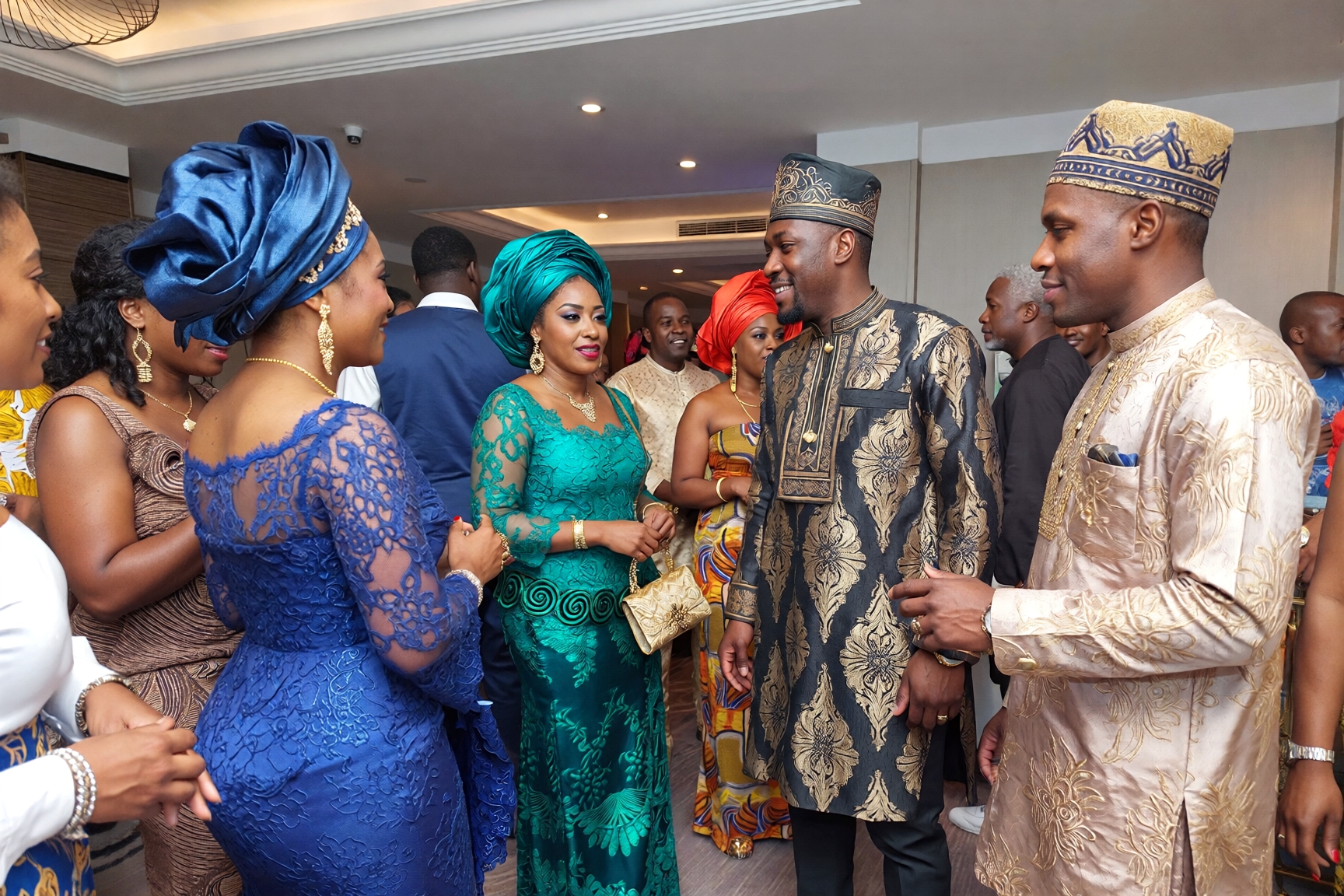
Welcome, dear reader! If you’ve just received a Nigerian wedding invitation and are staring at your wardrobe wondering what on earth to wear, you are in very good company. I’ve spent the better part of the last several months researching this topic with the kind of thoroughness it genuinely deserves, pulling together years of personal experience attending ceremonies across Lagos, Abuja, Enugu, Kano, and Port Harcourt, alongside deep conversations with fashion designers, seasoned wedding planners, and brides who still remember exactly what they wished their guests had worn. This article is the conclusion of all that work, and I want it to be the only guide you’ll ever need.
The short answer is that guests at Nigerian weddings dress beautifully, elaborately, and with enormous cultural intention. But the fuller answer is far more interesting, and far more useful.
Let me walk you through everything.
What to Wear as a Guest to a Nigerian Wedding
Before we get into specific garments, let’s establish one thing clearly: a Nigerian wedding is not a low-key affair. Whether it’s a Yoruba traditional ceremony in Ibadan, an Igbo white wedding in Enugu, or a Hausa-Fulani nikah in Kano, Nigerian weddings are celebrations of community, family, and cultural pride in ways that very few events in the world can match.
I remember the first Nigerian wedding I attended as a young adult. I wore what I thought was a smart outfit: a pressed shirt, dark trousers, and decent shoes. I walked into a hall where every single person looked like they were attending a state dinner. Women floated past me in head-to-toe lace, their gele headwraps sculpted into architectural masterpieces. Men wore agbada so magnificently embroidered that the fabric alone cost more than my entire wardrobe at the time. I was, to put it diplomatically, underdressed. I have never made that mistake again.
What guests wear depends significantly on which type of ceremony they are attending. Nigerian weddings typically span multiple events, and the dress expectations differ across each one. The traditional introduction ceremony calls for vibrant traditional attire. The white wedding (church or court) calls for smart formal or traditional wear. The reception is where guests genuinely go all out.

The National Council for Arts and Culture recognises Nigerian traditional dress as a living cultural institution, and nowhere is that more visible than at a wedding reception where five hundred people have all decided to look extraordinary simultaneously.
For a traditional wedding, guests are almost always expected to wear Nigerian traditional attire. This means ankara prints, aso-oke fabric (the handwoven textile beloved across Yorubaland), George fabric (favoured at Igbo ceremonies), lace in every conceivable weight and colour, and adire for those who want something more artisanal. Men wear agbada, kaftan, or native suits. Women wear buba and iro combinations, skirt-and-blouse sets in heavy lace, or elaborate gown cuts that incorporate traditional fabrics.
There is also the matter of aso-ebi. This is the coordinated fabric that close friends and family of the couple purchase and have made into personalised outfits. If you receive aso-ebi fabric with your invitation, you are expected to wear it. If you don’t receive it, that’s fine too. Simply wear your finest traditional attire or elegant formal wear, and you’ll be perfectly respectable.
For a white wedding church service, female guests typically wear cocktail dresses, midi-length dresses, or formal suits. Men wear well-fitted suits or native wear. The rule of thumb is: smarter than a regular Sunday church service, but you don’t need to outshine the bride. (Though I’ve seen guests come close at some Lagos weddings, which is a whole conversation of its own.)
The reception is the main event, and Nigerian receptions have no dress ceiling. This is where you wear your absolute best. Heavy lace, statement gele, coral bead accessories, embroidered agbada, tailored senator wears, and brocade skirt sets. Budget between ₦80,000 and ₦300,000 for a well-made guest outfit at a high-society reception, though beautiful options exist at lower price points if you know your market.
The National Institute for Cultural Orientation has made the case repeatedly that dressing is a tangible element of Nigerian culture, inseparable from identity and celebration. At a Nigerian wedding, that philosophy is lived out in every yard of fabric and every perfectly pinned gele.
What Is Proper Wedding Attire for Guests at Nigerian Ceremonies
Let’s get practical and specific. Proper wedding attire for Nigerian wedding guests breaks down by gender, ceremony type, and region. These are not arbitrary preferences. They are social codes that communicate respect for the couple, their families, and the cultural occasion itself.
For women attending traditional weddings:
The gold standard is a two or three-piece outfit in a statement fabric. This might be heavy lace over a lining, aso-oke buba and iro, or a structured gown in George fabric. The head tie (gele) is essential. Going to a Nigerian traditional wedding without a gele is rather like going to a beach without shoes: you can technically do it, but you’ll feel it. Professional gele tyers charge between ₦15,000 and ₦50,000 for their services, and the price is almost always worth it. A poorly tied gele undermines an otherwise excellent outfit.
Accessories matter enormously. Coral beads, gold jewellery, statement earrings, and a coordinated handbag complete the look. Shoes should be block heels or wedges if the ceremony is outdoors (dancing on grass or uneven ground in stilettos is a commitment nobody should make).
For men attending traditional weddings:
Agbada remains the prestige choice, particularly for Yoruba weddings. A full three-piece agbada in aso-oke or brocade fabric communicates that you take this event seriously. Kaftan suits are an excellent alternative, particularly popular at Hausa and northern Nigerian weddings. Native suits (senator wear) are smart, well-fitted, and work well for men who find agbada cumbersome. Cap to match your outfit is non-negotiable. No cap means the look is incomplete.
For white wedding church services:
Women: midi dresses, wrap dresses, structured suits, or Nigerian formal wear in moderate fabrics. Avoid white or ivory (that’s reserved for the bride). Avoid excessively bright colours that might draw attention during solemn moments. Pastels, deep jewel tones, and classic prints all work well.
Men: well-fitted suits in navy, charcoal, or khaki. Nigerian men also wear kaftan or senator wear to church, which is entirely appropriate and welcomed.
For cross-cultural and inter-ethnic weddings:
Nigeria’s rich diversity means many weddings blend multiple cultural traditions. As one Guardian Nigeria analysis of the Temi Otedola and Mr. Eazi wedding showed, even the most high-profile Nigerian weddings prioritise cultural heritage above all else, with Igbo-themed attire chosen specifically to honour family history. When attending a cross-cultural wedding, it is always appropriate to ask the couple which ethnic tradition’s aesthetic to lean into. They will appreciate the thoughtfulness.
As the Federal Ministry of Information and National Orientation documents on Nigeria’s dress culture, garments like the agbada, buba, iro, and gele have transcended their original ethnic origins to become shared national expressions of celebration. That shared language of festive dressing is something every wedding guest benefits from understanding.
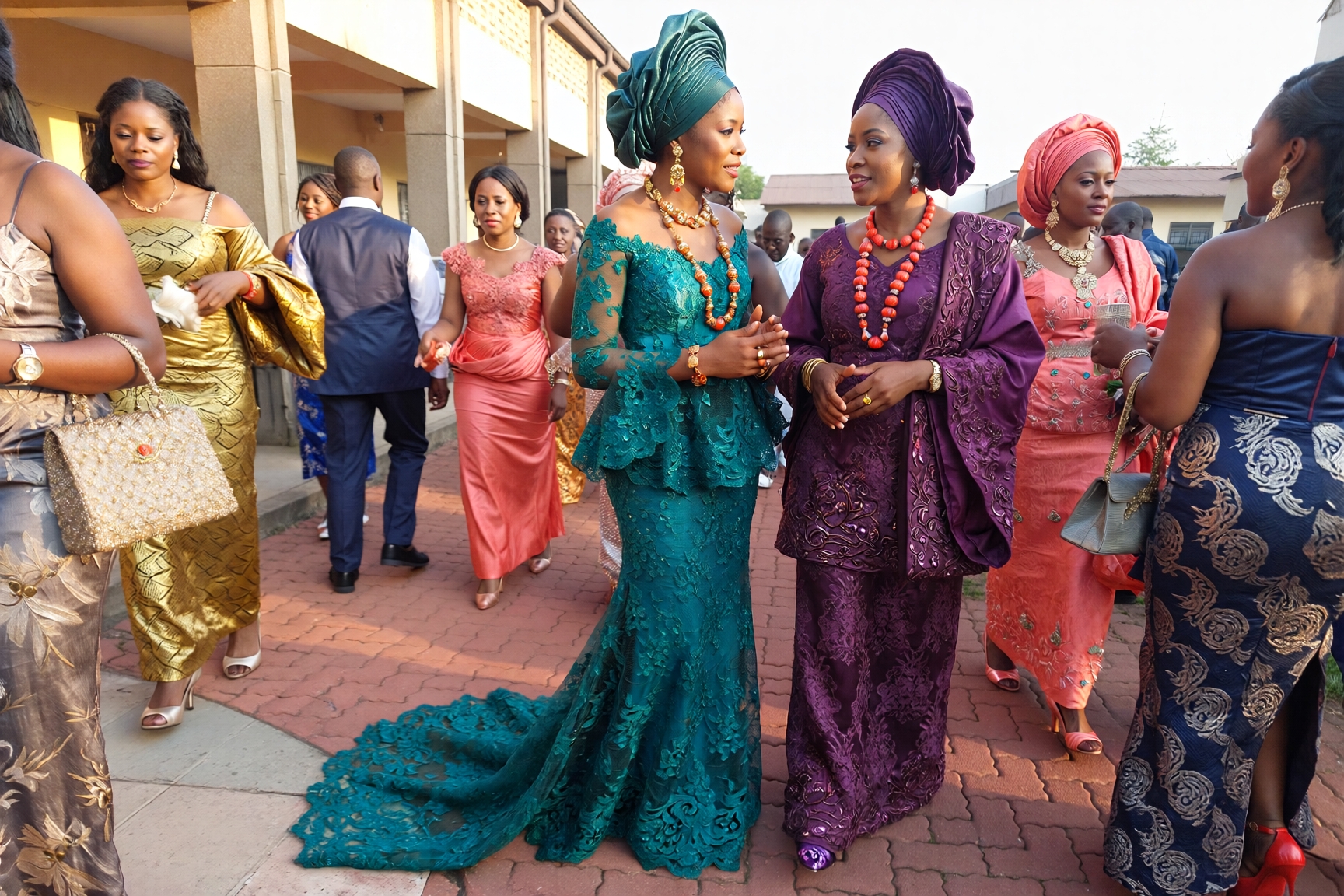
What to Wear to an African Wedding as a Guest (Female Edition)
This question comes up constantly from international guests, diaspora Nigerians attending their first homeland wedding, or friends from other African countries who’ve been invited to a Nigerian celebration. Let me be your guide.
The most important principle for women attending Nigerian weddings: err towards over-dressing rather than under-dressing. Nigerian weddings are not the place for understated minimalism. The occasion calls for colour, fabric richness, and effort.
If you are Nigerian or of Nigerian heritage, traditional attire is always the right choice. Pick a fabric that works for the season. In the dry Harmattan season between November and March, heavier aso-oke and thick lace are appropriate. During the humid wet months from April to October, lighter lace, organza, or soft ankara work better and won’t have you wilting before the reception ends.
If you are an international guest from outside Nigeria or Africa, you have two excellent options. The first is to embrace Nigerian traditional attire fully: visit a market, pick a fabric you love, and have it sewn into an appropriate style. Your Nigerian friends will be absolutely delighted. This is not cultural appropriation; this is cultural appreciation, and Nigerians overwhelmingly welcome it. The second option is to wear a formal evening gown or sophisticated cocktail dress in a bold colour. Avoid plain black (which in many Nigerian contexts reads as funereal), white (bridal), or overly casual fabrics like linen in wrinkled states.
If you have been invited to a wedding where aso-ebi fabric is being distributed, purchasing and wearing it shows solidarity with the family and your connection to the couple. The fabric is typically sold at a set price (ranging from ₦15,000 to ₦80,000 depending on the quality), and you then pay a tailor to make your chosen style. Factor in at least three to four weeks for tailoring. Rushing this process, as I have learned on multiple occasions, leads to disappointing outcomes.
As Guardian Nigeria’s feature on Nigeria’s leading fashion trends notes, aso-ebi is never truly complete without a gele. If you are wearing aso-ebi or traditional attire to a Nigerian wedding as a woman, the gele is the crown of the entire look. Invest in having it professionally tied.
A quick note on colour for female guests: Nigerian weddings love bold, celebratory colours. Emerald green, royal blue, burnt orange, deep purple, burgundy, and gold are all excellent choices. Mustard yellow has had an enormous moment in Nigerian wedding fashion circles recently. Avoid wearing the same colour as the bride’s stated colour theme without checking first (the couple often share their colour palette in advance, and guests adjust accordingly).
Nigerian Wedding Guest Attire by Ceremony Type: A Comparison
| Ceremony Type | Women: Recommended Attire | Men: Recommended Attire | Budget Range (Guest Outfit) | Key Accessory |
|---|---|---|---|---|
| Traditional introduction | Aso-ebi fabric outfit or statement lace with gele | Agbada or kaftan with matching cap | ₦60,000 to ₦250,000 | Gele (women), cap (men) |
| Traditional wedding (main) | Heavy lace or aso-oke buba and iro, full gele | Full agbada in aso-oke or brocade | ₦80,000 to ₦350,000 | Statement jewellery |
| White wedding church | Midi dress, formal suit, or smart native wear | Fitted suit or senator wear | ₦40,000 to ₦150,000 | Elegant shoes |
| Wedding reception | Absolute best attire: heavy lace, embroidered gown | Full agbada or embroidered kaftan | ₦100,000 to ₦500,000+ | Gele, beads, clutch |
| Hausa/Islamic nikah | Modest covered attire, rich fabrics | Kaftan or babariga | ₦50,000 to ₦200,000 | Head covering (women) |
| Registry/courthouse | Smart casual to formal | Suit or smart native wear | ₦30,000 to ₦100,000 | Classic accessories |
This table illustrates how the investment in guest attire typically escalates across ceremony types, with traditional weddings and reception events commanding the highest standards of dress and, consequently, the highest typical spend.
What Do Guests Wear to Nigerian Weddings: A Direct Answer
So, what do guests wear to Nigerian weddings? The direct answer: guests wear traditional Nigerian attire at traditional ceremonies, smart formal wear at church services, and their very finest outfits at receptions. The most common fabrics across all ceremony types are lace (in both the delicate French variety and the bolder African lace), aso-oke, George fabric, and ankara prints. Women almost always wear a gele at traditional events. Men wear agbada, kaftan, or senator wear with a matching cap.
Specifically, the key garments and options include:
- Aso-ebi fabric (if provided by the couple’s family)
- Heavy lace buba and iro for women (the reliable, always-correct traditional choice)
- Aso-oke in woven patterns for women or men (a prestigious fabric choice)
- Full three-piece agbada for men at traditional ceremonies
- Kaftan suits for men (particularly at northern Nigerian weddings)
- Senator wear (a fitted two-piece native suit) for men seeking comfort and elegance
- Ankara print gowns or skirt sets for women preferring a lighter, more modern traditional look
- George fabric outfits for guests at Igbo weddings, where this fabric holds particular cultural significance
- Formal evening gowns in bold colours for international female guests at receptions
- Well-fitted suits in classic colours for international male guests
One thing is consistent across all Nigerian wedding types: showing up underdressed communicates to the family that you didn’t take the occasion seriously. It’s a social faux pas that Nigerians remember long after the event has passed. On the other hand, showing up beautifully dressed, even if your outfit isn’t perfect in every cultural detail, is always received warmly.
What Is Not Appropriate to Wear as a Nigerian Wedding Guest
This section might save you from a genuinely uncomfortable experience. Nigerian weddings have clear social expectations, and violating them, even accidentally, leaves an impression.
Avoid white or off-white as the dominant colour. This is the bride’s colour at a white wedding, and wearing it in any significant amount reads as either deeply inconsiderate or simply oblivious. If you own an outfit that is predominantly white and love it dearly, this is not its occasion.
Avoid mourning colours as your primary palette. Black is complex in Nigerian wedding culture. At some weddings, particularly modern Lagos weddings, guests wear black and it looks very chic. At others, especially in communities where black is strongly associated with funerals, wearing it to a joyful event is considered odd at best and offensive at worst. If you are unsure, call someone close to the family and ask.
Avoid overly revealing or body-baring clothing. Nigerian weddings span generations, and what might look fashionable in one context looks disrespectful in another. Deeply plunging necklines, very short hemlines, or very sheer fabrics without a lining are best saved for nightlife events. This is particularly important for guests at traditional ceremonies or at events held in more conservative communities. The Federal Ministry of Information notes that Nigerian dress culture traditionally emphasises modesty as a value, even within its celebrated vibrancy.
Avoid casual Western clothing. Jeans, t-shirts, trainers, and casual summer dresses belong elsewhere. A Nigerian wedding reception is the absolute last place you want to look like you just came from a shopping trip. Even for more casual engagement ceremonies or small family gatherings, make an effort. Nigerians notice, and they appreciate people who try.
Avoid the exact colour of the couple’s bridal party if you know it in advance. Many Nigerian couples share their wedding colour palette before the event. If the bridesmaids are all in emerald green and you show up in an identical shade, you will look like a gatecrasher rather than a guest.
Avoid synthetic fabrics that don’t breathe. This is practical rather than cultural: Nigerian wedding venues, particularly outdoor traditional ceremonies, can be very warm. Fabrics like heavy polyester or tight synthetic blends will have you deeply uncomfortable by the afternoon. Choose breathable options wherever possible.
Avoid wearing another bride’s aso-ebi. If you attended a wedding three months ago and received aso-ebi fabric for that event, don’t wear the exact same finished outfit to a different family’s wedding. The fabric is specific to that celebration, and recycling it across different families’ events is considered poor form.
As Guardian Nigeria has explored in writing about African bridal attire, Nigerian ceremonial dress is a deliberate statement of cultural belonging and respect. Getting it right matters not just aesthetically but socially.
How to Dress Perfectly for a Nigerian Wedding: A Step-by-Step Guide
Having attended more Nigerian weddings than I can comfortably count, and having made every possible mistake in my earlier years, here is the practical process I now follow.
- Read the invitation carefully for dress code clues. Many modern Nigerian wedding invitations specify the colour palette, whether traditional attire is expected, and whether aso-ebi is being distributed. If the invitation says “traditional attire,” that means exactly what it says. If it says “smart casual,” that still means smarter than you’d initially imagine.
- Contact someone close to the family to ask about aso-ebi. If aso-ebi is available and you want to participate, you need to know the fabric, the price, and where to collect it. This conversation should happen at least six weeks before the wedding to allow tailoring time.
- Choose your fabric and confirm it suits the ceremony type. For traditional weddings, aso-oke, heavy lace, and George fabric are prestige choices. For reception events, any high-quality fabric works. For church services, lighter formal fabrics are appropriate.
- Book your tailor with adequate time. A minimum of three weeks before the event for standard outfits, and five to six weeks for complex designs with embroidery or beading. Confirm the fitting appointment dates at the time of booking, not as an afterthought.
- Arrange your accessories separately and in advance. Shoes, jewellery, handbag, and gele fabric should all be sorted before your final outfit fitting. Discovering at the last minute that your shoes don’t match or your gele fabric was left at the market is the stuff of wedding morning nightmares.
- Book a professional gele tier if you are a woman wearing traditional attire. Gele tying is a genuine skill. Unless you tie gele yourself and are confident in the result, hire a professional for the day. Prices range from ₦15,000 to ₦50,000 in major Nigerian cities. Many operate from salons and can be booked in advance.
- Do a full outfit rehearsal at least two days before the wedding. Put everything on together: outfit, shoes, accessories, and gele. Walk around in it. Sit down in it. Dance a little in it (this step is not optional, given what Nigerian wedding receptions involve). If anything is uncomfortable, you have time to adjust.
Related Articles
If you enjoyed this guide to Nigerian wedding guest attire, you might also find value in exploring the broader world of Nigerian clothing traditions. My article on what Nigerian clothing encompasses across different ethnic groups and occasions covers the cultural significance of key garments, how to source quality fabrics, and how dress communicates identity across Nigeria’s diverse communities.
Understanding wedding attire also connects deeply to the broader customs that shape Nigerian wedding celebrations. For a comprehensive look at the traditions, expectations, and financial realities of Nigerian ceremonies from engagement to reception, take a look at my guide on the marriage customs that define Nigerian weddings.
Dressing Well for Nigerian Weddings Is an Act of Cultural Respect
After months of research and a lifetime of experience watching how Nigerians dress for the occasions that matter most to them, I want to leave you with one thought above all others: getting dressed for a Nigerian wedding is an act of love.
When you take the time to source the right fabric, find a skilled tailor, book a gele tier, and choose accessories that complement your look, you are telling the couple and their families that you take their celebration seriously. You are participating in a cultural tradition that stretches back generations and that, as the National Council for Arts and Culture has consistently championed, represents something genuinely irreplaceable about Nigerian identity.
Nigerian weddings are extraordinary. Show up looking extraordinary, and you will feel it too.
Key takeaways:
- For traditional wedding ceremonies, always wear Nigerian traditional attire and, if you are a woman, invest in a professionally tied gele as the finishing piece of your look.
- Check with the couple or a family contact at least six weeks before the event to confirm whether aso-ebi is available, what the colour palette is, and whether any specific dress code applies to your ceremony type.
- Avoid white, excessively revealing clothing, and casual Western dress at all Nigerian wedding events; the social cost of underdressing at a Nigerian celebration is real and long-remembered.
Frequently Asked Questions About What Guests Wear to Nigerian Weddings
What do guests wear to Nigerian weddings if there is no dress code on the invitation?
If no specific dress code is given, default to Nigerian traditional attire or formal wear in a celebratory colour. Nigerian weddings almost always skew heavily formal, so over-dressing is always safer than under-dressing.
Can non-Nigerian guests wear Western formal wear to a Nigerian wedding?
Yes, Western formal wear is acceptable, particularly at white wedding church services and reception events in urban cities like Lagos and Abuja. A formal suit, elegant gown, or sophisticated cocktail dress in a bold, celebratory colour will be perfectly received.
What is aso-ebi and do I have to wear it as a guest?
Aso-ebi is the coordinated fabric distributed by the couple’s family for close friends and relatives to wear in matching outfits. If you receive aso-ebi and choose to participate, purchase and wear it. If you do not receive it, simply wear your best traditional or formal attire and you will be perfectly fine.
How much should I budget for a guest outfit to a Nigerian wedding?
For a mid-range traditional outfit including fabric, tailoring, and gele tying, budget between ₦80,000 and ₦200,000. For high-society Lagos or Abuja weddings, guest outfit budgets regularly reach ₦300,000 to ₦500,000 and beyond for truly elaborate looks.
What colour should female guests avoid wearing to a Nigerian wedding?
Avoid white or ivory as your dominant colour (reserved for the bride at white weddings), and exercise caution with black unless you know the couple’s family is comfortable with it. Bright, celebratory colours are always the safest and most welcome choice.
What do men typically wear to traditional Nigerian weddings?
Men typically wear agbada (a flowing three-piece embroidered garment), kaftan, or senator wear (a fitted two-piece native suit). A matching cap completes the outfit and is considered essential at traditional events.
Do I need to wear a gele as a female guest at a Nigerian wedding?
A gele is not legally mandatory (to state the obvious), but at traditional wedding ceremonies it is a very strong cultural expectation. Attending a Nigerian traditional wedding without a gele as a female guest will be noticed. For white wedding church services or registry ceremonies, it is optional.
What fabrics are most appropriate for Nigerian wedding guest outfits?
Lace (both the delicate French variety and bolder African lace), aso-oke, George fabric, brocade, ankara print, organza, and adire are all excellent choices. The prestige tier for traditional ceremonies is heavy lace, George fabric at Igbo weddings, and aso-oke for Yoruba ceremonies.
Can I wear trousers as a female guest to a Nigerian wedding?
Wide-leg or tailored trouser sets in appropriate fabrics are increasingly accepted at Nigerian wedding receptions in major cities, particularly styled with a statement top and gele. For more traditional or religiously conservative ceremonies, skirts and wrappers remain the safer and more culturally aligned choice.
What should international guests wear to a Nigerian wedding for the first time?
International guests are advised to either embrace Nigerian traditional attire (which will be warmly appreciated) or wear a formal evening gown or suit in a bold colour. Asking the couple in advance what they’d love to see guests wear is always a good move, and most couples are delighted when international guests make the cultural effort.
Is it appropriate to wear the same outfit to both the traditional ceremony and the reception?
Technically yes, though many guests change between events, particularly for multi-day wedding celebrations. If the ceremonies are on the same day, wearing one excellent outfit throughout is entirely acceptable. For multi-day celebrations, a different outfit for each event is the done thing.
What should guests wear to a Nigerian Islamic wedding or nikah ceremony?
For nikah ceremonies, modest attire is essential. Women should ensure their clothing covers their arms and legs, and a head covering is respectful and often expected. Rich fabrics in jewel tones work beautifully within these modesty requirements. Men typically wear kaftan or babariga. Avoid anything revealing or form-fitting.

