 Follow Us on Google News


 Follow Us on Google Discover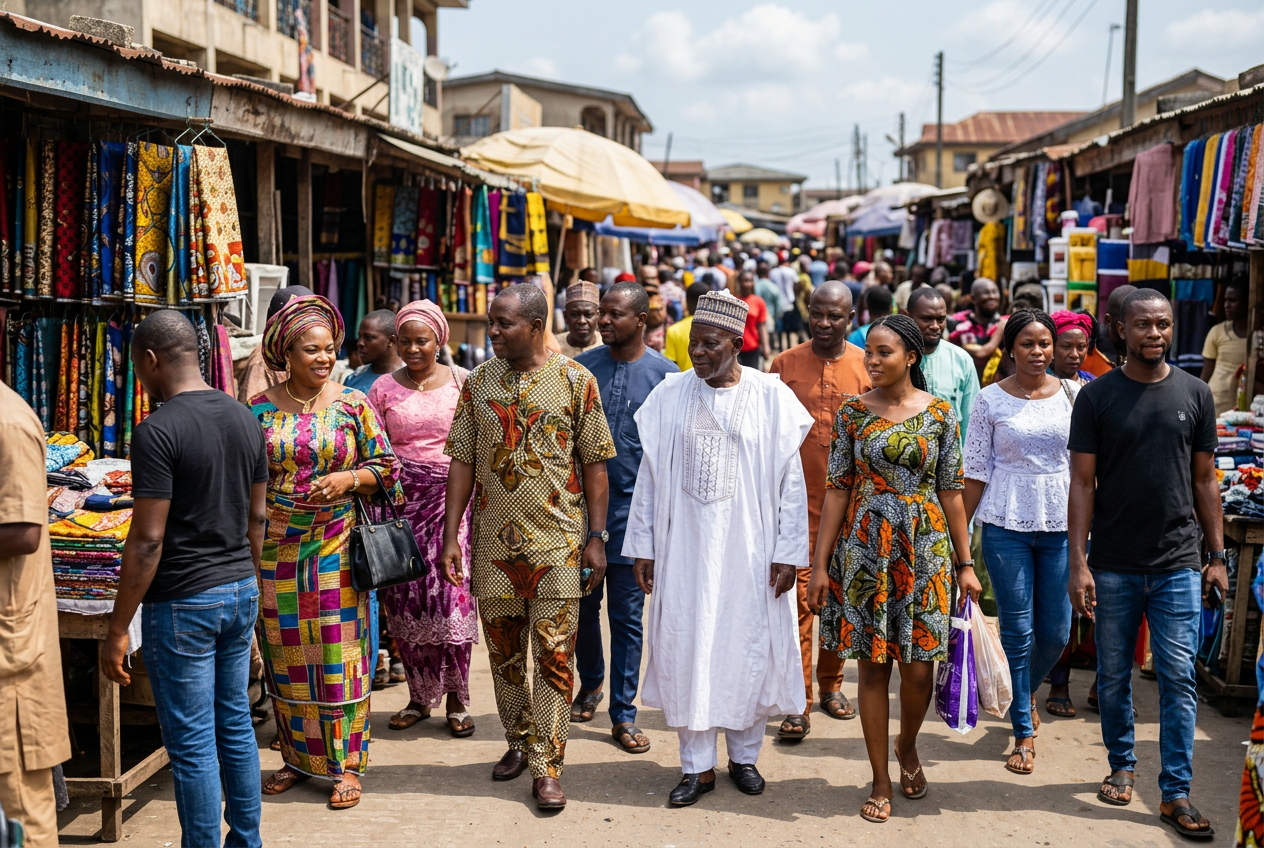
Welcome, and thank you so much for joining me on this exploration of Nigerian dress culture. I have been documenting Nigerian fashion traditions for years, attending everything from traditional marriage ceremonies in Benin City to high-octane Lagos owambe parties, and this article represents the culmination of months of dedicated research into a question that genuinely excites me every time it comes up. What do Nigerians wear? It is a question that sounds simple but opens a door to one of the most varied, vibrant, and culturally layered wardrobe traditions anywhere in the world.
Let me be direct from the start. Nigerians wear a fascinating blend of traditional ethnic attire, contemporary Western clothing, and modern Nigerian designer pieces, and the choice between them shifts constantly depending on occasion, region, religion, age, and personal identity. There is no single answer, and that is precisely what makes the subject so compelling.
I still remember standing at a Lagos bus stop years ago, watching a young woman stride past in immaculate jeans and a cropped university sweatshirt, followed immediately by an older woman wrapped in six metres of gleaming George fabric, her gele tied to architectural perfection. Both were entirely Nigerian. Both were entirely correct. That image stayed with me because it captures the full truth of Nigerian dressing: breadth, confidence, and absolutely zero apology.
What Type of Clothing Does Nigeria Wear Across Daily Life?
Nigerian clothing in everyday settings falls into two broad categories that coexist naturally: Western-influenced casual and professional wear, and traditional or traditional-inspired attire. The balance between them depends heavily on geography and generation.
In Lagos, Abuja, Port Harcourt, and other major cities, you will find young professionals wearing the same suits, trousers, shirts, dresses, and trainers you would see in London or New York from Monday to Thursday. Nigerian office dress codes in banking, law, and government tend to be formal. Women wear tailored dresses, blouses with trousers, or skirt suits. Men wear button-down shirts, blazers, and well-pressed trousers. Nigerian professional culture places considerable value on looking put-together, so you will rarely encounter a Nigerian office worker who appears dishevelled at their desk (the heat notwithstanding).
Friday, however, is a different matter entirely.

Friday is traditional dress day in many Nigerian workplaces, schools, and public institutions. On Fridays, the office transforms. Ankara prints appear at every desk. Aso-oke-trimmed blouses replace blazers. Men arrive in Senator suits, which are a modernised combination of a traditional embroidered top worn over matching trousers, looking sharp and culturally proud all at once. This tradition, supported by organisations like the National Institute for Cultural Orientation (NICO), which actively encourages Nigerians to wear their indigenous attire, reflects how deeply clothing connects to cultural identity here.
Outside urban centres, traditional clothing is even more prevalent in everyday life. In Kano, men wear flowing kaftans and embroidered babban riga as routine daywear. In Igbo communities in Anambra and Enugu States, women wear wrappers and blouses for daily activities with the ease and comfort that others wear tracksuit bottoms. In Yoruba towns across Ogun and Osun States, the sight of a woman expertly tying her gele for a morning church service is as ordinary as breakfast.
The Federal Ministry of Information and National Orientation notes that the use of Ankara materials by both men and women sets Nigerians apart in fashion at home and internationally, and having observed this first-hand at countless events, I can confirm that is not an overstatement.
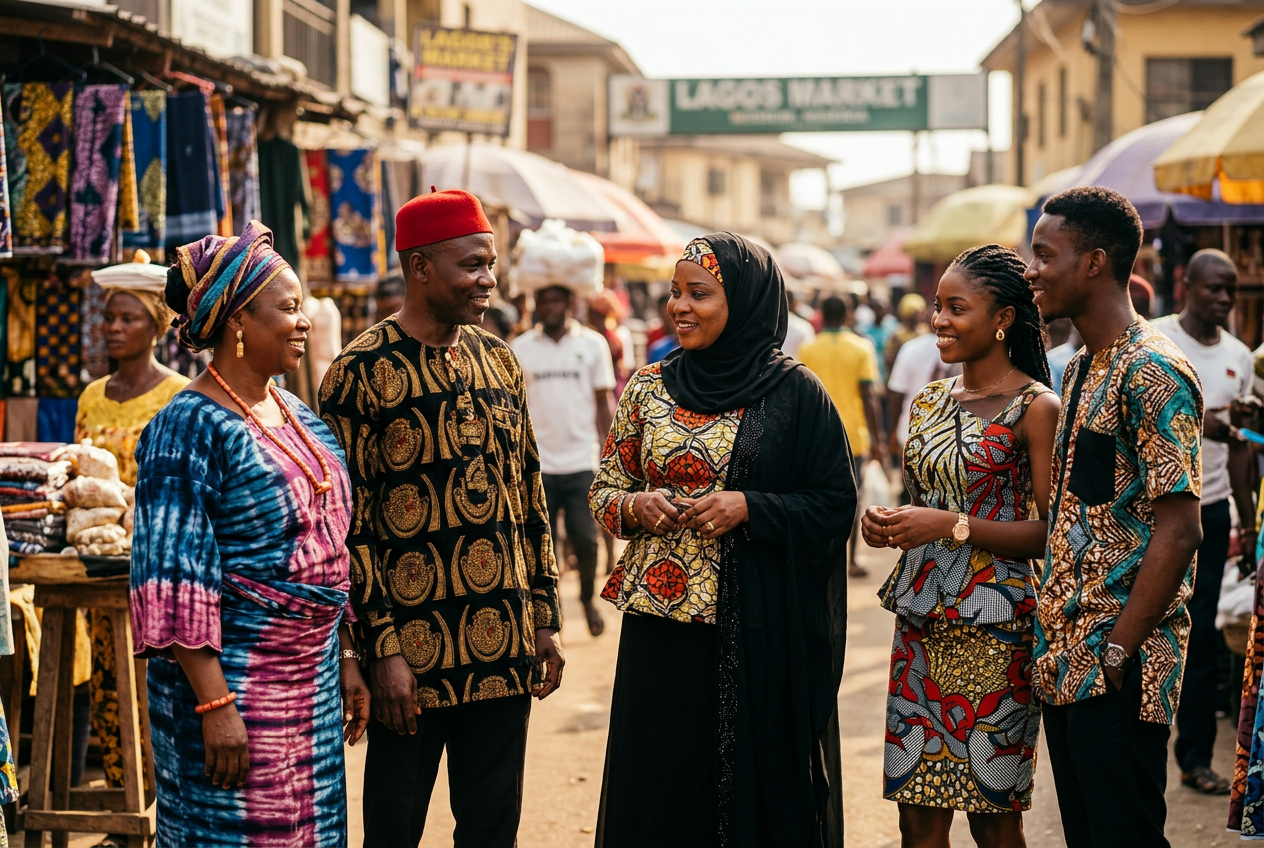
It is also worth noting the strong influence of religion on everyday clothing. Nigeria is roughly evenly divided between Christianity and Islam, and both faiths shape dress norms significantly. Muslim women in the North often wear hijab alongside their traditional Northern fabrics. Christian women in the South may wear modest dresses with head coverings for church. Religious dress is not a separate category in Nigeria; it is woven directly into the everyday wardrobe.
How Nigerian Dress Codes Shift Across Occasions
Think of Nigerian dressing as existing on a spectrum with three clear zones: everyday casual, smart professional or Friday traditional, and full ceremonial. Understanding where an occasion falls on that spectrum is genuinely the most useful skill for anyone navigating Nigerian dress culture.
The Guardian Nigeria’s fashion coverage, including its in-depth look at Nigerian ready-to-wear brands transforming traditional Ankara prints into international ready-to-wear lines, shows how these three zones are increasingly served by sophisticated local designers who understand both cultural expectations and modern aesthetics. Brands like Lisa Folawiyo have elevated what Nigerians wear at every level of that spectrum.
What Are the 4 Types of Nigerian Clothes?
This is a question I find myself answering frequently, and I think the clearest way to approach it is through four functional categories that cover the full range of what Nigerians wear, regardless of ethnic origin.
Traditional ethnic attire forms the first and most culturally significant category. These are the garments tied directly to specific ethnic groups, worn at ceremonies, cultural festivals, and occasions of cultural pride. The agbada, the iro and buba, the George wrapper, the babban riga, the isiagu: each belongs here.
Contemporary Western clothing forms the second category and dominates urban weekday wardrobes. Jeans, T-shirts, dresses, suits, and trainers are worn throughout Nigeria’s cities and are particularly common among younger Nigerians aged sixteen to thirty-five.
Modern Nigerian designer wear sits in its own distinct category. These are garments created by Nigerian designers who blend traditional fabrics and techniques with contemporary silhouettes. A woman might wear an Ankara jumpsuit with a structured bodice by a Lagos designer to a business lunch. This category has grown dramatically over the past decade, as documented extensively in Nigeria’s fashion journey over the years.
Religious or occasion-specific formal wear forms the fourth category. This includes everything from Islamic jalabiya and hijab styles to elaborately laced church outfits and the matching aso-ebi fabric sets that guests purchase and wear to weddings, funerals, and naming ceremonies. The aso-ebi tradition, where groups of guests coordinate in identical fabric as a show of love and solidarity, is one of Nigeria’s most distinctive and photogenic dressing customs.
These four categories are not mutually exclusive. A single outfit can sit across two or three of them simultaneously. A hand-woven aso-oke agbada worn by a Muslim man to a naming ceremony is simultaneously traditional ethnic attire, religious occasion wear, and ceremonial formal wear all at once.
Here is a practical guide to building a Nigerian wardrobe if you are attending events or relocating to Nigeria:
- Start with Ankara. Purchase two or three metres of a good-quality Ankara print in a versatile colour and have a local tailor make it into an outfit that suits your body and lifestyle. This gives you an entry-level traditional option that works for Fridays and casual celebrations.
- Find a reliable tailor. A skilled Nigerian tailor is more valuable than any boutique. Budget between ₦10,000 and ₦50,000 for tailoring fees depending on complexity.
- Invest in one quality lace outfit. Nigerian lace is the foundation of formal celebration dressing. Good French lace fabric runs from ₦30,000 to ₦250,000 per yard, but a well-made lace outfit lasts years.
- Add a gele or cap. No traditional Nigerian outfit is complete without headwear. Women should own at least one gele; men should have a traditional cap matching their ethnic style.
- Keep smart Western wear for professional settings. A well-tailored suit or dress works for office environments from Monday to Thursday across most Nigerian cities.
- Buy aso-ebi when invited to do so. If you receive a wedding invitation with fabric attached, participate. It costs money but buys genuine warmth from the celebrating family.
- Always dress a level above your comfort zone for Nigerian celebrations. Nigerians appreciate effort in dressing more than almost any culture I know. When in doubt, overdress.
What Are the 5 Traditional Dresses Worn Across Nigeria?
Nigeria’s 371 ethnic groups each bring their own traditions to dress, but five garments have achieved national and international recognition as the definitive traditional clothing of Nigeria. These five are the ones you will encounter most frequently and the ones that carry the deepest cultural significance.
The Agbada is Nigeria’s most internationally recognised traditional garment. Worn by men across the Yoruba, Hausa-Fulani, and increasingly all other groups, the agbada is a flowing three-piece ensemble consisting of a wide-sleeved outer robe, a long-sleeved inner shirt (buba), and fitted trousers (sokoto). A matching cap completes the look. The Yoruba call it agbada. The Hausa call it babban riga. The garment communicates dignity, wealth, and cultural pride simultaneously. A full ceremonial agbada with heavy embroidery can weigh 5 to 8 kilograms and cost between ₦500,000 and ₦3,000,000 at the high end.
The Iro and Buba is the quintessential Yoruba women’s traditional outfit, though it has been adopted widely across Nigeria. The iro is a wrapper (a rectangular length of fabric, typically 1.8 to 2 metres) tied around the waist. The buba is a loose, flowing blouse. Together, they create one of the most graceful silhouettes in Nigerian fashion. Add a gele headwrap and an ipele (the decorative fabric draped over the shoulder) and you have a complete, show-stopping traditional look. The Nigerian High Commission in London’s culture pages confirm that the buba, iro, gele, and ipele combination has been adopted across all regions of Nigeria with minor stylistic variations.
The Isiagu is the ceremonial shirt of Igbo men, patterned with embroidered lion heads on a rich fabric background that is typically red, maroon, or navy. Worn with matching trousers, a traditional striped hat (if Igbo), and sometimes a red cap (ozo title cap for title holders), the isiagu is deeply associated with Igbo cultural identity and authority. Seeing a line of Igbo men in matching isiagu at a traditional ceremony is genuinely spectacular.
The Kaftan is Northern Nigeria’s most versatile traditional garment, worn by both men and women in numerous styles. Men’s kaftans are long, loose robes often made in rich embroidered fabric. Women’s kaftans are shaped differently, typically more fitted with elaborate embellishment. The kaftan has spread far beyond its Northern origins and is now worn across Nigeria for everyday and ceremonial occasions.
Ankara-made traditional garments form the fifth category, though Ankara itself is a fabric rather than a garment. What places Ankara-based outfits on this list is how thoroughly the vibrant wax-print fabric has become a defining element of Nigerian national dress identity. From Ankara blouse-and-skirt sets to Ankara jumpsuits, boubous, and even agbadas, this fabric has become what most of the world pictures when they imagine Nigerian clothing.
Traditional Nigerian Garments at a Glance
The table below gives a summary overview of the key garments, their primary ethnic origin, and typical price ranges in Naira, so you can plan appropriately whether you are attending an event or simply building your appreciation of Nigerian dress culture. Prices reflect typical tailor-made costs for good-quality fabric as of 2025 and are approximate guides rather than fixed figures.
| Garment | Primary Ethnic Origin | Typical Fabric | Approx. Cost (Basic) | Approx. Cost (Ceremonial) |
|---|---|---|---|---|
| Agbada (Babban Riga) | Yoruba / Hausa-Fulani | Aso-oke, damask, lace | ₦50,000 | ₦500,000 to ₦3,000,000 |
| Iro and Buba (with Gele) | Yoruba | Aso-oke, George, lace | ₦30,000 | ₦200,000 to ₦1,500,000 |
| Isiagu with Red Cap | Igbo | Isiagu fabric, velvet | ₦40,000 | ₦150,000 to ₦600,000 |
| Kaftan (Men’s / Women’s) | Hausa-Fulani / Northern | Damask, embroidered cotton | ₦25,000 | ₦100,000 to ₦500,000 |
| Ankara Outfit | Pan-Nigerian | Ankara wax print | ₦15,000 | ₦50,000 to ₦300,000 |
| Ange / Tiv Cloth | Tiv (North-Central) | Hand-woven cotton | ₦20,000 | ₦80,000 to ₦200,000 |
| George Wrapper Set | Igbo / Niger Delta | George brocade fabric | ₦60,000 | ₦300,000 to ₦2,000,000 |
Costs rise sharply with embellishment and fabric quality. A basic Ankara outfit made by a local tailor sits at the accessible end of the market, making traditional Nigerian dressing available at nearly every budget level. The ceremonial end, however, is where Nigerian fashion truly becomes an art form.
Which State Is the Best State to Live in Nigeria for Fashion and Cultural Dressing?
This is a question that sparks lively debate, and my answer will probably annoy half my readers regardless of what I say (an occupational hazard for anyone writing about Nigeria!). But since the question is genuine, let me approach it honestly.
For sheer variety of traditional dress and access to quality tailors, fabrics, and fashion markets, Lagos State stands alone. Lagos is where Yoruba traditional fashion coexists with Igbo George-wrapper culture, Northern kaftan styles, Edo beadwork traditions, and everything else Nigeria contains, all compressed into one hyperactive megacity. If you want to see every type of Nigerian clothing in a single afternoon, Lagos Island markets will deliver that experience.
For the purest expression of any single ethnic clothing tradition, you need to be in that tradition’s home state. Kano State for Hausa-Fulani embroidered gowns and turbans. Anambra or Enugu State for the full Igbo traditional experience with George fabric, coral beads, and isiagu. Osun or Ogun State for Yoruba aso-oke at its most authentically produced. Benue State for Tiv ange cloth.
Abuja, as the Federal Capital Territory, offers a fascinating mid-ground. Because civil servants from every state in Nigeria live there, Abuja’s social events showcase an extraordinary mix of all Nigeria’s traditional styles simultaneously. Friday at a government ministry in Abuja looks like a beautifully curated exhibition of Nigerian national dress.
For quality of life combined with access to fashion, Lagos and Abuja lead. For authentic traditional dress immersion, the culture-specific states win every time. It genuinely depends on what you are looking for.
What Do Nigerians Wear? The Complete Answer
So, what do Nigerians wear? The complete answer is this: Nigerians wear a living, evolving, deeply personal combination of traditional ethnic garments, contemporary Western clothing, modern Nigerian designer pieces, and religious attire, with the specific mix varying by state, ethnic group, religion, age, occasion, and personal preference.
The garments most closely associated with Nigerian identity internationally are: the agbada (the flowing embroidered robe), the iro and buba (wrapper and blouse worn by women), Ankara prints (vibrant wax-print fabric in bold patterns), the George wrapper (favoured by Igbo and Niger Delta women for ceremonies), and the kaftan (worn widely in Northern Nigeria). Closely related elements include the gele headwrap (an essential accessory for women’s traditional dress), the aso-oke fabric (hand-woven by Yoruba artisans), adire (indigo-dyed cloth with symbolic patterns), and coral bead accessories that carry deep cultural and status significance.
What ties all of these together is pride. I have never encountered a culture that wears its clothing with more conscious pride than Nigeria. Whether it is a young man pressing his Senator suit with fierce concentration the night before a party, or a grandmother instructing her granddaughter in the correct way to tie a gele for the first time, Nigerian clothing is never merely functional. It is always a statement.
Related Articles
If you have enjoyed this exploration of what Nigerians wear, you will find rich context in two of my previous pieces on this topic. My article on what Nigerian clothing really means goes deeper into the fabrics, the tailoring traditions, and the way everyday dressing intersects with cultural belonging, drawing on conversations with Lagos market tailors and Kano dye-pit artisans to paint a vivid picture of clothing as lived cultural practice. If you are curious about the broader cultural values that shape why Nigerians dress the way they do, my piece on what Nigerian culture is known for explores the communal pride, the love of celebration, and the visual storytelling traditions that make Nigerian fashion so distinctive and so compelling to the rest of the world.
Dressing the Nigerian Way: Final Thoughts
Nigerian clothing is one of the most joyful subjects I have ever written about, and I say that after years of covering everything from economic policy to migration patterns. There is something genuinely uplifting about a fashion tradition that says: we have 371 ethnic groups, each with their own gorgeous way of dressing, and we celebrate all of it simultaneously.
The practical takeaway is straightforward. If you are a Nigerian who has drifted towards Western-only dressing, bring traditional pieces back into your wardrobe. Start with Ankara for Fridays. Add one quality lace or George outfit for celebrations. Invest in a properly made gele or a well-embroidered agbada or Senator suit for special occasions. You will feel the difference.
If you are a visitor or someone new to Nigerian culture, approach traditional dress with genuine curiosity. Ask. Learn. When you wear Nigerian fabric with respect and intention, it is one of the most effective cultural bridges I know.
And if you are already fully invested in Nigerian traditional dressing, I simply say: keep going. The arts and aesthetics of Aso-Oke fabric alone represent centuries of craft knowledge that deserve every bit of the pride Nigerians bring to wearing it.
Nigerian clothing is living history. Wear it accordingly.
- Invest in at least one quality traditional outfit appropriate to your own ethnic or regional background, as traditional attire connects you to cultural identity in ways Western clothing cannot replicate.
- Use Ankara fabric as your entry point into Nigerian traditional dressing: it is affordable, versatile, works for casual and semi-formal occasions, and is available across the country from ₦2,000 per yard upwards.
- For ceremonial occasions, always dress a tier above your comfort level: Nigerian celebrations reward visual effort, and the social warmth that comes from appearing in well-made traditional attire is genuinely worth the investment.
FAQs About What Nigerians Wear
What do Nigerians wear on a normal day?
On a typical weekday, most urban Nigerians wear Western-style clothing including jeans, shirts, dresses, and office attire that reflects their professional environment. In rural areas and Northern states, traditional garments such as kaftans, wrappers, and babban riga are more commonly seen as part of everyday life.
What is the national dress of Nigeria?
Nigeria does not have a single national dress, given its extraordinary ethnic diversity across more than 371 groups. However, the agbada for men and the iro and buba with gele for women are most frequently cited as the garments most representative of Nigerian traditional identity at a national level.
What fabric is most popular in Nigerian clothing?
Ankara wax-print fabric is the most widely worn traditional fabric across Nigeria today, used for everything from casual everyday outfits to formal celebratory wear. Aso-oke, George, and lace are the premium fabrics of choice for ceremonial occasions and high-investment traditional outfits.
Do Nigerians still wear traditional clothing regularly?
Yes, absolutely. Traditional clothing remains a central part of Nigerian life, particularly for ceremonies, Fridays, cultural festivals, and religious occasions. The tradition is arguably growing stronger rather than weaker among younger Nigerians who take pride in ethnic identity.
How much does a traditional Nigerian outfit cost?
A basic Ankara outfit made by a local tailor typically costs between ₦15,000 and ₦50,000, while a ceremonial agbada or George wrapper set from quality fabric can cost anywhere from ₦200,000 to several million naira. Fabric quality, embellishment, and the reputation of the tailor are the three biggest price drivers.
What is aso-ebi in Nigerian dressing?
Aso-ebi is the practice of purchasing and wearing a coordinated fabric selected by the host family for a celebration such as a wedding, naming ceremony, or funeral. It signals solidarity and belonging within the celebrating group, and the practice is one of the most distinctive and socially important customs in Nigerian dress culture.
What do Nigerian men wear to formal occasions?
Nigerian men wear either a full agbada (three-piece flowing robe, inner shirt, and trousers with a cap) or a Senator suit (embroidered traditional top with matching trousers) for formal and celebratory occasions. A matching cap is essential in both cases, and leather slippers or quality shoes complete the look.
What do Nigerian women wear to weddings?
Nigerian women wear elaborately made traditional outfits to weddings, typically in lace, George fabric, or aso-oke, styled with a gele headwrap and coordinated accessories including beads and jewellery. If an aso-ebi fabric has been designated for the event, close friends and family of the couple are expected to wear it.
What is the Ankara fabric and why is it so popular in Nigeria?
Ankara is a vibrantly coloured wax-print fabric that has become synonymous with Nigerian and West African fashion more broadly. It is popular because it is versatile, colourful, available at every price point, and adaptable into dozens of garment styles, making it the ideal fabric for expressing Nigerian identity at any budget.
What traditional clothing do Igbo people wear?
Igbo men traditionally wear the isiagu shirt (patterned with embroidered lion heads) with matching trousers and a traditional hat or red cap for title holders, while Igbo women are known for George fabric wrapper sets with coral bead accessories. Both garments are deeply tied to Igbo cultural pride and are worn at ceremonies with great formality.
What do Hausa-Fulani Nigerians typically wear?
Hausa-Fulani men traditionally wear the babban riga, a flowing embroidered gown worn with a cap and sometimes a turban, while women wear a combination of an Ankara blouse, wrapper, and hijab in many communities. The embroidery on Hausa traditional garments is considered among the finest textile craft in Africa.
What is the difference between agbada and kaftan in Nigerian fashion?
The agbada is a three-piece flowing robe with distinctively wide sleeves, typically associated with Yoruba and broadly West African formal dressing, while the kaftan is a single-piece long robe more closely associated with Northern Nigerian and Hausa-Fulani traditions. Both are worn across ethnic boundaries today, but they carry distinct cultural origins and styling conventions that Nigerians recognise immediately.

