 Follow Us on Google News
 Follow Us on Google Discover
Welcome, and thank you for being here. This is one of those questions that sounds deceptively simple until you actually sit with it, and it has taken me months of dedicated research into Nigerian identity politics, census history, and cultural anthropology to do it justice. Layer onto that years of experience navigating Nigerian identity both within the country and across diaspora communities on three continents, and I can tell you with genuine confidence: the answer to what ethnicity is Nigerian is one of the most fascinating and layered subjects in all of African demography.
Let me set something straight from the outset. “Nigerian” is not an ethnicity. It never has been. It is a nationality, a civic identity, a passport designation. The ethnicities of Nigerian people are something altogether richer, more numerous, and more complicated than a single label could ever convey.
That distinction matters enormously, and it is exactly what this article unpacks.
What Is My Ethnicity If I Am a Nigerian?
This is the question I get most often from Nigerians living abroad, especially those filling out forms that ask for “ethnicity” and finding themselves staring blankly at options that were clearly designed by people who had never heard of the Ijaw, the Tiv, or the Kanuri.
Here is the honest answer: your ethnicity is your specific ethnic group, not your nationality.
If you are Yoruba, your ethnicity is Yoruba. If you are Igbo, your ethnicity is Igbo. If your family comes from the Efik people of Cross River State, your ethnicity is Efik. Nigeria as a nation-state is home to 371 officially recognised ethnic groups speaking over 500 languages, and each of those groups represents a distinct ethnicity with its own history, linguistic identity, cultural practices, and territorial homeland. According to the Nigerian Ministry of Foreign Affairs, Nigerian people derive from over 250 ethnic groups and languages, and the term “Nigerian” refers to citizenship-based civic nationality rather than any shared ethnicity.

So when a British or American form asks for your ethnicity and offers “Black African” or “Black or Black British: African” as options, that is a racial category, not an ethnic one. Your ethnicity is far more specific than that.
I remember the first time I encountered this confusion in a meaningful way. I was conducting field research in Abuja, reviewing demographic questionnaires with colleagues at a university faculty. A postgraduate student from Ondo State was deeply frustrated by a scholarship application from a North American institution that listed only “African” as her ethnicity option. She was Yoruba, she explained. More specifically Ondo Yoruba. And that distinction mattered to her family, her community, her sense of self. “African” told you almost nothing about who she actually was.
This experience encapsulates why the question of Nigerian ethnicity deserves serious treatment rather than a dismissive paragraph.
Nigeria’s three largest ethnic groups dominate most conversations about the country’s demographic makeup. The Hausa-Fulani (though technically two distinct groups that merged through centuries of intermarriage and political alignment) represent approximately 29% of the population and predominantly occupy the northern states from Sokoto to Maiduguri. The Yoruba, at roughly 21%, concentrate in the south-western states and are perhaps the ethnic group whose cultural exports (Afrobeats, Nollywood, fashion) have travelled furthest internationally. The Igbo, at around 18%, are concentrated in the south-east and are celebrated for an extraordinary entrepreneurial tradition and republican social values that trace back to pre-colonial village democracy. As the Nigerian High Commission in Kampala confirms, each of these groups accounts for roughly a fifth of the population, forming the demographic foundation of the nation.
But stop right there before you mentally file away those three groups as “the Nigerian ethnicities.” Because the remaining 32% to 40% of Nigeria’s population, which is somewhere between 70 and 90 million people, belongs to 368 other ethnic groups. Many of them number in the millions. The Ijaw in the Niger Delta count over 14 million people. The Tiv of Benue State number more than five million. The Kanuri of the north-east, the Ibibio and Annang of Akwa Ibom, the Nupe of Niger State, the Edo of Edo State, the Igala of Kogi State, all of these groups have populations that would make them significant nations in their own right if they existed anywhere else. Treating them as footnotes is not just statistically careless. It is culturally disrespectful.
What I learned during fieldwork in Plateau State stays with me. Within a single local government area, I encountered seven distinct ethnic groups, each with its own language, traditional governance structure, and cultural calendar. The linguistic shift happened every twenty kilometres or so. If you want to understand what Nigerian ethnicity actually looks like in practice, picture that, multiplied across 36 states and a Federal Capital Territory.
The National Population Commission is responsible for collecting and publishing demographic data about Nigerian people, but it deliberately avoids ethnic enumeration in census data because of the political sensitivity that surrounds such counting. This absence of official ethnic breakdowns speaks volumes about the complexity involved in managing our diversity as a national project.
As one perceptive Guardian Nigeria opinion piece on Nigerian identity crisis observed, ethnic identity in Nigeria runs so deep that some Nigerians have effectively been treated as foreigners in the very Nigerian cities where they were born, simply because their ethnic group was different from the state’s majority group. That kind of experience is uncomfortable to acknowledge, but it tells you how serious and lived ethnic identity actually is.
Is Nigeria an Ethnicity or a Nationality?
Nigeria is unambiguously a nationality. Full stop.
It became a nationality in 1914 when British colonial administrator Frederick Lugard amalgamated the Northern and Southern Protectorates into a single entity, creating a country out of what had previously been hundreds of independent kingdoms, caliphates, emirates, chieftancies, and stateless societies. These communities did not choose to be Nigerian. They were grouped together by a colonial power drawing boundaries across a map, primarily for administrative convenience.
The result is a nation-state that contains multitudes: dozens of language families, centuries of separate historical development, radically different governance traditions, and pre-existing identities that predate Nigeria as a concept by thousands of years. A Fulani pastoralist whose ancestors migrated across West Africa long before European contact was not Nigerian. A Benin Kingdom bronzesmith working in the 15th century was not Nigerian. These were people of their own civilisations, and they became “Nigerian” only through the accident of colonial boundary-drawing.
Understanding this history matters because it explains why Nigerians typically identify by ethnicity first and nationality second. In everyday Nigerian life, you are Yoruba before you are Nigerian. You are Igbo before you are Nigerian. You are Kanuri or Tiv or Ijaw before you are Nigerian. This is not a sign of insufficient patriotism. It reflects the actual order of cultural inheritance. Your ethnicity was there before the country; your nationality came later.
That said, a genuinely Nigerian identity has been forming over the 65 years since independence. It is most visible in diaspora communities, where the shared experience of being African and being Nigerian in a foreign country creates a pan-Nigerian solidarity that transcends ethnic divisions. It appears in Nollywood films that mix Yoruba, Igbo, Hausa, and Pidgin English in ways that assume a pan-Nigerian audience. It pulses through Afrobeats music, which draws on Yoruba rhythms, Igbo aesthetics, and pan-Nigerian urban experience to create something genuinely new. And it lives in the way young Nigerians born after the civil war increasingly see themselves as Nigerian first, even while remaining proud of their specific ethnic heritage.
A thoughtful Guardian Nigeria piece on race and ethnicity made the important point that some Nigerians have even altered their identities or name presentations to align with ethnicities perceived as more advantaged in certain contexts. That reality reflects just how much ethnic identity intersects with opportunity, power, and belonging in Nigerian society.
How to Understand Nigerian Ethnic Identity: A Step-by-Step Guide
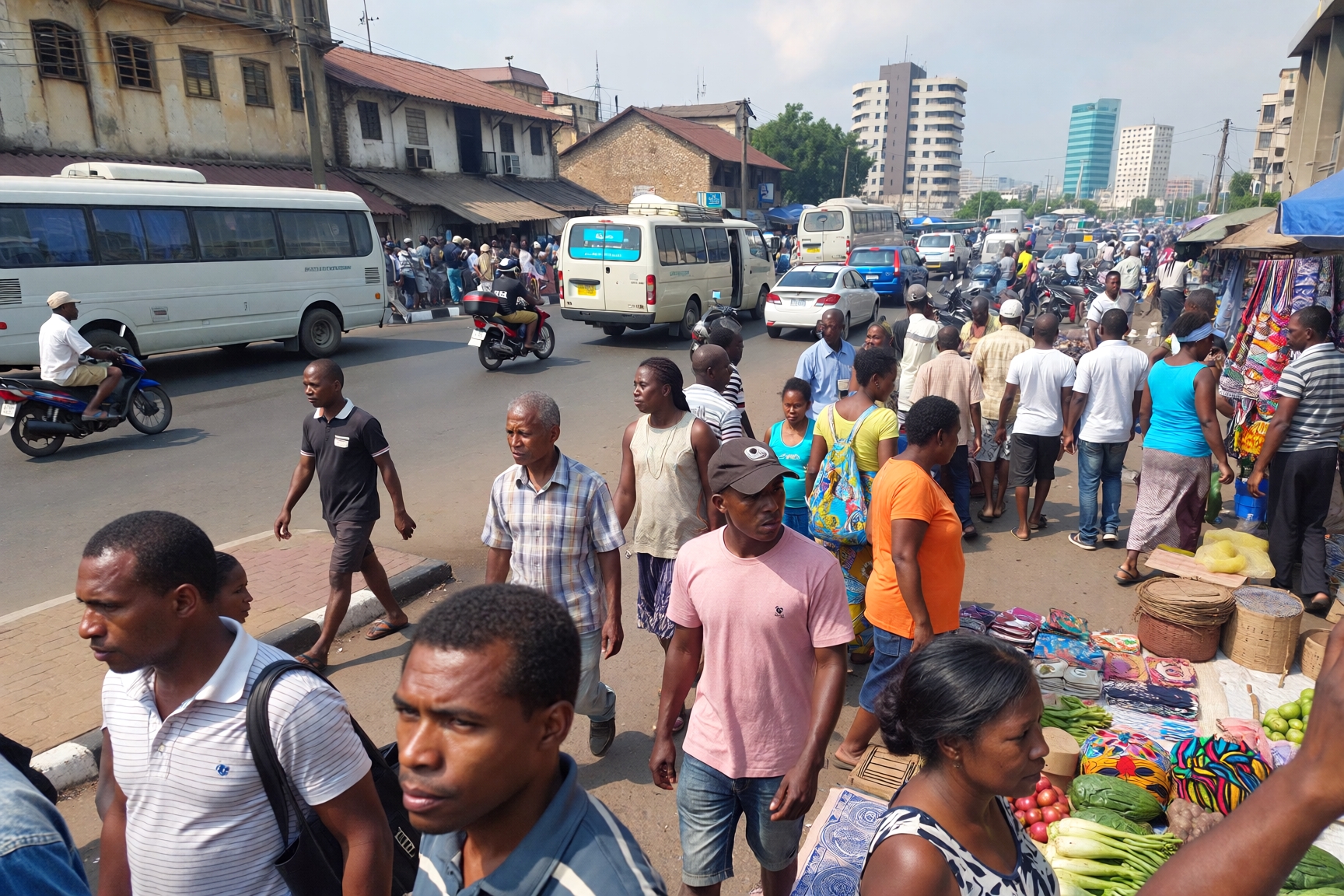
Navigating Nigerian ethnic diversity without a framework is like arriving at Alaba Market without knowing what you came to buy. After years of demographic research and cultural fieldwork, here is the approach I recommend:
- Start by distinguishing race, ethnicity, and nationality. Race is the broadest and most contested category; Nigeria is broadly classified as 99.8% Black African from a racial standpoint. Ethnicity is the specific cultural, linguistic, and ancestral group you belong to: Yoruba, Igbo, Hausa, Ijaw, and so on. Nationality is legal citizenship: Nigerian.
- Learn the three major groups first, then expand. Hausa-Fulani (north), Yoruba (south-west), and Igbo (south-east) form what demographers call Nigeria’s demographic triumvirate. Understand their geographic concentration, historical backgrounds, and cultural characteristics before moving to medium-sized groups.
- Recognise medium-sized ethnic groups as full participants. The Ijaw (14+ million), Tiv (5+ million), Kanuri, Ibibio, Edo, Nupe, and Igala each number in the millions. Collectively, so-called minority groups constitute nearly 40% of Nigeria’s population.
- Understand language families, not just individual languages. Nigeria’s 500+ languages belong to three main families: Niger-Congo (most southern languages, including Yoruba and Igbo), Afroasiatic (Hausa and related northern languages), and Nilo-Saharan (primarily Kanuri). Knowing which family a language belongs to reveals cultural and historical connections.
- Study geographic distribution on a map. Nigeria’s ethnic groups concentrate regionally rather than scattering randomly. The north is predominantly Hausa-Fulani and Kanuri, the south-west is Yoruba, the south-east is Igbo, and the Middle Belt (Benue, Plateau, Kogi, Nasarawa, Niger, Kwara states) holds the greatest ethnic diversity.
- Understand the role of federal character. Nigeria’s federal system uses the principle of “federal character” to ensure ethnic representation in government appointments, presidential tickets, and resource allocation. Learning how this works explains much of Nigerian political behaviour.
- Engage with the culture directly. Read Chinua Achebe (Igbo), Wole Soyinka (Yoruba), and Zaynab Alkali (Hausa). Attend a Durbar in Kano, an Osun-Osogbo Festival in Yorubaland, or a New Yam Festival in Igboland. Cultural immersion teaches what statistics cannot.
Ethnic Group Comparison Across Nigeria’s Six Geopolitical Zones
Nigeria’s 36 states are divided into six geopolitical zones for administrative and representational purposes. The table below shows the dominant ethnic group(s), estimated population share, major language, and primary religion in each zone.
| Geopolitical Zone | Dominant Ethnic Group(s) | Estimated Population Share | Major Language(s) | Primary Religion |
|---|---|---|---|---|
| North-West | Hausa-Fulani | ~22% of national population | Hausa, Fulfulde | Islam |
| North-East | Hausa-Fulani, Kanuri | ~13% of national population | Hausa, Kanuri | Islam |
| North-Central (Middle Belt) | Tiv, Nupe, Igala, Gwari, others | ~13% of national population | Multiple (Tiv, Nupe, etc.) | Mixed Islam/Christianity |
| South-West | Yoruba | ~21% of national population | Yoruba | Mixed Islam/Christianity |
| South-East | Igbo | ~18% of national population | Igbo | Christianity (predominantly) |
| South-South | Ijaw, Edo, Urhobo, Efik, Ibibio | ~13% of national population | Multiple (Ijaw, Efik, etc.) | Christianity (predominantly) |
The table above illustrates something important: no single ethnic group holds demographic dominance across all six zones. Even the Hausa-Fulani, Nigeria’s largest group, are overwhelmingly concentrated in the north, whilst the south is divided between Yoruba, Igbo, and a rich mosaic of smaller groups, particularly in the South-South where the Niger Delta’s ethnic plurality is extraordinary.
What Ethnicity Is Nigerian? The Direct Answer
Let me answer this directly, as it deserves: there is no single Nigerian ethnicity. Nigeria is a multinational state, meaning it is one country that contains multiple distinct nations or peoples within its borders.
If you are Nigerian, your ethnicity is the specific ethnic group you belong to by descent and cultural upbringing. The most commonly cited groups, with their approximate percentages of Nigeria’s population of roughly 230 million, include:
- Hausa-Fulani (approximately 29%, North-West and North-East)
- Yoruba (approximately 21%, South-West)
- Igbo (approximately 18%, South-East)
- Ijaw (approximately 4 to 6%, South-South/Niger Delta)
- Kanuri (approximately 4%, North-East)
- Ibibio (approximately 3.5%, Akwa Ibom)
- Tiv (approximately 2.5%, Benue/North-Central)
- Edo (approximately 2%, Edo State)
- Nupe (approximately 1.5%, Niger State)
- Igala (approximately 1%, Kogi State)
- Berom, Gwari, Urhobo, Isoko, Efik, Idoma, and 358 other officially recognised groups (remaining percentage)
When Western demographic surveys ask Nigerian-born people for their ethnicity and offer only “Black African” or “Black: African/Caribbean/British” as options, those categories describe racial classification, not ethnicity. Your genuine ethnicity is one of the specific groups above.
That distinction is not merely academic. It shapes your name, your language, your marriage customs, your food, your relationship with your community, your historical memory, and your sense of who you are.
Which City Never Sleeps in Nigeria?
The answer, without any serious competition, is Lagos.
Lagos is Africa’s most populous city, a sprawling coastal metropolis of over 20 million people that operates on a rhythm all its own. I have walked through Victoria Island at 3 AM and found restaurants still serving full tables of customers, clubs packed with revellers, and market traders setting up their stalls for the morning rush. The city does not have an off switch.
The Guardian Nigeria’s coverage of Lagos nightlife captures how establishments like Quilox on Victoria Island routinely host international DJs and celebrities, keeping the party alive until sunrise on weekends. But Lagos’s sleeplessness is not only about entertainment. It is economic necessity. Many Lagosians work multiple jobs, with night shifts beginning as day shifts end. The notorious traffic congestion means commuters leave home at 5 AM and return at 10 PM, compressing rest time into whatever gaps they can find. Add to that the round-the-clock activity at the ports, the 24-hour petrol queues that appear whenever fuel supply tightens, the night markets of Oshodi and Mile 12, and the music studios that run sessions through the darkness to meet Afrobeats deadlines, and you have a city that simply never stops.
Port Harcourt has its oil industry nightlife. Abuja has its diplomatic bar scene. Kano’s ancient markets maintain late hours. But none of these cities has earned the title the way Lagos has, not merely as a reputation but as a lived daily reality for millions of people.
The phrase “Lagos never sleeps” has become a badge of identity for the city’s residents. It signals ambition, resilience, hustle culture, and the particular flavour of West African urban energy that has no real equivalent anywhere else on the continent. Rather like New York’s famous claim, but louder, warmer, and considerably more densely packed with danfo buses.
What Sells Very Fast in Nigeria?
Nigeria’s consumer market is enormous, aspirational, and extraordinarily competitive. With over 200 million consumers and a young, urban population with strong purchasing intent, certain product categories move faster than almost anywhere else in Africa.
Food and staple groceries lead the way, as they always do. Rice, palm oil, garri, beans, tomatoes, onions, and cooking gas are daily necessities that sell continuously across every market and supermarket in the country. These are the anchor categories of Nigeria’s massive informal retail sector, which accounts for the majority of consumer goods transactions and operates through the millions of small shops (known as provision stores or kiosks) that dot every street in every city. As Guardian Nigeria’s coverage of Nigeria’s spending habits reveals, food is where the largest share of Nigerian consumer income goes, regardless of economic conditions.
Mobile telecommunications products and airtime sell at extraordinary velocity. Nigeria has one of the largest mobile subscriber bases in Africa, with over 200 million active SIM cards. Airtime recharge vouchers, mobile data bundles, and phone accessories are among the fastest-moving items in any retail environment, from high-street shops to roadside stalls.
Personal care and beauty products move remarkably quickly, particularly skincare. The Nigerian beauty market has exploded in recent years, with both premium international brands and locally produced products finding enthusiastic consumers willing to spend significant amounts on grooming. Skin lightening creams, hair extensions and wigs, and body oils generate substantial daily sales.
Affordable clothing and fashion accessories, particularly in the ₦2,000 to ₦15,000 price range, sell continuously through Balogun Market in Lagos, Onitsha Main Market in Anambra, and their equivalents across the country. Nigerian consumers love fashion and will find a way to look good regardless of economic pressures.
Finally, second-hand electronics (tokunbo goods), particularly smartphones and generators, represent another fast-moving category driven by Nigeria’s infrastructure gaps and the aspiration to participate in the digital economy at every income level.
Related Articles
If you have enjoyed exploring Nigerian ethnic identity and cultural life, you may want to read my earlier research pieces that cover related ground in depth. My article on What Is the Dominant Race in Nigeria? unpacks the important difference between racial classification and ethnic identity across Nigeria’s 371 groups. And for a thorough breakdown of each major group, their history, and their cultural contributions, my piece on How Many Ethnic Groups Are in Nigeria? offers the most comprehensive treatment of this subject I have written.
Understanding Nigerian Ethnicity: Final Thoughts
The question “what ethnicity is Nigerian” is really an invitation to understand one of the world’s most beautifully complex nations.
Nigeria is not one ethnicity. It is 371 ethnicities living together under one flag, negotiating their differences, celebrating their diversity, and steadily building a shared national identity that layers on top of, rather than replacing, the ancient ethnic identities that predate the country itself. As a Nigerian, your ethnicity is your specific group, the Yoruba, Igbo, Hausa, Ijaw, or any of hundreds of other communities. Your nationality is Nigerian. Both matter. Neither cancels the other.
Here are three practical takeaways from everything covered above:
- When filling out international forms asking for ethnicity, you are not obligated to choose a racial category. Write your specific ethnic group (Yoruba, Igbo, Hausa, Tiv, etc.) in any free-text field, or select “Other” and specify. Your ethnicity is real and specific.
- If you are building knowledge of Nigeria’s diversity, use the six geopolitical zone framework as your mental map. Each zone has a distinct demographic character, and understanding those patterns makes Nigerian politics, economics, and culture far more legible.
- Take pride in whichever ethnic identity you carry. Nigeria’s strength as a nation has always come from the extraordinary creativity, resilience, and cultural richness of its 371 peoples, not from any homogeneity it could never have had.
Frequently Asked Questions About Nigerian Ethnicity
What ethnicity is Nigerian?
There is no single Nigerian ethnicity. Nigeria is home to 371 officially recognised ethnic groups, including the Hausa-Fulani, Yoruba, and Igbo as the three largest, along with the Ijaw, Kanuri, Tiv, Ibibio, Edo, and hundreds of smaller groups. “Nigerian” describes citizenship and nationality, not a shared ethnicity.
What is my ethnicity if I am Nigerian?
Your ethnicity is the specific ethnic group you belong to by descent, such as Yoruba, Igbo, Hausa, Ijaw, Efik, Nupe, Tiv, or any of the 371 groups officially recognised in Nigeria. When international forms ask for ethnicity and offer only broad racial categories, your actual ethnicity is far more specific than “Black African.”
Is Nigeria an ethnicity or a nationality?
Nigeria is a nationality, not an ethnicity. It refers to citizenship in the Federal Republic of Nigeria, a nation created by British colonial amalgamation in 1914 out of hundreds of previously independent peoples and kingdoms. Ethnicity in Nigeria is specific to one of the 371 distinct cultural and linguistic groups within the country.
What are the main ethnic groups in Nigeria?
The three largest are the Hausa-Fulani (approximately 29% of the population, concentrated in northern states), the Yoruba (approximately 21%, south-west), and the Igbo (approximately 18%, south-east). Medium-sized groups include the Ijaw, Kanuri, Tiv, Ibibio, and Edo, each numbering in the millions.
How many ethnic groups does Nigeria have?
Nigeria has 371 officially recognised ethnic groups speaking over 500 indigenous languages. This makes it one of the most ethnically diverse countries on Earth, ranking among the top three globally for cultural diversity alongside Chad and Cameroon.
What is Nigerian ethnicity called in the UK and USA?
On British forms, Nigerians are typically classified under “Black or Black British: African,” and on American forms under “Black or African American” or “African.” These are racial categories rather than ethnic ones. Many diaspora Nigerians now write their specific ethnic group (Yoruba, Igbo, Hausa, etc.) in free-text fields when available.
Are Yoruba, Igbo, and Hausa the same ethnicity?
No, they are three distinct ethnicities with different languages, cultural practices, historical traditions, and geographic homelands. Yoruba belongs to the Niger-Congo language family with its base in south-western Nigeria, Igbo is also Niger-Congo but structurally distinct and based in the south-east, whilst Hausa belongs to the Afroasiatic language family and is concentrated in the north.
Which city never sleeps in Nigeria?
Lagos is the city that never sleeps in Nigeria. With over 20 million residents, 24-hour markets, a thriving entertainment industry, continuous port activity, and a culture of round-the-clock commerce and nightlife, Lagos operates without any meaningful pause, day or night, weekday or weekend.
What sells very fast in Nigeria?
The fastest-selling product categories in Nigeria include food staples (rice, palm oil, garri, tomatoes), airtime and mobile data, personal care and beauty products (particularly skincare and hair extensions), affordable fashion, and second-hand electronics such as smartphones. These categories sell continuously across formal and informal retail channels.
Do Nigerians identify more with their ethnicity or their nationality?
Most Nigerians, particularly older generations and those outside major cosmopolitan cities, identify by ethnicity first. In Lagos, Abuja, and in diaspora communities abroad, a pan-Nigerian identity is stronger and growing. Younger, urban, and highly educated Nigerians increasingly hold both identities simultaneously without perceiving any contradiction.
Why did Nigeria end up with so many ethnic groups?
Nigeria’s extraordinary ethnic diversity results from millennia of West African migration patterns, varied ecological zones supporting distinct communities, the rise and fall of ancient empires and kingdoms, and the 1914 British colonial amalgamation that combined hundreds of previously independent societies into one nation-state. Geography, history, and colonial policy all contributed.
Can Nigerians from different ethnic groups understand each other?
Not linguistically in most cases, since Yoruba, Igbo, Hausa, and most other Nigerian languages are mutually unintelligible. English, the official language, and Nigerian Pidgin English serve as the two main bridges across ethnic and linguistic lines, particularly in urban markets, workplaces, and among younger generations. Nigerian Pidgin in particular has become a genuine national contact language.

