 Follow Us on Google News
 Follow Us on Google Discover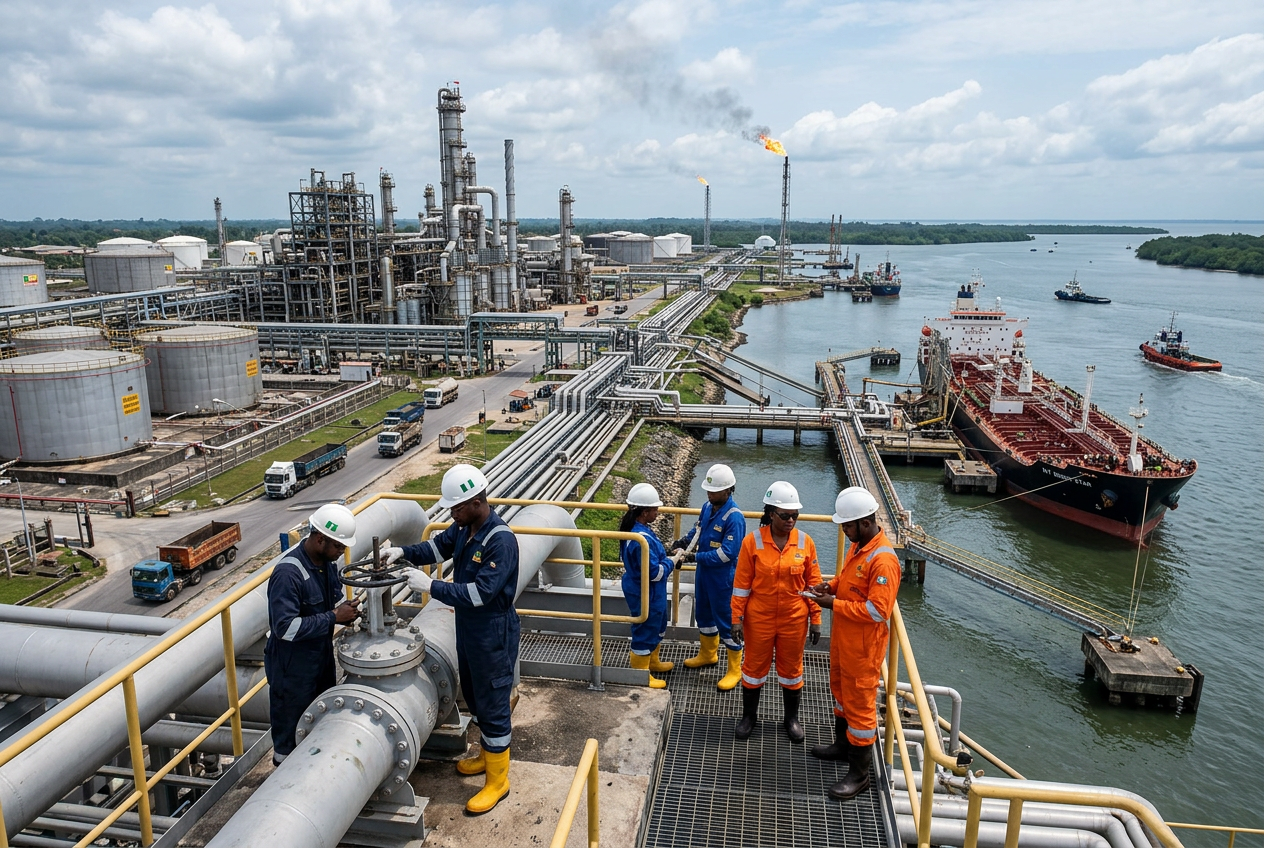
Hello, and thank you for stopping by. If you have ever found yourself in an argument at a family gathering over whether it is oil, farming, or “small business” that truly keeps Nigeria running, then you are in very good company. This article distils months of digging through national accounts and quarterly reports, plus years spent writing about the Nigerian economy. My aim is simple: to answer, honestly and clearly, what Nigeria’s biggest industry actually is, and why the answer depends entirely on what you mean by “biggest”. Much of that answer runs through the country’s oil and gas sector, though as you will soon see, it is far from the whole story.
Here is the short version, and I will unpack it properly as we go. If you mean the industry that earns the most money from abroad and fills the government’s pockets, the answer is oil and gas. If you mean the one that feeds and employs the most people, the answer is agriculture. And if you mean the part of the economy with the most day-to-day activity, you are really talking about services, that busy world of trade, telecoms, and banking. One country, three defensible answers. Rather like asking who the “most important” player in a football team is: it depends on whether you are counting goals, tackles, or minutes on the pitch.
Let us walk through it together.
What Are the Top 5 Industries in Nigeria?
Before we crown a single winner, it helps to meet the main contenders. Nigeria has a big, varied economy, the largest in Africa by output, and no single sector tells the whole story on its own.
Here are the five that matter most:
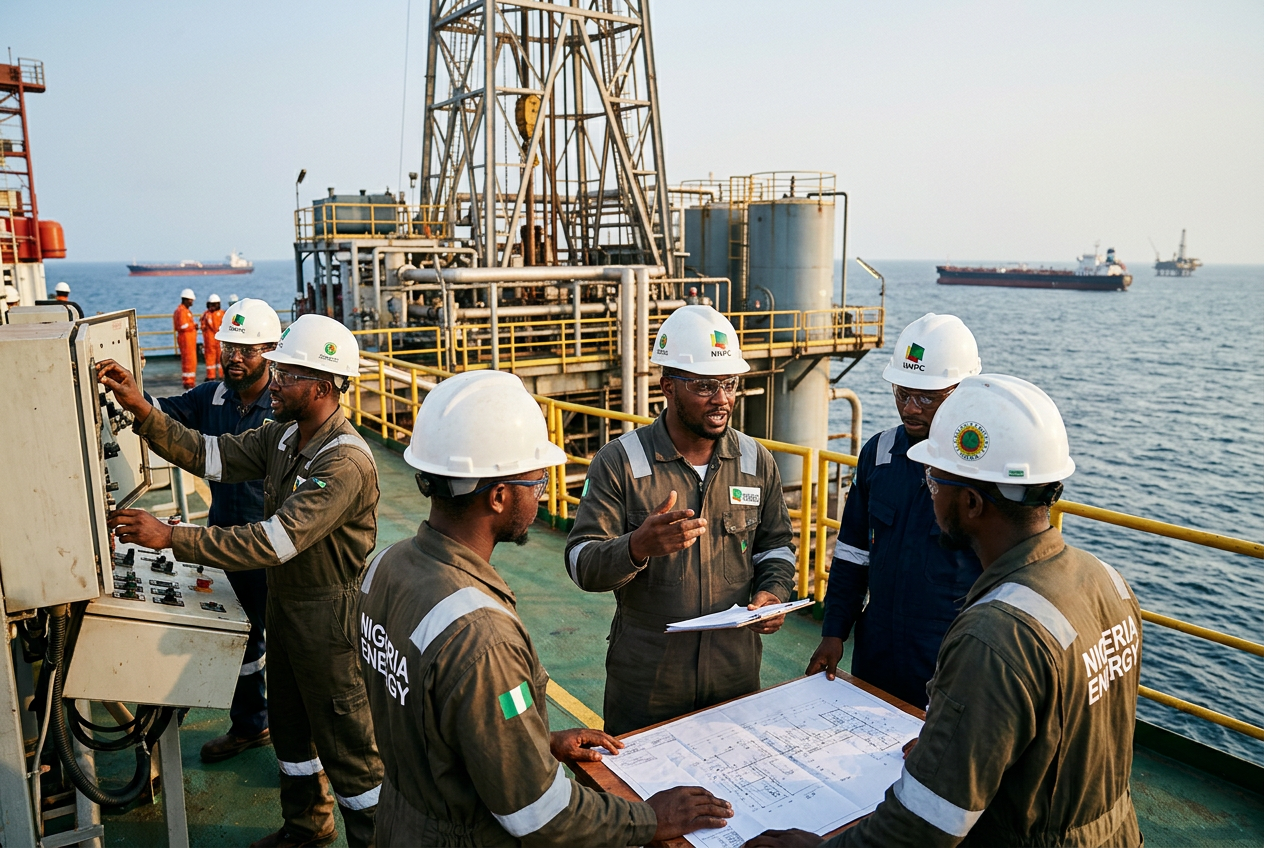
Oil and gas sits at the top when we talk about export earnings. Crude oil has long provided the majority of the country’s foreign exchange, and for decades it bankrolled budgets from Lagos to Maiduguri. The Nigerian Upstream Petroleum Regulatory Commission notes that Nigeria holds proven reserves of around 37.5 billion barrels and remains Africa’s leading crude producer, which tells you why this sector dominates the conversation even when it is not creating the most jobs.

Agriculture comes next, and in human terms it may be the most important of all. It employs roughly a third of the workforce, from yam and cassava farmers in the Middle Belt to fishing communities along the coast. Its share of the economy is enormous compared with oil, even if a single barrel of crude is worth far more than a single tuber.
Then there is trade, the wholesale and retail buying and selling that happens in every market from Onitsha to Kano. It rarely makes headlines, yet it is one of the largest slices of the whole economy.
Telecommunications and information technology form the fourth pillar, and this is where a lot of the excitement lives. Mobile networks, data, and a fast-growing fintech scene have turned ICT into one of the country’s genuine success stories.
Financial services round out the top five, with banks, insurers, and payment companies quietly powering everything else. The National Bureau of Statistics regularly points to services of this kind, alongside telecoms and trade, as the main drivers of quarterly growth, which is a useful reminder that the loudest sector is not always the fastest-moving one.
A quick word of caution here, because it trips people up. “Top five” by what measure? By jobs, agriculture wins hands down. By export cash, oil is untouchable. By share of overall economic output, services collectively lead. Keep that distinction in your back pocket, because we will return to it again and again.
What is Nigeria’s Biggest Source of Income?
Now to the money, which is usually what people mean when they ask this question in the first place.
Nigeria’s biggest single source of foreign income is crude oil. It really is that clear-cut. For many years, oil and gas supplied the overwhelming majority of the country’s foreign exchange earnings, and even now, with the government pushing hard to diversify, petroleum still carries a very large share of what the country earns abroad. The Central Bank of Nigeria, which manages the country’s external reserves and monetary policy, has spent years wrestling with exactly this dependence, because when oil prices wobble, the naira tends to wobble with them.
I remember interviewing a small exporter in Lagos a few years back who put it beautifully. “When Brent sneezes,” he said, “the whole market catches a cold.” That single line explains more about Nigerian macroeconomics than a dozen textbooks.
Government revenue tells a similar story, though it is slowly changing. Oil has historically funded a huge portion of the federal budget through royalties, taxes, and the government’s own stake in production. Non-oil revenue, meaning company taxes, customs duties, and the like, has been rising, which is genuinely good news. But make no mistake: a bad year for oil is still a bad year for the treasury.
This is precisely why analysts keep warning that the country may not always capture the full benefit of higher crude prices, thanks to ageing infrastructure and years of underinvestment. Earning a lot from oil and keeping a lot from oil are, sadly, two very different things.
So if the question is “what brings in the most money”, the answer is oil. Full stop. Hold that thought, because it is about to bump up against a very different picture.
So, What is Nigeria’s Biggest Industry, Exactly?
Right, let us answer the headline question directly, because you have been patient.
Nigeria’s biggest industry is the oil and gas sector, judged by the yardstick most people mean when they ask: export earnings and government revenue. Crude oil has provided the lion’s share of the nation’s foreign exchange for decades and remains the single most valuable thing Nigeria sells to the world, which is why petroleum, and the entire ecosystem around it (upstream production, the Niger Delta oilfields, refining, and gas), is treated as the country’s flagship industry. The closely linked entities you will hear in the same breath are OPEC (Nigeria is a longstanding member), the Nigerian National Petroleum Company, the Petroleum Industry Act of 2021, and the Dangote Refinery, all of which orbit this one dominant sector.
But here is the twist that catches so many people out.
Oil is not the biggest contributor to Nigeria’s Gross Domestic Product. Not even close. In recent quarters the oil sector has accounted for only around 3 per cent of real GDP, while the non-oil economy has made up roughly 97 per cent. That is not a typo. The very sector that earns the most abroad is a small part of total economic activity at home, because GDP counts everything: every haircut, every bag of rice sold, every bank transfer, every phone call.
When the National Bureau of Statistics reported that industry and oil output helped lift growth, the finer detail showed services and agriculture doing most of the heavy lifting quarter after quarter.
So the honest, complete answer is this. Oil is Nigeria’s biggest industry by export value and government revenue. Agriculture is its biggest by employment. Services are its biggest by share of GDP. If someone insists on a single word, “oil” is the traditional answer, but a well-informed Nigerian in 2026 knows to add the footnote.
Nigeria’s Key Economic Sectors and What Each One Contributes
The table below lays out the main sectors side by side, so you can see at a glance why “biggest” gets so slippery. Figures are drawn from recent National Bureau of Statistics reporting and should be read as broad, up-to-date guides rather than fixed numbers, since quarterly shares shift.
| Sector | Rough share of GDP | Standout economic role | Recent figure worth knowing |
|---|---|---|---|
| Oil and gas | Around 3 per cent | Largest export earner and major government revenue source | Output near 1.58 to 1.68 million barrels per day |
| Agriculture | Roughly a quarter | Largest employer, feeding much of the population | Grew about 3.8 per cent year on year in Q3 2025 |
| Services (trade, ICT, finance) | The largest single block | Fastest-moving, drives most quarterly growth | Led GDP growth of 4.07 per cent in Q4 2025 |
| Manufacturing and construction | Mid-teens per cent | Value addition and building activity | Industry sector share around 17 per cent in Q2 2025 |
| Telecommunications and ICT | Part of services | Mobile, data, and a booming fintech scene | A consistent star performer for growth |
What the table really shows is the gap between earning and activity. Oil sits at the bottom for GDP share yet at the very top for export cash, while services do the opposite. Read across the rows rather than down a single column, and the whole “biggest industry” puzzle suddenly makes sense.
What Makes Nigeria So Wealthy?
Wealthy is a loaded word for a country where poverty remains widespread, so let me be careful here. Nigeria has the biggest economy on the continent, yet that wealth is unevenly shared, and GDP per person is modest. Both things are true at once.
Still, the sources of that national economic heft are worth naming.
First, oil and gas, which brought in decades of foreign exchange and built much of the modern state. Second, sheer scale: with more than 200 million people, Nigeria has an enormous domestic market, and a market that size creates value simply by existing. Third, and increasingly, services and technology, from Nollywood’s global reach to the fintech firms turning Lagos into a genuine startup hub.
If you want a practical way to weigh all this up yourself, rather than taking anyone’s word for it, here is the method I use when I sit down with a new set of figures.
- Decide your measure first. Are you ranking by export earnings, by share of GDP, or by jobs? The winner changes with the question, so pick before you look.
- Pull the latest National Bureau of Statistics GDP report. It breaks the economy into oil and non-oil, and then into sectors, quarter by quarter.
- Compare oil’s export share with its GDP share. The huge gap between the two is the single most revealing thing about Nigeria’s economy.
- Check employment data separately. Money and jobs live in different places here, and agriculture is where most of the work is.
- Track the trend, not just the snapshot. Look at three or four quarters in a row to see which sectors are quietly gaining ground.
Follow those five steps and you will understand Nigeria’s economy better than most people who only ever repeat the word “oil”.
A useful measure to keep in mind: in nominal terms, aggregate GDP reached around N122.81 trillion in the fourth quarter of 2025 alone. Numbers that large are hard to picture, but they underline the point that this is a big, layered economy, not a one-crop operation.
What is Nigeria’s Biggest Business?
This question sounds identical to the last one, but people usually mean something slightly different by it. They are often asking about the biggest commercial activity, or sometimes the biggest company.
By commercial activity, the answer echoes what we have already found. The oil and gas business is the biggest by value of what it sells abroad, while trade and services make up the biggest share of everyday commerce. If you walked through any Nigerian city and simply counted transactions, you would be swimming in buying and selling long before you spotted a single barrel of crude.
By individual company, the picture is more varied and changes with fortunes. The petroleum sector hosts some of the largest firms by revenue, and the arrival of large-scale domestic refining has reshaped the sector considerably. Meanwhile telecoms operators and banks count among the biggest employers and taxpayers, which is why they feel so present in daily life.
My own take, after years of watching this, is that Nigeria does not really have one biggest business. It has an oil business that earns the most, a trading culture that touches the most people, and a technology scene that is growing the fastest. The genius of the place is that all three run at once.
Final Thoughts on Nigeria’s Biggest Industry
So where does that leave us?
If you take away one idea, let it be this: the answer to “what is Nigeria’s biggest industry” depends entirely on your measuring stick. Oil and gas win on export earnings and government revenue, and that is the traditional, headline answer. Agriculture wins on employment, quietly supporting a third of the workforce. Services win on share of GDP, powering most of the quarter-to-quarter growth. Each answer is correct in its own lane.
The practical takeaway for anyone trying to understand, invest in, or simply talk sensibly about Nigeria is to hold all three pictures in mind at once. Watch the oil figures for the country’s foreign earnings and fiscal health. Watch agriculture for jobs and food security. Watch services and technology for where the future is being built. Do that, and you will never again be caught flat-footed at that family gathering.
Nigeria’s story is not the story of a single industry. It is the story of a large, restless economy learning to stand on more than one leg. And that, to my mind, is a far more hopeful headline than “oil” alone.
Related Articles
If this has whetted your appetite, you might enjoy two other pieces I have written that sit neatly alongside this one. For a closer look at how a single city concentrates so much of the nation’s commercial energy, my article on the main industry in Lagos shows the economy at street level. And if you want the bigger-picture case for why Nigeria carries such weight on the continent, my piece asking which country is the giant of Africa puts all of this into its regional context.
Key Takeaways
- Match the measure to the question: oil wins on exports and government revenue, agriculture wins on jobs, and services win on share of GDP, so “biggest” has three honest answers.
- Follow the quarterly National Bureau of Statistics GDP reports for the real picture, remembering that oil now sits at only around 3 per cent of GDP despite dominating export earnings.
- Watch the diversification story, because telecoms, fintech, and agriculture are where much of Nigeria’s future growth and employment is being built.
Frequently Asked Questions About Nigeria’s Biggest Industry
What is Nigeria’s biggest industry?
Nigeria’s biggest industry is oil and gas, which supplies the largest share of export earnings and a major part of government revenue. It does not employ the most people, so its dominance is about money earned abroad rather than jobs created at home.
What are the top 5 industries in Nigeria?
The five that matter most are oil and gas, agriculture, trade, telecommunications, and financial services. Together they shape the bulk of the country’s output, employment, and foreign exchange.
What is Nigeria’s biggest source of income?
Crude oil exports remain Nigeria’s biggest single source of foreign income, historically providing most of its foreign exchange earnings. Non-oil taxes and customs revenue are rising, but oil still carries much of the fiscal weight.
Does oil contribute the most to Nigeria’s GDP?
No, oil is only a small slice of GDP, around 3 per cent in recent quarters, because GDP counts activity across every sector. Services and agriculture add far more to the overall figure, even though oil earns the most abroad.
Which sector employs the most Nigerians?
Agriculture employs the most Nigerians by a wide margin, supporting roughly a third of the workforce. Much of this is smallholder and family farming spread across rural communities.
Is agriculture bigger than oil in Nigeria?
By share of GDP and by jobs, agriculture is far bigger than oil. By export earnings and government revenue, oil is still firmly the leader.
What makes Nigeria wealthy?
Nigeria’s economic weight comes from large oil reserves, a domestic market of more than 200 million people, and fast-growing services such as telecoms and finance. Its size and resources give it the largest economy in Africa, even though that wealth is unevenly shared.
What is Nigeria’s biggest business sector today?
Measured by everyday economic activity, services such as trade, telecoms, and finance form the biggest part of the economy. Measured by export cash, the oil and gas business still leads.
How much crude oil does Nigeria produce?
Nigeria’s crude output has recently hovered between roughly 1.5 and 1.7 million barrels per day. Production has been recovering after years of decline caused by theft, vandalism, and underinvestment.
Is Nigeria still Africa’s largest oil producer?
Nigeria remains one of Africa’s top crude producers and is frequently the largest, with proven reserves of about 37.5 billion barrels. Its monthly output competes closely with countries like Angola and Libya.
Why is Nigeria trying to diversify away from oil?
Oil prices swing sharply, and leaning on one export leaves the budget exposed to shocks beyond the country’s control. Growing agriculture, technology, and manufacturing spreads that risk and creates far more jobs.
Will oil remain Nigeria’s biggest industry in the future?
Oil is likely to stay the biggest export earner for some years, but its share of the wider economy is slowly shrinking. Services and agriculture are expected to keep gaining ground as diversification continues.

