 Follow Us on Google News


 Follow Us on Google Discover
Hello there, and welcome to what I can genuinely say represents the culmination of months of intensive research into Nigerian linguistics and years of experience working across Nigeria’s diverse linguistic landscape. Having spent considerable time documenting communication patterns from the bustling markets of Lagos to the academic halls of Ibadan, from the busy streets of Kano to the tranquil fishing villages of the Niger Delta, I’ve witnessed firsthand how Nigeria’s unique accent shapes both national identity and international perception. What accent is Nigerian? The Nigerian accent is a distinctive English pronunciation pattern influenced by the country’s 500-plus indigenous languages, most notably Hausa, Igbo, and Yoruba, characterised by specific phonetic features including syllable-timed rhythm, unique vowel sounds, and tonal inflections derived from Nigeria’s indigenous linguistic heritage.
This exploration goes beyond mere phonetics.
I remember attending a conference in London three years ago where I struck up a conversation with a British colleague at the coffee station. Before I’d finished introducing myself, she interrupted with a knowing smile: “You’re Nigerian, aren’t you?” I hadn’t mentioned my nationality, but my accent had already told her everything. That moment crystallised something I’d long suspected but never quite articulated. Our accents aren’t just about how we speak English but about who we are, where we come from, and the rich tapestry of languages that have shaped our national identity.
The Federal Ministry of Education has recognised the complexity of Nigeria’s multilingual environment, noting that with over 500 indigenous languages interacting with English as the official language of instruction, Nigerian speakers naturally develop distinctive pronunciation patterns that reflect their linguistic backgrounds. This isn’t a deficiency but rather a feature of what linguists call World Englishes, where English adapts to local linguistic environments whilst maintaining intelligibility across national and international contexts.
What fascinates me most about the Nigerian accent is how it serves as an audible map of our nation’s diversity. A Hausa speaker from Kano bringing their language’s emphatic consonants into English creates a markedly different accent from an Igbo speaker from Enugu whose tonal language background influences their intonation patterns, which differs again from a Yoruba speaker from Ibadan whose vowel-rich native language shapes their English pronunciation. Yet despite this internal variation, there remain identifiable features that mark someone as Nigerian when they speak English, regardless of their specific ethnic background.
Understanding the Nigerian Accent Foundation
The Nigerian accent emerges from what linguists call substrate influence, where features from indigenous languages transfer into English pronunciation. Nigeria’s position as home to approximately 7% of the world’s total languages creates a uniquely complex linguistic environment where English interacts with hundreds of local languages daily.

When I was conducting field research in Calabar two years ago, I interviewed a secondary school teacher who beautifully explained this phenomenon. She said her students naturally brought their Efik language patterns into their English, not because they were speaking English incorrectly, but because their brains had been wired from birth to produce sounds in particular ways. She compared it to asking someone who’d learned to swim in the ocean to suddenly swim in a pool. The fundamentals remain, but the technique adapts to the environment.
The syllable-timed rhythm distinguishes Nigerian English pronunciation from the stress-timed rhythm of British or American English. In stress-timed languages, stressed syllables occur at roughly regular intervals with unstressed syllables compressed between them, creating that characteristic “bouncy” quality you hear in standard British or American speech. Nigerian English, influenced by indigenous languages that give roughly equal time to each syllable, produces a more even, measured cadence that non-Nigerians often describe as “musical” or “rhythmic.”
This syllable timing isn’t random or incorrect.
It’s the natural result of transferring phonological patterns from languages like Yoruba, Igbo, and Hausa, where syllable weight and tone carry meaning. The Nigerian Educational Research and Development Council has documented how curriculum materials must account for these pronunciation patterns when teaching English, recognising that effective language education builds on rather than attempts to erase students’ linguistic foundations.
Vowel sounds represent another distinctive feature. Standard British English recognises approximately 20 vowel sounds (including diphthongs), whilst American English has about 16. Nigerian English typically employs 7 to 10 pure vowel sounds, mirroring the simpler vowel systems of most Nigerian languages. This means words like “bit” and “beat” might sound identical when spoken by a Nigerian, as the short /I/ and long /i:/ distinction doesn’t exist in many Nigerian languages.
What Kind of Accent Is Nigerian?
The Nigerian accent falls within the category of West African English varieties, but it possesses unique characteristics that distinguish it from Ghanaian, Sierra Leonean, or Liberian English. Linguists classify it as an outer circle variety of English, using Kachru’s World Englishes framework, meaning English functions as a second language in Nigeria whilst serving crucial roles in education, government, and inter-ethnic communication.
I had a revealing conversation with a linguistics professor at the University of Lagos last year who specialised in phonetics. She explained that Nigerian English shouldn’t be judged against British or American standards because it serves different functions in a different linguistic ecology. Just as Australian English developed distinctive features whilst remaining mutually intelligible with other English varieties, Nigerian English has evolved features that serve Nigerian communicative needs whilst maintaining international comprehensibility.
Tonal influence represents perhaps the most distinctive characteristic. Many Nigerian languages, including Yoruba, Igbo, Edo, and Tiv, are tonal languages where pitch changes alter word meaning. When these speakers learn English, they naturally transfer some tonal patterns, giving Nigerian English a melodic quality that linguists sometimes describe as “sing-song” (though this term can be perceived as condescending). This isn’t accent deficiency but linguistic transfer, as natural as an American dropping their /r/ sounds when learning French.
The consonant system also shows interesting variations. The /th/ sounds in English (as in “think” and “this”) don’t exist in most Nigerian languages, so many Nigerians substitute /t/ and /d/ respectively. Rather than “thirty-three thousand,” you might hear “tirty-tree tousand.” Similarly, the distinction between /l/ and /r/ can be fluid, particularly among Yoruba speakers whose language doesn’t phonemically distinguish these sounds.
Guardian Nigeria has published compelling analysis of how Nigerian English continues evolving, with Nigerian vocabulary and expressions increasingly recognised internationally. The Oxford English Dictionary’s addition of 29 Nigerian English words validates what sociolinguists have long argued: Nigerian English represents a legitimate variety, not a corrupted version of British or American English.
Stress patterns in Nigerian English typically differ from standard British patterns. Whilst British English stresses the first syllable in words like “PHOtograph,” “phoTOgraphy,” and “photoGRAPHic” (shifting stress based on word form), Nigerian English often maintains first-syllable stress regardless of word form. This creates the characteristic pronunciation pattern that marks someone as Nigerian even when individual phonemes might be ambiguous.
Nigerian Cities and Linguistic Diversity
Regional Accent Variations Across Nigeria
| City/Region | Dominant Indigenous Language | Characteristic English Features | Example Phonetic Marker |
|---|---|---|---|
| Lagos | Yoruba | Strong syllable timing, /th/ to /t/ shift | “tree” for “three” |
| Kano | Hausa | Emphatic consonants, uvular /r/ | Rolled /r/ sounds |
| Port Harcourt | Igbo/Ijaw | High-pitched intonation, nasal vowels | Strong nasalisation |
| Enugu | Igbo | Tonal patterns, /l/ and /r/ fluidity | Melodic sentence contours |
| Calabar | Efik/Ibibio | Rounded vowels, softer consonants | Distinctive vowel quality |
| Ibadan | Yoruba | Mid-tone baseline, vowel lengthening | Extended vowel duration |
This table illustrates the remarkable diversity within what outsiders might perceive as a single “Nigerian accent.” Each region’s dominant indigenous language shapes English pronunciation in distinctive ways, creating a rich mosaic of accent variation across the country.
Which City Never Sleeps in Nigeria?
Lagos holds the unofficial title of Nigeria’s city that never sleeps, a megalopolis where activity continues round the clock across its approximately 20 million residents. The commercial capital’s 24-hour energy stems from its status as West Africa’s economic hub, where markets, factories, ports, and entertainment venues operate continuously to service both local and international commerce.
I’ve spent countless nights navigating Lagos traffic at 2 AM, always amazed at the constant flow of vehicles, the hawkers still selling goods at intersections, and the yellow danfo buses still ferrying passengers. Unlike cities that wind down after midnight, Lagos maintains a perpetual pulse driven by economic necessity and cultural vitality.
The accent diversity within Lagos itself deserves special mention. As Nigeria’s most cosmopolitan city, Lagos hosts speakers from every Nigerian ethnic group, creating a linguistic melting pot where accents blend and evolve. The Lagos accent variant, particularly among younger, educated professionals, often incorporates features from multiple Nigerian languages whilst being influenced by American media consumption. This has created what some linguists call “Lagos English,” a prestige variety that differs from both traditional Nigerian English and indigenous language-influenced varieties.
The phrase “Lagos never sleeps” has become so embedded in Nigerian consciousness that it shapes expectations about pace, energy, and opportunity. Night markets in areas like Computer Village or Alaba International continue trading until dawn. Clubs and restaurants in Victoria Island and Lekki maintain operations through the night. Even traditionally daytime services like banks now operate extended hours to accommodate the city’s ceaseless rhythm.
Transportation infrastructure supports this 24-hour lifestyle. The Lagos State Government has implemented night bus services on major routes, whilst the maritime transport sector operates continuously to handle cargo movements through Apapa and Tin Can ports. This economic imperative has attracted migrants from across Nigeria and West Africa, further enriching the city’s linguistic and cultural tapestry.
However, this sleepless nature comes with challenges. Traffic congestion, locally called “go-slow,” can occur at any hour. Power supply issues mean many businesses run generators continuously, creating both noise and air pollution. Yet Lagosians navigate these challenges with characteristic resilience, their diverse accents and languages blending in markets, streets, and business districts to create the city’s distinctive soundscape.
How Do I Say “I Love You” in Pidgin?
In Nigerian Pidgin, you express “I love you” as “I love you” (pronounced exactly as written), though more emphatic variations include “I dey feel you well well,” “You dey my heart,” or the direct “I love you die.” Nigerian Pidgin, whilst using English vocabulary as its foundation, operates with simplified grammar patterns and unique expressions that have evolved into a legitimate language variety spoken across West Africa.
Let me share a personal story here.
When I was documenting pidgin usage in Warri three years ago, I watched a young man propose to his girlfriend entirely in pidgin. He didn’t use the simple “I love you” but instead wove together “From the day wey I first see you, my heart don dey do gbim gbim,” combining emotion with the rhythmic, vivid imagery that makes pidgin so expressive. She understood every nuance because pidgin isn’t just simplified English but a fully-formed communication system with its own rules, idioms, and emotional range.
The versatility of Nigerian Pidgin for expressing affection extends beyond literal translations. “You don enter my heart” (you’ve entered my heart), “I no fit breathe without you” (I can’t breathe without you), and “You be the only person wey dey make me happy” (you’re the only one who makes me happy) all convey romantic feelings with varying intensity. The beauty lies in pidgin’s directness combined with poetic imagery drawn from everyday experiences.
Pidgin serves as Nigeria’s unofficial lingua franca, bridging ethnic and educational divides more effectively than English in many contexts. Linguistic research has documented how pidgin enables communication across Nigeria’s diverse language groups, particularly in markets, workplaces, and informal settings where standard English might seem too formal or exclusionary.
The pronunciation of pidgin expressions follows patterns similar to Nigerian English, incorporating syllable timing, simplified consonant clusters, and tonal inflections from indigenous languages. “I love you” might be pronounced with equal emphasis on each word, creating “I-love-you” as three distinct, evenly-spaced syllables rather than the stress-timed pattern of standard English where “love” receives primary stress.
Emotional intensity in pidgin often comes through repetition and emphasis markers like “well well,” “die,” or “sotey” (until). “I love you well well” intensifies the feeling, whilst “I love you die” suggests love to the point of death, though this expression carries a playful rather than morbid tone. Understanding these intensifiers requires cultural context that transcends mere translation.
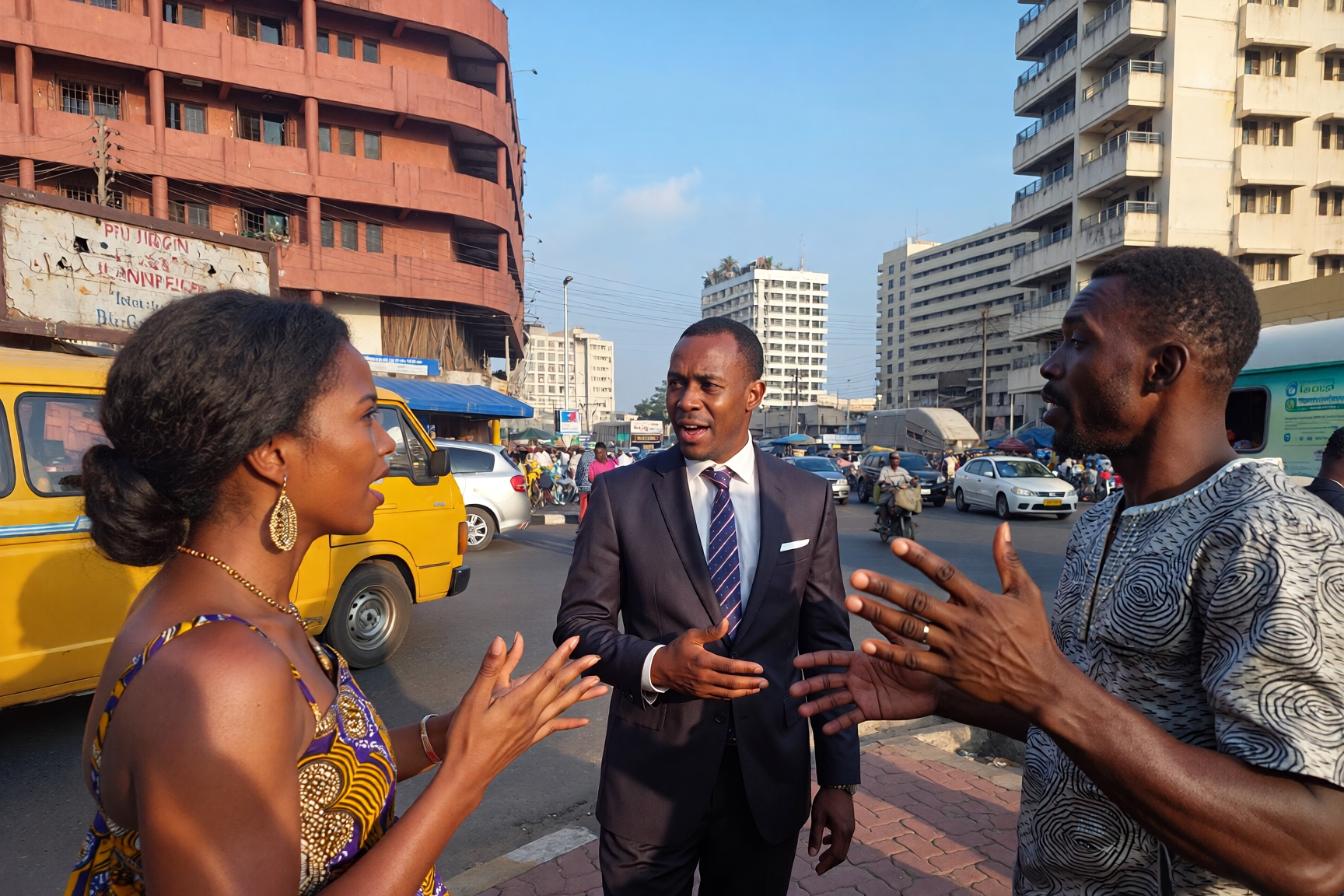
Regional variations exist within Nigerian Pidgin itself. Warri pidgin, considered particularly vibrant and creative, employs different expressions than Lagos or Port Harcourt pidgin. A Warri person might say “I dey form for you” (I’m attracted to you) or “You sharp for my eye” (you’re attractive to me), expressions less common in other regions. These variations mirror the accent diversity found in Nigerian English, demonstrating how even a contact language adapts to local linguistic environments.
Is Nigeria Using UK or US English?
Nigeria officially uses British English spelling, grammar, and vocabulary conventions, a legacy of British colonial education that persists in schools, government documents, and formal communication. However, American English influence has grown substantially through media consumption, internet usage, and educational exchanges, creating a hybrid usage pattern where British conventions dominate formal contexts whilst American influences permeate informal communication.
The Voice of Nigeria Broadcasting Service reports that English remains the country’s official language for education and assessment, following British spelling conventions in national examinations administered by WAEC (West African Examinations Council) and NECO (National Examinations Council). Students write “colour” not “color,” “centre” not “center,” and “organise” not “organize,” with marks deducted for American spellings in formal examinations.
I observed this British orientation clearly when reviewing examination scripts at a secondary school in Benin City last year. The English teacher meticulously corrected any American spellings, treating them as errors rather than acceptable variations. Yet the same students who wrote “favourite” in their exams would text “favorite” on their phones, influenced by American spell-checkers and social media exposure. This generational shift suggests British dominance may erode over time as digital communication reshapes language norms.
The 7-Step Guide to Understanding Nigerian Accent Development
Understanding how the Nigerian accent develops requires examining the intersection of linguistic acquisition, educational practices, and cultural identity. These seven steps illuminate the process through which Nigerian children develop their distinctive English pronunciation patterns.
1. Mother Tongue Foundation (Birth to Age 5)
Nigerian children typically acquire their family’s indigenous language first, developing phonological patterns, tonal awareness, and grammatical structures that form their linguistic foundation. This primary language acquisition establishes neural pathways for sound production that persist even after learning additional languages. A Yoruba child learns to distinguish three tones (high, mid, low) that determine word meaning, whilst an Igbo child develops awareness of how aspiration and voice affect consonants.
Research by the Federal Ministry of Arts, Culture and Creative Economy demonstrates that this mother tongue foundation strengthens rather than hinders subsequent language learning, providing cognitive frameworks that support multilingual development. The sounds, rhythms, and patterns acquired during this crucial period become the substrate that colours all future language learning, including English pronunciation.
2. English Introduction (Ages 5-6)
Formal English instruction typically begins in primary school, though urban middle-class children might encounter English earlier through media or English-speaking parents. The Nigerian reaffirmation of English as the medium of instruction means most children receive English education from Primary 1, learning to read, write, and speak English whilst simultaneously maintaining their indigenous language at home and in the community.
This simultaneous bilingualism creates what linguists call interlanguage, where features from the first language influence second language production. Nigerian children don’t “speak English with an accent” in their own perception. They’re simply speaking English the way English sounds when filtered through Nigerian linguistic structures, producing sounds and patterns that feel natural to their Nigerian-trained vocal apparatus.
3. Phonetic Transfer (Ages 7-10)
During middle primary years, characteristic Nigerian English features solidify as children transfer phonological patterns from their indigenous languages to English. The /th/ sounds become /t/ and /d/, vowel distinctions simplify, and syllable timing replaces stress timing. Teachers often attempt to correct these “errors,” but unless children receive intensive phonetic training (rarely available in Nigerian schools), the substrate influence persists.
I remember interviewing a brilliant primary school teacher in Kaduna who’d studied linguistics at university. She explained how she’d given up trying to make her students produce “perfect” British pronunciation, instead focusing on intelligibility and communication effectiveness. “Why should a Nigerian child sound like they’re from London?” she asked. “As long as they can communicate clearly with other English speakers, their accent is perfectly valid.”
4. Formal Language Education (Ages 11-15)
Secondary education reinforces English language skills through dedicated English studies, literature courses, and subject instruction entirely in English. Students write essays, participate in debates, and study prescribed texts from British and American literature. Yet despite this intensive English exposure, their accent typically remains distinctively Nigerian because accent formation largely completes by puberty, with neural plasticity for phonological acquisition declining significantly after age 12.
The persistence of Nigerian accent features throughout secondary education highlights an important linguistic reality. Accent isn’t about intelligence, education level, or language proficiency. It’s about the phonological patterns established during critical acquisition periods. Even highly educated Nigerians with perfect grammar and extensive vocabulary maintain distinctive accent features because these reflect their linguistic history, not their current competence.
5. Media and Pop Culture Influence (Ages 15-25)
Adolescence and young adulthood bring increased exposure to American and British media through streaming services, social media, and internet content. This exposure sometimes creates accent variation, particularly among urban youth who consciously adopt American pronunciations they perceive as prestigious. The rise of Nigerian linguistic pride movements has partially countered this trend, with young Nigerians increasingly embracing their accent as identity marker rather than deficit.
6. Professional and Social Contexts (Ages 25-45)
Professional life presents varying accent pressures. Call centre workers serving international clients often receive “accent neutralisation” training to modify their Nigerian pronunciation toward American or British standards. International business professionals might code-switch, using more standard pronunciation in professional contexts whilst maintaining Nigerian features in casual conversation. Yet many successful professionals, including politicians, academics, and business leaders, maintain strong Nigerian accents throughout their careers without professional hindrance.
I’ve observed this code-switching in action countless times. A colleague who works for an American tech company modulates his accent during Zoom calls with California-based teammates, then immediately reverts to full Nigerian pronunciation when chatting with local colleagues. He describes it as effortless, like switching between English and Yoruba, each serving different communicative purposes without one being superior to the other.
7. Accent Stability and Identity (Ages 45+)
By middle age, accent becomes relatively fixed, resistant to change even with extended residence abroad. Many Nigerians who’ve lived in Britain or America for decades maintain identifiable Nigerian pronunciation features, particularly in informal contexts. This persistence reflects accent’s role in identity maintenance, serving as audible connection to cultural origins even when separated from homeland by thousands of miles.
The Direct Answer: What Defines the Nigerian Accent?
The Nigerian accent is fundamentally defined by syllable-timed rhythm (giving equal duration to each syllable rather than stressing some syllables whilst compressing others), simplified vowel systems derived from indigenous languages (typically 7 to 10 pure vowels compared to British English’s 20), consonant substitutions (particularly /th/ becoming /t/ or /d/, and fluid /l/ and /r/ distinctions), tonal inflections transferred from tonal indigenous languages creating melodic sentence contours, and maintained equal stress across syllables where British or American English would vary stress patterns. These features combine with vocabulary borrowings from Nigerian languages and unique grammatical structures to create a distinctive, legitimate variety of World English that serves over 200 million speakers whilst maintaining international intelligibility.
This accent isn’t one-size-fits-all but rather encompasses regional variations reflecting Nigeria’s linguistic diversity. A Hausa speaker from Sokoto brings different indigenous language influences than an Efik speaker from Calabar, creating accent variation within the broader category of “Nigerian English.” Yet certain core features remain consistent enough that Nigerian speakers are typically identifiable as Nigerian regardless of their specific ethnic background, much as American speakers from Boston, Texas, and California all sound distinctively American despite their regional differences.
The legitimacy of the Nigerian accent has gained increasing recognition in linguistic scholarship. Where earlier researchers might have categorised Nigerian pronunciation as “errors” requiring correction, contemporary World Englishes scholarship recognises Nigerian English as a valid variety serving unique communicative functions in Nigeria’s multilingual environment. This perspective shift mirrors similar recognition of Indian English, Singapore English, and other outer circle varieties as legitimate rather than deficient.
Pidgin English and Accent Development
Nigerian Pidgin represents a fascinating parallel to Nigerian English, sharing many phonological features whilst serving different social functions. Both varieties incorporate syllable timing, simplified vowel systems, and consonant modifications derived from indigenous languages. However, pidgin adds additional features including simplified morphology, unique grammatical structures borrowed from multiple Nigerian languages, and a distinctive vocabulary blending English, Portuguese, and indigenous language elements.
The relationship between pidgin and standard Nigerian English accents remains complex and bidirectional. Pidgin influences how many Nigerians pronounce English, particularly in informal contexts or among speakers with limited formal education. Conversely, standard English education influences pidgin pronunciation, especially among educated speakers who code-switch between varieties. Both share substrate influences from Nigerian languages, creating overlapping phonological features that mark them as distinctively Nigerian language varieties.
Guardian Nigeria has explored how the increasing use of pidgin in popular culture, music, and informal communication has elevated its status from “broken English” to recognised lingua franca. This status shift has implications for accent perception. Where speaking with a strong Nigerian accent once carried stigma in some circles, the growing cultural pride in Nigerian identity has transformed accent from liability to asset, something to maintain rather than eliminate.
Young Nigerians increasingly embrace their accent as identity marker, resisting pressure to adopt British or American pronunciation patterns. This attitude shift reflects broader cultural confidence stemming from Nigeria’s growing influence in African music, literature, and popular culture. When Nigerian artists like Burna Boy, Wizkid, and Davido sing in Nigerian-accented English without attempting British or American pronunciation, they validate Nigerian English pronunciation for millions of young listeners.
Understanding Accent Versus Dialect
It’s crucial to distinguish accent from dialect, terms often confused in casual discourse. Accent refers strictly to pronunciation patterns, how sounds are produced. Dialect encompasses vocabulary, grammar, and idioms alongside pronunciation. Nigerian English includes both distinctive accent features (pronunciation) and dialectal features (unique vocabulary like “danfo” for minibus, “next tomorrow” for day after tomorrow, and grammatical structures like “I am coming” meaning “I’ll be back soon”).
This distinction matters because accent change requires different intervention than dialect modification. Changing accent necessitates intensive phonetic training to retrain vocal apparatus and neural patterns, typically requiring hundreds of hours of practice with diminishing returns after adolescence. Modifying dialect elements like vocabulary and grammar proves far more tractable through education and exposure, explaining why educated Nigerians might use standard English grammar and vocabulary whilst maintaining distinctive Nigerian pronunciation.
Related Articles: Further Reading on Nigerian Culture and Health
For readers interested in exploring more aspects of Nigerian culture and traditional knowledge, I’ve written extensively on other topics that complement this linguistic exploration. My article on sexual health benefits of goron tula examines traditional Nigerian medicine and cultural practices surrounding this “miracle fruit,” whilst my piece on health benefits of scent leaves explores another traditional Nigerian herb and its role in both culinary and medicinal contexts. Both articles reflect the same commitment to rigorous research and cultural respect that informs this examination of Nigerian linguistic identity.
Conclusion: Celebrating Nigerian Linguistic Identity
The Nigerian accent represents far more than pronunciation differences from British or American English. It embodies Nigeria’s linguistic heritage, reflecting the country’s position as custodian of approximately 7% of the world’s languages. Each time a Nigerian speaks English with their distinctive accent, they’re performing a complex linguistic act that honours their indigenous language background whilst participating in global English communication. This isn’t linguistic deficiency but linguistic wealth, demonstrating the flexibility and adaptability that has made English a true world language capable of carrying multiple cultural identities simultaneously.
The future of the Nigerian accent looks secure despite globalisation pressures. Young Nigerians increasingly embrace their accent as identity badge rather than obstacle to overcome. Nigerian popular culture, from Nollywood films to Afrobeats music, broadcasts Nigerian English pronunciation globally, normalising features once stigmatised as errors. As Nigeria’s cultural and economic influence grows, the Nigerian accent gains prestige and recognition, following the trajectory of other post-colonial English varieties that have moved from marginalisation to acceptance.
Understanding the Nigerian accent requires moving beyond deficit models that judge non-British or non-American pronunciation as incorrect. Nigerian English serves vital functions in Nigerian society, enabling communication across ethnic boundaries whilst maintaining connections to indigenous linguistic traditions. It’s time to celebrate rather than apologise for the Nigerian accent, recognising it as legitimate expression of Nigerian identity and valuable contribution to the rich tapestry of World Englishes.
Key Takeaways:
- The Nigerian accent emerges from substrate influence where Nigeria’s 500-plus indigenous languages transfer phonological patterns into English pronunciation, creating distinctive features including syllable-timed rhythm, simplified vowel systems, and tonal inflections that mark Nigerian English as a legitimate World English variety rather than corrupted British or American English.
- Regional variation within the Nigerian accent reflects the country’s linguistic diversity, with Hausa, Igbo, and Yoruba speakers each bringing different indigenous language influences that create identifiable regional accent patterns whilst maintaining core features that identify speakers as Nigerian across regional boundaries.
- Growing cultural confidence has transformed the Nigerian accent from perceived liability to celebrated identity marker, with young Nigerians increasingly embracing their distinctive pronunciation as reflection of cultural pride rather than linguistic deficiency, supported by Nigerian popular culture’s global influence through music, film, and literature.
FAQ Section: Common Questions About Nigerian Accents
What accent is Nigerian?
The Nigerian accent is a distinctive English pronunciation pattern characterised by syllable-timed rhythm, simplified vowel systems, tonal inflections, and specific consonant substitutions derived from Nigeria’s indigenous languages. It represents a legitimate World English variety serving over 200 million speakers whilst maintaining international intelligibility.
Is the Nigerian accent the same across the country?
No, regional variations exist based on dominant indigenous languages in different areas, with Hausa speakers from northern Nigeria exhibiting different pronunciation features than Igbo speakers from the southeast or Yoruba speakers from the southwest. However, core features remain consistent enough to identify speakers as Nigerian regardless of specific regional origin.
Why do Nigerians pronounce ‘th’ as ‘t’ or ‘d’?
The /th/ sounds (as in “think” and “this”) don’t exist in most Nigerian languages, so speakers substitute the closest equivalent sounds from their phonological inventory, /t/ and /d/ respectively. This represents natural phonetic transfer from indigenous languages rather than pronunciation error.
Do educated Nigerians have different accents than less educated ones?
Education level affects vocabulary, grammar, and code-switching ability more than accent, as accent formation largely completes during childhood before formal education significantly impacts pronunciation. Highly educated Nigerians typically maintain distinctive Nigerian accent features throughout their lives.
Can Nigerians change their accent to sound British or American?
With intensive phonetic training, some modification is possible, particularly for those who learn English early or receive specialised accent training. However, complete accent change after childhood requires extraordinary effort and typically results in hybrid pronunciation rather than native-like British or American accent.
How do other countries perceive the Nigerian accent?
Perception varies by context and listener familiarity, with those experienced with World Englishes generally accepting Nigerian pronunciation as legitimate variety, whilst those unfamiliar might initially find it challenging. Growing Nigerian cultural influence has increased positive perception globally.
Is Nigerian Pidgin the same as Nigerian English?
No, Nigerian Pidgin is a separate language variety with unique grammar, vocabulary, and social functions, though both share phonological features derived from indigenous languages. Pidgin serves as informal lingua franca across ethnic groups, whilst Nigerian English serves formal education and official contexts.
Why does the Nigerian accent sound musical or sing-song?
Tonal inflections transferred from tonal indigenous languages like Yoruba, Igbo, and Edo create melodic sentence contours, as speakers transfer pitch patterns used for meaning-making in their indigenous languages into English where pitch typically indicates emotion or emphasis rather than lexical meaning.
How does Lagos influence Nigerian accent development?
Lagos, as Nigeria’s most cosmopolitan city hosting speakers from all ethnic groups, has developed a distinctive urban accent variant blending features from multiple Nigerian languages whilst incorporating American English influences from media consumption. This “Lagos English” increasingly functions as prestige variety among younger, urban Nigerians.
Are there Nigerian accent differences between age groups?
Yes, younger Nigerians show increased American English influence from media exposure compared to older generations who learned English under more British-oriented education systems. However, core Nigerian phonological features persist across age groups, maintaining accent continuity despite generational variation.
Does living abroad eliminate the Nigerian accent?
No, accent remains relatively stable after adolescence, with most Nigerians maintaining identifiable pronunciation features even after decades abroad. Some code-switching or modification might occur, but complete accent change rarely happens for adults who learned English in Nigeria.
Should Nigerians try to change their accent?
Linguistic research increasingly recognises accent diversity as legitimate rather than deficient, suggesting effort spent on accent modification might be better invested in communication skills, vocabulary development, and grammatical accuracy. The Nigerian accent represents cultural identity worth preserving rather than linguistic problem requiring correction.

