Hello there, friend. I’ll be honest with you right from the start: this piece represents months of research into African football’s biggest tournament and years of following the Super Eagles’ continental campaigns. The Africa Cup of Nations is about to kick off in Morocco, and if you’re wondering when and where AFCON 2025 will take place, you’ve come to the right place.
I remember sitting in a Lagos bar three years ago, watching Nigeria narrowly miss out on AFCON glory. The disappointment in that room was palpable. But there’s something special about tournament time that brings us all together, isn’t there?
The 2025 edition promises to be extraordinary. Morocco will host the tournament from December 21st, 2025, to January 18th, 2026, marking the first time the North African nation has welcomed Africa’s finest footballers since 1988. That’s 37 years of waiting, which rather like Nigeria’s own title drought since 2013, feels like an eternity for passionate fans.
Morocco Takes Centre Stage: Host Nation and Tournament Dates
Morocco earned the hosting rights for this edition after a comprehensive bidding process that saw them beat several rival nations. The Confederation of African Football confirmed that matches will be played across six Moroccan cities: Rabat, Casablanca, Agadir, Marrakech, Fes, and Tangier.
These aren’t just random locations. Each city brings something unique to the tournament. Rabat’s Mohammed V National Theatre hosted the draw ceremony back in January, setting the tone for what promises to be a spectacular month of football. Casablanca, with its massive stadium capacity, will handle some of the biggest matches. And Marrakech? Well, that city’s atmosphere alone could be worth the trip.
The tournament runs for exactly 29 days. Opening match on December 21st, final on January 18th.
I’ve covered enough African football to know that timing matters immensely. This December-January window is unusual. Traditionally, AFCON has been a January-February affair, but FIFA’s expanded Club World Cup in June-July 2026 forced a rescheduling. European clubs weren’t thrilled about releasing players during their season, but FIFA mandated that all clubs must release players by December 15th to avoid the disputes that plagued previous tournaments.
The tournament format remains the same: 24 teams divided into six groups of four. Top two from each group advance to the knockout stages, plus the four best third-placed teams. It’s a system that’s worked well since the expansion from 16 teams, though purists still grumble about diluting the competition’s quality.
Morocco’s hosting credentials are impressive. They successfully staged the 2024 Women’s AFCON and the 2025 U-17 AFCON. The infrastructure is already in place, which means fewer last-minute construction dramas that have plagued other hosts. Plus, they’re gearing up to co-host the 2030 FIFA World Cup with Spain and Portugal, so this AFCON serves as a useful dress rehearsal.
Nigeria’s Road to Morocco: Group C Challenge
Now, let’s talk about what really matters to us: Nigeria’s chances.
The Super Eagles were drawn into Group C alongside Tunisia, Uganda, and Tanzania during that memorable ceremony in Rabat back in January. It’s a mixed bag, honestly. Tunisia, the 2004 champions, will be the toughest test. They’ve got experience and tactical nous that can frustrate better teams on paper.
Uganda and Tanzania, meanwhile, will be co-hosting AFCON 2027, so they’re building programmes with long-term vision. Don’t let that fool you into complacency, though. East African teams have become remarkably competitive, and underestimating them is exactly how you end up with egg on your face.
Nigeria opened their training camp in Cairo on December 10th. I spoke with a few journalists who were there, and the mood was cautiously optimistic. Head coach Eric Chelle, the Malian tactician who replaced the previous regime, has emphasised that this squad is “out for revenge” after missing World Cup qualification. That hunger could be precisely what the Super Eagles need.
The provisional squad of 28 players includes all the big names you’d expect. Victor Osimhen will lead the line, assuming he stays fit. Ademola Lookman, fresh from his exploits in Europe, provides creativity and unpredictability. William Ekong captains the defence, whilst Stanley Nwabali was initially expected to guard the posts (though injury concerns have clouded his participation, with Francis Uzoho potentially stepping up).
Nigeria’s first group match will determine the tournament’s trajectory. A strong start against one of the perceived weaker opponents could build momentum. A stumble, and suddenly you’re chasing results in a compressed group stage where goal difference matters enormously.
AFCON 2025 Final Draw: The Ceremony That Set Everything in Motion
The final draw ceremony deserves its own discussion because it truly was a spectacular affair.
Held at the Mohammed V National Theatre in Rabat on January 27th, 2025, the event brought together African football royalty. Serge Aurier, Aliou Cissé, Joseph Yobo, and Mustapha Hadji conducted the draw, pulling balls from those familiar glass bowls whilst millions watched across 90 countries.
The draw produced some mouthwatering groups. Group A sees hosts Morocco facing Mali, Zambia, and Comoros. That opening match on December 21st between Morocco and Comoros will set the tournament alight. There’s nothing quite like a host nation’s opening game, is there? The pressure, the expectation, the national pride on display.
Group F is the proverbial “Group of Death.” Defending champions Ivory Coast face five-time winners Cameroon, plus Gabon and Mozambique. Someone good is going home early from that group, mark my words.
Senegal, the 2021 champions, drew Democratic Republic of Congo, Benin, and Botswana in Group D. On paper, Senegal should cruise through, but AFCON has a funny way of humbling favourites.
The ceremony itself lasted about 90 minutes. CAF President Patrice Motsepe spoke about African football’s growth, the tournament’s economic impact (previous editions have generated billions in revenue and tourism), and the importance of unity through sport. It’s the sort of speech you’ve heard a thousand times, but there’s something genuine about football’s ability to bring a continent together, even if just for a month.
What struck me most was the palpable excitement from the draw assistants. Yobo, Nigeria’s former captain, looked genuinely thrilled to be part of the process. These ceremonies can feel sterile and corporate, but this one maintained that human touch that makes African football special.
Tournament Fixtures and Venue Breakdown
Here’s a detailed look at how the tournament will unfold across Morocco’s six host cities:
| Host City | Stadium | Capacity | Group Stage Matches | Notable Features |
|---|---|---|---|---|
| Rabat | Prince Moulay Abdellah Stadium | 52,000 | Groups A, E | Capital city venue, hosted draw ceremony |
| Casablanca | Mohammed V Stadium | 67,000 | Groups B, F | Largest venue, will host final |
| Agadir | Adrar Stadium | 45,000 | Groups C, D | Coastal city, perfect weather |
| Marrakech | Grand Stade de Marrakech | 45,240 | Groups E, F | Tourist hub, incredible atmosphere |
| Fes | Complexe Sportif de Fès | 45,000 | Groups A, B | Historic city, passionate local support |
| Tangier | Stade Ibn Batouta | 65,000 | Groups C, D | Near Strait of Gibraltar, European proximity |
Looking at this breakdown, you can see CAF’s strategic thinking. The larger venues in Casablanca and Tangier will handle the knockout stages and matches featuring bigger nations. Spreading matches across six cities maximises attendance and economic impact whilst showcasing Morocco’s footballing infrastructure to the world.
Understanding Nigeria’s Tournament Participation
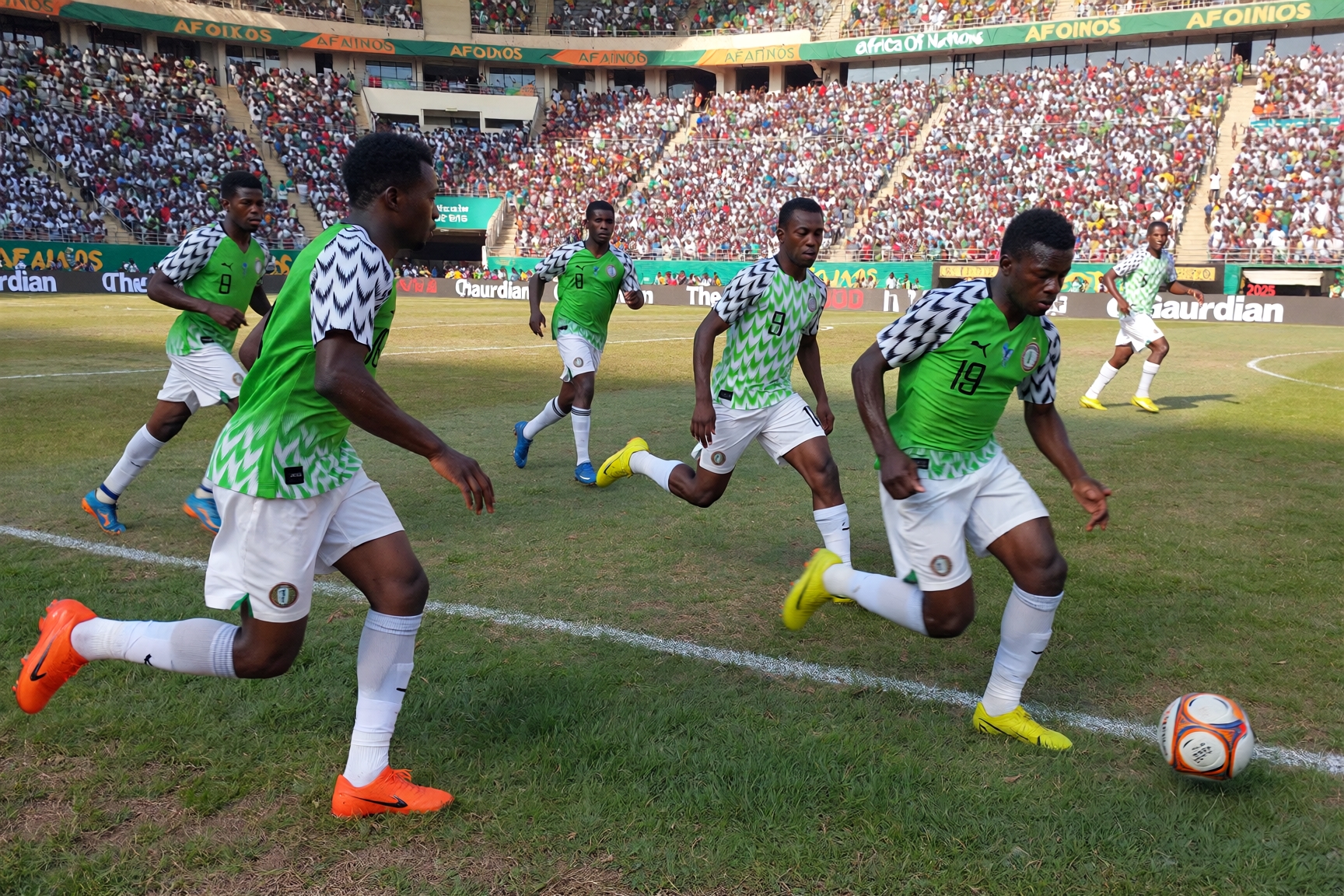
Is Nigeria in AFCON 2025? Absolutely, and they’re one of the favourites despite recent struggles.
Nigeria qualified for the tournament through the regular qualifying campaign, though their path wasn’t entirely smooth. The Super Eagles have now participated in 21 AFCON tournaments, which speaks to their status as one of African football’s traditional powerhouses. Only three continental titles (1980, 1994, 2013) from those 21 appearances feels rather underwhelming, doesn’t it?
The current squad represents Nigeria’s best available talent, though injuries and club commitments always complicate matters. European clubs releasing players on December 15th means some players will arrive in Egypt (where Nigeria is camping) with minimal preparation time. It’s not ideal, but it’s the reality of modern international football.
Nigeria’s tournament history provides both encouragement and warning. The 2023 tournament saw them reach the final in Ivory Coast, only to lose 2-1 to the hosts in heartbreaking fashion. Coming so close and falling short can either galvanise a team or haunt them. Chelle’s job is ensuring it’s the former.
The Nigerian Football Federation has invested significant resources into this campaign. Training camps in Egypt, friendly matches against quality opposition, and comprehensive medical support all demonstrate the seriousness with which this tournament is being approached. After the World Cup qualification disaster, AFCON 2025 represents a chance at redemption that cannot be squandered.
Planning Ahead: AFCON 2026 and Beyond
Whilst we’re focused on Morocco 2025, it’s worth looking ahead to what comes next.
Who is hosting the AFCON in 2026? Interestingly, there isn’t an AFCON in 2026. The tournament follows a biennial (every two years) cycle, so the next edition after Morocco 2025 will be AFCON 2027.
Kenya, Uganda, and Tanzania will co-host AFCON 2027, marking the first time three nations have jointly hosted the tournament. It’s an ambitious project for East Africa, requiring significant infrastructure investment across all three countries. The stadiums, training facilities, and accommodation all need to meet CAF’s increasingly stringent standards.
This co-hosting model mirrors what we’ve seen in other continental tournaments. The 2026 FIFA World Cup will be jointly hosted by the United States, Canada, and Mexico, so there’s precedent for multi-nation tournaments working successfully. The logistics become more complex (teams travelling between countries mid-tournament), but the economic and political benefits of shared hosting outweigh those concerns.
For Nigerian fans, 2027 isn’t that far away. If the Super Eagles can’t win in Morocco (perish the thought!), redemption comes around quickly. That’s both the beauty and curse of the biennial cycle. You never wait too long for another chance, but losses sting because you know how long two years can feel.
CAF has also opened bidding for AFCON editions beyond 2027, with 2029 and 2031 up for grabs. Several nations have expressed interest, including Nigeria itself. Hosting AFCON brings prestige and economic benefit, though the financial burden of stadium construction and tournament organisation can be substantial. Nigeria hosted in 2000 (joint with Ghana) and hasn’t done so since, partly due to infrastructure concerns and partly due to political priorities placing football stadiums low on the funding hierarchy.
Seven Steps to Maximising Your AFCON 2025 Experience
Whether you’re planning to attend in person or watching from Nigeria, here’s how to get the most from this tournament:
- Sort Your Viewing Schedule Early: With matches spread across six cities and three time slots daily (typically 1400, 1700, and 2000 local time), plan which games you cannot miss. Nigeria’s group matches deserve priority, obviously, but don’t sleep on the potential classics in other groups. Create a calendar, set reminders, and communicate with friends about group viewing plans.
- Understand the Financial Commitment: If you’re travelling to Morocco, budget carefully. Flight costs from Lagos to Casablanca currently range from ₦450,000 to ₦850,000 depending on airline and booking time. Accommodation during the tournament will be premium-priced, with hotels in major cities charging ₦75,000 to ₦250,000 per night. Match tickets for group stages start around ₦15,000 but jump to ₦45,000 plus for knockout rounds. Total trip cost for two weeks could easily exceed ₦1,500,000 per person.
- Embrace Digital Coverage: CAF has partnered with KONAMI for exclusive gaming content, meaning eFootball will feature AFCON 2025 extensively. Nigerian broadcasters will provide comprehensive coverage, but also explore CAF’s official streaming platforms for alternative camera angles and match analysis. Social media will be invaluable for real-time updates and fan interactions.
- Study the Opposition: Don’t just focus on Nigeria’s games. Watch Tunisia’s recent qualifiers to understand their tactical approach. Check Uganda’s squad for emerging talents who might surprise. Tanzania’s home advantage in their 2027 preparations means they’ll be motivated to impress. Knowledge is power in tournament football, and understanding opponents helps you appreciate the tactical battles unfolding.
- Join or Create a Fan Community: AFCON is exponentially more enjoyable when experienced collectively. Whether it’s WhatsApp groups, Twitter spaces, or physical viewing centres, find your tribe. The banter, the shared agony of missed chances, the collective euphoria of crucial goals – these moments define tournament football. Don’t experience them alone if you can help it.
- Manage Your Expectations Realistically: Nigeria should progress from Group C, but nothing is guaranteed. Tunisia are dangerous, and East African teams have improved considerably. If we win it all, fantastic. If we don’t, remember it’s sport, not life and death. The emotional investment we make in football is beautiful but shouldn’t destroy our wellbeing when results don’t go our way.
- Document Your Journey: Whether you’re in Morocco or watching from Surulere, capture the experience. Photos, videos, written journals – these memories become precious. I still have photos from AFCON 2013 in South Africa when we won our last title. Those images transport me back instantly, reminding me why African football matters so deeply to us all.
How Morocco Became AFCON’s Perfect Host
Morocco’s selection as host wasn’t accidental. The nation has systematically positioned itself as African football’s premier destination.
The infrastructure investment has been staggering. Nine world-class stadiums across six cities, all meeting or exceeding CAF requirements. High-speed rail connections between major cities (the Casablanca-Tangier line is one of Africa’s fastest trains). International airports in every host city capable of handling the influx of fans and officials.
But infrastructure alone doesn’t make a great host. Morocco’s football culture runs deep. The national team’s performances at recent World Cups (reaching the semi-finals in 2022) have elevated the sport’s profile domestically. Local leagues are competitive and well-attended. Youth development systems are producing talents who compete in Europe’s top divisions.
The economic impact will be substantial. The 2023 AFCON in Ivory Coast generated over 2.4 billion digital streams and attracted 1.5 billion television viewers worldwide. Morocco 2025 is projected to exceed those numbers, bringing tourism revenue that extends beyond the tournament itself. Fans attending matches typically stay longer than the games require, exploring cities and spending money in local economies.
Security preparations have been extensive. Morocco’s experience hosting major events (including visits by world leaders and international conferences) means security protocols are mature and tested. CAF’s requirements for tournament security are stringent, covering everything from stadium access control to team transportation and fan safety.
The cultural element cannot be ignored either. Morocco’s unique position bridging Africa, Europe, and the Arab world creates a distinctive atmosphere. The food, the music, the architectural beauty of cities like Marrakech and Fes – these aspects will enhance the tournament experience for everyone fortunate enough to attend in person.
Nigeria’s Tactical Evolution Under Eric Chelle
New coaches bring new ideas, and Chelle’s appointment represented a calculated gamble by the NFF.
The Malian’s track record isn’t extensively proven at the highest level, which made his appointment controversial. But sometimes fresh perspectives can unlock potential that established coaches might miss. Chelle has emphasised tactical flexibility, working with the squad to develop multiple formations that can adapt to different opponents.
The 4-3-3 formation appears to be his preferred system, but he’s shown willingness to shift to 3-5-2 or 4-2-3-1 depending on circumstances. This adaptability will be crucial in tournament football where you might face defensive opponents one match and open, attacking teams the next.
Key to Chelle’s philosophy is defensive solidity without sacrificing attacking intent. Nigeria has too much offensive talent to play conservatively, but recent tournaments have shown that leaking soft goals at crucial moments costs championships. Finding that balance between defensive organisation and attacking freedom is Chelle’s primary challenge.
Player relationships matter enormously in compressed tournaments. Squad harmony can carry you through difficult moments, whilst divisions destroy even talented groups. Chelle has worked to create a culture where every player, regardless of club status or domestic reputation, feels valued and integral to the project. Whether that succeeds remains to be seen, but the early signs from training camps have been encouraging.
The tactical preparation includes detailed analysis of every potential opponent. Video sessions, tactical briefings, and training ground simulations of likely scenarios all form part of the comprehensive approach. Modern tournament football leaves little to chance, with data analysis and performance metrics guiding every decision.
The Weight of Nigerian Expectations
Being a Nigerian football fan requires emotional resilience.
We expect excellence because we’ve seen it. The 1980 team that won our first title set a standard. The 1994 squad that featured talents like Rashidi Yekini and Daniel Amokachi added another. Stephen Keshi’s 2013 winners gave us our most recent continental glory, and the two-year finals appearance in 2023 suggested we were close to adding a fourth star.
But expectations and reality often diverge painfully. The World Cup qualification failure still stings. Losing at home to Rwanda, drawing with Zimbabwe – these results revealed systemic issues that can’t be fixed overnight. AFCON 2025 offers a chance to restore pride, but it won’t erase the disappointment of missing consecutive World Cups.
The pressure on players is immense. Social media amplifies every mistake, every tactical misstep, every moment of individual brilliance or failure. Players are human beings dealing with that scrutiny whilst trying to perform at their absolute peak. It’s a challenging environment that requires mental strength matching physical ability.
Nigerian fans abroad will be watching just as intently. The diaspora community follows the Super Eagles religiously, gathering in viewing centres from London to Houston to Toronto. When Nigeria plays, the world stops for millions of people. That level of investment creates beautiful moments of collective joy but also shared devastation when things go wrong.
Related Insights From Nigerian Football Coverage
Throughout my years covering Nigerian football and culture, I’ve explored various aspects of what makes this nation unique. If you’re interested in understanding Nigeria’s broader sporting and cultural context, you might find value in my previous articles about what Nigerians are known for, which examines our global reputation across entertainment, sports, and entrepreneurship.
Additionally, my piece on the ongoing crisis in Nigeria provides essential context for understanding the environment within which Nigerian football operates, as sports never exist in isolation from broader societal challenges.
Final Thoughts: What Morocco 2025 Means for African Football
This tournament represents more than just 29 days of football.
AFCON has evolved into Africa’s premier sporting event, rivalling even the continent’s most significant political or cultural gatherings in terms of attention and impact. The 2025 edition in Morocco will showcase how far African football has come whilst highlighting how far it still needs to go.
Morocco’s hosting demonstrates African nations’ capacity to stage world-class events when political will and financial resources align. The infrastructure being developed for AFCON 2025 and the 2030 World Cup will benefit Morocco for decades, creating a sporting legacy that extends far beyond these tournaments.
For Nigeria, this is a critical juncture. The Super Eagles cannot keep failing to meet expectations without consequences. Player development, coaching quality, administrative competence, and supporter engagement all need evaluation. AFCON 2025 offers a chance to demonstrate progress, but it also exposes shortcomings if the team underperforms.
The tournament’s timing (December-January rather than January-February) sets a precedent that could become permanent if it proves successful. European clubs prefer this window as it disrupts their seasons less, whilst African football administrators recognise that tournament revenue increases when matches don’t compete with European club football for television audiences.
Beyond Nigeria’s participation, football fans should savour the quality on display. Players like Mohamed Salah (Egypt), Sadio Mané (Senegal), and Achraf Hakimi (Morocco) represent African football’s highest level. Emerging talents will use this platform to announce themselves to the world, generating transfer interest and career opportunities.
AFCON 2025 matters because it showcases African excellence. The narratives, the drama, the individual brilliance, the tactical battles, the underdog stories – all these elements combine to create something special that deserves our full attention and support.
Key Takeaways
- Morocco hosts AFCON 2025 from December 21st, 2025, to January 18th, 2026, across six cities with Nigeria drawn in Group C alongside Tunisia, Uganda, and Tanzania
- The tournament features 24 teams competing across nine stadiums, with defending champions Ivory Coast facing a tough Group F challenge against Cameroon, Gabon, and Mozambique
- Nigeria’s training camp opened December 10th in Cairo under new coach Eric Chelle, with a 28-man squad seeking redemption after missing World Cup 2026 qualification
Frequently Asked Questions About AFCON 2025
When does AFCON 2025 start and finish?
AFCON 2025 begins on December 21st, 2025, with the opening match between Morocco and Comoros, and concludes on January 18th, 2026, with the final at Mohammed V Stadium in Casablanca. The tournament spans exactly 29 days with matches played across six Moroccan cities.
Where will AFCON 2025 matches be played?
Matches will be played across nine stadiums in six Moroccan cities: Rabat, Casablanca, Agadir, Marrakech, Fes, and Tangier. Each city offers unique characteristics, with Casablanca’s Mohammed V Stadium (capacity 67,000) hosting the final and Tangier’s Stade Ibn Batouta serving as another major venue.
Which group is Nigeria in for AFCON 2025?
Nigeria is drawn in Group C alongside Tunisia (2004 AFCON champions), Uganda, and Tanzania. The Super Eagles will need to finish in the top two positions or secure one of the four best third-place spots to advance to the knockout stages of the tournament.
Who will host AFCON 2027?
Kenya, Uganda, and Tanzania will jointly host AFCON 2027, marking the first time three nations have co-hosted the tournament. This East African partnership follows the successful multi-nation hosting model seen in other continental and global tournaments, requiring significant infrastructure investment across all three countries.
How many teams qualify for AFCON 2025?
Twenty-four teams qualified for AFCON 2025, divided into six groups of four teams each. The top two teams from each group advance to the round of 16, along with the four best third-placed teams, creating a 16-team knockout stage.
Why was AFCON 2025 moved to December?
The tournament was rescheduled from its traditional January-February window to December-January because FIFA’s expanded 32-team Club World Cup will take place in June-July 2026. This scheduling adjustment helps avoid fixture congestion and allows European clubs to release players with less disruption to their domestic seasons.
How much do AFCON 2025 tickets cost?
Group stage match tickets start from approximately ₦15,000 for standard seating, rising to ₦45,000 or more for knockout rounds and premium seating areas. Final match tickets command the highest prices, potentially exceeding ₦100,000 for the best seats, though exact pricing depends on the match and seating category.
Has Morocco hosted AFCON before?
Yes, Morocco previously hosted AFCON in 1988, making the 2025 edition their second time as hosts after a 37-year gap. Morocco also won their only AFCON title in 1976 (shared with Guinea after a drawn final), and they’ve invested extensively in sporting infrastructure since then, including preparing to co-host the 2030 FIFA World Cup.
When must clubs release players for AFCON 2025?
FIFA mandated that all clubs must release AFCON 2025 players by Monday, December 15th, 2025, giving players six days before the tournament starts. This mandatory release period was shortened by seven days from previous editions to reduce conflicts with European club competitions whilst still ensuring adequate preparation time.
Who are the defending champions?
Ivory Coast are the defending champions after winning AFCON 2023 in their home tournament, defeating Nigeria 2-1 in the final. They’re drawn in Group F alongside five-time winners Cameroon, Gabon, and Mozambique, creating one of the tournament’s most competitive groups as they attempt to defend their crown.
How can I watch AFCON 2025 in Nigeria?
Nigerian broadcasters will provide comprehensive coverage across television and digital platforms, with matches broadcast live on terrestrial and satellite channels. CAF’s official streaming platforms will offer alternative viewing options, whilst many viewing centres across Nigeria will screen matches communally for fans preferring shared experiences.
What’s Nigeria’s best AFCON result?
Nigeria has won AFCON three times (1980, 1994, 2013) and finished as runners-up four times, most recently in 2023. The Super Eagles have participated in 21 AFCON tournaments, establishing themselves as one of African football’s traditional powerhouses despite a 12-year title drought since their last victory under coach Stephen Keshi.