 Follow Us on Google News


 Follow Us on Google Discover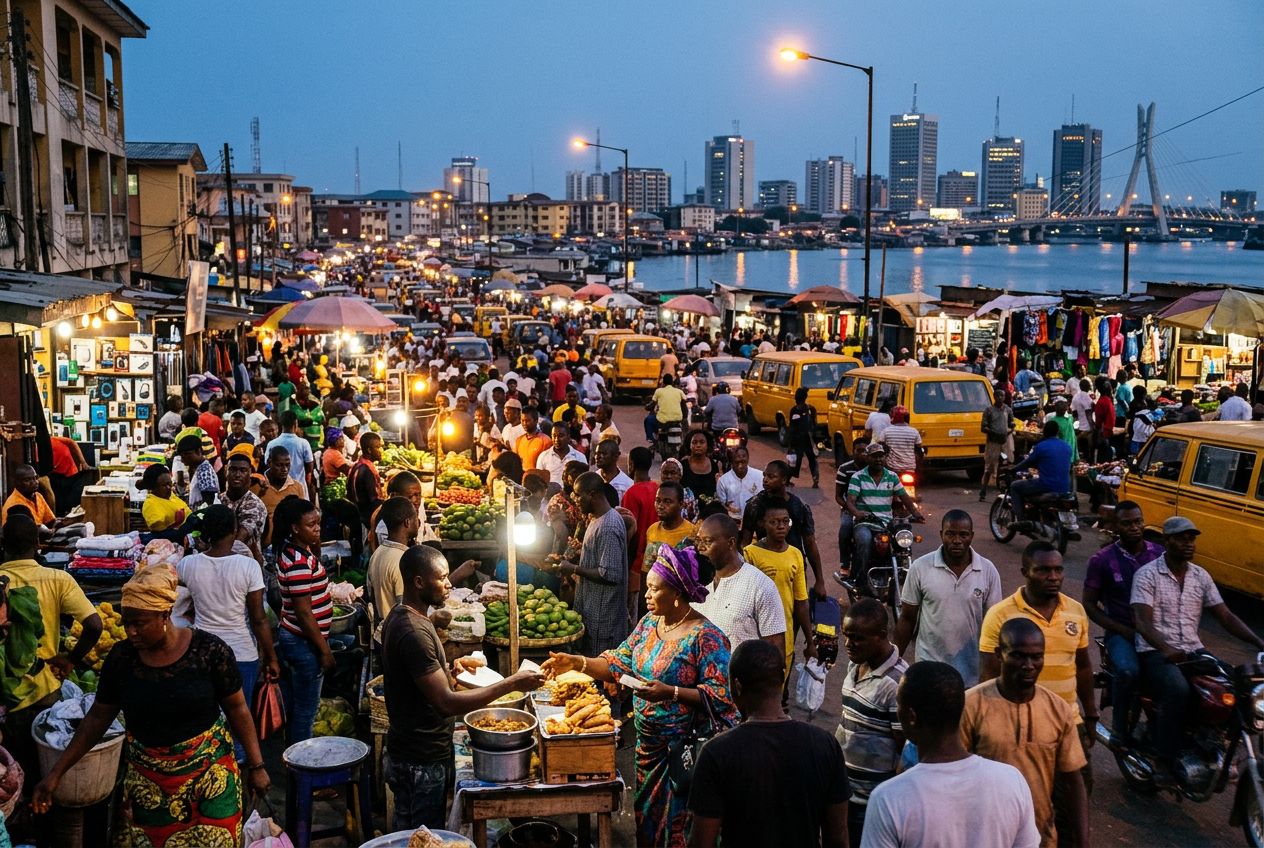
Welcome, and thank you for finding your way here. This is one of those questions I genuinely love being asked, because the answer reveals something much richer and more surprising than most people expect. After months of dedicated research into Nigerian demographics, census history, and ethnic identity politics, combined with years of writing about Nigerian society and culture, I can tell you with confidence: the racial makeup of Nigeria is not what international headlines would have you believe.
Nigeria is classified as 99.8% Black African under Western racial categorisation systems. But that single statistic is almost comically inadequate when you start to understand what is actually going on inside those 923,000 square kilometres. The real story is one of extraordinary ethnic diversity, a demographic tapestry so complex that researchers, sociologists, and even Nigerians themselves are still trying to fully map it.
Settle in. This one is worth taking slowly.
Understanding Nigeria’s Ethnic, Not Racial, Identity
The honest truth is that Nigeria does not think in terms of race. Never really has.
When I asked a senior researcher at the National Population Commission in Abuja to walk me through Nigeria’s racial demographics a couple of years back, he almost laughed. Not unkindly, but with genuine amusement. “We don’t count race here,” he told me. “We count ethnic groups, language families, local government areas.” That response told me everything I needed to know.
According to the National Bureau of Statistics, Nigeria is home to over 250 distinct ethnic groups speaking more than 500 languages. That figure alone should stop you in your tracks. Five hundred languages. In one country. This is not a homogeneous racial bloc; it is one of the most ethnically plural nations on the entire planet.

The three dominant groups are the Hausa-Fulani in the north (approximately 29% of the population), the Yoruba in the southwest (around 21%), and the Igbo in the southeast (roughly 18%). Together, these three groups account for about 68% of Nigerians, as confirmed in the National Nutrition and Health Survey 2018. The remaining 32% spans hundreds of other ethnic nationalities, including the Ijaw, Kanuri, Tiv, Efik, Ibibio, Nupe, Urhobo, and many more. This breakdown was explored thoughtfully in a Guardian Nigeria feature on Nigeria’s minority ethnic groups and their political representation.
Race, by contrast, is a blunt instrument for describing this reality. It flattens what is actually a continent of difference into a single colour.
The Big Three: Hausa-Fulani, Yoruba, and Igbo
Let me give you a proper sense of what these groups actually represent, because percentages only carry you so far.
The Hausa-Fulani are the numerically largest grouping, concentrated primarily across the north of Nigeria in states including Kano, Kaduna, Sokoto, Zamfara, Katsina, and Borno. Historically, this grouping represents a fusion of the Hausa people (who built famous city-states including Kano, Zaria, and Katsina) and the Fulani, who conducted the early 19th-century Sokoto Jihad led by Usman dan Fodio. The result is a demographic bloc with deep Islamic traditions, a pastoral and mercantile heritage, and a political influence that has shaped Nigerian governance since independence.
The Yoruba occupy the southwest, with Lagos as their cosmopolitan anchor. Lagos is, of course, Africa’s largest city and Nigeria’s economic capital, and the Yoruba have historically been at the forefront of Nigerian intellectual and cultural life. Wole Soyinka, Fela Kuti, and Bola Tinubu are all Yoruba. The culture has an elaborate system of chieftaincy, a rich tradition of visual art, and a diaspora that stretches from the United Kingdom to Cuba and Brazil. I find the Yoruba cultural confidence particularly fascinating to study: theirs is a group that absorbed centuries of external influence and came out distinctly, irreducibly themselves.
The Igbo, meanwhile, are the people of the southeast. Entrepreneurial, republican in their traditional social structures, and fiercely proud of a heritage that survived the catastrophic losses of the Nigerian Civil War (1967 to 1970), the Igbo represent roughly 40 to 46 million people. As a Guardian Nigeria opinion piece on ethnicity and national cohesion rightly noted, the interplay between these three major groups and the hundreds of smaller nationalities defines Nigerian politics, commerce, and daily life in ways that foreign observers rarely appreciate.
Beyond the Big Three, minority groups collectively constitute a significant and underappreciated 32% of the population. Groups like the Ijaw in the Niger Delta, the Kanuri around Lake Chad, the Tiv of Benue State, the Efik of Calabar, and the Nupe of Niger State each carry centuries of distinct history and cultural practice. Taraba State alone is said to host approximately 80 separate ethnic communities. Eighty. In one state.
What Is the Racial Makeup of Nigeria? The Direct Answer
So, to answer the primary question plainly: the racial makeup of Nigeria, under conventional international classification systems, is approximately 99.8% Black African.
A small number of Lebanese, Syrian, European, Chinese, and Indian residents and citizens account for a fraction of a percentage point each. There are also the historically significant communities of the Aguda (descendants of freed enslaved Africans who returned from Brazil and Cuba in the 19th century) and the Saro (returnees from Sierra Leone), both of whom carry traces of genetic mixing from their diaspora years. Collectively, however, these groups do not register as statistically significant on a national scale.
The entities most closely related to this question include:
- Hausa-Fulani: approximately 29% of the population, concentrated in northern states
- Yoruba: approximately 21%, dominant in Lagos, Ogun, Oyo, Ondo, Ekiti, and Osun states
- Igbo: approximately 18%, primarily in Abia, Anambra, Ebonyi, Enugu, and Imo states
- Ijaw: approximately 10%, largely in Bayelsa, Delta, and Rivers states
- Kanuri: approximately 4%, mainly in Borno and Yobe states
- Tiv: approximately 2.5%, concentrated in Benue State
- Other groups: the remaining 15.5%, comprising hundreds of additional ethnic nationalities
This framing matters because the international tendency to reduce Nigeria to “Black” erases a staggering amount of human variety. A Tiv farmer in Benue State and a Yoruba banker in Lagos are both Black Africans in the broadest racial sense, but they may speak mutually unintelligible languages, observe completely different cultural and spiritual practices, eat entirely different foods, and have histories that barely intersect before the 20th century.
As this Guardian Nigeria feature on cultural diversity eloquently puts it, every additional year spent observing Nigerian life reveals how much richness is hidden beneath the surface of a supposedly unified national identity.
Nigeria’s Major Ethnic Groups: Population and Geographic Distribution
The table below draws on projections from the National Bureau of Statistics and peer-reviewed demographic literature to give a comparative snapshot of Nigeria’s principal ethnic communities.
| Ethnic Group | Estimated Population Share | Primary Region | Notable States |
|---|---|---|---|
| Hausa-Fulani | ~29% | North-West / North-East | Kano, Kaduna, Sokoto, Katsina |
| Yoruba | ~21% | South-West | Lagos, Oyo, Osun, Ogun |
| Igbo | ~18% | South-East | Anambra, Imo, Enugu, Abia |
| Ijaw | ~10% | South-South / Niger Delta | Bayelsa, Delta, Rivers |
| Kanuri | ~4% | North-East | Borno, Yobe |
| Tiv | ~2.5% | North-Central | Benue |
| Efik/Ibibio | ~3.5% | South-South | Cross River, Akwa Ibom |
| Nupe | ~1.5% | North-Central | Niger, Kwara |
| Urhobo | ~1.5% | South-South | Delta |
| Other groups | ~9% | Distributed nationally | Multiple states |
This table underscores an important truth: even the “dominant” Hausa-Fulani grouping does not constitute a majority. Nigeria has no ethnic majority. Every group is, in a meaningful sense, a minority in a nation that belongs to everyone and exclusively to no one. This is simultaneously Nigeria’s great challenge and its most remarkable characteristic.
Which City Never Sleeps in Nigeria: The Lagos Phenomenon
No conversation about Nigerian demographics and identity would be complete without Lagos, the city that embodies the country’s contradictions and energies more than any other place on earth.
Lagos is the city that never sleeps in Nigeria. No other urban centre comes close to the round-the-clock pulse of activity that Lagosians experience as simply normal life.
I lived in Lagos for several years, and I can tell you from direct experience that the city operates on a completely different temporal logic to everywhere else. The traffic at 2am on the Third Mainland Bridge is not unusual. Market women in Oshodi begin preparing their stalls before 4am. Commercial buses run through the night. The generators hum, the music plays, the suya grills burn, and the city simply does not stop.
There are data to support this reputation. Lagos ranked sixth best city for nightlife globally in 2024 by Time Out Magazine, ahead of Rotterdam and Manchester. According to a report by Oui Capital, Lagos nightlife alone is worth approximately N1.5 trillion, including revenue from late-night entertainment, clubs, events, and concerts. The city’s 24-hour economy encompasses not just entertainment but healthcare, logistics, retail, food services, and transport.
Lagos functions as Nigeria’s commercial capital and its demographic mixing bowl. All 250-plus ethnic groups converge here. A single street in Alaba International Market might host Igbo traders, Yoruba landlords, Hausa transporters, Urhobo mechanics, and Lebanese wholesalers all operating side by side. The city is where Nigeria’s ethnic diversity becomes most visible, most negotiated, and most productive.
This demographic concentration contributes directly to Lagos’s economic weight. The city generates an estimated 25 to 30% of Nigeria’s total GDP, making it an economic engine without parallel anywhere on the continent.
Seven Steps to Understanding Nigeria’s Demographic Identity
For anyone looking to develop a more informed understanding of Nigerian demographics, whether for research, business, journalism, or personal knowledge, here is a structured approach that I’ve refined through my own years of fieldwork and desk research.
- Start with the six geopolitical zones. Nigeria’s 36 states are organised into six zones: North-West, North-East, North-Central, South-West, South-South, and South-East. Each zone has distinct demographic and cultural characteristics that reflect the dominant groups in that region.
- Learn the three major language families. The Hausa, Yoruba, and Igbo languages serve as the primary lingua francas in their respective regions. Understanding which language family dominates a given area immediately tells you the cultural baseline of that community.
- Consult NBS demographic publications. The National Bureau of Statistics publishes regular demographic bulletins available at nigerianstat.gov.ng. These are the most reliable official source for population data, birth rates, and geographic distribution figures.
- Recognise that census data is politically contested. Nigeria’s last formal census was conducted in 2006. Population figures since then are estimates and projections. Different ethnic and political groups dispute official numbers for strategic reasons, so treat any precise figures with proportionate scepticism.
- Study the minority groups separately. The Big Three get most of the academic and journalistic attention, but the remaining 32% of Nigeria’s population tells stories that are equally important. Research the Ijaw in the context of the Niger Delta conflict, the Kanuri in the context of Borno’s history, and the Tiv in the context of the Middle Belt.
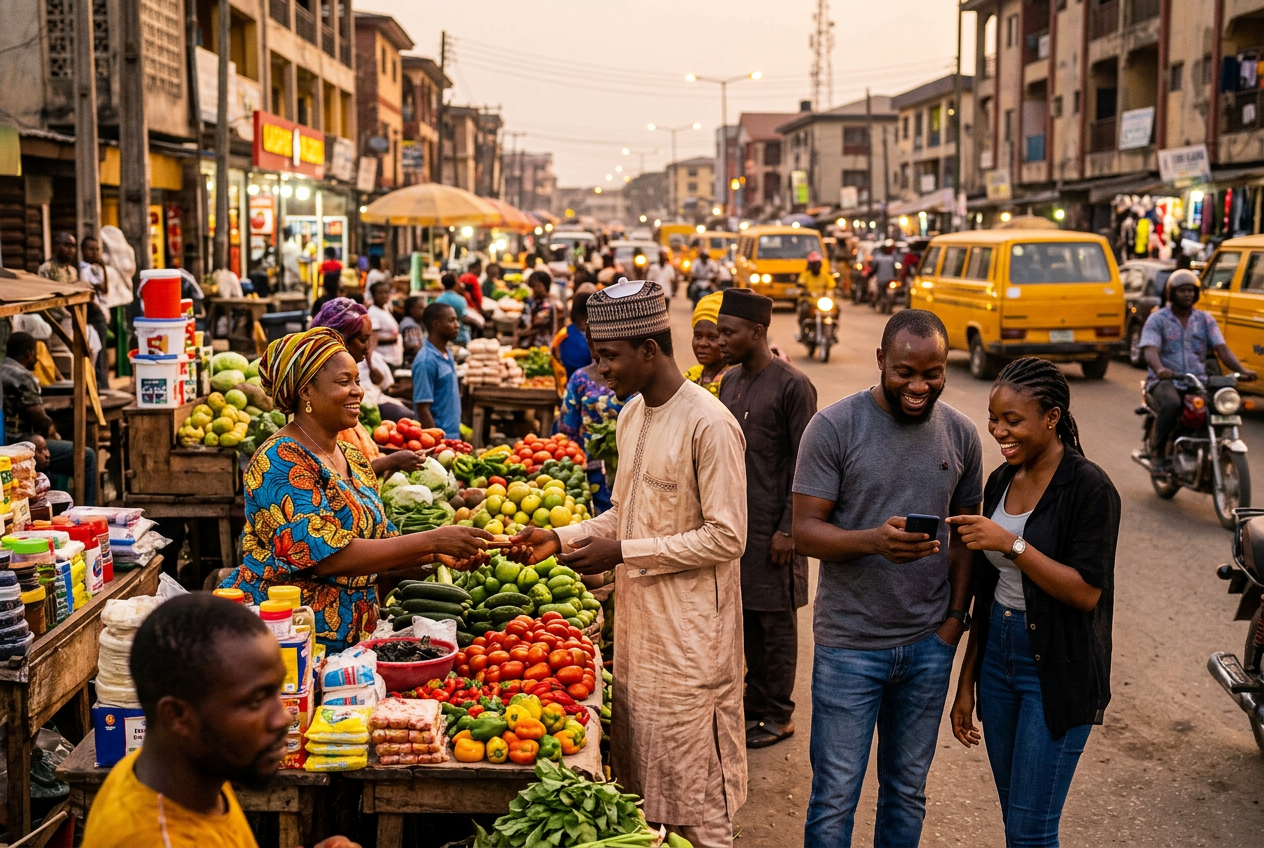
- Visit markets rather than reading about them. Every ethnographer I know agrees: the fastest way to understand Nigerian ethnic diversity is to spend a morning in a large urban market. Onitsha Main Market, Lagos Island’s Balogun Market, and Kano’s Kurmi Market are living archives of Nigerian demographic complexity.
- Engage the diaspora. Nigerian communities in Houston, London, Toronto, and beyond have developed rich institutions, associations, and publications that offer an external perspective on Nigerian identity. These diaspora lenses often illuminate aspects of home that are invisible from within.
What Sells Very Fast in Nigeria: The Commercial Pulse of a Demographic Giant
One reason Nigeria’s demographic makeup matters so much is the market it creates. With over 220 million people, Nigeria is Africa’s most populous nation and one of the largest consumer markets on the continent.
So what sells fast here? The short answer: essentials with volume.
Rice is perhaps the single most reliable fast-moving product in the Nigerian market. It is a daily staple consumed across all income levels, ethnic groups, and geographic zones. Whether you are in a household in Kano, a restaurant in Port Harcourt, or a canteen in Enugu, rice is on the table. The demand is essentially bottomless, which is why the government’s rice import policies invariably trigger national debate.
After rice, the next tier of fast-moving consumer goods includes cooking oil (particularly palm oil and vegetable oil), sachet water, bread, eggs, noodles (Indomie has become practically synonymous with a fast cheap meal across the country), and seasoning cubes. Maggi and Knorr cubes are sold in quantities that would astonish anyone unfamiliar with Nigerian cooking.
On the personal care side, skincare products move extraordinarily fast in Nigeria, particularly among young women in urban centres. Hair extensions and wigs are another category with remarkable turnover. I visited a wholesale market in Alaba a few years ago and genuinely could not believe the volume of hair products changing hands before 9am.
Telecommunications products, particularly affordable Android smartphones, phone accessories, data cards, and airtime, are also among the fastest-selling categories. The entry of brands like Tecno and Infinix into the Nigerian market at accessible price points created a revolution in how Nigerians access the internet, and demand for these products shows no sign of slowing.
The diversity of Nigeria’s ethnic groups, with their varied food traditions, beauty practices, and economic circumstances, creates a layered and nuanced consumer market that rewards businesses willing to do the demographic homework.
What City Has the Most Nigerians in the US: The Diaspora Question
Nigeria’s demographic story does not end at its borders.
The Nigerian diaspora in the United States is one of the most educated, economically successful, and culturally active immigrant communities in America. As of 2023, approximately 760,000 Americans claim Nigerian ancestry, with around 476,000 born in Nigeria itself.
The city with the most Nigerians in the United States is Houston, Texas. This fact surprises many people who expect New York or Washington DC to top the list, but Houston’s dominance is not coincidental. The oil and gas connection is fundamental: Nigeria is a major petroleum producer, and Houston is the global capital of the energy industry. Thousands of Nigerian petroleum engineers, geoscientists, and energy executives have built careers in Houston’s oil corridors, and their professional networks pulled family, friends, and community members in behind them.
Texas as a state hosts between 113,000 and 124,000 Nigerian-Americans according to American Community Survey estimates, consistently leading all other American states in total Nigerian population. Within Texas, the Alief, Westwood, and Sharpstown neighbourhoods of Houston are particularly dense with Nigerian communities. Nigerian grocery stores, churches, restaurants, and professional associations give these areas a distinct cultural texture.
It is worth noting the competitive picture. By metropolitan area, New York City edges Houston when the entire northeastern metro region is counted together. The Washington DC, Maryland, and Virginia corridor, known as the DMV, also rivals Houston if you combine all three jurisdictions. Prince George’s County in Maryland, in particular, is home to between 65,000 and 80,000 Nigerians, and the community there has a distinct character shaped by proximity to federal government institutions, international organisations, and the policy world.
But for a single cohesive city with an identifiable, concentrated Nigerian community, Houston is the undisputed answer.
The Nigerians in Diaspora Commission has formally recognised Houston as holding the largest individual-city Nigerian population in the United States. This recognition carries practical implications: Houston’s mayor has repeatedly lobbied for a Nigerian consulate in the city specifically to serve the community’s needs.
What Is the Safest City in Nigeria: Security, Stability, and Urban Life
If racial and ethnic makeup tells us who Nigerians are, safety data tells us something about where they can live their lives most fully.
The safest city in Nigeria is widely considered to be Abuja, the Federal Capital Territory.
This is not a controversial opinion. Abuja was purpose-built as Nigeria’s capital in the 1980s, replacing Lagos in a deliberate effort to create a more geographically and ethnically neutral seat of government. Its planned layout, organised districts, and concentration of federal security infrastructure make it qualitatively different from other major Nigerian cities.
Calabar, the capital of Cross River State, is another consistently cited candidate. Known for its hospitality, its annual Calabar Festival (one of Africa’s largest cultural carnivals), and its relatively low crime rate, Calabar has earned a reputation as one of Nigeria’s most liveable cities. Enugu, the “Coal City” in the southeast, is frequently mentioned alongside Calabar for its calm atmosphere and organised urban environment.
It is worth being honest about what safety means in the Nigerian context, though. No Nigerian city is without security challenges. Lagos, for all its energy and opportunity, has areas with significant petty crime and occasional violent incidents. Port Harcourt, the heart of the oil industry in the Niger Delta, has a complicated history with organised criminal activity tied to resource conflict, though it has improved considerably in recent years. Even Abuja, which often presents itself as an oasis of order, recorded a Safety Index of 39.87 in Numbeo’s 2024 data, reflecting genuine concerns among residents.
The practical wisdom is this: safety in Nigeria is highly localised. Within any major city, there are neighbourhoods that feel remarkably secure and areas where caution is essential. Understanding which districts carry which risks matters far more than city-level generalisations.
For anyone considering relocation or extended stays, the consensus among long-term residents points to Abuja’s GRA districts, Calabar, Uyo in Akwa Ibom State, Eket, and parts of Enugu as among the most consistently peaceful environments in the country.
What Nigeria’s Demographic Picture Means for the Country’s Future
Here is the bigger picture, and why I think all of this matters beyond trivia and statistics.
Nigeria’s racial and ethnic makeup is one of the most complex of any nation on earth. That complexity is a source of tension, yes. The Guardian Nigeria has published incisive work on how ethnic rivalry strains Nigerian economic development, and those arguments deserve serious attention. But complexity is also a source of extraordinary cultural creativity. Afrobeats drew from Yoruba rhythms and Igbo aesthetics. Nollywood tells stories that the Hausa north and Igbo east and Yoruba southwest can all recognise themselves in. Jollof rice is claimed simultaneously by too many groups to count, which is perhaps the most Nigerian thing imaginable.
A country with 250-plus ethnic groups, a thriving diaspora on every continent, a city like Lagos that never sleeps, and a consumer market of 220 million people is not a country that needs simplifying. It needs understanding.
The racial makeup of Nigeria, reduced to its demographic bare minimum, is almost entirely Black African. But the more meaningful truth is that Nigeria contains enough distinct peoples, languages, histories, and futures to constitute a world unto itself.
Related Articles
If you found this piece on Nigeria’s demographic complexity useful, you may also want to explore some of my earlier work on related themes:
- What Is the Dominant Race in Nigeria? looks at how the concept of racial dominance translates (and often fails to translate) into the Nigerian context, with a focus on the Hausa-Fulani, Yoruba, and Igbo groupings.
- What Ethnicity Is Nigerian? explores the fundamental distinction between nationality and ethnicity, and why calling someone simply “Nigerian” tells you almost nothing about who they actually are.
Key Takeaways
- Nigeria is classified as approximately 99.8% Black African under Western racial categories, but this figure obscures a population made up of over 250 distinct ethnic groups speaking more than 500 languages, with no single group forming a majority.
- Lagos is Nigeria’s city that never sleeps, an economic engine generating up to 30% of national GDP and operating around the clock, while the safest city in Nigeria is widely considered to be Abuja, followed by Calabar and Enugu.
- Houston, Texas holds the largest concentrated Nigerian community of any single American city, driven primarily by the oil and gas industry connection between Nigeria and the Texas energy corridor.
FAQs About the Racial Makeup of Nigeria
What is the racial makeup of Nigeria in simple terms?
Under international racial classification systems, Nigeria is approximately 99.8% Black African. However, this racial label obscures the country’s remarkable internal diversity, which is better understood through its more than 250 ethnic groups speaking over 500 languages.
What are the three largest ethnic groups in Nigeria?
The three largest ethnic groups are the Hausa-Fulani (approximately 29% of the population), the Yoruba (approximately 21%), and the Igbo (approximately 18%). Together these three groups account for roughly 68% of Nigeria’s total population of over 220 million people.
Does Nigeria have any non-Black African residents?
Yes, though they represent a very small fraction of the population. Communities of Lebanese, Syrian, Chinese, Indian, and European residents exist in cities like Lagos and Abuja, along with historically significant groups like the Aguda (Brazilian-Nigerian returnees) and the Saro (Sierra Leonean returnees).
Why does Nigeria not classify its population by race?
Nigeria classifies its population by ethnic group, local government area, and geopolitical zone rather than by race. This reflects the reality that “race” as a category developed primarily within Western colonial frameworks and does not map meaningfully onto Nigerian demographic realities.
Which city never sleeps in Nigeria?
Lagos is universally recognised as the city that never sleeps in Nigeria, operating across all 24 hours with active markets, transport, food services, entertainment, and commercial activity. The city ranked sixth globally for nightlife by Time Out Magazine in 2024.
What products sell very fast in Nigeria?
Rice, cooking oil, sachet water, bread, eggs, noodles, seasoning cubes, and personal care products like skincare and hair extensions are among the fastest-selling consumer goods in Nigeria. Affordable smartphones and mobile phone accessories also move at extremely high volumes.
Which American city has the largest Nigerian community?
Houston, Texas is recognised as the American city with the largest concentrated Nigerian community, driven by the connection between Nigeria’s petroleum industry and Houston’s position as the global centre of the oil and gas sector. The city holds an estimated 150,000 Nigerian residents.
Is Abuja the safest city in Nigeria?
Abuja is widely considered the safest major city in Nigeria due to its planned urban layout, organised security infrastructure, and concentration of federal agencies. Other cities frequently cited for relative safety include Calabar, Uyo, and Enugu.
How many ethnic groups does Nigeria have?
Nigeria has over 250 officially recognised ethnic groups, with some counts reaching as high as 371 distinct communities when smaller sub-groups are included. These groups speak more than 500 languages, making Nigeria one of the most linguistically diverse nations on the planet.
How big is the Nigerian diaspora in the United States?
Approximately 760,000 Americans claimed Nigerian ancestry as of 2023, with around 476,000 born in Nigeria. Nigerian-Americans are concentrated in Texas, Maryland, New York, California, and Georgia, and represent one of the most highly educated immigrant communities in the United States.
What is the population of Nigeria in 2025?
Nigeria’s population is estimated at approximately 225 to 230 million people as of 2025, making it the most populous country in Africa and one of the ten most populous nations on earth. The country’s population is predominantly young, with a high fertility rate driving continued growth.
What language do most Nigerians speak?
English is the official national language of Nigeria and the primary language of government, education, and formal commerce. The three most widely spoken indigenous languages are Hausa, Yoruba, and Igbo, while Nigerian Pidgin English serves as an informal lingua franca understood by tens of millions across ethnic lines.

