 Follow Us on Google News


 Follow Us on Google Discover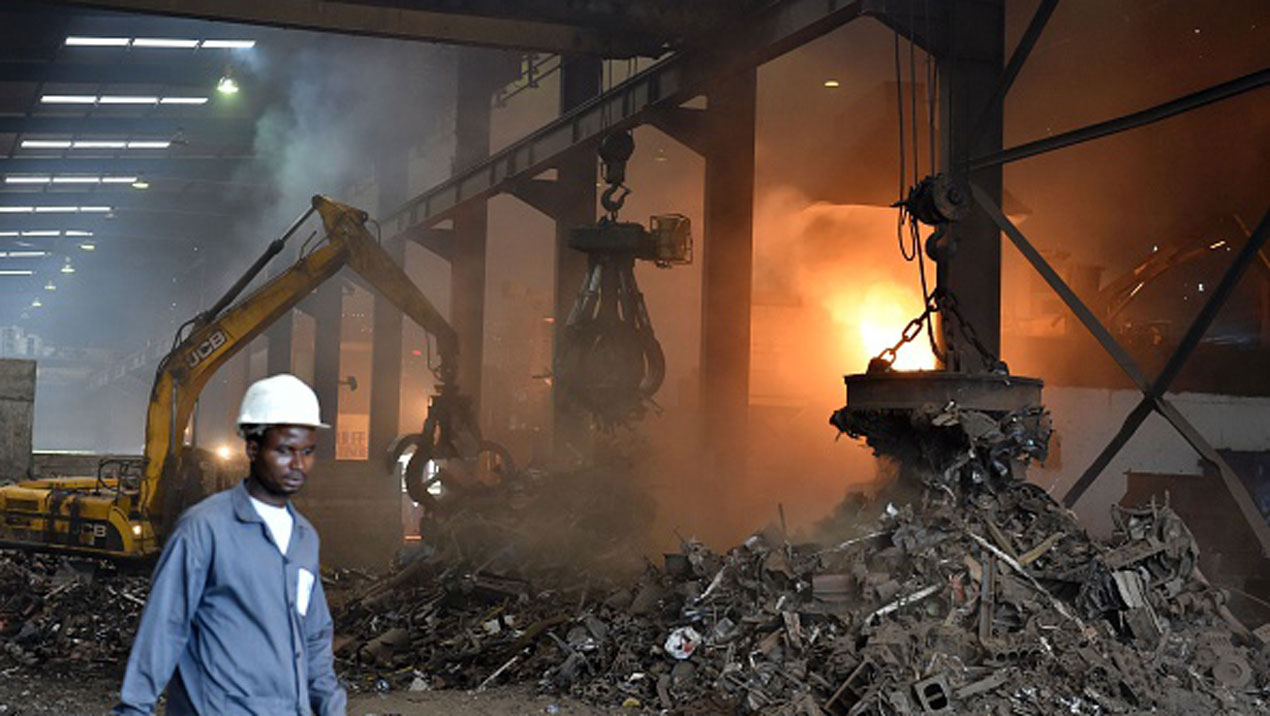

[ad]
For, nothing can be meaningfully achieved in a state of insecurity such as pervading this land. No plan or programme of development can be implemented, including even raising local food production.
What are aspirants’ blueprints to secure the country and its people? What does each aspirant say on the devolution of policing powers to the states and local authorities, as done in a normal federation? Nigerians want to see a clear and well-articulated plan of action. Not rhetoric.
Two major industries that enable the creation of other industries are wasting away in Nigeria. The Ajaokuta Iron and Steel Complex lying there, doing nothing; so too are petrochemical plants (including refineries and oil depots) located north and south of the country.
[ad]
The multiplier benefits of bringing these into the production mode are immense including jobs of all types and categories, directly and indirectly, skill acquisition, and the much-touted ‘technology transfer.’
If the petrochemical plants function as they were built to do, that unjustifiably dubious ‘fuel subsidy’ will disappear and scarce foreign exchange will be conserved for more purposeful spending.
Besides fertilizer for agriculture and the many industrial raw materials that are by-products of refining, Nigeria may even export petroleum products to other countries.
After all, there are some non-oil producing companies that have thought it wise to import crude oil, refine it in their refineries and export products to other countries. What does each presidential candidate intend to do with these mega projects; how and when?
[ad]
This country is literally swimming in debt, thanks to the reason-defying economic management of the current All Progressives Congress (APC) government.

As of March 2022, Nigeria’s external debt stood at $39.69 billion. This is calculated to be 20.6 per cent of the country’s Nominal GDP.
The first quarter of 2022 witnessed a shortfall of N300 billion in Nigeria’s revenue against debt servicing. Total revenue was N1.63 trillion while debt servicing required N1.94 trillion.
The Economist Intelligence Unit (EIU) reportedly commented that “The staggeringly high 118.9 per cent debt service/revenue ratio in January-April is the world’s worst, and underlines unsustainable fiscal policy.”
[ad]
What are the plan and policies of Nigeria’s presidential aspirants on borrowing and the debt burden that is turning into a debt trap?
We refuse to believe that Nigeria needs to borrow so much to execute its development plans. There is money in this country but too much of it is stolen by the managers of its affairs and resources.
The evidence is in reports of oil theft, in the unremitted funds from operations in the oil sector, and in the observations coming out of National Assembly investigations into the management of ministries, departments and agencies of governments at all levels.
It can be confidently said that the amount of money lost to all types of financial corruption can fully fund Nigeria’s development. The Nigerian victims of these heinous acts of corruption would want to know what exactly will aspiring presidents do about them.
In all these and others similarly urgent matters, it will not do to merely state the goal, how will that goal any way defined and phrased, be achieved and within what time frame? Time frame is important in this and other matters.
Nigeria is too far behind on the key indices of development to afford the luxury of what in popular parlance is termed ‘God’s time.’ S.M.A.R.T is a widely known acronym in management for Specific, Measurable, Achievable, Relevant, and Time-Bound.
We strongly recommend that every aspirant campaigns with a S.M.A.R.T-compliant manifesto. Voters can use this first, to determine the preparedness of the office seeker, and if voted into office, second measure his or her performance.
All said, it is no exaggeration that much of the afflictions of Nigeria arise from the fact that its governors operate a dishonest – but conveniently self-serving- a form of federalism. This is not federalism as defined, known, and practised in the civilised world.
The Guardian has written 61 editorials in as many weeks specifically to argue that Nigeria must align with the rest of the civilised world in the practice of a truly federal administrative structure including the control of resources and the maintenance of security.
Every aspirant to public office in the coming election must not only commit to the concept of true federalism as universally understood, but spell out in a document how he or she intends to bring it to pass.
All these are to say therefore that aspirants must, personally and directly, raise and speak to salient issues of national importance. No more repetition of tired platitudes and inanities or ‘‘manifestoes of convenient promises.’’
• Concluded.
[ad]

