 Follow Us on Google News
 Follow Us on Google Discover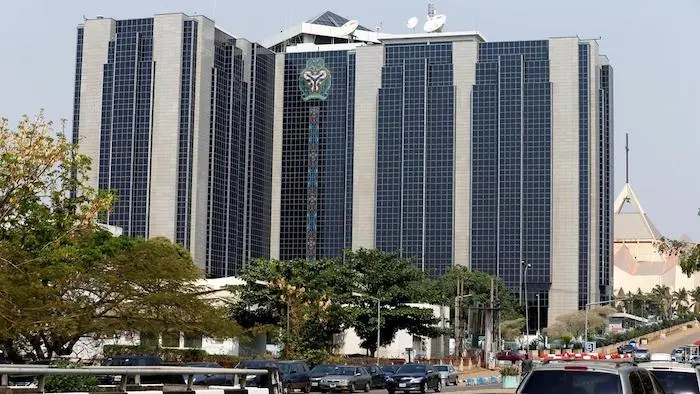
The Nigeria Exchange Limited (NGX) was literally thrown into frenzy on Monday, June 16, 2025, when nervous investors embarked on massive dumping of shares of banks. It was a spontaneous reaction to the sweeping directive of the Central Bank of Nigeria (CBN), dated Friday, June 13, placing temporary suspension of banks’ dividend payment until 2028. The policy has also halted issuance of management bonuses and investment in off-shore subsidiaries.
The sudden regulatory policy was designed to curtail banks’ abuse of for bearances and Single Obligor Limit (SOL) by compelling them to make adequate provisions for significant lending risks. Although the apex bank issued the directive in good faith to boost retention of internally generated funds and bolster capital adequacy amongst others, little did it realise that the circular contained price-sensitive information, also referred to as insider information in the stock market parlance. It is material and non-public information about a publicly quoted company that could significantly affect its share price if released.
As a backlash effect of the circular and shareholders’ reaction, trading on the NGX succumbed to bearish run as market capitalisation dipped by N108 bn, largely driven by sporadic sell-offs in the banking sector. The NGX All-Share Index depreciated by 170.77 points or 0.15 percent to close at 115,258,77, as against 115,429.54 at the end of the trading on Friday, June 13.
Consequently, the total market capitalisation declined from N72.82 trillion to N72.70 trillion, a loss of N121 billion, a day-on-day. Expectedly, the market sustained the loss spree on Tuesday, June 17, as the All-Share Index nosedived by 348.61 points or 0.3 per cent to close at 114,910.16, compared to the previous day’s close.
The market capitalisation also dropped from N72.7 trillion to N72.5 billion, amounting to N183 billion loss, with fears that the bearish trend would continue until the market begins its self-correction. A Report by Renaissance Capital shows that leading the pack of the banks that have developed hunchback of exposure to forbearances is Zenith International Bank while First HoldCo, Fidelity Bank, FCMB and Access Corporation were also on board. The loan books of GTCO and Stanbic IBTC are clean, indicating that the banks can pay dividend from their banking business.
The freefall of share prices took toll on the banks with high exposures. In order to assuage their shareholders and depositors that they remain a going concern, many banks hurriedly issued statements on the status of their exposures, payment plan and assurances of ability to pay dividend.
Miffed by the mood of the market, the Chairman, Association of Securities Dealing Houses of Nigeria (ASHON), Sam Onukwue, in a statement criticized the apex bank for announcing price-sensitive information, urging it to provide alternative information as a matter of urgency to calm the frayed nerves. He expressed his members’ dismay that investor confidence in the banking sector was waning, especially now that some banks would still come to the market to raise capital to comply with the deadline on the CBN-induced recapitalisation.
But Onukwue assured investors that the market fundamentals remained strong, hence there should be no panic sale of banks shares. Other operators were under pressure to advise their clients that the CBN’s announcement would not have adverse effects on banks’ future performance.

However, as a damage control, CBN finally issued another circular, dated June 17, entitled “CBN Affirms Strength of Banking Sector, Issues Routine Transitional Guidance for Select Institution”, signed by the apex bank’s Acting Assistant Director of Corporate Communications, Hakama Sidi Ali. As a balm to hurt mind, the circular doused tension on the market and relative stability started to build up in the banking sector. This is the power of information.
The apex bank erred in reasoning and logic by issuing the first circular, which triggered downswing in the share prices of banks. Such price-sensitive information could have been done discreetly without throwing investors into panic mode. Stock market is primarily driven by three factors- company’s performance, demand and supply and market hearsay. CBN’s initial mishandling of corporate communication brings into fore, the concept of Efficient Market Hypothesis (EMH). The hypothesis is an investment theory which suggests that the prices of financial instruments reflect all available information.
Although the assumptions of Efficient Market Hypothesis are similar to perfect market and therefore unrealistic, information plays key roles in the pricing of securities. It is settled in Corporate Finance that government policies can significantly influence stock markets. Policy announcements can lead to volatility.
Therefore, it is crucial to know their implications. In the United States in 2008, the US Securities and ExchangeCommission (SEC) banned short selling and this led to volatility in the high cap stocks. In the United Kingdom, the announcement of Brexit referendum on June 23, 2016, plunged FT 100 index on the London Stock Exchange.
There are lessons to learn from the CBN’s mishandling of corporate communication strategy. The lighting speed with which the initial circular jolted investors and the same manner that the latest circular reversed the situation shows how investors react to information. For the umpteenth time, I will advocate that practising stockbroker should be appointed to serve on the CBN’s Monetary Policy Committee (MPC) to advise how policy issues in the money market impact the capital market. During the inglorious tenure of Godwin Emefiele as the CBN Governor, monetary policies were always in favour of the money market to the detriment of the capital market.
Mr Yemi Cardoso should reverse this stigma. The apex bank should allow its Corporate Communications Department to handle internal and external communication as adjudged by the difference between the CBN’s acerbic circular and the bail-out one
The dust raised by the abuse of forbearance and Single Obligor Limit in the banking sector will compel investors to shift attention from accounting profit to cash profit. It is no longer a matter of huge interest income in the financial statement but what comes in as cash from the interest income. Market regulators, operators and investors should subject banks to more scrutiny and avoid reliance on paper profit. The time is now.
Oni is an Integrated Communications Strategist.

