 Follow Us on Google News
 Follow Us on Google Discover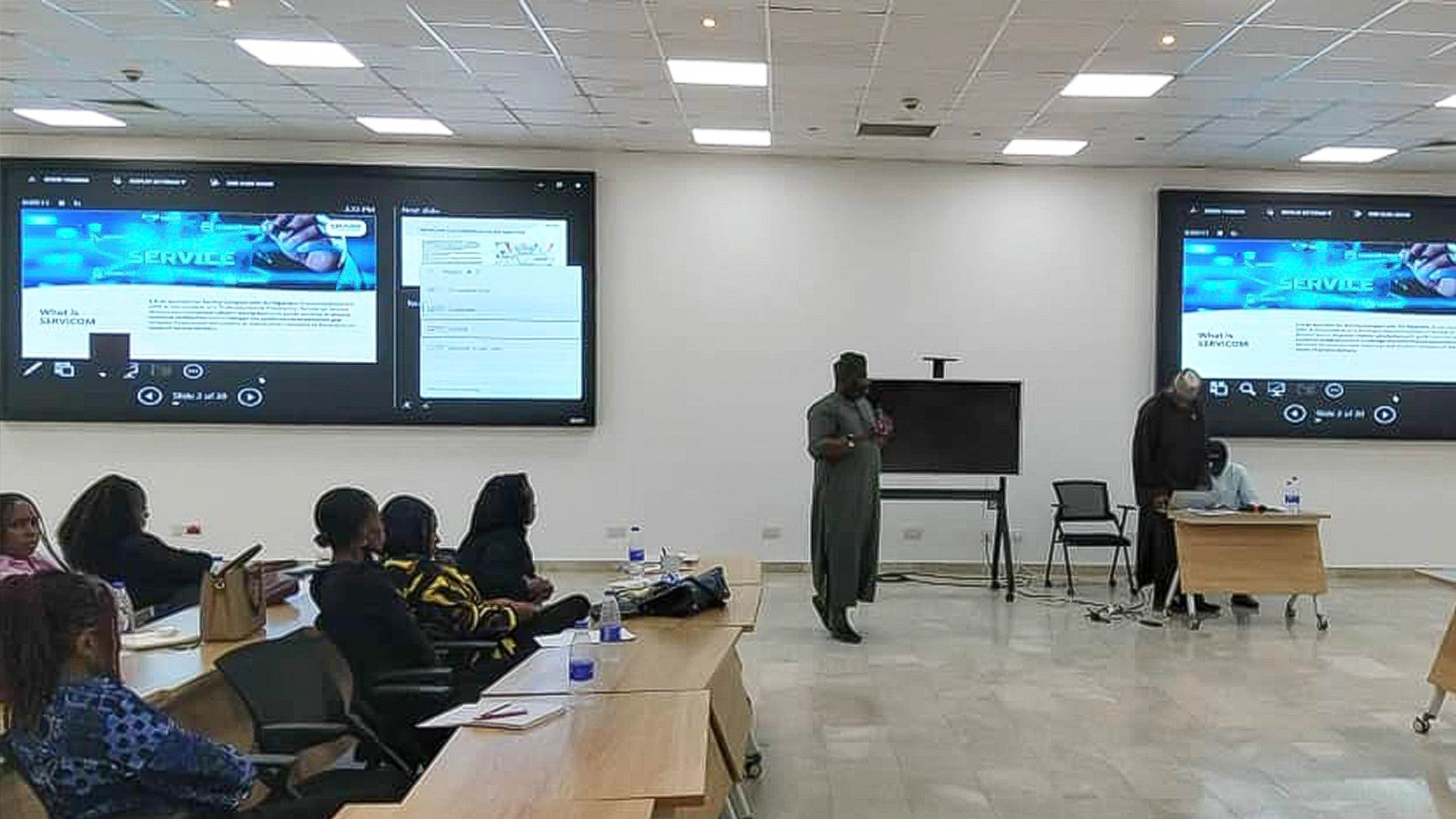
The Nigerian Education Loan Fund’s (NELFUND) decision to organise a two-day capacity-building programme for members of staff underscores a fundamental truth: the success of any public institution depends on the competence, integrity and commitment of its workforce.
As the agency implementing President Bola Ahmed Tinubu’s flagship student loan programme, NELFUND led by the Managing Director/Chief Executive, Akintunde Sawyerr, carries the responsibility of ensuring that millions of Nigerians can access higher education regardless of their financial circumstances. Since the scheme commenced in May 2024, the Fund has grown rapidly. As of July 4, 2026, it had disbursed more than N303 billion to over 1.6 million beneficiaries across more than 315 tertiary institutions. Managing an intervention of this magnitude requires a workforce that is not only technically competent but also ethical, innovative and service-oriented.
Recognising this, the Fund organised the training for staff drawn from the Human Resources, SERVICOM, Legal, Client Support and Anti-Corruption and Transparency Unit (ACTU).
The programme featured experienced professionals whose expertise aligned with the agency’s strategic goals. Human resource consultant Victor Ekundayo delivered sessions on Driving Business Success Through the HR Imperative Framework; consultant Akeem Lawal spoke on Ethical Conduct and Compliance; Tejan Ibrahim of the Chartered Institute of Personnel Management (CIPM) facilitated discussions on Emotional Intelligence in the Workplace; SERVICOM Director Olusola Fowobaje examined NELFUND’s Service Delivery Standards and Complaints Resolution Mechanism; while Segun Aina of CIPM concluded with sessions on Enterprise Innovation and Innovative Leadership for Operational Turnaround and Sustainable Success.
Together, the facilitators equipped participants with practical knowledge on leadership, ethics, customer service, emotional intelligence and innovation—qualities essential for sustaining NELFUND’s expanding mandate.
Dr Ugboma’s Strategic Human Capital Vision

At the centre of the initiative is the Director of Human Resources, Dr Zino Ugboma, whose commitment to workforce development reflects a modern understanding of public sector leadership. Rather than viewing human resources as merely an administrative function, he has positioned it as a strategic driver of institutional performance.
With NELFUND administering billions of naira in student loans and serving more than 1.6 million beneficiaries, investing in staff development has become a strategic necessity. Ethical conduct, compliance, emotional intelligence, innovation and effective service delivery are no longer optional competencies; they are indispensable to sustaining public trust.
The training therefore focused on strengthening these competencies while preparing employees to respond to the increasing demands of the Fund’s operations.
Speaking on the significance of the programme, Ugboma said the objective was to build a workforce capable of delivering efficiently on NELFUND’s mandate.
Although the student loan application and disbursement process is largely technology-driven, he noted that dedicated personnel remain responsible for ensuring the system functions effectively.
He explained that the programme engaged retired public service directors and professionals from the Chartered Institute of Personnel Management to expose employees to global best practices in human resource management and public service.
“I hope to see a better-equipped workforce. We have issued over 1.6 million loans to Nigerian students, and although the process is technology-driven, there are still people behind the system who ensure these loans reach the beneficiaries. Our workforce must therefore be equipped with the right tools to deliver on our mandate. My charge is for staff to apply the lessons in their daily responsibilities so that together we can build a stronger Fund and ultimately a better Nigeria,” Ugboma said.
Embedding a Culture of Service Excellence
SERVICOM Director Olusola Fowobaje described the programme as a deliberate effort by the Fund’s management to deepen staff capacity and strengthen service delivery.
According to him, the training represents a new phase in NELFUND’s capacity-building strategy by allowing participants to interact directly with directors, consultants and other experienced professionals in smaller batches.
He explained that the sessions covered human resource management, service delivery, complaint resolution, ethics, transparency and anti-corruption, while giving junior officers a better understanding of the standards required in managing public resources.
Fowobaje disclosed that the Managing Director had directed that every department and unit of the Fund should undergo similar training, with capacity-building programmes now scheduled on a quarterly basis to ensure continuous professional development across the organisation.
Participants Reflect on Practical Lessons
Participants described the programme as practical, engaging and directly relevant to their responsibilities, saying it broadened their understanding of workplace ethics, leadership, innovation and teamwork while reinforcing the importance of continuous learning in a rapidly evolving public institution.
For Joan Azonobor, a Legal Officer, the sessions on emotional intelligence and human resource management stood out. She said the training helped participants assess themselves, improve workplace relationships and gain a better appreciation of the role of the Human Resources Department. According to her, the interactive exercises provided practical tools that staff could immediately apply in their daily responsibilities while correcting common misconceptions about HR functions.
Mmesoma Ekenechukwu of the Procurement Department described the programme as insightful and educational, saying it deepened her understanding of ethics, integrity, compliance and emotional intelligence. She noted that the lessons would strengthen professionalism, accountability and interpersonal relationships, enabling staff to contribute more effectively to the organisation’s objectives.
Similarly, Oluemeka Emmanuel and Monalisa Dike, both of the SERVICOM Department, said the training reinforced the high standards expected of NELFUND employees. They identified emotional intelligence, workplace ethics and time management as some of the most valuable lessons, stressing that avoiding procrastination would improve productivity, reduce unnecessary pressure and strengthen teamwork.
From the Anti-Corruption and Transparency Unit, Chekwube Okwara described the programme as an eye-opener that simplified complex concepts relating to ethics, compliance, innovation and public service. According to her, the sessions challenged participants to think creatively, embrace innovation and contribute to NELFUND’s long-term vision of becoming one of Nigeria’s leading public institutions. She also commended the facilitators for delivering practical and engaging presentations that inspired participants to exceed expectations.
Supporting Tinubu’s Education Reform
The capacity-building initiative aligns closely with President Tinubu’s vision of expanding access to higher education through the Renewed Hope Agenda. The student loan scheme has emerged as one of the administration’s most ambitious social interventions, removing financial barriers that have prevented countless young Nigerians from pursuing tertiary education.
Beyond providing interest-free loans for institutional fees and upkeep, the programme represents a long-term investment in human capital development. However, its sustainability depends not only on funding but also on the competence and integrity of those responsible for implementing it.
That reality explains why the Fund’s investment in continuous staff development is as significant as the loans it disburses. By equipping employees with the skills to manage public resources responsibly, respond effectively to stakeholders and embrace innovation, the Fund is strengthening the institutional foundation needed to sustain one of Nigeria’s most important education reforms.
An Investment Beyond Training
The training programme is therefore more than an internal staff development exercise. It is a strategic investment in institutional excellence, service delivery and public confidence.
The initiative also highlights the growing importance of human resource leadership in public institutions. Through Dr Zino Ugboma’s commitment to continuous learning and professional development, NELFUND is building a workforce capable of sustaining its rapid growth while maintaining the transparency, efficiency and accountability expected of a public institution entrusted with billions of naira.
Equally important is the support of the Fund’s management, whose decision to institutionalise quarterly training demonstrates a long-term commitment to organisational learning. Combined with the expertise of facilitators, the programme has laid a solid foundation for a culture of excellence that extends beyond the classroom.
As business leader Richard Branson aptly observed, “Train people well enough so they can leave; treat them well enough so they don’t want to.” For NELFUND, that philosophy is particularly relevant. An institution entrusted with transforming access to higher education must itself be driven by a workforce that is skilled, ethical and motivated.
By investing in its people today, the agency is investing in the credibility, sustainability and future success of Nigeria’s student loan programme. In doing so, it is reinforcing a simple but enduring principle: lasting institutional success is built not only on policies and technology, but on the quality of the people entrusted to deliver them.

