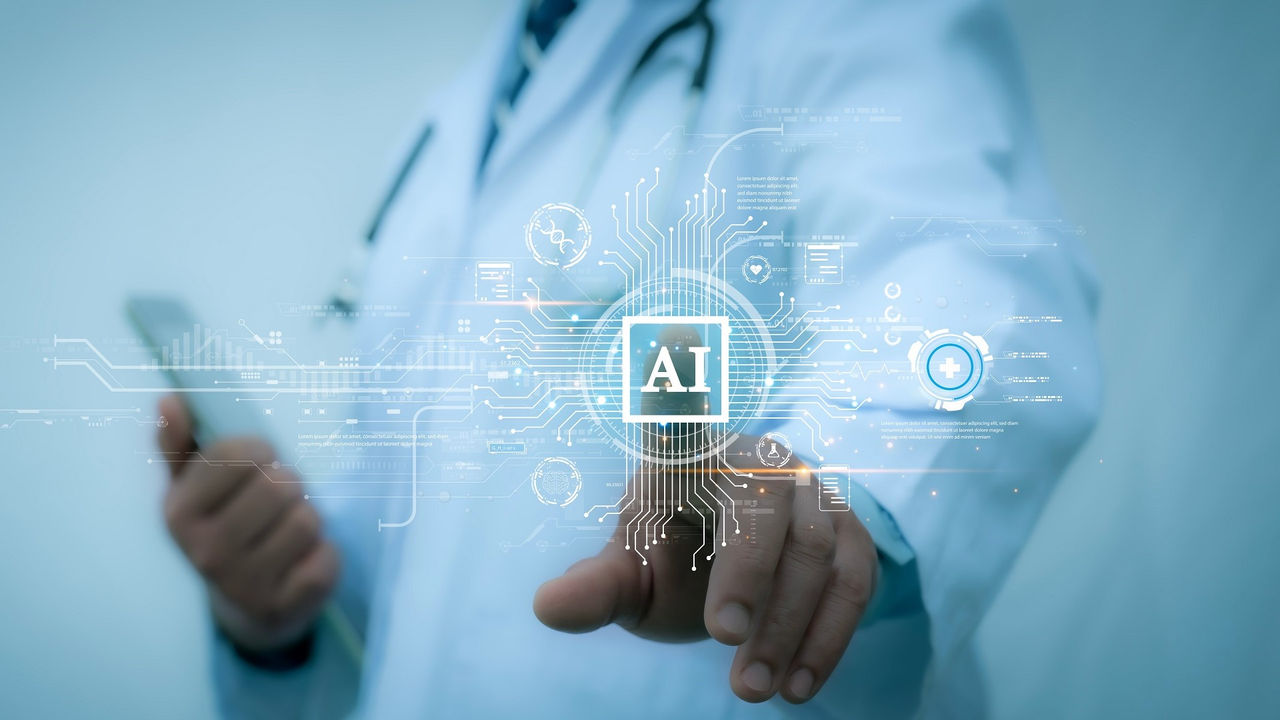
This scene illustrates a potential revolution in African healthcare. With 24 per cent of the global disease burden, but only 3 per cent of the world’s health workers, Africa faces a critical challenge. AI could be the game-changer.
As an AI Engineer, I see AI as a force multiplier. Imagine thousands of virtual doctors (agents) complementing the work of the real ones, each armed with the knowledge of millions of patient records and a detailed knowledge base of most medical conditions. That’s the power of AI in diagnostics.
Moreover, AI’s influence extends beyond diagnostics. It transforms resource allocation, enhancing telemedicine, and even tailoring treatments to Africa’s diverse genetic landscape. In Rwanda, for instance, AI is already being used to optimise supply chains for medical equipment and ensure critical resources reach the right places at the right time.
The potential is limitless, but so are the challenges. Africa faces obstacles such as data scarcity, inadequate infrastructure, ethical concerns, and the need for culturally sensitive implementations. Yet, despite these barriers, the future holds great promise. Between 2019 and 2022, 160 million Africans gained broadband access. 4G adoption in sub-Saharan Africa is projected to more than double to 45 per cent in the next five years. We’re witnessing a digital leap that could significantly accelerate AI adoption across various sectors.
In this article, we’ll explore how AI can transform African healthcare, the technical challenges we currently face, and the innovative solutions that could save millions of lives.
Current state of healthcare in Africa: A digital divide in life and death
Imagine two parallel universes of healthcare existing side by side. In one, a small minority enjoys world-class private facilities. On the other hand, the vast majority struggle with underfunded public hospitals, where even the most basic care is a luxury. This is the reality of healthcare in Africa today.
Let me put this in stark numerical terms: 95 per cent of surgeries in Africa are performed in subpar conditions. It’s as if we’re asking surgeons to perform delicate operations with one hand tied behind their back. The result? A postoperative complication rates as high as 38.2 per cent in certain countries. Unnecessary complications, infections, and mortality rates that would be unthinkable in most developed countries.
But it’s not just about equipment. It’s also about people. Africa needs 50 times its current healthcare workforce to meet basic needs. Let me emphasise, basic needs. And as if that weren’t enough, we’re facing a relentless ‘Brain Drain’ problem. Top healthcare professionals are emigrating to developed countries faster than we are training new ones, which further strains the already under-resourced and overburdened system. Most do so in search of better infrastructure, training, and working conditions.
This situation creates a perfect storm for AI intervention. Just as mobile banking leapfrogged traditional infrastructure in Africa, AI has the potential to bypass traditional healthcare limitations. We’re not just talking about AI as a band-aid solution, but as a fundamental reimagining of how healthcare is delivered in resource-constrained environments.
For instance, AI could help bridge the expertise gap left by the ‘Brain Drain’ issue. Imagine AI systems that can train and provide diagnostic support to less experienced healthcare workers, effectively extending the reach of specialist knowledge across the country or even the continent.
Why is AI fit for African healthcare?
The continent’s healthcare challenges are huge, but so is the opportunity for radical change. Unlike developed regions constrained by legacy systems, Africa has the chance to leapfrog directly into AI-driven healthcare solutions. This technical landscape, together with rising digital use and pressing health requirements, presents an ideal environment for AI integration. The question is not whether AI is appropriate for African healthcare, but whether we can afford to lose this important window of opportunity. A continent with healthcare concerns as diverse as its peoples, yet a single technology holds the key to addressing them all.
Here’s how AI is poised to transform African healthcare:
AI as a force multiplier: With the limited number of health workers, AI can act as a force multiplier, enhancing the capabilities of existing healthcare professionals and systems. For instance, AI-powered diagnostic tools and decision support systems enable fewer healthcare professionals to serve a larger population more effectively. This could be done effectively and quickly, which would be much faster than building new healthcare talent pipelines.
Supercharging Diagnostics: In regions like West Africa, where there are fewer than 10 pathologists per one million people, AI can significantly boost diagnostic capabilities. Deep learning algorithms are currently being used in rural South Africa to enhance the proficiency of health workers in diagnosing HIV through lateral flow tests. These applications can dramatically improve early detection and treatment of diseases.
Tailored for Africa: Technological solutions developed outside of Africa often fail to address local contexts, leading to subpar performance. Less than 2 per cent of analysed human genomes are from African individuals, despite Africa having the highest genetic diversity. AI trained on African-specific data can create solutions as diverse as the continent itself. To create more effective solutions tailored to African challenges, it’s imperative to gather, comprehend, and analyse genetic data from African populations.
Leapfrogging legacy systems: Africa’s lack of entrenched healthcare infrastructure, often seen as a weakness, could be its greatest strength in AI adoption. This could potentially allow for more rapid adoption of AI technologies compared to regions with more established, traditional healthcare infrastructures. Drawing parallels from the success of the mobile phone and banking sectors, we could learn from the decades of research of developed nations and implement quick solutions catered towards our unique needs and challenges.
AI as a public health sentinel: We’re using AI to study genomic sequences of animal viruses, predicting their transmission to humans. In a continent that is often ground zero for emerging diseases, this is like having an early warning system for the next pandemic
Fighting Antimicrobial Resistance (AMR): AI models are our new allies in the war against superbugs. They are being used to optimise antimicrobial use and broader infection care, a critical challenge in African health systems. In terms of AMR problem identification, through rapid data analysis, models can detect emerging resistance patterns. Additionally, through predictive modelling, AI can provide proactive interventions and treatment optimisation, contributing to more effective antimicrobial stewardship. This allows for the identification of emerging resistance patterns and the development of predictive models for proactive interventions and treatment optimisation.
The future of African healthcare isn’t just AI-assisted—it will be AI-empowered. With the rapid adoption we’re already seeing with regard to technology, that future might be closer than we think. The question isn’t whether AI fits African healthcare, but how quickly we can harness its full potential.
Challenges in Implementing AI for African healthcare
As we envision a future where AI transforms healthcare across Africa, it’s crucial to acknowledge the obstacles that lie ahead. The path to implementing AI in the continents’ healthcare system is fraught with challenges that demand innovative solutions and collaborative efforts. It’s exciting and full of potential, but not without its hurdles. Let’s break down these challenges:
To be continued tomorrow.
Usman is an Artificial Intelligence Engineer and Solutions Architect. He can be reached via: [email protected]