 Follow Us on Google News
 Follow Us on Google Discover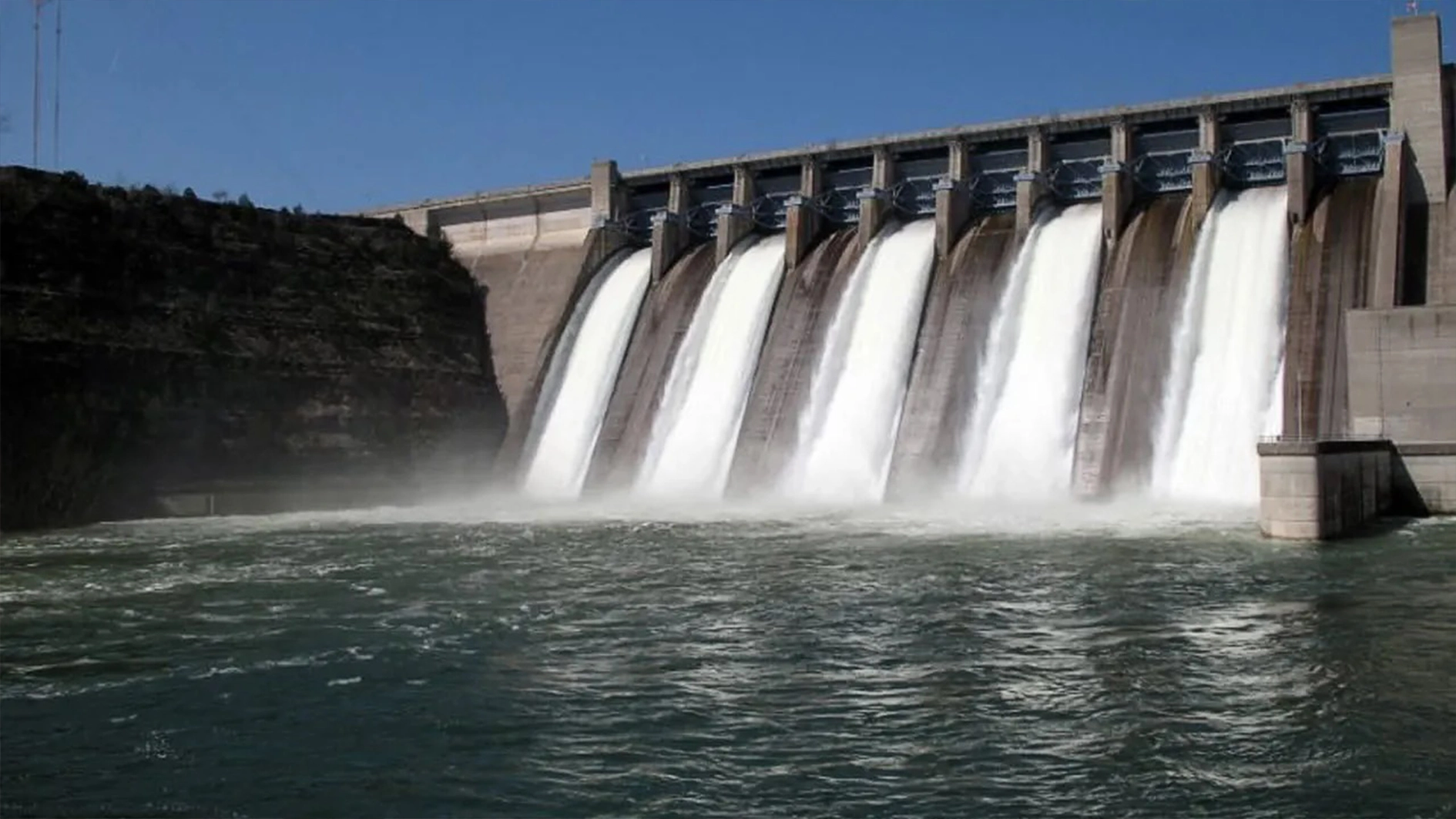
By Lanre Babalola
The first paper in this series established the structural mechanics of Nigeria’s annual electricity stress season: the scissor that opens every February as cooling demand peaks and hydro output falls, in a system with no reserve capacity to absorb the collision. This paper narrows the lens to a single asset – Shiroro Hydroelectric Power Station on the Kaduna River – in order to illuminate a failure that is at once more specific and more revealing. Shiroro was designed explicitly as Nigeria’s insurance against the seasonal crisis that the first paper described. Understanding how that insurance was spent – quietly, incrementally, without deliberate decision – is essential to understanding both how deep the problem runs and what genuine recovery would require.
What Shiroro was built to do
To understand what went wrong at Shiroro, it is necessary to understand what was supposed to go right – the engineering logic that underlay the original architecture of Nigeria’s generation portfolio. That logic, imperfectly realised but coherent in its conception, assigned different plants different roles based on their technical characteristics and cost profiles.
Shiroro Hydroelectric Power Station was commissioned in 1990 on the Kaduna River, with an installed capacity of 600MW and a reservoir of approximately seven billion cubic metres.
It was not conceived as a continuous generation asset. It was conceived, in the language of power system engineering, as a peaking and reserve plant.
The distinction matters enormously. A baseload plant is designed to run continuously, delivering a steady stream of energy around the clock. Its value lies in the reliable, uninterrupted volume of electricity it produces. A peaking plant is designed for the opposite: to sit partly or largely idle during normal demand periods, conserving its resources, and to dispatch rapidly when demand spikes or when another plant fails. Its value lies not in continuous energy output but in dispatchable reserve capacity – the ability to respond quickly when the system needs it most.

Hydroelectric plants are technically ideal candidates for peaking duty. They can ramp up output within minutes, far faster than most thermal plants. They can regulate frequency and voltage, providing the ancillary services that stabilise a grid under stress. They can perform black-start functions – restarting the grid after a total collapse without drawing power from the grid itself.
Shiroro was specifically designed to provide all of these services: quick-response peak-load supply, frequency and voltage regulation, spinning and standing reserves, and black-start capability, including the ability to supply Abuja in island mode via dedicated lines if the main grid went down.
The reservoir was, in engineering terms, a stored energy battery. And like any battery, its value depended entirely on not being discharged before the moment it was needed. In the original architecture of Nigeria’s generation portfolio, the logic was clear. Large gas-fired thermal plants would carry the continuous baseload. Kainji and Jebba would follow the load through the middle of the demand curve. Shiroro would be held in reserve – its reservoir kept charged, ready to deliver full output precisely when the system needed it most.
For this architecture to function as intended, one condition was essential: the thermal baseload capacity had to actually work. Shiroro’s designed role as a peaking plant was predicated on the assumption that the grid’s continuous load would be carried by gas-fired plants, freeing Shiroro to husband its reservoir for moments of system stress. Remove that assumption, and the entire design logic unravels.
What actually happened: A system in reverse
Nigeria’s power system did not develop as its architects intended. The thermal baseload that was supposed to anchor the system and create the space for Shiroro’s designed flexibility chronically underperformed. Gas supply disruptions – pipeline vandalism, insufficient compression infrastructure, payment arrears to producers – became structural features of the sector rather than temporary setbacks.
Plant maintenance deteriorated as commercial revenues failed to materialise. The circular debt – distribution companies unable to pay generators, generators unable to pay gas suppliers, gas suppliers unable to invest in supply reliability – became self-reinforcing.
The consequence was a progressive inversion of the designed portfolio hierarchy. Rather than gas baseload carrying continuous load while hydro provided flexibility and Shiroro stood in reserve, the system drifted toward a different operational reality: hydro plants became the de facto baseload, gas plants ran intermittently when gas was available, and the concept of a strategic reserve disappeared entirely.
The inversion had a straightforward operational logic, even if it was destructive in the medium term. Of the assets available, hydro stations were demonstrably the most reliable. Their turbines, once running, had high mechanical availability. Their fuel cost was negligible. They produced clean power with no gas supply uncertainty.
Under perpetual pressure to maximise available generation – a pressure that is entirely understandable given the chronic supply deficit – system operators leaned on what worked. Hydro plants became the system’s backbone by default, dispatched heavily and continuously, year-round.
The merit-order economics reinforced the operational imperative. Hydro’s near-zero variable cost made it the priority dispatch choice under any rational economic ordering. NERC directives and system operator protocols reflected this reality, treating hydro as must-run or near-must-run capacity. The result was that Shiroro – a plant designed with the capacity factor appropriate to a peaking role, expected to run partially and strategically – found itself operating at sustained, continuous outputs across the full annual cycle.
What was engineered as a flexible, strategic asset – Nigeria’s insurance policy against seasonal system stress – had become a de facto workhorse, drawn down continuously because the surrounding portfolio that would allow it to operate correctly had failed to materialise.
Operational drift and its consequences
Power system engineers use the concept of operational drift to describe what happened to Shiroro and, to varying degrees, to the broader hydro fleet. Operational drift occurs when infrastructure designed and built for one purpose is gradually repurposed for another – not through deliberate redesign, but through the accumulated pressure of a surrounding system that has failed to evolve as planned.
The plant itself does not change. Its reservoir, turbines, and ramp-rate characteristics remain as designed. What changes is how it is used, and the consequences of that changed use compound over time.
For Shiroro, the consequences manifest most acutely in the February–April stress window. The logic is straightforward and damaging. A plant designed for peaking duty conserves its reservoir through low-demand periods, entering the stress season with a full – or at least adequately charged – reservoir, ready to dispatch at full output precisely when the system needs it.
A plant forced into baseload dispatch draws its reservoir down continuously through the dry season. By the time February arrives, the reservoir has been progressively depleted over the preceding months of sub-optimal drawdown. The plant enters the period of maximum system stress with materially less stored water than its design intended.
The seasonal consequence is therefore worse than simple hydrology would imply. Shiroro’s February–April output reduction is not solely the product of low dry-season inflows. It is partly the product of how the reservoir has been managed – or, more precisely, mismanaged – through the harmattan months that precede the stress peak. The shortfall is partly self-inflicted.
This is an important diagnostic insight, and it is underappreciated in the public discussion of Nigeria’s electricity crisis. It means that the seasonal crisis is not purely exogenous – not simply the unavoidable consequence of the Niger basin’s hydrology.
It is partly endogenous: the result of operational decisions that, however understandable in the short run, systematically undermine the system’s ability to cope with a predictable seasonal stress. And if the crisis is partly endogenous, it is partly remediable through operational change, without requiring any new infrastructure at all.
The February–April window, therefore, concentrates three distinct stresses simultaneously.
Temperatures of 38 to 42 degrees drive cooling demand 20 to 30 per cent above annual averages. Minimum dry-season inflows reduce turbine head and hydro output by up to 40 per cent compared to the wet-season peak – and that reduction is worsened by the prior baseload dispatch that has already drawn reservoirs down.
And Shiroro, designed as the reserve that would absorb precisely this kind of stress, has been consumed before the crisis arrives and cannot perform the function it was built for.
The result is grid instability and unplanned outages – not as a failure of the system in any dramatic sense, but as its only remaining mechanism for balancing supply and demand.
The portfolio incoherence behind the plant
The Shiroro story is not merely a case study in the mismanagement of a single asset. It is a symptom of a deeper and more fundamental problem: the loss of the systemic architecture – the internal logic of the generation portfolio – that makes individual plants valuable in their intended roles.
Nigeria’s generation mix was not arbitrary. Its plants were assigned roles that made engineering and economic sense together, as an integrated system. Thermal baseload, hydro load-following, hydro peaking and reserve: each element depended on the others functioning as designed. That architecture has been progressively scrambled by decades of underinvestment in thermal capacity, chronic gas supply failures, and the deterioration of associated infrastructure. Shiroro’s misuse is a consequence of portfolio incoherence: a plant running outside its design envelope because the surrounding portfolio that would allow it to operate correctly has collapsed.
This reframing matters for how the problem is understood and addressed. Nigeria’s electricity crisis is not primarily about underinvestment in individual plants in isolation. It is about the loss of the systemic architecture that makes individual plants valuable. Adding megawatts to a portfolio whose internal logic has been dismantled will not restore that logic. Rebuilding the architecture – not just aggregating capacity – is the genuine planning challenge.
The irony of design and the weight of neglect
There is a particular historical irony embedded in the Shiroro story that deserves to be stated plainly. The plant was commissioned in 1990 at a time when Nigerian planners were explicitly aware of the seasonal vulnerabilities of the hydro-dependent grid. Kainji and Jebba were already operating, and their seasonal production profiles were understood.
Shiroro was built, in part, as a direct response to those vulnerabilities: a fast-response, flexible, reserve asset that could be held in strategic readiness for the moments of maximum system stress.
Nigerian power planners, 40 years ago, understood the problem that today’s operators, regulators, and commentators apparently do not or their expertise is ignored. They designed and built a solution to it.
That solution has been progressively dismantled – not through deliberate policy choice, not through ignorance of its purpose, but through the accumulated pressure of a surrounding system that failed to hold up its end of the architectural bargain.
The thermal baseload that was supposed to free Shiroro for its designed role never reliably materialised. And so Shiroro was pressed into service as a workhorse, its strategic flexibility consumed by the same chronic dysfunction it was built to help manage.
The management of Shiroro today – to the extent that management is even the right word for a system that has drifted rather than been steered – appears largely indifferent to the plant’s design logic. There is little public evidence of reservoir management protocols calibrated to the annual hydrological cycle and the seasonal demand profile.
There is limited indication that dispatch decisions are made with explicit reference to the February–April stress window and the need to conserve water for that period. The plant is dispatched on the same basis as any other available asset: run it when you can, because the system cannot afford not to.
This is understandable as a short-run survival strategy. It is indefensible as a management approach for a strategic infrastructure asset whose entire value proposition depends on not being consumed before the crisis arrives.
What comes next
The two papers in this series so far have established the diagnosis in full. The seasonal demand-supply scissors explain the structural mechanics of the annual crisis. The Shiroro story explains why the crisis is consistently worse than the meteorology and hydrology alone would predict, and why the system’s own design – which contained a partial solution – has been quietly undone.
What remains is the question of remedy: what can be done, what cannot, what must be distinguished from what is merely convenient to propose, and what reframing of the problem is required before any intervention can be designed with the precision the crisis demands.
That is the subject of the third and final paper in this series.
Read the remaining part of this article on www.guardian.ng
Dr Babalola is a former Minister of Power and was one of the principal architects of Nigeria’s electricity sector reform. Through Exenergia Limited, he works on infrastructure development, electricity industry policy, regulatory economics, and the macroeconomic dimensions of energy infrastructure failure. This paper is the second in a three-part series, The Grid’s Invisible Clock published under the Exenergia Limited banner. He also writes The Missing Markets, a Substack newsletter examining the markets, institutions, and infrastructure gaps that constrain growth in developing and emerging economies.

