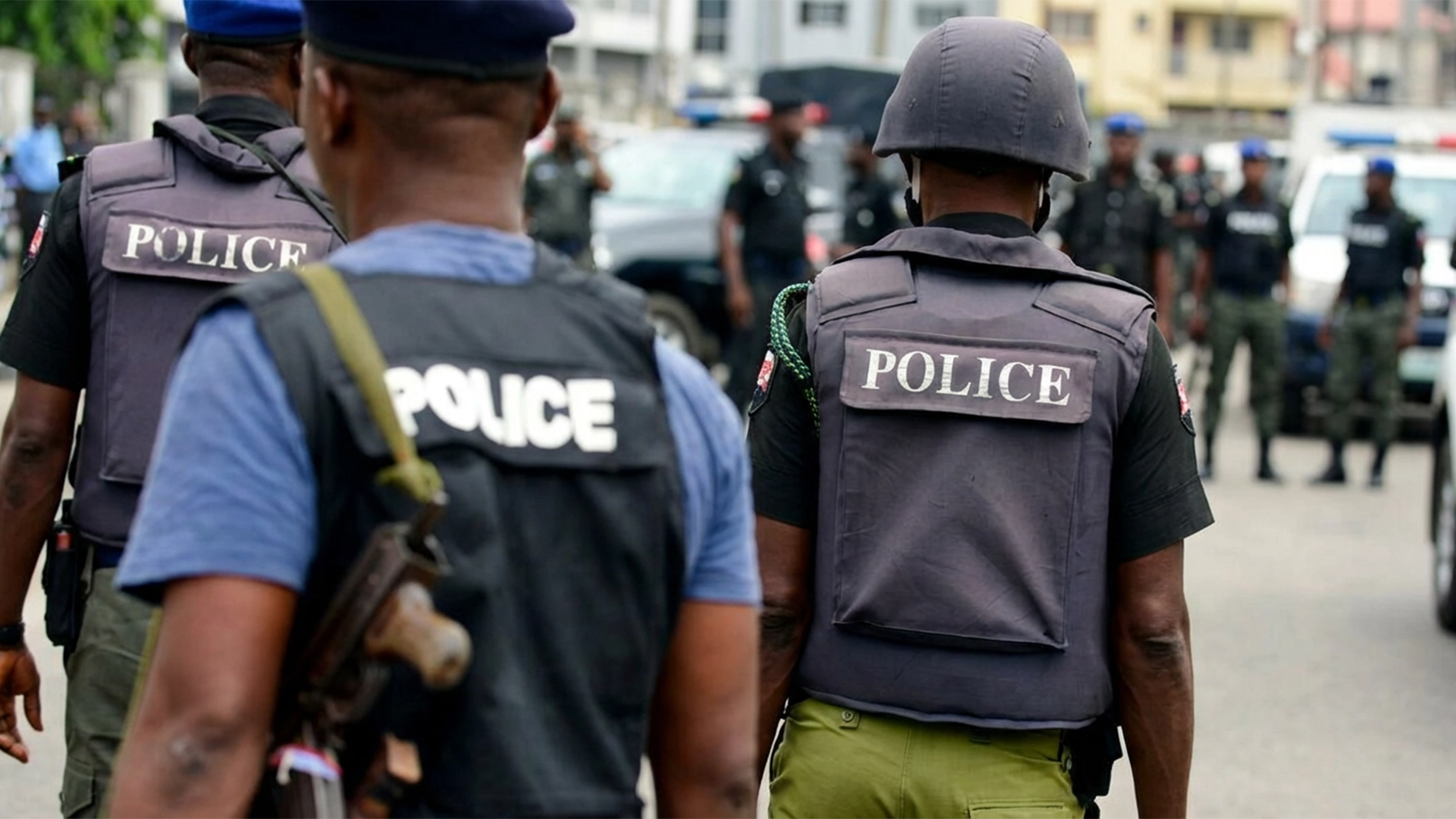
Despite the consensus that has been reached across our land on the establishment of state police, there are voices seeking to reverse the hope-filled efforts towards the most sensible steps to tackle the seemingly intractable insecurity scourge menacing the country.
Those seeking to roll back the hand of the clock are employing the same profitless argument. And it is all what I have been calling the same shibboleth, the same beaten track, the same old hat—that all that is needed is increased funding, training and raising of numerical strength of the policemen under the present dispensation.
I do pray that President Bola Tinubu will not feel intimidated and back down. He is on the right path to rescue the nation from the choke-hold by terrorists, banditry, kidnappers and their sponsors.
Tinubu has been making the right pronouncements on the imperative of state police since he came into the saddle. He called on the National Assembly last week to begin reviewing our laws to allow states that want state police to establish same. He had said in June, in his words: “State police is no longer optional but a national imperative.”
This was coming on the heels of the Northern Establishment comprising governors, traditional rulers and some stakeholders throwing their full weight behind the setting up of state police. This week they met in Kaduna and repeated their position. The South-West Establishment has done the same. The Conference of States Assembly Speakers has done likewise and are roaring to go to give all the necessary legislative papers their assent.
President Tinubu’s speech in June was at the high-level Legislative Dialogue on Nigeria’s National Security Architecture. Represented at the time by the Defence Minister, Mohammed Abubakar Badaru, who has just left the government, Tinubu said: “The debate over state police is no longer theoretical. It is grounded in the daily fears and lived anxieties of Nigerians: farmers afraid to tend their fields, traders unsure of safe passage, and communities abandoned to self-help.”
He said the current centralised security system has outlived its usefulness. He fears that failure to realign the constitution with Nigeria’s lived realities might pose a grave threat to national unity. He described the 1999 Constitution as fundamental to its democracy but outdated in dealing with modern security threats as posed by rising complexity of terrorism, cybercrime, farmer-herder conflicts, piracy and separatist agitations.
In his words: “These are clear indications that the current legal framework is inadequate to secure Nigeria’s vast and diverse territory. The pace of change in technology in the complexity of security threats, and in the dynamics of our federal structure has far outstripped the capacity of some constitutional provisions. Our constitution must evolve or risk becoming a danger to the very unity it is meant to protect.’’
President Tinubu then pressed for a constitutional amendment that would move policing from the Exclusive Legislative List to the Concurrent List, to enable states with capacity and political will to establish their own police forces. He said such a move would ensure more accountable, community-based policing while preserving federal coordination and oversight. “We must learn from global best practices, adapting decentralised models that enhance local accountability without sacrificing national oversight.”
As I did report on the occasion, Tinubu listed pro-active steps his Administration has taken to provide security to vulnerable segment of the citizenry, particularly school children. He mentioned the establishment of the National Safe Schools Response Coordination Centre. There was also the approval of community policing framework aimed at narrowing the gap between citizens and law enforcement. His conviction is, “These efforts must be complemented with structural changes. Without constitutional backing for decentralised policing these initiatives will remain limited in impact.”
Throwing the challenge to the National Assembly, particularly the House Committee on Constitutional Review chaired by the Deputy Speaker, Benjamin Kalu, urging them to act with urgency and courage in pushing through security-focused amendments, he said: “None of these reforms will materialise without legislative courage and political will. Let History record that in this chamber, on this day, Nigeria leaders chose courage over caution, vision over fear and reform over inertia.”
Profound! Convincing! Enheartening!
There is the argument that governors will misuse state police. Former President Babangida had dismissed such fears as unfounded, and not in the present-day Nigeria and the rights awakening of the citizenry. He said Nigeria must not be left behind in the march of civilisation.
The other argument is about how states that are unable to pay their staff salaries regularly can risk arming their police with guns and other lethal weapons. This is a chicken and egg argument. Which comes first? Where there is no security how will the citizens be able to go out to work and rake in money for their personal responsibilities and pay taxes into the government covers and indeed boost the economy of the state in general? Therefore, it is state police first, peace and security to go out to work next and fund government activities, and pay not only the police but all the workers as at when due.
The amendment to be made to the constitution will not make it compulsory for every state to have state police. Once it moves to concurrent list, states which are not ready or overwhelmed by the fear of their governors misusing the system may wait until they are ready, when they will have governors who will not abuse the police. As former Governor Jonah Jang once said, we must not forget that we are a federation and mixing unitary with federalism will never work. In the First Republic, Eastern Region did not have regional police. It was content with the Nigeria Police while the Western Region had a three-tier policing structure.
It is also very important to state that the fact that five governors out of 36 will abuse their power over the police under their control should not be reason to deny those that will use the police responsibly, the right to set up their own police for law and order, using the phrase by Joseph Daodu, one-time President of the Nigerian Bar Association. That will not be fair and just to tie the hands of those who want to face the insecurity challenge in their state frontally and unimpeded!
People including governors are naturally not at the same level of inner maturity. This accounts for the diversity of all peoples all over the world. Those less mature are to learn from those that are half a step ahead of them. The point that is also lost on us in the debate is that the establishment of state police will not be tantamount to abolition of the Nigeria Police. Guidelines will, of course, be drawn up for collaborative working between the two tiers and operational boundaries.
President Bola Tinubu’s drive for the establishment of the state police deserves all our backing. It is sound; it is convincingly the way to go for the health, development and progress of our nation.