 Follow Us on Google News
 Follow Us on Google Discover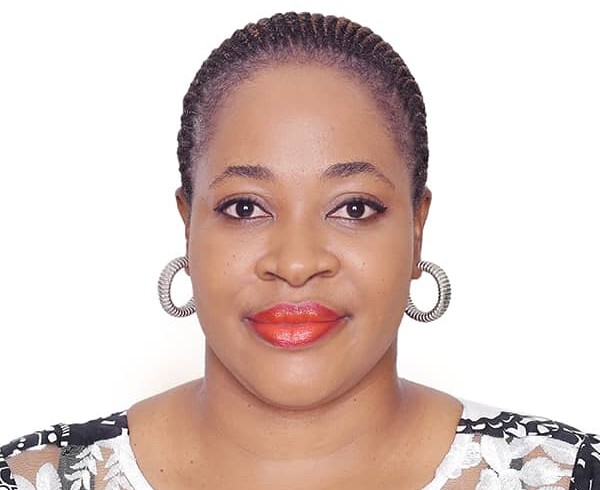
Walk into a rural health facility in Talata Mafara, Zamfara or a crowded urban clinic in Ikot Ekpene, Akwa Ibom, and ask the health worker a simple question: how many children were vaccinated here last month? Or, how much did it cost the facility to provide antenatal care last quarter? More often than not, the response will be either a guess, a shrug, or a tattered register filled with incomplete entries. And therein lies one of Africa’s biggest hidden health crises, not the lack of resources alone, but the lack of reliable, actionable data to inform where those scarce resources should go.
Across Nigeria and much of sub-Saharan Africa, decisions about how health systems are funded often rely on outdated, fragmented, or inaccurate data. The result? Funds are misallocated. Facilities are under- or over-supplied. Staff are sent to where they’re not most needed or where their influence can get them. And ultimately, millions of lives are placed at risk, not because we don’t care, but because we don’t know enough to act better.
Let’s simplify this. Imagine a small business trying to run without knowing its daily sales, inventory, customer distribution or staff performance. Disaster, right? That’s how our health systems function in many parts of Africa: flying blind, hoping to land safely.
Health financing isn’t just about spending money. It’s about spending wisely, allocating the right amount, to the right place, for the right need and at the right time. But without data, how can governments decide whether to fund maternal health more than malaria control in a specific region? Or how can a local government know if a health centre needs more midwives or more cold chain equipment for vaccines? What we face across the continent is a data deficit, a situation where the information needed to make effective health financing decisions is either unavailable, incomplete, or unreliable. And this deficit is creating a funding gap, not just in naira and dollars, but in results.
In 2021, Nigeria committed less than 5% of its national budget to health. But even this limited budget is often not guided by real-time, grassroots-level data. Instead, we rely on assumptions, donor-driven templates, or inconsistent reporting from under-trained staff at the facility level. For example, the National Health Insurance Authority and the Basic Health Care Provision Fund (BHCPF) were established to ensure more Nigerians access essential health services, particularly at the primary health care level. But implementation has been hampered by a lack of baseline data on actual facility costs, disease burden variations across states, and the financial risk protection needs of the poorest citizens. Without such data, funds are often distributed equally or politically rather than equitably. A facility in Yobe with 2,000 clients might receive the same funding as one in Ekiti with 500 clients. That’s not equity, that’s inefficiency. And inefficiency in health financing is deadly.
Let’s make this even more relatable. In a community in Niger State, a clinic receives essential drugs based on a standard formula that assumes every facility serves the same number of patients. But the community had experienced a recent cholera outbreak, which doubled the number of patients within weeks. With no rapid reporting system, the data never made it to the central ministry on time. Result? Stock-outs. Patients turned away. Lives lost. This is not an isolated story. Across the continent, poor data systems mean that budget cycles are completed long before real needs are documented. It also means that donor funding, already under pressure globally, is spent inefficiently, reducing its impact.

The lack of granular, disaggregated health data also means we can’t track where the poor really are, what health services they use, and how much they spend out-of-pocket. So when we talk about “universal health coverage,” we often do so with educated guesswork. So what’s the solution? The good news is we don’t need to reinvent the wheel. Countries like Rwanda and Ethiopia have made significant strides by investing in routine health information systems, community-based data collection, and health accounts that track every fund spent in the health sector.
First, Nigeria and its peers must scale up investments in digital health infrastructure, simple tools like tablets or mobile apps that allow real-time data collection and transmission from primary health facilities to national dashboards.
Second, we need to professionalise data use at all levels. This means training not just data clerks, but also health workers, local government officials, and finance managers to understand and use data, not just collect it. A nurse filling out a register should know that her data informs national policy, not just her monthly report.
Third, we must harmonise data systems. Today, multiple donors and agencies collect data using different formats and platforms. This creates duplication and confusion. Governments must lead efforts to unify data systems under a single, interoperable national architecture.
Fourth, civil society and communities must demand transparency. When citizens know how many children were immunised in their ward or how much the local government spent on health last quarter, they are better equipped to hold leaders accountable.
At the heart of all this is political will. Evidence-based health financing decisions are not just technical; they are also political. It takes courage to move funds from urban teaching hospitals to rural PHCs. It takes vision to invest in data systems when roads and bridges are falling apart. But the cost of not doing so is far greater. In 2020 alone, Nigeria spent an estimated $1.5 billion on medical tourism, money that could have revolutionised our health data systems in many folds. Meanwhile, our poorest citizens die from illnesses that could be treated for a fraction of that cost, if only the right resources reached the right place at the right time.
Data is power. In the fight for better health across Africa, it is not enough to have good intentions. We must have good information. And we must act on it. The path to closing funding gaps begins with closing data gaps. Let 2022 be the year we say: “No more decisions without data.” To the community of practice: we owe our people not just more funding, but smarter funding. Funding informed by evidence. Funding driven by need. Funding that saves lives because it is based on truth, not assumptions.
It’s time to turn our health systems into engines of growth, not graves of potential.
Ms. Oyarekhua is a health systems financing and policy expert with over 10 years of experience supporting health financing solutions across Nigeria and sub-Saharan Africa.

