Allegations that recent gazetting of the country’s new tax law showed significant differences between the versions passed by the National Assembly and the copies published as laws have suddenly pushed the federal government’s tax reform to a critical crossroads. And despite official and repeated debunking of the allegations and offering of clarifications on the issue, there is no doubt that a strange but avoidable credibility issue has been introduced into a long-overdue reform.
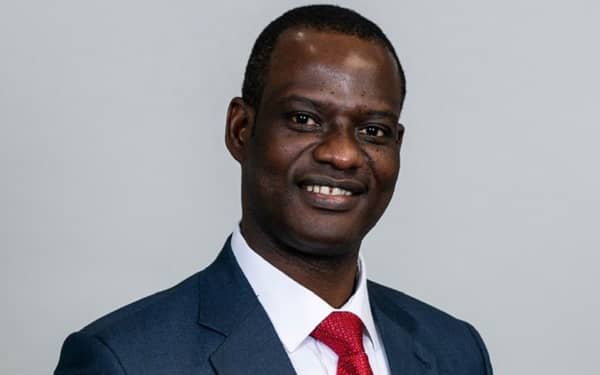
Considering the potential significance of the tax laws to Nigeria’s future political economy, it is important that all stakeholders, including the complainants, join forces to quickly identify the problems, rectify them, roll out sanctions where appropriate and move on with the implementation in the interest of Nigerians. For this, the appeal by Chairman of the Presidential Committee on Fiscal Policy and Tax Reforms, Taiwo Oyedele, for the public to exercise patience and await the outcome of the investigation of the allegations being conducted by the House of Representatives is instructive.
Some lawmakers and members of civil society had alleged that the tax reform laws passed by the National Assembly and signed by President Bola Tinubu were altered after passage, revelations that have long raised questions about the legality of the versions circulated in the public space. The lawmakers said the alterations contained in the gazetted copies did not receive the approval of the parliament, hence they are constitutionally defective.
Chairman of the Presidential Committee on Fiscal Policy and Tax Reforms, Taiwo Oyedele, in response, dismissed the claims of alterations of the Acts after law-making rigour. He described the controversy as misinformation aimed at creating fear and stalling the implementation of reforms scheduled to begin on January 1 this year. Oyedele said the allegations could not be authoritatively established because the certified harmonised versions transmitted by the National Assembly to the President have not been made public.
If there are, indeed, alterations in the important documents, such misconduct is nothing short of a national embarrassment, considering the amount of attention the tax reform has attracted, especially from the international community, which had waited to see how Nigeria followed through with the process. Hence, the accusations are not another sleaze that the authorities treat casually. And while the reforms themselves are too important to be derailed by procedural misconduct or error, the integrity of the lawmaking process must be defended with equal urgency. Achieving the two objectives is not and should not be mutually exclusive.
Tax reform, as it were, is not a matter of convenience but a fiscal necessity. With oil revenues still significantly volatile, debt servicing continues to consume an alarming portion of Nigeria’s earnings, leaving a huge hole in the national public finance. Like other African countries, the country is expected to bring its tax revenue to speed to bridge the gap. But the existing tax framework is too defective to magically drive the process of growing the tax revenue, which is estimated at 10 per cent of the output level, distantly lower than the 17 per cent African average.
Narrow tax bases, multiple taxation, weak compliance and outdated laws have constrained revenue mobilisation, distorted economic incentives of tax payment and served as a discouragement to the few good citizens who pay. With the wealthiest exploring all available loopholes to evade taxes, the country had to rely on indirect taxes, which are, by nature, retrogressive and repressive of fair income retribution. For a country that ranks extremely low on all economic development benchmarks, a progressive tax system is not only an economic necessity but also a moral obligation.
By shifting to a progressive tax system, the reform provides a legal ground to address the historic distortions in the tax system. Aimed at harmonisation, simplification, efficiency and improved compliance, the exercise is also central to restoring fiscal viability and reducing Nigeria’s chronic dependence on borrowing. Suspending the process will not only amount to reversing the commendable progress towards building a just country but will also deepen uncertainty, weaken investor confidence and prolong a broken fiscal system.
Yet, the controversy about the gazetted copies of the legal documents strikes at the heart of democratic governance. In any constitutional democracy, the sanctity of the legislative process is non-negotiable, as every law derives its legitimacy not only from its intent but also from strict adherence to due process. Any alteration – omission, insertion or rewording – after passage by the legislature is a grave institutional breach that undermines the principle of separation of powers, erodes public trust and raises troubling questions about unchecked influence in the lawmaking process.
The authorities owe Nigerians, not only the National Assembly, more than mere reassurances. There must be a thorough, transparent and time-bound investigation into how the discrepancies happened. The investigation must necessarily trace the full process of lawmaking – from harmonisation at the committee stage, presidential assent to eventual gazetting. All officials along the chain should be made to account for their roles. Administrative opacity or bureaucratic silence will only fuel suspicion.
Assurances must be based on facts and responsibility. If the investigation establishes deliberate unauthorised amendments, those responsible must be exposed and sanctioned appropriately. Anything less would set a dangerous precedent – that laws passed by elected lawmakers can be reworked by unseen hands to serve selfish or suspicious interests. Such a novel practice must not be added to the long list of our ‘peculiarities’ as a democratic country.
If allowed, the impunity would not only stain the tax reform but also ruin future legislative efforts. The government must apply reasonable administrative, civil or criminal sanctions to validate the claim that no individual or office is above the law.
The task of correcting any wrong is necessary. But calls for suspension or cancellation of the tax reforms altogether are misguided. Nigeria cannot afford a policy U-turn at this critical time. Besides, the economic challenges the reforms seek to address will not wait for political comfort. We cannot afford to visit the sins of immoral official actors on the fiscal survival of the country and the economy.
What is important is correction, not policy retreat. The appropriate path is clear: correct any discrepancies immediately, following the right legal procedure, whatever form it will take. That should not degenerate into another episode of national controversy. All authorities must keep their eyes on the ball for a new tax regime this year. The take-off date may be reasonably adjusted, but not indefinitely.
Most importantly, this experience should serve as a sobering reminder that reform is not only about document writing but also about institutional discipline. Nigeria’s fiscal future depends on credible laws, trusted processes and accountable offices. The new tax template must proceed because the country needs it. But it should not stand on a foundation of illegality and fraud.