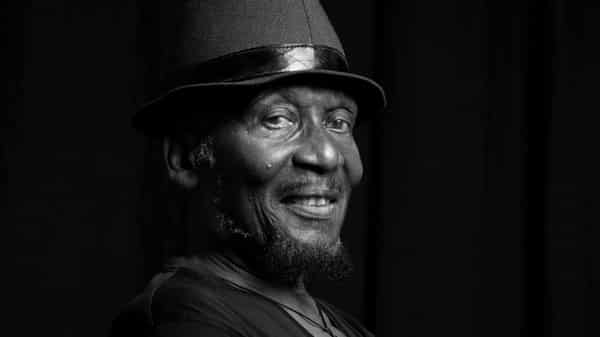
Have you heard the news? This is a line from one of the popular songs of James Chambers, known professionally as Jimmy Cliff that talked about his experience in Nigeria. And really no one was expecting to get the news of his passing on November 24, 2025, at 81 years. His death brings a heavy mark on a remarkable era of a genre of popular music.
A Jamaican ska, rocksteady, reggae and soul musician, Jimmy Cliff was considered one of the most celebrated musicians of his generation, and he is credited with helping to popularise reggae music internationally. He had told Spin in 2022, “(Reggae) is a pure music. It was born of the poorer class of people. It came from the need for recognition, identity and respect.”
His wife, Latifa Chambers, had announced his death via a statement on Instagram: “It’s with profound sadness that I share that my husband, Jimmy Cliff, has crossed over due to a seizure followed by pneumonia. I am thankful for his family, friends, fellow artists and co-workers who have shared his journey with him. To all his fans around the world, please know that your support was his strength throughout his whole career.”
And indeed Cliff had a marvelous followership for decades, his fans spinning across many continents but particularly visible in America, Europe and Africa.
Following his passing on November 24, Cliff’s albums and singles took over both the iTunes Top 100 Reggae Albums and Top 100 Singles Charts, which music executive, Maxine Stowe, said is “a testament to the enduring power of both Cliff’s catalogue and his character” and represents a cultural and emotional re-immersion into his body of work.
Born July 30, 1944 as the eighth of nine children, in abject poverty, in the parish of St. James, Jamaica, Cliff like Ivan Martin in The Harder They Come, moved to Kingston in his youth to become a musician. In the early 1960s, Jamaica was gaining its independence from Britain, and the early sounds of reggae — first called ska and rocksteady — were catching on. Calling himself Jimmy Cliff, he had a handful of local hits, including King of Kings and Miss Jamaica, and, after overcoming the kinds of barriers that upended Martin, was called on to help represent his country at the 1964 World’s Fair in New York City.
As an artiste, Cliff made deliberate and multifaceted efforts to reach across cultural and racial lines to appeal to a mainstream audience. Blessed with a sweet, mellifluous voice, he began singing at his local church at the age of six. He was inspired to write his own material when he heard ska pioneer Derrick Morgan on the radio – and asked his woodwork teacher how one might go about composing their own song.
By the time he was 14, he had moved to Kingston and adopted the surname Cliff to express the heights he intended on reaching.
He recorded a handful of singles before topping the Jamaican charts with his own composition, Hurricane Hattie.
At the time of his death, he was the only living reggae musician to hold the Order of Merit, the highest honour that can be granted by the Jamaican government for achievements in the arts and sciences. Cliff was nominated for seven Grammys and won twice for Best Reggae Album: in 1986 for Cliff Hanger and in 2012 for the well-named Rebirth, widely regarded as his best work in years.
The consummate artiste’s other albums included the Grammy-nominated The Power and the Glory, Humanitarian and the 2022 release, Refugees. He also performed on Steve Van Zandt’s protest anthem, Sun City, and acted in the Robin Williams comedy, Club Paradise, for which he contributed a handful of songs to the soundtrack and sang with Elvis Costello on the rocker, Seven Day Weekend.
A star since the 1960s, he helped to bring the sound of Jamaica to a global audience through hits such as Wonderful World, Beautiful People and You Can Get It If You Really Want.
He is known for such songs as Many Rivers to Cross, If I Follow My Mind, You Can Get It If You Really Want, Reggae Night and others, Cliff was one of five performers inducted into the Rock and Roll Hall of Fame in 2010, and is one of only two Jamaicans in the Hall of Fame, the other being Bob Marley. Cliff called the induction “a great thrill and an honour”.
In 1965, he relocated to London to work with Island Records – later the home of Bob Marley – but the label’s attempts to make his sound palatable to rock audiences were initially unsuccessful. He eventually struck gold with the 1969 single Wonderful World, Beautiful People – an upbeat, feel-good anthem; and the more politically-charged Vietnam, which Bob Dylan called “the best protest song ever written.”
By the early 1970s, he had accepted director Perry Henzell’s offer to star in a film about an aspiring reggae musician, Ivanhoe ‘Ivan’ Martin, who turns to crime when his career stalls. Henzell named the movie, The Harder They Come, after suggesting the title as a possible song for Cliff. His lead role as a gun-toting rebel in the 1972 crime drama is a cornerstone of Jamaican cinema, and was attributed as the movie that brought reggae to America. The soundtrack helped put reggae on the map.
Cliff was a spirited tenor and a gift for catchphrases and topical lyrics who joined Kingston’s emerging music scene in his teens and helped lead a movement in the 1960s that included such future stars as Bob Marley, Toots Hibbert and Peter Tosh.
Inducting him in 2010, Fugees star Wyclef Jean said he had been inspired by Cliff’s success as a young boy growing up in Haiti.
“When we saw Jimmy Cliff, we saw ourselves,” he said.
Cliff’s contributions to Jamaican music and culture were further recognised in October 2003 when he was awarded the country’s prestigious Order of Merit. The singer said his connection to fans was more important than any of the other honours bestowed upon him.