 Follow Us on Google News


 Follow Us on Google Discover
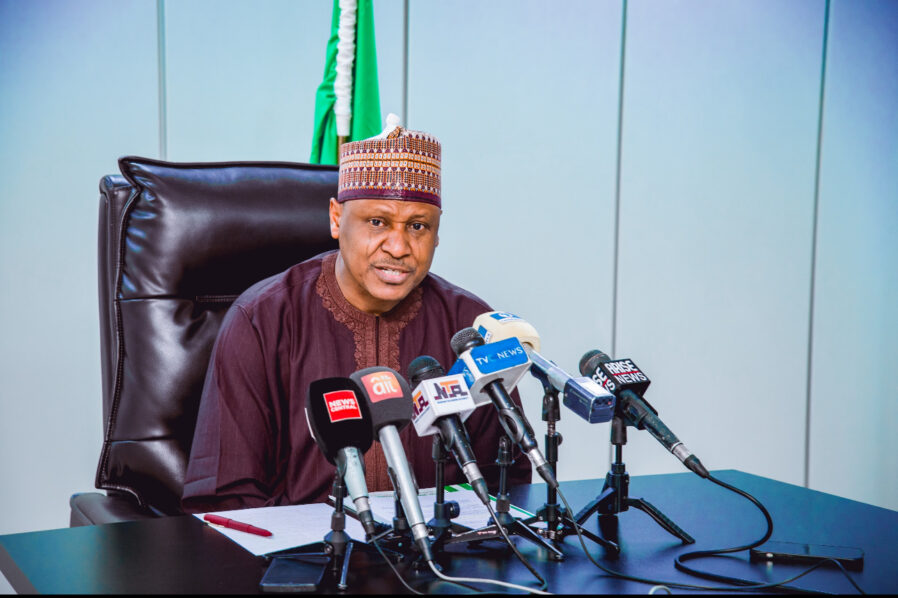
The briefing by the Minister of Information and National Orientation, Mohammed Idris on how the federal government is spending savings from fuel subsidy removal is interesting; but to many Nigerians, there is a lot of room for improvement on the part of government. This is considering the fact that the dividends of fuel subsidy removal, which government promised lavishly, are yet to be really impactful on the living standards of the average Nigerian. What is prevalent now is economic hardship, difficulty in making ends meet, and a perception that the downturn may not end soon. This, government needs to address urgently, before Nigerians run out of patience.
[ad]
At the 2024 yearly conference of the International Press Institute themed ‘’Democracy, Media Freedom and Imperative of Protecting the Nigerian Civil Space’’ which was held in Abuja recently, Minister of Information and National Orientation, Mohammed Idris said funds being saved from the stoppage of subsidy were being used to execute what he described as high-impact projects and schemes by the Tinubu administration. He listed such projects and schemes as student loan, physical and digital infrastructure, low-cost consumer credit, agricultural production, and targeted social investments. Idris stated that following the subsidy removal, Tinubu was gradually guiding Nigeria into an unprecedented energy transition phase, launching a presidential initiative to move the country from fossil fuels to Compressed Natural Gas (CNG) as fuel for vehicles and machinery. He said the Federal Government had approved fresh N110billion for payment of tuition for 120,000 students of public tertiary institutions that applied for loans through the Nigerian Education Loan Fund (NELFUND) and that 500,000 civil servants nationwide were targeted as beneficiaries in the first set of the consumer credit scheme, which is to enable Nigerians have access to funds to purchase locally-made goods on credit.
While much of what the Minister said are verifiable, there is still a yawning gap from what Nigerians expect. The fact is that Nigeria is big and so hugely populated that the impact of what the minister reeled out seems to be lost on the majority. This country is in a hurry and demands that government makes hay while the sun shines.
It is granted that the socio-economic situation in the country had been bad before the coming of the Tinubu administration and fixing it will not happen in a matter of weeks or months. But the hope was that there would be focus on human beings and Nigerians would get the kind of treatments they deserve to boost their living standard. However, close to two years in the entanglement, that hope is not getting brighter.
The government’s investment in physical and digital infrastructure, and loan for indigent students, are laudable gestures just as efforts on consumer credit schemes and energy transition are matters that touch on the average Nigerian. However, the beneficiaries so far are paltry, compared to those in dire need of transformation.
The Information Minister listed agricultural production as one of the things on which the money saved from subsidy removal is being spent. Nigerians are asking: where is the agricultural production taking place in this country? Where are the farms? What are the foodstuffs, crops or livestock being produced? When will they be ready for sale, distribution and consumption? Can Nigeria witness the years of pyramids of rice, groundnut and other export commodities so common in the 50s and the 60s? In particular, can agriculture flourish in Nigeria with the prevalence of bandits who have perfected the habit of killing farmers, kidnapping them, driving them away from their farms or even villages, or otherwise extorting them with imposed fines as precondition for farming? The government must be conscious that any gain they make from the measures listed by the Information Minister is likely to be downgraded by the persistent insecurity. Therefore security should be a priority of government.
It is equally worrisome that despite the increase in statutory allocation to the states due to the money being made from subsidy removal, this is not translating to improved welfare of the people. President Tinubu may not be in a position to dictate to the states how they spend their money; but he needs to find some ingenious ways to make this happen, given that it is his reform that is driving the national economy. Governors must take greater charge of their responsibilities to the people.
[ad]
Workers at state levels are still being owed salaries, new hands are not being recruited into the civil service to check the high rate of unemployment and ex-workers are still living in penury caused by failure of most state governments to pay the backlogs of pensions and gratuities owed them.

Besides, government is still borrowing money to run the country even as the country pays highly and regularly to service existing debts. While money being gained from subsidy removal is handy in offsetting some of the debts, government must exercise care not to expend on debt service at the expense of lifting the masses from poverty. Where it is necessary for fresh loans to be procured for specific and public purpose, the loans should be spent strictly on those projects, and the government department or agency involved should render full account publicly.
Nigeria is richly blessed to become a global economic power. There should be no hunger in Nigeria, an agrarian economy with vast arable land. Nigeria does not need to borrow money to run the country in the first place.
As Nigerians crave for prudent and transparent management of the subsidy removal to lift the nation’s economy from the current parlous state, leaders of government should explore countless avenues to directly touch on the people. Government can intervene pragmatically in basic needs of the people such as housing, public transportation, schooling of children ad health care. The money saved must be spent on relevant projects and schemes for hapless citizens and the economy to really benefit the people.
[ad]

