 Follow Us on Google News
 Follow Us on Google Discover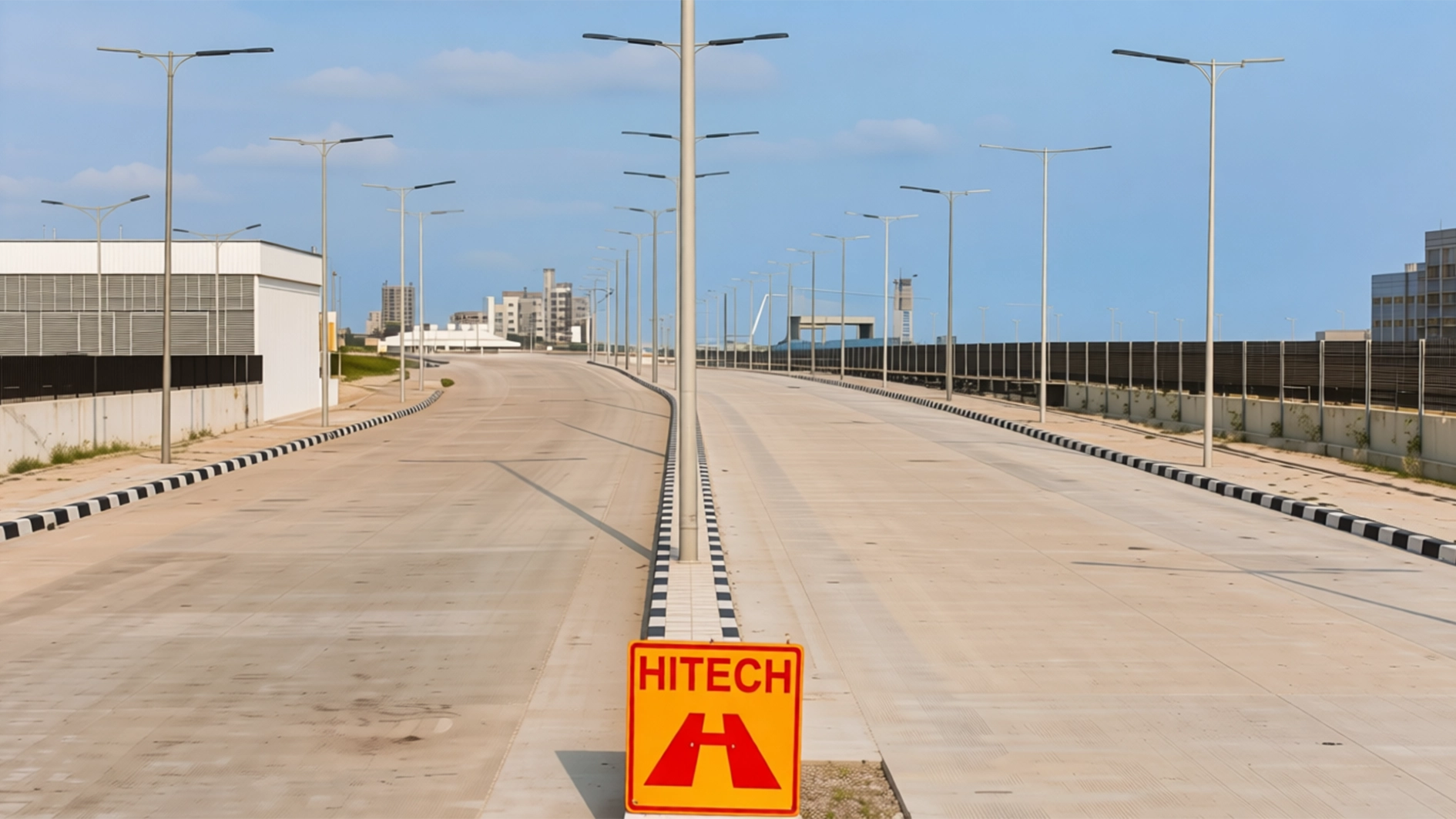
The advertised effort by stakeholders from the South West and South South through the Development Agenda for Western Nigeria (DAWN) and the BRACED commissions to harness what they described as vast economic opportunities to be presented by the Lagos-Calabar coastal highway is highly instructive. The task forms part of the mandate of the two separate regional bodies, and such opportunities need to be swiftly tapped to improve the wellbeing of the people and help achieve the development aspirations of the two zones.
The bodies must recognise from the outset that whatever plans they have on development would amount to nothing if the security of lives and property is not factored into it. They should learn not only from the pervasive insecurity and its adverse consequences in the country, but also from the failure of similar development programmes across the country, which have collapsed under insecurity.
Beyond this, Nigerians, particularly the people of the two regions, are not encouraged that before the Lagos-Calabar road project started, several new and similar opportunities had opened to all the regions in the country to remarkably develop their domains, but have not been tapped, even by the DAWN and BRACED. And it can be argued that inherent in the untapped opportunities are strong potentials for development.
Notably too, the two bodies set up and designed as specialised institutions to facilitate sustainable development, regional integration and economic growth in their separate zones are yet to record remarkable achievements since they were established, eliciting doubt about their capacity to deliver on the new plan. The perception is that they exist only in name, and it is difficult to blame sceptics who perceive the current talk about the highway as politics, to perhaps endorse the Lagos-Calabar road project amidst criticism of the alleged failure to pass through the due process of approval and funding, as well as costing more than expected. In any case, DAWN and BRACED have a responsibility to prove to the world that they are not executing an ‘endorsement contract’ and that they have the capacity to really tap the claimed opportunities and would do so for the benefit of their areas.
Stakeholders from the two zones held a high-level engagement in Ibadan, Oyo State capital, recently, where they described the 75-kilometre Lagos-Calabar highway under construction as a potential catalyst for long-term national economic transformation if properly planned and managed. In attendance at the event convened by DAWN were its representatives and those of the BRACED Commission, comprising Bayelsa, Rivers, Akwa Ibom, Cross River, Edo and Delta states, alongside government officials, development experts and private sector operators.
The participants agreed on the need for joint planning frameworks to maximise investments along the corridor. They noted that strategic utilisation of the opportunities created by the coastal highway could significantly expand Nigeria’s economic output, with projections suggesting the country’s Gross Domestic Product (GDP) could grow to between $1.4 trillion and $14 trillion within the next 50 years.
At the event themed ‘Unlocking the Economic Potentials of the Lagos-Calabar Coastal Highway: Land Governance and Regional Alignment for the South West Corridor’, the Director General of DAWN, Dr Seye Oyeleye, described the highway as Nigeria’s biggest infrastructure initiative in six decades. According to him, the engagement was convened to ensure that states along the corridor avoid fragmented development approaches that have undermined previous infrastructure projects. Oyeleye specifically noted that collaboration among Lagos, Ogun and Ondo states, alongside their South South counterparts, would enable the creation of industrial, green and tourism zones along the highway.
The DAWN and BRACED were established to do basically the same thing, which is to foster regional cooperation and economic integration, improve the business climate and attract investors with a view to achieving sustainable development for the collective benefit of the people of their regions. It is, however, a matter of concern that DAWN and BRACED have so far not justified their establishment. To many Nigerians, the story has been that of a dying vision due to a lack of commitment on the part of the leaders who initiated it to see the bodies achieve their goals. There is also a perception that the commissions are now being used to achieve selfish political ends.
Following President Bola Tinubu’s signing, on June 9, 2023, of the Electricity Act 2023 to empower state governments, companies and individuals to generate, transmit, and distribute electricity, expectations were that the regions would be liberated from decades of irredeemable epileptic power supply through the national grid that breaks down easily and frequently. This expectation was because regions such as the South West, which have advocated true federalism as an elixir for genuine development, as witnessed in the days of the Western Region government, would seize the advantage of the law to provide reliable electricity for their people. This is yet to manifest. Yet, epileptic electricity supply has scuttled the realisation of the development goals of the states and the region for a long time, killed social life, hampered efforts by indigenes to become self-reliant, spiked unemployment level and consequently increased the level of criminal activities.
This is therefore an opportunity to transform the South West and South South that neither of the two regional bodies has yet to be seen tapping. The same goes for the rail transport system that the Federal Government has deregulated through a constitutional amendment in 2023, which allows states to establish their own rail systems, effectively breaking Federal Government’s monopoly via the Nigerian Railway Corporation (NRC). This regional development opportunity has not been embraced by DAWN and BRACED. Nor have they tapped the opportunity now opened to states to establish modular refineries and invest in other areas in the oil industry following the deregulation of the downstream sector.
These are the facilities that, when put in place, would naturally attract foreign investors. But in how many places is anything serious happening in these regards? If DAWN and BRACED have not been able to take advantage of the opportunities inherent in the deregulation in the power, rail, and oil sectors, what will be the basis for believing that they will be able to do anything serious with the Lagos-Calabar coastal highway?
Oyeleye spoke about creating industrial, green and tourism zones along the highway. Won’t the expected investments need a constant power supply to operate? Oil exploration in the Niger Delta involves frequent movement of heavy equipment, usually from Lagos to the region, which is done by road in the absence of a rail system, thus putting pressure on the roads. These should be of serious concern to both regions.
No doubt, regional cooperation should be encouraged as a measure to boost federalism and strengthen development programmes. Such cooperation should go beyond the optics and transform into practical possibilities. Failure of regional bodies in this regard will amount to insincerity and failure by those who established them. Therefore, DAWN and BRACED should show the capacity to deliver. The governors should exhibit the political will to make them work. They must prove their commitment to the transformation of their states and regions.

