 Follow Us on Google News
 Follow Us on Google Discover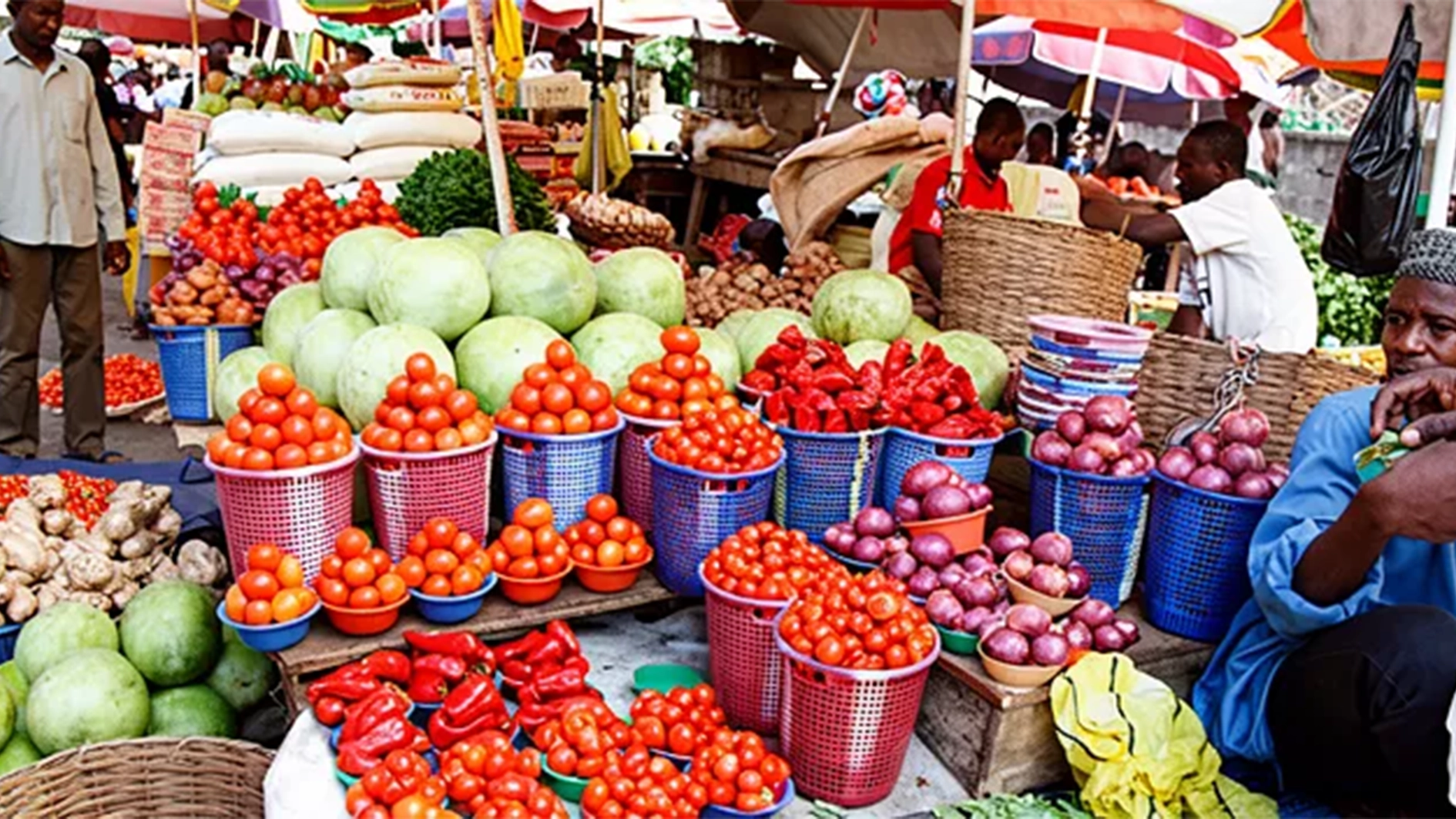
Barring the potential adverse effects of the war in the Middle East, the recent moderation in the prices of food items offers a flicker of hope. If nothing else, the era of volatile price changes seems to be behind Nigeria, at least in the meantime. Coming after a year of debilitating food hikes that impoverished thousands of households and pushed more than a handful of individuals to the brink of destitution, that moderation is significant.
It means that income earners can plan next day’s meal expenditure with a significant level of certainty, and that they would not need to take out emergency loans to make up for an unexpected spike in prices. That is a huge relief and a substantial pivot from the dark days of sporadic hourly price adjustments that trapped the majority of the working class in a survival crisis.
At its peak in 2024, Nigeria’s composite food inflation reached 41 per cent, official statistics revealed. Still, the majority baulked at the government-backed data, arguing that the numbers understated the real crisis. From 2023 to 2024, prices of staple foods, including rice, beans, potatoes, yams and garri had more than doubled. Some of the food items had become unaffordable to many low-income earners. But it was more food deprivation as families pulled back from other essentials just to prevent empty stomachs. Health and education, key productivity drivers, became unaffordable luxuries in many homes, thus entrenching the underdevelopment trap.
The country seems to have rolled through the tragedy.
For the first time since 2015, food inflation returned to a single-digit figure in January 2026, while the month-on-month price change curve consolidated the deflationary momentum. Food price increases, in the past few months, have pulled back so fast and some items so cheap in relative terms that some experts have raised questions about the sustainability while advocating measures to protect farmers.
For instance, a former Anambra State governor and presidential candidate of the Labour Party in the 2023 election, a few days ago, cautioned against celebrating low market prices, warning that importation of cheap food could undermine the survival of farmers in the long run. A private sector advocate, Dr Muda Yusuf, had earlier called on the government to set up a price stabilisation mechanism to sustain the livelihood of farmers.
Indeed, Nigeria can crush farmers just to bring down prices to a level considered affordable. Millions of Nigerians should not also starve to death to make farmers happy. There must be a delicate balancing act in achieving both prosperous farmers and food sufficiency. But more importantly, this is not a choice to be made by fiat but through thorough research on best farming practices and the country’s comparative advantage in agriculture.

For millions of Nigerians who spend nearly 100 per cent of their income on food, the sharp drop in food inflation is not a mere statistical footnote but a matter of survival. For them, the lower the prices of food, the merrier.
On the other hand, farmers think of higher prices as a guarantee of better living conditions. When farmers are consigned to the lowest economic cadre, farming perpetually remains an inferior good, which everybody dumps as soon as income level increases.
But this is more of a problem of scale rather than prices. Otherwise, how do farmers in Europe, America and Asia hold their heads above crowds? It is not because food prices are at a cut-throat level in those regions; it is because farmers produce at a scale that their small profit margin becomes a huge sum when aggregated. This should be the Nigerian government’s measure of success in the design of policies that seek to make farming attractive. Price stabilisation mechanism may offer a short-term relief to farmers, but it will not deliver the long-term benefits, freedom and sustainability that the country will get from large-scale farming.
A country that survived on agriculture before crude distorted the sustainable path to economic prosperity should be bold to shun tokenism in the guise of policy design to revive the sector that once fed its economy. Insecurity thrives in different parts of the country because of the large swaths of uncultivated lands across the country, large enough to accommodate an entire city taken as hostages. It is time the government married its food sufficiency and security strategies. Nigeria should engage the youths to cultivate barren lands to grow the food the country needs and to grow the stunted economy.
The easing of food prices deserves acknowledgement. It suggests that certain supply-side pressures – harvest cycles, improved logistics in some corridors and relatively stable currency – may be yielding results. But the relief should not be mistaken for recovery, particularly with the raging Middle East crisis. A few months of price moderation do not erase the cumulative damage caused by prolonged inflation. Many households’ depleted savings, scaled-back nutrition and increased debt stocks just to cope with previous spikes.
Also, some items are merely falling from historically high levels, meaning that what is observed as a steep fall is only a measure of the extremely high 2023/2024 base effect. The current prices still represent a steep, heavy burden compared to the pre-economic reform era, which means much more work is required to make most of the population better off.
As a validation that the hellish days may not be over, the structural drivers of food inflation – insecurity in key agricultural belts, high input costs, poor access to farmers and unavailable storage facilities – remain stubbornly entrenched. This is all the more reason that the government should treat the food price decline as temporary and a validation of what is possible when the country resolves food production and supply constraints, rather than a vindication of failure and poverty of ideas. The urgency of the moment requires that solutions to long-standing agricultural challenges are ring-fenced, and appropriate policy options developed to tackle the abiding constraints.
Most importantly, nothing short of food sovereignty can change the course of food security in Nigeria. This country cannot continue to import staple food items like rice and potatoes and expect to sustain affordable food prices.

