 Follow Us on Google News
 Follow Us on Google Discover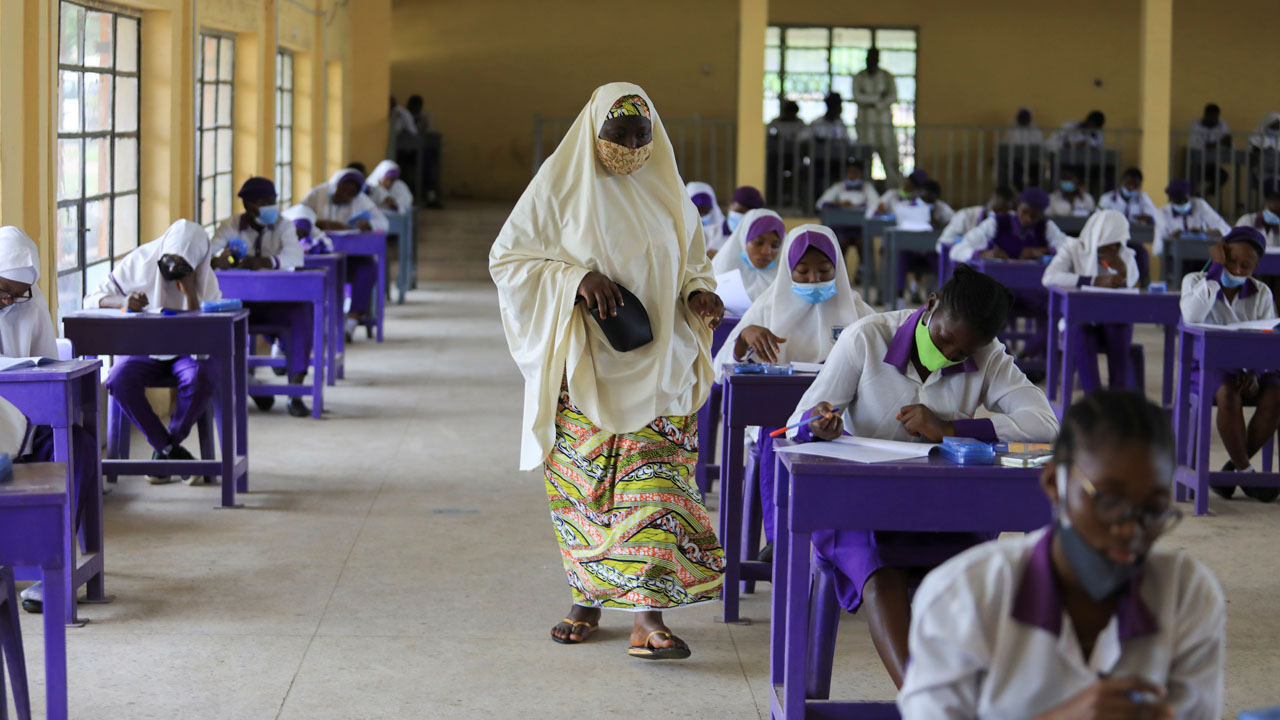
The warning by Nasarawa State Government, through its Universal Basic Education Board (NSUBEB), to prosecute parents of out-of-school children (OOSC) in the state is lofty. It is an initiative that, if thoroughly pursued, can positively re-orientate hitherto lackluster attitude of many parents in that region to education. The Executive Chairman of NSUBEB, Dr. Kassim Muhammed-Kassim, explained that the initiative is part of broader efforts to improve literacy and ensure quality education statewide.
He also maintained that free and compulsory basic education is a fundamental right of every child; therefore, the Nasarawa State Government is determined to tackle the concerns of out-of-school-children (OOSC) in its jurisdiction. Urging public cooperation, Muhammed-Kassim warned that parents or guardians who fail to enrol their children or wards in school will be prosecuted under the state’s Child Rights Law.
While this warning should serve as a wake-up call to erring parents, it is also a call to duty for government to fix numerous challenges of the education sector in its domain. Nasarawa’s educational situation is very similar to that of most other parts of northern Nigeria which are battling substandard structures, lack of basic utilities like chairs, inadequate teachers, improper teacher placement, and staff truancy. These problems should be effectively addressed.
Sanctioning parents of OOSC may significantly improve school attendance in Nasarawa State. However, the policy or law should be strictly enforced to ensure total compliance. Importantly, parental dereliction constitutes only a marginal portion of the problem, as the current OOSC rate is attributable to diverse factors.
Nigeria bears the world’s highest OOSC burden, with one in five of the world’s out-of-school children being Nigerian. Recent estimates for OOSC in Nigeria hover around 18.3 – 20 million, representing 15% of the global figure, thus pushing the country into the cesspit of intellectual bankruptcy.
According to UNESCO, one in every three Nigerian children is out-of-school: 10.2 million at the primary level, and 8.1 million at the junior secondary school (JSS) level, while 12.4 million children never attended school, and 5.9 million left school early. The statistics are sobering and thought-provoking.

Poor governance is a major catalyst for OOSC. Education is not a priority for many state governments while the sector contends with poor funding, inadequate facilities, misconceived policies, and protracted labour disputes, among others.
The combined effects of these have drastically lowered the standards of education including in institutions of higher learning. Nigeria’s current highest-ranked post-secondary school, the University of Ibadan, places a distant 801 on the global pedestal.
Every Nigerian child, regardless of their peculiar circumstances, has the right to formal education. The government is constitutionally required to ensure equal and adequate educational opportunities to all citizens. As the constitution further directs, the government should strive to eradicate illiteracy and, when practicable, provide free, compulsory, and universal education up to tertiary levels, and also adult literacy programmes.
Section 15 of the Child’s Right Act reiterates the right of the Nigerian child to free, compulsory, and universal basic education, and mandates the government to provide the same. Similarly, it enjoins parents and guardians to ensure that their children or wards attend and complete primary and junior secondary education, and to encourage those not interested in senior secondary education to learn an appropriate trade.
Therefore, government and parents owe the Nigerian children a qualitative education jointly and severally. Parents must enrol their children in schools, and the government remains duty-bound to provide learning institutions. The government must first ensure the existence of good schools before compelling attendance.
Insecurity has been identified as a key contributor to the current education crisis, especially in Northern Nigeria, which has an estimated 15.23 million OOSC (about 80% of the national total). Terrorists have not spared the Nigerian child. Schools have become theatres of ‘war’ as mass student abduction is a recurring decimal in Northern Nigeria.
Insecurity has forced the closure of hundreds of schools, including unity schools, in the North. To this day, a countless number of students, Leah Sharibu inclusive, remain in captivity after several years of abduction. The Safe Schools Initiative, launched in 2014 to secure school facilities nationwide is grossly ineffective. Government must reverse this notion if it hopes to encourage parents to send their wards to school.
Poverty constitutes another fundamental barrier to mass school enrolment in Nigeria. A staggering 133 million Nigerians are still living in multidimensional poverty! This sad reality also directly impacts children.
The UNICEF Nigeria Child Report of 2025 asserts that two in every three Nigerian children live in multidimensional poverty, lacking access to essentials such as quality education, healthcare, nutrition, protection, clean water, etc. Furthermore, socio-economic challenges, such as early marriage, the almajiri system, and the now culturally materialistic lifestyle (get-rich-quick syndrome), play a considerable role in the continued rise in child illiteracy. Government must strive to overcome the lack of political will as the primary factor in Nigeria’s staggering OOSC rate.
Government at all levels needs to work hard to redeem the education system as a matter of urgency. Coordinated actions should be taken to tackle all the problems undermining the growth, progress, and stability of the education sector.
The government must ensure that schools are secure and safe for learning. In addition, it must heavily invest public funds in education and make education attractive and rewarding.
Public schools should be tuition-free and adequately equipped with functional libraries. Students should enjoy free study materials and meals, and outstanding students should be awarded scholarships. Teachers should be decently compensated to attract the best talents; existing technical and vocational training schools should be revamped, and inter-state sport competitions should be reintroduced.
As the Executive Director of the Hope For Second Chance Foundation, Ibukunoluwa Otesile warned: Nigeria risks failing its next generation if immediate action is not taken. Government should treat children education with the seriousness it deserves.

