 Follow Us on Google News


 Follow Us on Google Discover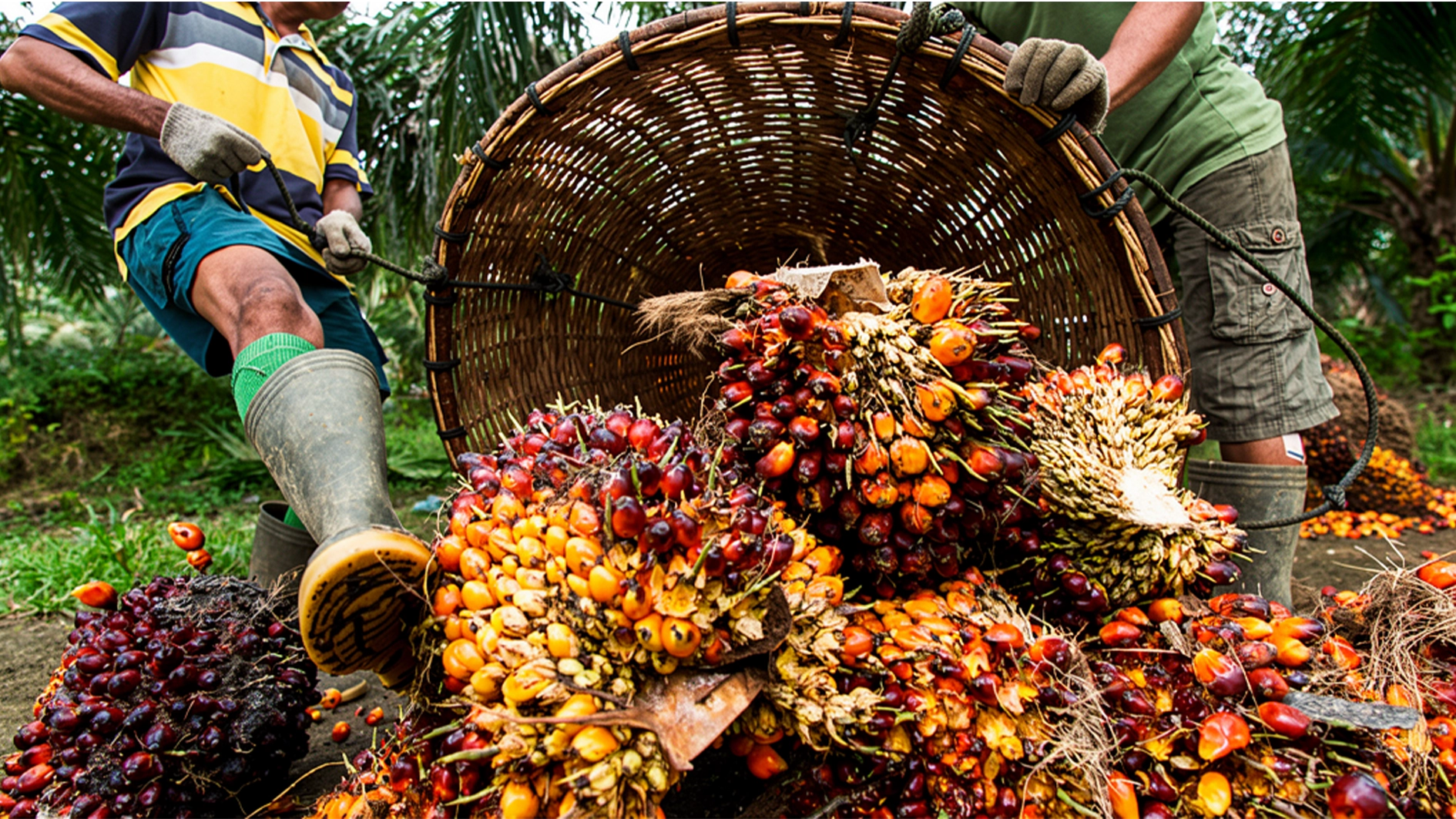
The Federal Government’s decision to initiate the cultivation of 100 million palm oil trees, though commendable, does not constitute a silver bullet that would cure the reversal of fortune that decades of neglect have foisted on the country.
Nigeria, once the world’s largest producer of palm oil, is now nestled in the fifth position in the pecking order and spends a princely $600 million yearly importing palm oil, despite having the natural resources and historical expertise to produce it locally.
In addition, the National Bureau of Statistics’ (NBS) Foreign Trade Reports over time show that Crude Palm Oil (CPO) and palm oil fractions consistently top the country’s agricultural imports, with import values exceeding N100 billion every year.
Falling from its enviable position of controlling 40 per cent of the global market, to importing about 50 per cent of palm oil used locally did not just happen suddenly, it took decades to manifest as a result of diverse missteps, policy failures, use of low-yielding seedlings, failure to invest in plantations, smuggling and cross-border arbitrage, poor processing capacity, deployment of outdated technology, structural challenges, competition from cheap imports from West African and South-East Asian nations, as well as issues bordering on land and access to land.
The consequences of Nigeria’s shift from global leader to net importer have manifested in many ways, including draining the country’s finances. For instance, in 2021, the country imported 309,911 Metric Tonnes (MT) of palm oil from Malaysia. In 2022, the imported quantity stood at 227,035 MT, and jumped to 304,043 metric tonnes in 2023. This was a 77,008 MT increase from 2022.
The devaluation of the naira and increased local production of palm fruits notwithstanding, data from the Malaysian Palm Oil Council (MPOC) further indicated that Nigeria’s imports of Malaysian Palm Oil surged by 34 per cent in 2023.

While years of stagnant output growth and rising local demand have stretched the country’s capacity to its elastic limits, a decline in the international price of crude palm oil, experts say, always leads to increased palm oil imports, as well as smuggling from neighbouring West African countries.
When Nigeria led the pack in the 1960s and 1970s, present-day palm oil giants from South-East Asia – Malaysia, Indonesia and Thailand – were either not in the frame or had not yet begun commercial palm oil production.
Indeed, according to experts, when Nigeria had extensive oil palm plantations, Malaysia and Indonesia, which lacked genetic diversity, visited Nigeria to acquire oil palm genetic resources and exchange planting materials.
Today, many Nigerian smallholder farmers are embracing the “Malaysian supergene,” a high-yielding, genetically superior oil palm variety, in their bid to improve productivity.
Recently, the Plantation Owners Forum of Nigeria (POFON) explained that 80 per cent of palm oil planted areas were either wild trees or managed by smallholders and medium-sized plantations with an estimated oil yield of fewer than 0.5 tonnes per hectare. Twenty per cent of the planted areas are managed by commercial estates with an estimated oil yield of 1 to 2.3 tonnes per hectare. This gap between production and demand has led Nigeria to become a net importer of palm oil to meet local demand.
Before the latest moves by the Federal Government, the Central Bank of Nigeria (CBN) launched the Oil Palm Development Initiative in 2019 to reverse the trend and reduce dependence on imports. This was after palm oil production dropped to 1.12 million metric tonnes in 2018, prompting national concern.
The bank then confirmed that the country was spending millions of dollars yearly on importing palm oil, putting further pressure on and depleting its foreign exchange reserves. That initiative, which targeted the establishment of 100,000 hectares of plantations in the short term and 500,000 hectares in the long term, was adjudged not as successful as envisaged despite stakeholders across the value chain, including smallholders, commercial farmers, and processors, being offered low-interest and long-term loans.
The bank reportedly partnered with 11 South-East and South-South states in implementing the initiative, which also restricted access to foreign exchange for palm oil imports.
A further suggestion that the initiative may not have achieved its expected goal can be gleaned from the National Palm Produce Association of Nigeria (NPPAN) in 2021, which called on the CBN to set aside a minimum of N200 billion in intervention funds to support smallholder oil palm farmers under the initiative.
The group also called on the Federal Government to urgently enact a law establishing the National Oil Palm Development Council to regulate, incentivise investment, fund and provide a level playing field for the industry.
Furthermore, it demanded improved funding for the Nigerian Institute for Oil Palm Research (NIFOR) to increase research and the production of hybrid seedlings, and urged the CBN to persuade the Bankers’ Committee to accept oil palm plantations as collateral and to include them in the National Collateral Register (NCR).
It is in this light that the Federal Government’s contemplation of restoring the country’s long-lost position in the palm oil value chain, laudable as it is, requires more than mere pronouncements. Given the role that agriculture played in the country’s economic development in the years of yore, a coordinated approach to supporting smallholder farmers, incentivising private-sector participation, rejuvenating ageing plantations, and modernising processing infrastructure is of utmost importance.
As a mono-economy still plagued by the oil boom era and policy neglect, the country’s managers must come to terms with the fact that, at some point, oil will dry up, while agriculture will remain a major lifeline, ensuring food security and economic stability.
While the country’s continuous importation of about 50 per cent of its palm oil demands weakens the naira, its steady reliance on Malaysia’s supergene specie does not guarantee, or represent a sustainable approach to boosting long-term improved productivity.
The country must be ready to take drastic actions, including putting in place a comprehensive strategy that guarantees the use of only certified, domestically developed high-yield seedlings, carrying out concurrent investment in processing infrastructure and market access, and integrating with nucleus estate and smallholder support schemes. It is only by so doing that the country can reduce its dependence on imports, strengthen its economy, and reclaim its lost position in the league of palm oil-producing nations.

