 Follow Us on Google News


 Follow Us on Google Discover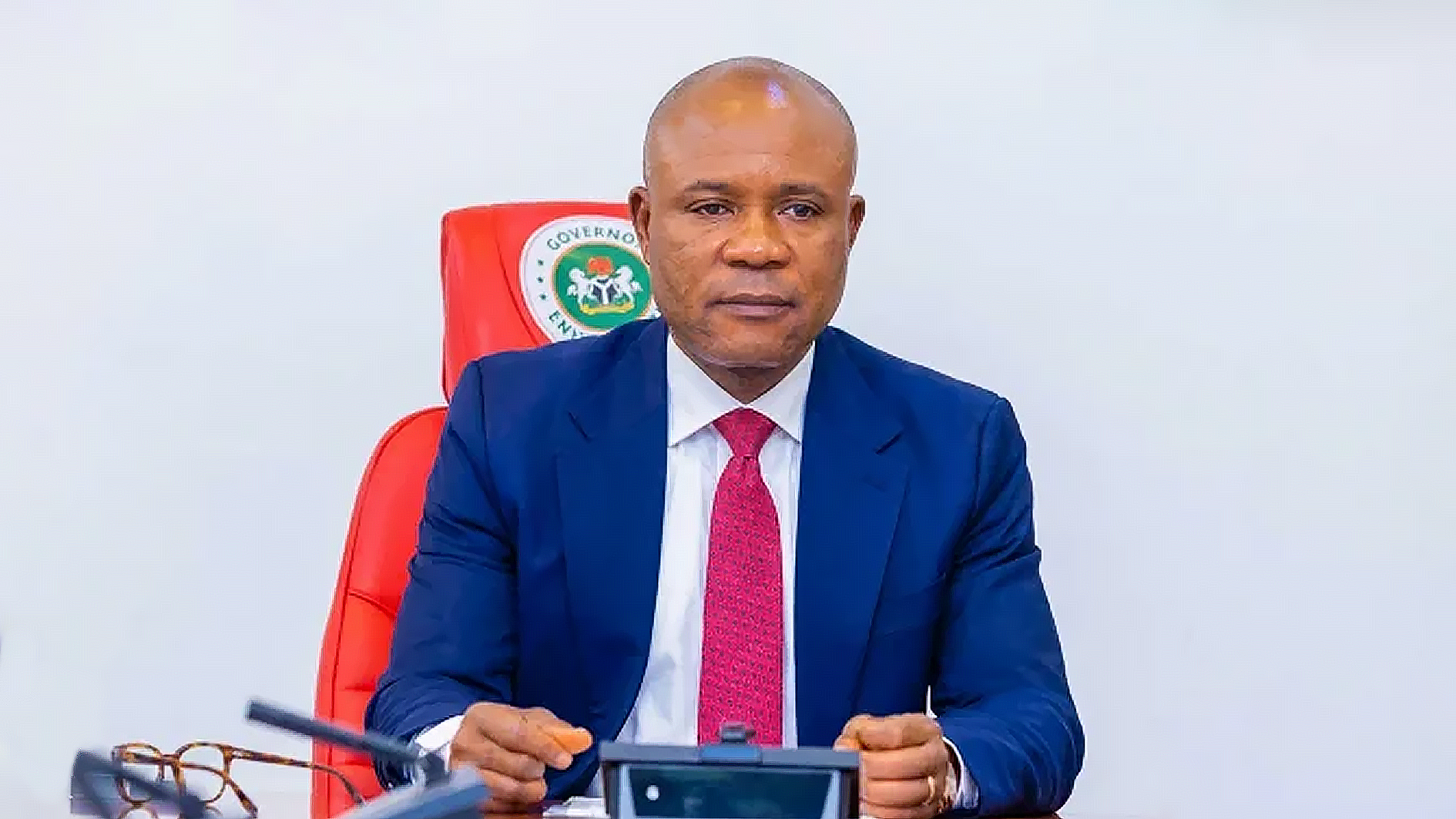
By Chinedu Ochinanwata
On May 29, 2023, Dr. Peter Ndubuisi Mbah took the oath of office as the sixth executive governor of Enugu State, and with that single act, a new chapter opened for a state long celebrated for its calm, its culture, and its coal-mining heritage, but also long associated with a civil-service-driven economy that had grown too slowly for too long. Barely three years later, the verdict from residents, commentators, and independent observers alike is strikingly consistent: Enugu is a different state today. Roads that were once impassable now carry commerce. Villages that once sat in darkness now buzz with activity. Classrooms once starved of basic tools now hum with technology. And a state that once depended overwhelmingly on federal allocations is steadily building an economy of its own.
This is the story of a “silent achiever” turned “paragon of dedication,” a former oil and gas entrepreneur who walked away from the boardroom of Pinnacle Oil and Gas Limited a company he built from a modest startup into one of Nigeria’s downstream powerhouses to apply the same discipline, data-driven thinking, and relentless execution to public service. It is the story of a governor who did not simply promise change, but who set out, with the precision of a businessman and the compassion of a public servant, to prove that government can work.
His mantra, “Tomorrow Is Here,” is not just a campaign slogan. It has become the philosophy of an administration determined to compress years of underdevelopment into months of visible, measurable progress.
Born on March 17, 1972, in Enugu, Peter Ndubuisi Mbah hails from Owo in Nkanu East Local Government Area. He is a maritime lawyer, financial analyst, and businessman whose academic journey took him through the Lagos State University, the Lagos Business School, the Nigerian Law School, the University of East London, the University of Navarra, and Oxford University. He is a Fellow of the Certified Institute of Public Administration and Management, and a member of both the Nigerian Institute of International Affairs and the Nigerian Bar Association.
Before politics, Mbah had already proven himself in the private sector, founding Pinnacle Oil and Gas Limited and steering it to become one of the most significant players in Nigeria’s fuel-importation and downstream oil industry. That entrepreneurial rigor the instinct to measure everything, cut waste, and chase results is widely regarded as the defining feature of his approach to governing Enugu State.

In May 2022, Mbah secured the People Democratic Party’s gubernatorial ticket with an overwhelming 790 of 807 delegate votes, before going on to win the 2023 general election. Since taking office, his government has anchored its work around the “Tomorrow Is Here” development agenda, built on three pillars: economic expansion and industrialisation; infrastructure and ease of doing business; and human capital and social investment, all in service of an audacious target of growing Enugu’s economy from about $4.4 billion to $30 billion by 2031.
Perhaps nothing captures the change in Enugu’s fortunes more starkly than the state’s revenue profile. Under Governor Mbah, Enugu’s Internally Generated Revenue climbed dramatically from roughly ₦37.4 billion at the close of 2023 to about ₦144.7 billion by September 2024, a jump of well over 280 percent within a single administrative cycle. That is not a cosmetic improvement; it reflects a deliberate strategy to reduce the state’s historic dependence on monthly federal allocations and to fund development from resources generated within Enugu itself.
The administration backed this fiscal ambition with budgeting choices to match. Enugu’s capital expenditure allocation has consistently dwarfed its recurrent spending, with capital votes running as high as 86 percent of the budget in some years an extraordinary tilt toward actual project delivery rather than the bureaucratic overhead that has historically consumed the budgets of many Nigerian states.
This fiscal transformation is paired with an aggressive push to reposition Enugu’s economy away from a civil-service-dependent structure toward one anchored on investment, enterprise, and industrial expansion. The government has pursued business-enabling reforms including the 2026 Business Enabling Reforms Action Plan (BERAP) designed to cut red tape, speed up the process of registering and running a business, and make Enugu one of the most attractive investment destinations in Nigeria. Analysts tracking the state’s trajectory describe an administration moving with the discipline of a private company: closing investment deals in record time, drafting transaction documentation with speed, and treating every sector as an opportunity for measurable transformation.
Infrastructure has been the most visible signature of the Mbah years. The governor campaigned on a promise to construct 10,000 roads across Enugu State within eight years, an ambitious target that skeptics considered close to impossible. Yet within roughly sixteen months of the administration’s road programme taking off, more than 730 road projects had already been completed, a pace unmatched by any of his predecessors. To sustain that momentum, the state commissioned its first-ever government-owned mega asphalt plant, guaranteeing a steady, cost-effective supply of asphalt for ongoing and future projects rather than leaving the state at the mercy of private contractors and volatile material costs.
More than 1,200 urban and rural roads are reported to be under development across the state, transforming how goods move from farms to markets, how children get to school, and how businesses reach customers. Flagship projects such as the dualisation of the 43.7-kilometre Penoks–Abakpa–Ugwogo Nike–Opi Nsukka corridor illustrate the scale of ambition: these are not cosmetic patch-and-fill jobs, but structural investments meant to serve the state for generations.
Water supply, long one of Enugu’s most painful daily struggles, has also seen a historic leap. The state’s water production capacity has grown from an unreliable trickle of about two million litres a day to a commissioned 70 million litres per day, with an ambitious target of 120 million litres per day on the horizon through the expansion of the 9th Mile 24/7 Water Scheme. For a state where residents once queued for boreholes or paid steep prices for water tankers, this is not a minor statistic, it is a fundamental improvement in daily quality of life.
The transportation sector has undergone its own quiet revolution. The administration launched Enugu Air, a state airline aimed at improving connectivity for residents and investors alike, alongside a CNG Mass Transit Programme designed to offer cleaner, cheaper public transportation. Ultra-modern transport terminals have been built from the ground up at strategic locations such as Holy Ghost, Abakpa, and Garriki, modernising how residents move around the state. The 042 Ride Taxi Scheme, meanwhile, has been introduced as a youth-employment vehicle as much as a transportation solution, putting young Enugu residents to work while strengthening the state’s public transport network.
If there is one project that has come to symbolise the Mbah administration’s ambition, it is the Enugu Smart Green Schools initiative, a plan to build state-of-the-art, technology-enabled schools in all 260 wards of Enugu State. Backed by an investment reported at roughly ₦420 billion, these schools are being equipped with digital whiteboards, science laboratories, solar power systems, and free daily meals for pupils, with plans to feed over 300,000 children a day by September 2026 under the Smart Green School nutrition programme.
This is an education policy built for the twenty-first century rather than the twentieth. Rather than simply renovating old classroom blocks, the administration set out to build a genuinely new kind of public school, one where a child in a rural ward in Enugu has access to the same digital learning tools as a child anywhere else in the world. The government has backed this vision with its wallet: education has consistently received around 33 percent of the state’s annual budget, a figure that comfortably exceeds the benchmark recommended by UNESCO for developing countries and stands as one of the clearest signals of where the administration’s priorities lie.
Higher and vocational education has not been neglected either. The Enugu State College of Nursing Sciences, Parklane and Awgu, has been upgraded and now exposes students to modern learning techniques and globally recognised certifications. Beyond formal schooling, the administration has invested heavily in skills acquisition, training tens of thousands of young people in ICT and vocational skills, a direct response to youth unemployment that equips Enugu’s next generation not just with certificates, but with employable, marketable skills.
Governor Mbah’s healthcare reforms follow the same underlying philosophy that runs through his entire administration: build systems, not stopgaps. The government has committed to ensuring that every one of Enugu’s 260 wards hosts a fully operational, modern primary healthcare centre, closing the historic gap between urban and rural access to basic medical care. This is being complemented by investment in secondary and tertiary facilities, expanded health insurance coverage, and the deployment of digital health systems designed to improve both efficiency and accountability in service delivery.
The centrepiece of this healthcare vision is the Enugu State International Hospital, a 300-bed specialist quaternary care facility built with a clear and audacious goal: reversing Nigeria’s costly medical tourism trend by making Enugu itself a destination for world-class healthcare. Alongside it, the state has established a DNA testing centre, a first-of-its-kind facility in the region that strengthens both healthcare delivery and the justice system’s forensic capabilities. Taken together, these investments mark a shift away from reactive, crisis-driven healthcare toward a preventive, sustainable model of health governance, one that a coalition of civic and good-governance stakeholders in the state has publicly praised as a landmark achievement of the administration.
For years, the South-East region’s economy, including Enugu’s, suffered under the shadow of sit-at-home orders enforced by militant elements associated with the proscribed Indigenous People of Biafra (IPOB). Businesses shuttered on enforced “sit-at-home” days, schools emptied, and economic activity stalled repeatedly, draining billions from the regional economy over the years. Governor Mbah took a firm, frontal stance against this disruption, refusing to allow fear to dictate the state’s economic calendar.
His administration paired that political will with practical investment: technology-driven surveillance systems and integrated command centres have been deployed to strengthen security monitoring and response across the state. The results have been widely noted, a marked reduction in the crime and disruption associated with sit-at-home enforcement, and a corresponding rebound in economic confidence. This achievement was among the key reasons Governor Mbah was honoured as Governor of the Year 2024 at a leadership conference recognising outstanding subnational governance in Nigeria, with organisers citing the intelligence, creativity, and consistency he brought to restoring order and stability across Enugu State.
Good governance requires the rule of law, and Governor Mbah’s administration has quietly but decisively reformed Enugu’s justice sector, recognising that without a credible legal framework, investors will not commit their capital and businesses will not thrive. New legislation, including the Enugu State College of Nursing Sciences Parklane and Awgu Bill of 2024, has been passed alongside five forward-looking executive orders that provide legal backing for various government policies and initiatives.
Within the courts themselves, the transformation has been just as significant: digital case management systems have been introduced to speed up and modernise court processes, alternative dispute resolution centres have been established to ease pressure on the formal court system, specialised courts have been created to handle specific categories of cases more efficiently, and a Witness Support Unit now exists to protect and empower witnesses in criminal proceedings. These reforms may not make daily headlines, but they form the legal bedrock on which Enugu’s broader economic ambitions depend.
Recognising that Enugu’s path to a $30 billion economy cannot rest on infrastructure and services alone, the Mbah administration has moved to reposition agriculture as a commercially viable, mechanised, value-chain-driven sector rather than a subsistence activity. The procurement of tractors and modern farming equipment has been central to this push, alongside efforts to integrate rural connectivity, improved roads reaching farming communities, directly into the state’s industrial strategy. Unlike many states that concentrate almost all investment in their capital cities, Enugu’s approach has deliberately extended development into rural areas, integrating agriculture and industry into a single, more equitable value chain.
The administration has also turned its attention to Enugu’s cultural and tourism assets, recognising their economic potential. Landmark facilities such as the Presidential Hotel and the International Conference Centre in Enugu are being upgraded to attract more visitors, conferences, and major events to the state. A new five-star convention centre, reportedly capable of seating up to 20,000 people, is being developed as a first-of-its-kind facility that positions Enugu as a serious contender for national and international events.
Nor has the administration neglected Enugu’s beloved football heritage. Governor Mbah’s support for Rangers International Football Club, a team widely regarded as far more than a sporting institution, but a symbol of Igbo identity and pride has been commended by stakeholders as a recognition of the deep cultural role sport plays in the life of the state.
The scale and pace of these achievements have not gone unnoticed nationally. Governor Mbah was named Governor of the Year 2024, with organisers describing his leadership as a benchmark for transformative governance not just in Enugu, but across Africa. Civic coalitions, former state lawmakers, and independent commentators have since echoed similar praise, pointing to visible, on-the-ground evidence. Smart Green Schools rising in all 260 wards, healthcare centres reaching underserved communities, roads connecting once-isolated villages, and a state increasingly able to fund its own development as proof that the “Tomorrow Is Here” agenda is more than rhetoric.
Beyond his public office, Governor Mbah’s commitment to service predates his governorship. Through the Peter Mbah Foundation, a humanitarian initiative dedicated to improving lives in underserved communities, he has long demonstrated a personal philosophy rooted in philanthropy and education values that now visibly inform the priorities of his administration.
No fair assessment of any administration would claim that every challenge has been solved. Enugu, like every Nigerian state, continues to navigate the broader economic pressures facing the country, and the ambitious $30 billion GDP target set for 2031 remains a work in progress rather than a finished achievement. But what is undeniable, and what independent observers, civic groups, and residents alike continue to point to, is the sheer volume and visibility of change delivered within just three years: an internally generated revenue base that has multiplied several times over; hundreds of roads built where none existed before; a water supply system expanded more than thirtyfold; a healthcare system reaching every ward; a school in every community equipped for the digital age; a justice system quietly modernised; and a security apparatus that has pushed back against years of enforced economic paralysis.
Governor Peter Ndubuisi Mbah came into office as a successful businessman with no prior experience as a professional politician, promising to bring private-sector discipline to public service. Three years on, the evidence across Enugu State’s roads, classrooms, hospitals, farms, and courtrooms suggests he has kept that promise, project by project, ward by ward. For the people of the Coal City State, the slogan that once sounded like a campaign flourish has become a lived, daily reality: Tomorrow, indeed, is here.
Chinedu Ochinanwata ([email protected], [email protected]) is a Professor of Digital Economy and Innovation based in Abuja.

