 Follow Us on Google News
 Follow Us on Google Discover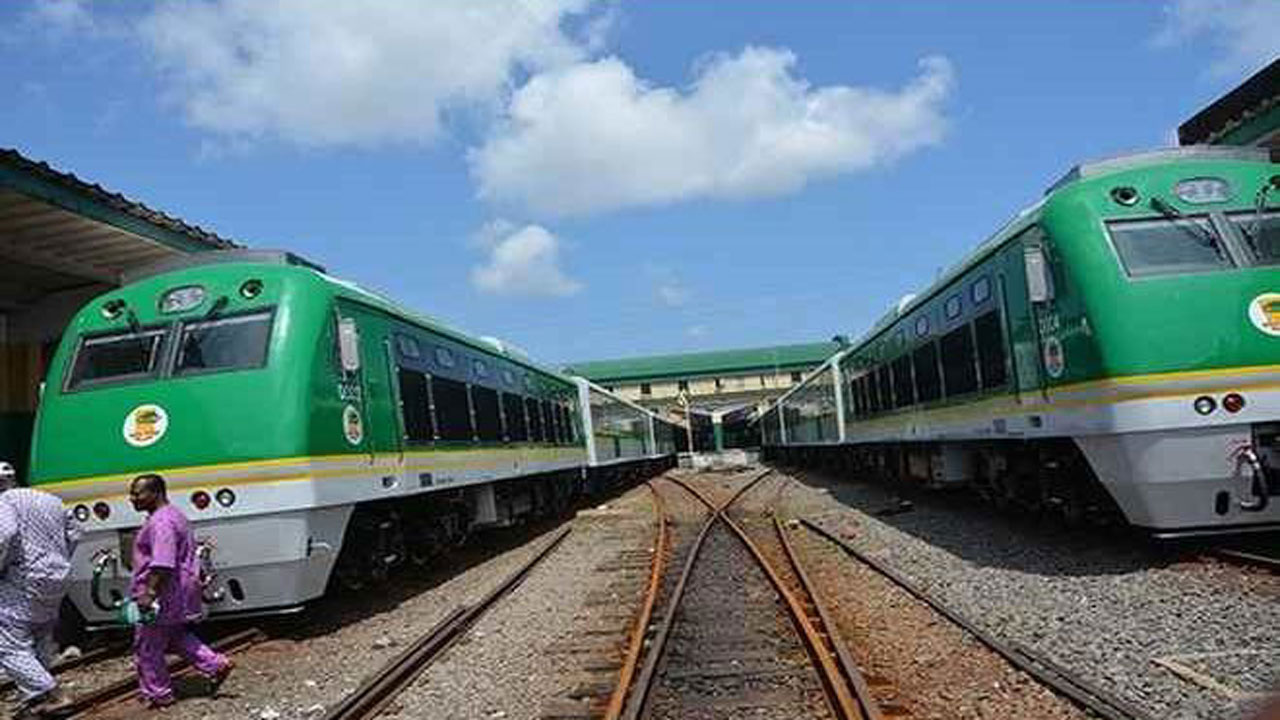
Reports of massive deterioration in railway services on the Abuja-Kaduna-Kano line speak volumes about the scale of institutional failure in the country. That particular train route is meant to be a precursor of the modern rail transportation system in the entire country, and it cannot be but disheartening that instead of showing the way forward, the services have crumbled as if nobody was in charge; barely 10 years after the first trams began operation. Although the Senate is investigating the cause of the near collapse, Nigerians who are feeling the brunt directly will be pacified only when, and if, rail services are fully restored to their original efficient status.
The Senate’s investigation into the railway services followed observations in the chambers that service quality has collapsed despite heavy public investment. Among their key complaints is the extremely slow speed on the route, making it impossible for trains to reach their destinations on time. There is also a sharp decline in daily passenger traffic, from about 10,000 when the line opened to fewer than 1,000 per shuttle day. Daily trips have been cut from around 10 to as few as two on some days. It is not surprising that Senate President Godswill Akpabio noted that a bicycle—or even a keke napep—can sometimes reach Kaduna (from Abuja) faster than the train. Consequently, revenue from railway transportation continues to dwindle, prompting the Senate to treat the railway’s decline as a “national emergency”.
The decline of the Abuja–Kaduna railway is a manifestation of poor governance and inept management. Otherwise, how can a railway that gulped so much of taxpayers’ money be allowed to deteriorate to the point of near abandonment, in a manner reminiscent of failed projects? As Senator Abdul Ningi, representing Bauchi Central, described the issue, this is indeed a “Nigerian tragedy.” The Chairman of the Senate Committee on Transport, Senator Adamu Aliero, went further, describing the railway as an “eyesore” and emphasising the urgent need for coordinated action to restore it to operational efficiency.
The Abuja–Kaduna rail line, which suffered a bombing on March 28, 2022—when armed bandits detonated improvised explosive devices on the track—is one of Nigeria’s most important standard-gauge corridors. Built with significant public funds and inaugurated in 2016, it has since declined, shaking public confidence not only in rail transport but in government projects as a whole.
The railway was once celebrated as a symbol of renewal: a modern artery meant to knit together major cities, ease pressure on dangerous highways and restore public confidence in rail transport. Today, that promise lies embarrassingly diminished. The project has suffered from poor maintenance, vandalism, derailments and repeated bandit attacks along the northern corridor. The recent derailment in August 2025 at Asham reinforced the growing perception that the line is unsafe and poorly managed.
The Senate’s decision to probe the line’s waning operations is therefore timely. It would be a greater tragedy to watch what should have been a bustling corridor of commerce and mobility become a case study in neglect, mismanagement and poor maintenance culture.

The decline of the Abuja–Kaduna railway testifies to Nigeria’s chronic lack of maintenance culture. Governments erect skyscrapers today, only for them to decay tomorrow due to a lack of routine maintenance. This culture of neglect explains why it took the government an astonishing ten years to realise that the railway was collapsing. Had routine maintenance been carried out as required, the railway might not have deteriorated to its present sorry state.
This decline is more troubling given the huge amount of borrowed funds sunk into the scheme and the fanfare surrounding its inauguration. The line was meant to be self-sustaining, or at least operationally efficient. For many Nigerians, the Abuja–Kaduna rail line was not a luxury; it was a necessity, especially at a time when insecurity made road travel perilous. A failing railway, therefore, has social and economic consequences far beyond inconvenience. It pushes travellers back onto unsafe roads, increases transport costs, and further erodes trust in public institutions.
Instructively, the ad hoc Senate Committee—originally set up last November but stalled due to funding constraints—has now been officially revived to investigate every aspect of the railway project, from contracts to operations. The 12-member committee, chaired by Senator Adams Oshiomhole, has been mandated to examine issues including vandalism, derailments, coach shortages, ticketing abuses, and propriety of expenditure in the construction and operation of the railway.
However, investigations alone cannot move trains or restore a failing railway to health. The country has witnessed countless inquiries that end in reports gathering dust. If this Senate inquiry is to matter, it must confront hard questions without sentiment. Where did maintenance plans fail? Why were spare parts, coaches and signalling systems allowed to deteriorate? How effective has the Nigerian Railway Corporation been in managing a modern standard-gauge system? And crucially, how were funds appropriated for operations and upgrades utilised?
There is also the broader issue of governance. Railways—like power and water—cannot survive on political attention alone. They require technical competence, consistent funding, security coordination and accountability. Vandalism and sabotage are real threats, but they thrive most where oversight is weak and responses sluggish. Blaming “external factors” without addressing internal failures would amount to an exercise in futility.
At the heart of the Abuja–Kaduna railway problem is maintenance—or the lack of it. Modern rail systems thrive on routine inspections, predictive maintenance and strict adherence to technical standards. Nigeria’s approach, by contrast, has been largely episodic: repairs are hurriedly carried out only after breakdowns occur. This fire-brigade mentality guarantees recurring failures and steadily rising costs. Until maintenance is institutionalised as a core operational priority, no amount of emergency funding will rescue the line.
Equally troubling is the rail corridor’s persistent vulnerability to vandalism and theft. Tracks, signalling components and other critical assets are routinely exposed, with little deterrence. A railway of such national importance should not be left at the mercy of saboteurs. Effective surveillance, corridor fencing, technology-driven monitoring and sustained collaboration with security agencies are no longer optional—they are essential.
Funding, too, remains a delicate but unavoidable issue. Rail infrastructure is capital-intensive and unforgiving of financial shortcuts. However, the solution is not merely to allocate more public funds without reform. What is required is transparency in spending, clear performance benchmarks for the Nigerian Railway Corporation, and a willingness to open aspects of rail operations to competent private-sector participation under strict regulatory oversight.
In addition, those responsible for preventable failures must be identified, and consequences should follow. Without this, investigations will continue to amount to little more than political theatre.
The Abuja–Kaduna railway can still be salvaged. But doing so requires abandoning the culture of excuses and embracing a comprehensive reset: disciplined maintenance, robust security, sustainable financing and serious institutional reform. The Senate investigation should aim at concrete reforms: professionalised management, transparent budgeting, realistic fare and service models, and a maintenance regime that treats infrastructure as a living system, not a one-off project. Ultimately, Nigerians want and deserve a railway that works.

