Ongoing reforms in the Ministry of Interior are significant to the success of the President Bola Tinubu-led administration and its Renewed Hope Agenda. Notably, there have been improvements in the immigration services and welfare of various discipline agencies in the mining sector, among others. However, the correctional services need far deeper momentum in the New Year and are heavily dependent on holistic cooperation beyond the Ministry of Interior alone.
Clearly, one of the shining lights in the current administration is the Minister of Interior, Dr Olubunmi Tunji-Ojo. He stands in combining high-visibility, politically salient reforms in the areas of prison decongestion, biometric and immigration modernisation; personnel-focused measures that quickly change the morale in paramilitary services. Recall that Tunji-Ojo stepped into the saddle with an eye on the dysfunctional passport issuance regime. He had led the Nigeria Immigration Service (NIS) to clear over 200,000 pending passport applications in a couple of weeks. He also oversaw the modernisation of immigration and identity systems, the rollout of regional and national biometric identity solutions, and the modernisation of immigration/border processes, framed as necessary for migration management and regional cooperation.
The introduction of the e-gates at major airports and the e-visa system revolutionised how Nigeria manages immigration. By simplifying the visa application process, this initiative made it easier for foreign nationals to visit Nigeria, promoting tourism and international collaboration. Specifically, Tunji-Ojo also championed the “Migration Information Data Analysis System” (MIDAS), which enhances the management of migration data. This system provides critical insights that inform policy decisions, enabling Nigeria to address migration challenges effectively.
Notably, the Centralised Interior Management and Administration System (CIMAS) is a platform that enhances oversight and decision-making across Ministry of Interior agencies. CIMAS facilitates secure inter-agency collaboration and intelligence exchange among security agencies, ensuring data integrity and confidentiality. Overall, the Nigerian travellers are now familiar with initiatives like Electronic Visa (e-Visa), Landing and Exit Cards (LEC), Advance Passenger Information (API), Migrant Information Management System (MIMS), Citizen and Business (C&B), Single Travel Emergency Passport (STEP), Temporary Work Permit (TWP), Guard Management System (GMS) and Combined Expatriate Residence Permit and Aliens.
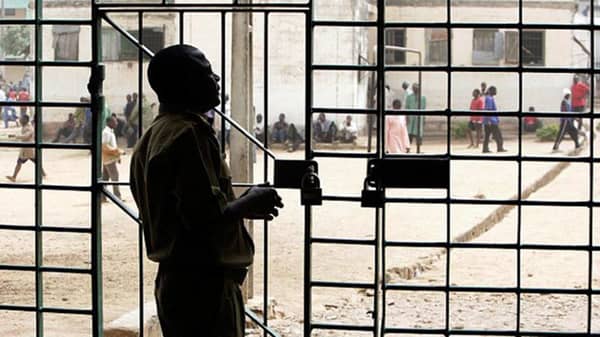
The Nigerian correctional service sector has been what it is for decades: mismanaged, rotten and an accident waiting to happen. Amid jailbreaks, Tunji-Ojo acknowledged the rot and the tall hurdle of addressing endemic structural damage. For instance, the Nigerian Correctional Service (NCoS) reported a total inmate population of 81,558 as of July 2025, comprising 79,615 males and 1,943 females. The number of inmates awaiting trial (pre-trial detainees) stood at 53,473. Many of these individuals spend years behind bars without their cases being heard in court, often for minor offences, contributing to severe overcrowding. The prison system suffers from chronic overcrowding, with many facilities holding more than their designed capacity.
For example, the Abakaliki facility, built in 1949 to accommodate 387 inmates, now houses over 1,300. Inmates therefore face dire conditions, including poor feeding (despite a recent budget increase to N1,125 daily per inmate, which is still considered insufficient for a balanced meal), lack of adequate medical care, and a high risk of death in custody due to these conditions.
Undaunted by the groundswell of reform tasks and their urgency, Tunji-Ojo began with a systematic review of cases, focusing on early release or relief for long-detained, low-risk inmates, and emphasising the reduction of recidivism. Following high-profile incidents, such as the Suleja prison breakout, Tunji-Ojo led government delegations, publicly acknowledged infrastructural deficits, and used these incidents to accelerate plans to upgrade decrepit correctional facilities. These responses signalled active stewardship rather than silence. The ministry publicly reported a measurable fall in inmate numbers following case reviews and parole/relief measures tied to the reform effort. This move saw to the decongestion of correctional facilities, clearance of fines and compensations worth N585 million for 4,068 inmates, and the transformation of correctional homes into centres of rehabilitation, fostering hope and redemption for inmates.
The reform has indeed begun, but it needs to gain momentum. With a clinical focus on reforms and modernisation, the current administration has emplaced the Immigration Service Reform Committee with a focus on modernising the Nigerian Immigration Service to enhance efficiency, reduce corruption, and improve service delivery. It unfolded the Digital Case Management System, streamlining case handling in the justice system to enhance transparency and reduce delays. Specifically, correctional services have been reformed to focus on the rehabilitation and reintegration of inmates into society. A notable case is the Kuje Medium Custodial Centre, where facilities have been modernised to create a more humane and effective correctional environment.
The fundamental driver of prison inefficiency and congestion ecosystem is not the lack of enabling laws. In fact, it has been argued that the Nigerian criminal justice and correctional framework closely aligns with global norms. The fundamental challenge is the absence of a coordinated, multi-stakeholder effort that begins with the judiciary. Modern judges and magistrates should not be reluctant to issue non-custodial sentences.
Nigeria must trust in the system’s ability to monitor offenders on probation or community service. However, this would continue to occur where the police, courts, and correctional services operate in silos, without effective communication and coordination, and a shared strategy for administering justice.
There should be periodic sensitisation and training sessions for magistrates and judges on the application of non-custodial sentences, specifically highlighting the success rates in their application globally. These should be matched with extensive monitoring and implementation mechanisms. For the government, strategic investment is necessary. Funds should be devoted to recruitment and training to build and maintain a framework that can effectively audit and enforce the implementation of the existing laws.
Similarly, the civil society organisations can play a key role in public education and advocacy to promote the use of non-custodial interventions. They can also collaborate with the judiciary to develop and test pilot schemes for effective community monitoring and implementing prison decongestion.